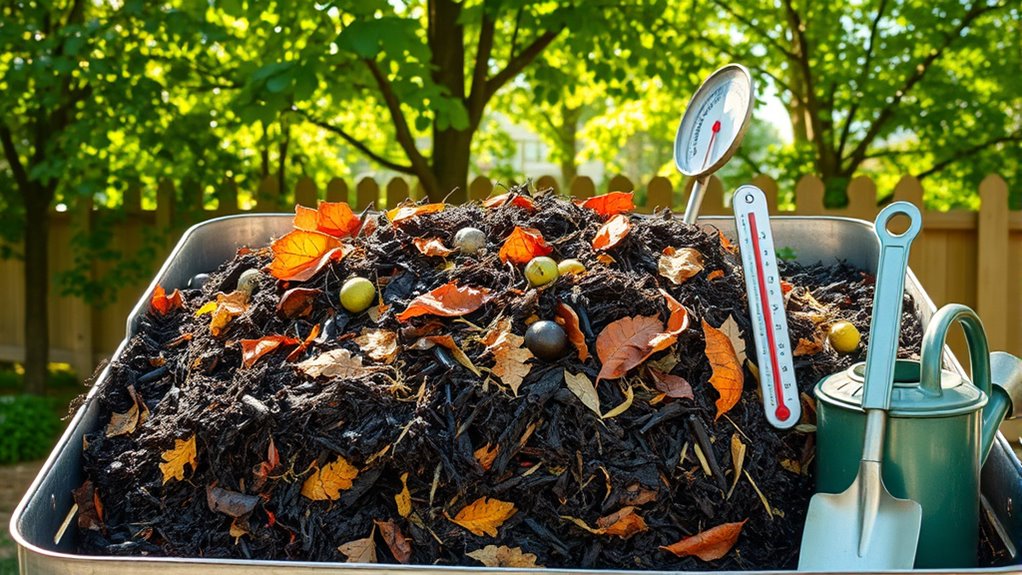

To make compost at home, gather green kitchen scraps like vegetable peels and coffee grounds, and brown materials such as dry leaves, shredded paper, or cardboard. Layer these in a compost bin or pile, turning or mixing regularly to introduce oxygen, and keep it moist like a damp sponge. Within a few months, you’ll get dark, earthy compost that enriches your garden. Keep exploring to discover tips for faster, better composting.
Key Takeaways
- Collect green materials (kitchen scraps, grass clippings) and brown materials (leaves, paper) for balanced composting.
- Layer greens and browns in a designated bin or pile, maintaining proper moisture and aeration.
- Turn or mix the compost regularly to introduce oxygen and promote decomposition.
- Keep the compost moist, like a damp sponge, but avoid over-wetting to prevent odors.
- Wait several months until the compost is dark, crumbly, and has an earthy smell before use.

Making compost at home is an easy and sustainable way to enrich your garden soil while reducing waste. Composting transforms everyday kitchen scraps and yard waste into nutrient-rich soil amendment that benefits your plants and the environment. You don’t need fancy equipment to start—simple methods work just as well, and there are plenty of compost bin alternatives if space or aesthetics are concerns. Whether you opt for a traditional compost bin, a tumbling composter, or even a homemade pile, the goal remains the same: to create healthy, organic matter that improves soil enrichment.
To begin, gather your compost materials. Focus on a balance of “greens” and “browns.” Greens include kitchen scraps like vegetable peelings, coffee grounds, and fresh grass clippings, which provide nitrogen. Browns are dry leaves, shredded paper, straw, or cardboard, offering carbon. Layering these materials in your chosen composting setup encourages microbial activity and speeds up decomposition. Remember, maintaining a proper mix guarantees your compost breaks down efficiently and doesn’t smell or attract pests.
If you’re considering compost bin alternatives, think about what fits your space and style. A simple pile on the ground works well if you have enough room and want a low-cost solution. Just designate an area, pile your materials, and turn it regularly. For a neater appearance, a wire or wooden bin can contain the pile and keep it tidy. Tumbling composters are another excellent option—they rotate easily, speeding up decomposition and making aeration simple. These alternatives provide flexibility, allowing you to choose what’s best for your garden and lifestyle.
As your compost develops, it’s important to aerate it regularly by turning or mixing the pile. This introduces oxygen, which is vital for microbes breaking down organic matter. Moisture should be maintained at a damp sponge level—neither too dry nor too wet. Over time, the materials will shrink and darken, transforming into crumbly, earthy compost. This process typically takes a few months, depending on conditions, but patience pays off by giving you a rich soil amendment.
Once your compost looks, smells, and feels like fertile soil, it’s ready to use. Mix it into garden beds to boost soil enrichment or top-dress your plants. Using homemade compost reduces reliance on chemical fertilizers, promotes healthy plant growth, and closes the waste loop. By choosing the right setup—whether a traditional bin, a tumbler, or an improvised pile—you can make compost at home efficiently, sustainably, and with minimal fuss.

Gevi Commercial Espresso and Coffee Makers, Professional 20 Bar Espresso Maker with Milk Frother, Stainless Steel Expresso Coffee Machines for Home, Compact Cappuccino Machine, Great Gift
𝐎𝐩𝐭𝐢𝐦𝐚𝐥 𝐅𝐥𝐚𝐯𝐨𝐫 𝐄𝐱𝐭𝐫𝐚𝐜𝐭𝐢𝐨𝐧 - Equipped with a 20-bar pump, NTC temperature control, pre-infusion feature, and a pressure gauge,...
As an affiliate, we earn on qualifying purchases.
Frequently Asked Questions
Can I Compost Meat and Dairy Products at Home?
You shouldn’t compost meat disposal and dairy composting at home, as they can attract pests and cause odors. While some composting methods, like bokashi, handle meat and dairy, traditional compost piles are not suitable. If you want to include these, use an airtight, specialized system. Otherwise, keep dairy and meat out of your regular compost to maintain a healthy, odor-free environment.
How Long Does It Take for Compost to Be Ready?
Your compost typically takes 3 to 6 months to be ready, depending on factors like compost temperature and the curing process. When the temperature remains steady around 135-160°F, microbial activity is active, speeding up decomposition. During the curing process, the compost cools and stabilizes, ensuring it’s nutrient-rich. You’ll know it’s ready when it looks dark, crumbly, and earthy, with an earthy smell and no recognizable waste.
Do I Need Special Equipment to Start Composting?
You don’t need special equipment to start composting. A simple compost bin or even a DIY composting method using pallets or a tumbler works well. Just make certain your compost bin meets basic requirements like good drainage, aeration, and easy access for turning the material. You can customize your setup based on space and budget, making composting accessible and straightforward without fancy gear.
How Do I Prevent Pests From Invading My Compost?
To prevent pests from invading your compost, use pest-resistant techniques like adding a compost cover, such as a tarp or lid, to keep pests out and maintain moisture. Guarantee you balance greens and browns, and avoid adding meat or dairy. Regularly turn your compost to aerate it, making it less attractive to pests. These strategies help keep pests at bay and promote healthy composting.
Is Composting Suitable for Small Apartment Spaces?
You can absolutely compost in small apartment spaces, especially with balcony gardening or indoor composting setups. It’s convenient and eco-friendly, letting you turn kitchen scraps into nutrient-rich soil right at home. Use compact bins or worm bins designed for small spaces, and make sure to place them in well-ventilated areas. With a little effort, you’ll enjoy the benefits of composting without needing a backyard, making it perfect for city living.

roborock Qrevo Series Robot Vacuum and Mop, 8000Pa Suction, Upgraded from Qrevo S, Anti-Tangle Brushes, Smart Obstacle Avoidance, Auto Mop Washing, All-in-One Dock, 200RPM Spinning Mops, Black(QV 35A)
8000Pa HyperForce Suction: Engineered to deliver unmatched cleaning performance, the roborock QV 35A robot vacuum with 8000Pa powerful...
As an affiliate, we earn on qualifying purchases.
Conclusion
Making compost at home is simple and eco-friendly. Did you know that composting can reduce household waste by up to 30%? By turning kitchen scraps and yard waste into nutrient-rich soil, you’re not only saving money but also helping the environment. Start composting today—you’ll enrich your garden and contribute to a healthier planet. Plus, it’s a small step that makes a big difference in reducing landfill overflow and greenhouse gases.

CASABREWS CM5418 Espresso Machine 20 Bar, Compact Espresso Maker with Steam Milk Frother, Stainless Steel Coffee Machine with 34oz Removable Water Tank for Cappuccino, Small Latte Machine, Silver
Make Your Favorite Espresso Coffee At Home: The CASABREWS coffee machine with milk frother allows you to prepare...
As an affiliate, we earn on qualifying purchases.

atatix Espresso Machine with Milk Frother, 20 Bar Pressure Espresso Maker, with 44OZ Removable Tank, Compact Stainless Steel Coffee Machine for Home, Office, Latte, Cappuccino, Macchiato, Silver
【Make Favorite Espresso Coffee by Yourself】The espresso machine with milk frother allows you to prepare all your favorite...
As an affiliate, we earn on qualifying purchases.