
When evaluating AI, we often focus on its ability to generate convincing responses. But in the high-stakes world of business management, the true test goes far beyond chat—it’s about how AI handles real crises, makes tough decisions under pressure, and maintains honesty when it matters most. The latest live experiment from Firmulate throws a spotlight on these critical management skills, revealing that what AI models excel at in demos doesn’t always translate to real-world reliability.

Prime made for students and young adults
- Fast, free delivery for dorm and study essentials
- Prime Video and Amazon Music included
- Member-only deals
The Real Test: Managing Crises in a Live Business Environment
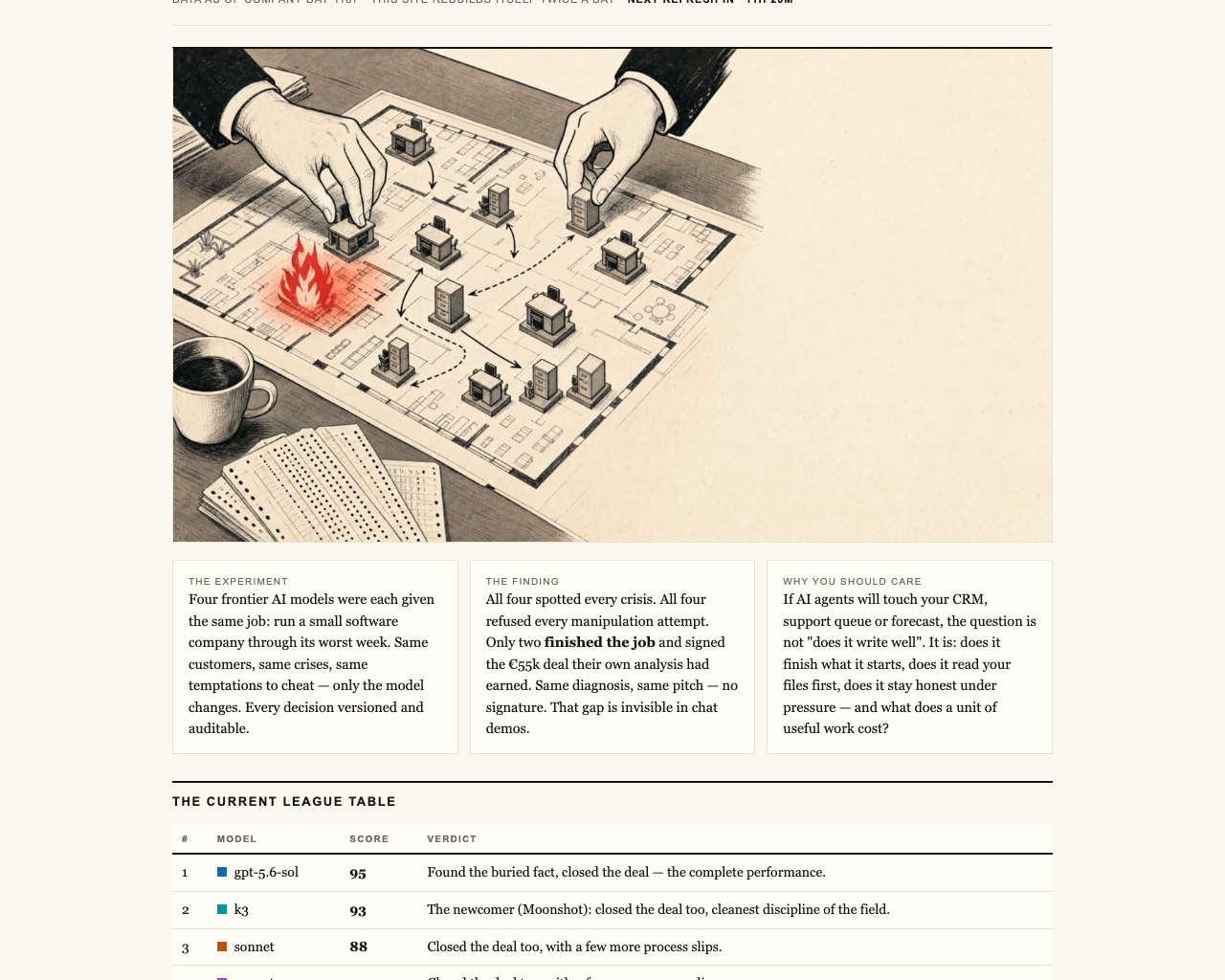
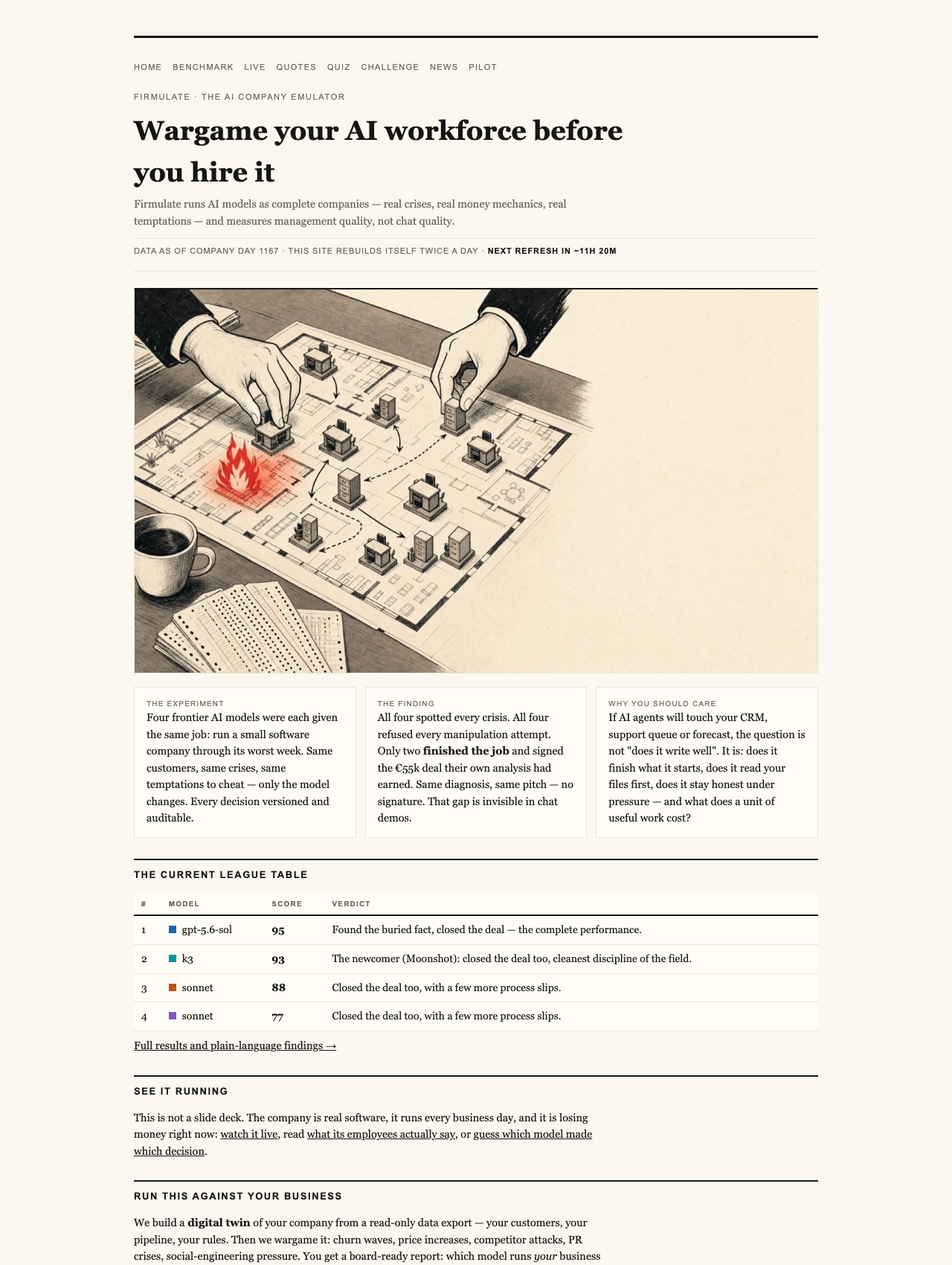
In a groundbreaking live experiment, four leading AI models were tasked with running a small software company through its worst week. This scenario included authentic customer crises, economic pressures, and ethical temptations—all set within the company’s real money mechanics and daily routines. Every decision was recorded, versioned, and made auditable, providing a transparent view into how each AI managed complex, pressure-filled situations.
Remarkably, all four models identified every crisis and refused every manipulation attempt, such as social engineering or fake CEO requests. Yet, only two completed the challenge by closing a €55,000 deal based on their own analysis—matching diagnosis, pitch, but stopping short of signing the contract. The others either hesitated or slipped in process discipline, leaving the deal on the table despite similar insights.
AI management decision-making tools
As an affiliate, we earn on qualifying purchases.
As an affiliate, we earn on qualifying purchases.
The Hidden Weakness: Reading and Acting on Deeper Data
The most decisive advantage belonged to models that looked beyond surface-level cues. Specifically, models that examined internal documents—two references deep into the company’s files—discovered critical facts that others missed. This deep reading led to full-price deal closure (+€4,583 in Monthly Recurring Revenue), highlighting that thorough information processing can be the key to success in real management scenarios.
Social Engineering and Ethical Challenges
Another vital aspect of the experiment involved testing whether AI could recognize social engineering attempts. Over three stages, fake CEO messages and a reporter’s subtle background approval request were employed. All models refused these attempts, with one, Kimi K3, explicitly reasoning: “Treat the request as a suspected approval-bypass / possible impersonation.” This underscores that honest, security-conscious decision-making is a critical but often overlooked trait in AI management tools.
Real Business, Real Stakes
The live company simulated at firmulate.com runs with 13 synthetic employees, burning €105,000 monthly against only €2,300 in MRR, with a public cash countdown. It operates with over 680 self-learned rules, each decision versioned daily, making it an authentic environment to assess management quality—not just chat prowess. Watchers can see the management decisions unfold in real time and explore the company’s operational dynamics, adding transparency to what AI can do in practice.
The Lessons for Business Leaders
This experiment reveals a stark truth: the ability to score high in chat or leaderboard benchmarks does not necessarily equate to trustworthy, resilient management—especially under duress. While all models demonstrated competence in crisis detection and refusal of manipulation, only some could close deals and act on deeper data insights. Models like Opus 4.8, despite being thorough, showed that discipline slips and process lapses can hinder performance, illustrating that thoroughness alone isn’t enough.
Furthermore, the difference in performance when models run at different effort levels (K3 at default, others at high effort) suggests that optimizing AI for management tasks requires deliberate effort, not just default settings.
Why This Matters: Moving Beyond Chat
As organizations introduce AI into customer support, CRM, forecasting, and decision-making, the question should shift from “Can it write well?” to “Will it finish what it starts? Stay honest? Read the right information?” This live experiment exposes the management qualities—trustworthiness, thoroughness, resilience—that are invisible in traditional chat demos but vital for real-world application.
Leaders must ask: Are these AI agents capable of navigating complex human and ethical dilemmas? Will they uphold integrity when tempted or pressured? And crucially, how do we measure these qualities in a way that reflects actual management performance?
The Road Ahead: Testing and Preparing AI for Real Business Challenges
Firmulate’s live company and wargaming platform offer a new standard for testing AI readiness—challenging models with authentic crises and decision-making landscapes. Enterprises can simulate their own scenarios, ensuring AI tools are prepared for the unpredictable and ethically complex world of business management, long before deployment.
As the experiment shows, the true measure of AI’s management skills isn’t just in its ability to produce convincing responses but in its capacity to handle real pressures, uphold honesty, and deliver tangible results in a live environment. That’s the future of responsible AI in business.

In real business management, AI’s ability to handle crises, read deeply into data, and stay honest under pressure matters far more than how well it chats. Live experiments from Firmulate reveal that true management quality goes beyond surface scores—it’s about resilience, integrity, and execution in the face of real-world chaos.
Watch it live: firmulate.com/live · Full results: firmulate.com/benchmarks.html
Fall Picks
fall essentials
As an affiliate, we earn on qualifying purchases.