
For students choosing anatomy models, the best overall fit is the Learning Resources Anatomy Models Bundle Set for studying more than one body system without relying on a single display model. The 18-Part Life-Size Human Torso stands out for hands-on organ study, while the Life Size Human Heart Model is a stronger choice for focused cardiovascular revision. The main tradeoff is breadth versus detail: torso and multi-model sets cover more topics, while specialized models make one structure easier to examine. Size, removable parts, and how much assembly or storage space a model needs also affect its classroom usefulness. Read on for the full comparison and guidance on matching a model to your course.

Prime made for students and young adults
- Fast, free delivery for dorm and study essentials
- Prime Video and Amazon Music included
- Member-only deals
Key Takeaways
- Broad coverage comes from sets: The Learning Resources bundle and EVOTECH body-and-skeleton set can support study across several structures, while a heart, skull, or lumbar spine model focuses attention on one topic.
- Removable parts make torso models more useful for active study: The 18-part life-size torso offers more components to handle than the smaller EVOTECH 11-inch torso, but it also needs more display and storage space.
- Size does not equal detail: The 33-inch, 27-part DSFGFRR model offers a larger, multi-part study aid, while compact 11-inch torsos trade some working scale for easier desk storage.
- Choose a skeleton for joint and bone study, not organ revision: The NLShan and Breesky skeletons focus on movable limbs and skeletal form; neither replaces a torso with removable organs.
- Focused models answer specific course needs: The 48-structure heart, color-coded skull, and lumbar model with a herniated-disc demonstration each offer a clearer path into a narrow subject than a general anatomy figure.
| Life Size Human Heart Model with 48 Numbered Anatomical Structures, 2-Part Detachable Heart with Magnets & Guide, Medical Model for Teaching & Study |  | Best for Focused Heart Study | Brand: WLLFS | Model number: xz-01 | Dimensions: 4.33 x 4.33 x 8.27 inches | VIEW LATEST PRICE | See Our Full Breakdown |
| Breesky Mini Human Spine Anatomy Model with Nerves and Stand, 17 Inches |  | Best for Spine and Nerve Demonstrations | Height: 17 inches | Included anatomy: Vertebrae, nerves, arteries, pelvis, sacrum, femur heads, and herniated lumbar disc | Stand: Metal stand with base | VIEW LATEST PRICE | See Our Full Breakdown |
| DSFGFRR Human Anatomy Muscle and Organ Model, 27-Part, Half Life Size, 33-Inch |  | Best for Hands-On Full-Body Study | Brand: DSFGFRR | Height: 33 inches | Measurements: 32 in L x 10 in W | VIEW LATEST PRICE | See Our Full Breakdown |
| Human Anatomy Study Cube – Study 9 Parts of the Human Body – Perfect Anatomy Revision Guide – Addictive Model Cube – Great Gift for Nurses, Dentists, Medical Students |  | Best Portable Revision Aid | Brand: Kits of Medicine | Model number: 7625937811463 | Dimensions: 2.76 x 2.76 inches (7 cm cube) | VIEW LATEST PRICE | See Our Full Breakdown |
| EVOTECH SCIENTIFIC 17-Inch Human Torso Anatomy Model, 16 Removable Parts |  | Best Compact Torso Model | Height: 17 inches | Removable parts: 16 | Material: Non-toxic PVC | VIEW LATEST PRICE | See Our Full Breakdown |
| Anatomy Skull Model – 15-Part Color-Coded Exploded Miniature |  | Best Compact Skull Study Model | Number of pieces: 15 | Material: PVC | Weight: 0.3 kg | VIEW LATEST PRICE | See Our Full Breakdown |
| Learning Resources Anatomy Models Bundle Set |  | Best Multi-System Set for Beginners | Brand: Learning Resources | Model number: LER3338 | Age range: 5 years and up; recommended 8+ | VIEW LATEST PRICE | See Our Full Breakdown |
| 18-Part Life-Size Human Torso Model with Removable Organs | 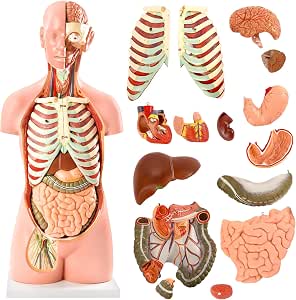 | Best for Classroom Torso Demonstrations | Brand: NEW HORIZON | Model size: 34 inches | Removable parts: 18 organs | VIEW LATEST PRICE | See Our Full Breakdown |
| 2-Piece Lumbar Spine Model with 5 Vertebrae and Herniated Disc Demonstration Set |  | Best for Focused Lumbar Anatomy | Model contents: Lumbar spine model and separate herniated-disc demonstration piece | Vertebrae: Five vertebrae, plus sacrum and discs | Enlargement: 1.5× design highlighting the L4-L5 region | VIEW LATEST PRICE | See Our Full Breakdown |
| Be Amazing! Toys Interactive Human Body Anatomy Figure, 60 Pieces, Ages 8+ |  | Best Interactive Model for Younger Students | Brand: Be Amazing! Toys | Model: Science to the Max Interactive Human Body | Height: 14 inches | VIEW LATEST PRICE | See Our Full Breakdown |
| NLShan 17.7-Inch Human Skeleton Anatomy Model with Movable Joints and Display Stand | 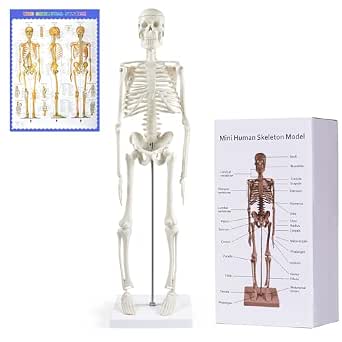 | Best for Joint Demonstrations | Height: 17.7 inches | Material: PVC | Weight: 1.08 pounds | VIEW LATEST PRICE | See Our Full Breakdown |
| EVOTECH SCIENTIFIC 11-Inch Human Torso Anatomy Model, 15 Removable Parts |  | Best for Portable Organ Study | Height: 11 inches | Detachable parts: 15 | Material: Non-toxic PVC | VIEW LATEST PRICE | See Our Full Breakdown |
| EVOTECH SCIENTIFIC Human Anatomy Model Set: Body, Skeleton, Heart, and Half-Size Skull with Brain |  | Best Multi-Model Study Set | Included models: Human body, skeleton, heart, and half-size skull with brain | Skeleton height: 17.7 inches | Torso height: 11 inches | VIEW LATEST PRICE | See Our Full Breakdown |
| Human Body Model for Anatomy Study – 15 Part 11″ |  | Best Compact Torso Pick | Model height: 11 inches | Detachable parts: 15 | Package dimensions: 12.05 x 5.43 x 4.88 inches | VIEW LATEST PRICE | See Our Full Breakdown |
| Breesky 17.7-Inch Human Skeleton Model with Movable Arms and Legs |  | Best for Basic Skeletal Review | Height: 17.7 inches | Base dimensions: 4.75 x 4.75 inches | Product dimensions: 11.54 x 6.18 x 0.2 inches | VIEW LATEST PRICE | See Our Full Breakdown |
More Details on Our Top Picks
Life Size Human Heart Model with 48 Numbered Anatomical Structures, 2-Part Detachable Heart with Magnets & Guide, Medical Model for Teaching & Study
For students concentrating on cardiac anatomy, I’d choose this two-part heart model over a general body model such as the EVOTECH SCIENTIFIC 17-Inch Human Torso. Its 48 numbered structures and included study guide make it easier to link labels with the visible anatomy, while the hidden magnets let students separate and reassemble the two sections during review. At 8.27 inches tall, it suits desk study and small-group explanation better than a large-room demonstration. The tradeoff is scope: this is a focused teaching aid, not a substitute for a torso model or a detailed atlas of every cardiac feature. Its compact dimensions may also make the numbered details hard to see from the back of a classroom.
Pros:- 48 numbered structures pair visible anatomy with the included study guide.
- Two-part magnetic construction supports repeated separation and reassembly.
- Compact footprint fits a study desk or small teaching station.
- PVC construction is described as drop-resistant.
Cons:- Covers the heart alone, unlike the EVOTECH SCIENTIFIC torso model with removable organs.
- The 8.27-inch height can limit visibility in larger teaching spaces.
- The stated 48 structures may not cover every cardiac detail an advanced student needs.
Best for: Students studying heart anatomy who want a labeled, hands-on model for desk review or small-group demonstrations.
Not ideal for: Instructors teaching from across a large classroom, or students who need a model covering multiple body systems and finer cardiac detail.
- Brand:WLLFS
- Model number:xz-01
- Dimensions:4.33 x 4.33 x 8.27 inches
- Numbered structures:48
- Detachable design:2 parts with hidden magnets
- Material:PVC
- Included learning aid:Study guide
Our verdict“Choose this model for focused, hands-on heart revision; choose a torso model if you need broader body-system context.”
Breesky Mini Human Spine Anatomy Model with Nerves and Stand, 17 Inches
I’d pick the Breesky when the lesson centers on the spine and nearby structures rather than whole-body anatomy. Its 17-inch height gives it a more visible teaching presence than the compact heart model, and the combination of nerve branches, arteries, pelvis, and a herniated lumbar disc helps connect spinal structure with common clinical topics. The metal stand keeps it upright for desk-side explanation or patient education. Compared with the DSFGFRR 33-inch muscle-and-organ model, this one takes up less space and is more anatomically focused, but it offers far fewer body regions to explore. Its size still limits visibility in a large lecture room, and the listed features do not describe removable vertebrae or other hands-on disassembly.
Pros:- Shows nerve branches and a herniated lumbar disc alongside spinal anatomy.
- Includes pelvis, sacrum, femur heads, and arteries for added context.
- Metal stand and base support upright display.
- Smaller than the 33-inch DSFGFRR model, making it easier to place in a study area.
Cons:- At 17 inches, it may be difficult to see across a large teaching space.
- Focused on spinal anatomy rather than multiple body systems.
- The listed description does not specify detachable parts for hands-on assembly.
Best for: Students of anatomy, physical therapy, or related clinical subjects who need a compact spine model that shows nerves and a herniated disc.
Not ideal for: Learners seeking a full-body overview, removable-part dissection practice, or a model visible from the back of a large lecture hall.
- Height:17 inches
- Included anatomy:Vertebrae, nerves, arteries, pelvis, sacrum, femur heads, and herniated lumbar disc
- Stand:Metal stand with base
- Package dimensions:15.31 x 5.51 x 3.23 inches
- Item weight:1.32 pounds
- Manufacturer:breesky
Our verdict“Choose the Breesky for compact spine and nerve teaching, not for broad anatomy coverage or large-class visibility.”
DSFGFRR Human Anatomy Muscle and Organ Model, 27-Part, Half Life Size, 33-Inch
Among these five picks, the DSFGFRR offers the broadest hands-on study format: 27 removable parts and more than 200 numbered markers give students more to identify and manipulate than the single-system heart or spine models. Its 33-inch height and weighted wooden base suit classroom demonstrations, while the half-life-size format gives it more presence than the 17-inch EVOTECH SCIENTIFIC torso. That extra scale comes with a real space cost: the model measures 32 inches long and weighs 9 pounds, so it is less convenient to move or store. I’d also want a clear parts list before choosing it for a specific course, since the product information does not name the structures included among its 27 removable pieces.
Pros:- 27 removable parts support active identification and assembly-based study.
- More than 200 numbered markers provide extensive labeling for review.
- 33-inch height gives it more classroom presence than the 17-inch torso model.
- Weighted wooden base is designed to support a stable display.
Cons:- Its 32-inch length and 9-pound weight make storage and transport less convenient.
- The product description does not specify which structures are included among the 27 parts.
- Broad muscle-and-organ coverage may be less useful than a focused model for students studying only the heart or spine.
Best for: Teen and adult students, tutors, and instructors who want a larger model with removable anatomy and many numbered structures for classroom or guided study.
Not ideal for: Students with limited storage space, buyers needing a clearly itemized set of included organs, or those who want a lightweight model to carry between classes.
- Brand:DSFGFRR
- Height:33 inches
- Measurements:32 in L x 10 in W
- Removable parts:27
- Numbered markers:More than 200
- Weight:9 pounds
- Material:PVC
- Base:Weighted wooden base
- Age range:Teen and adult
Our verdict“Choose this for broad, hands-on anatomy practice if you have room to store it and can confirm its included structures suit your course.”
Human Anatomy Study Cube – Study 9 Parts of the Human Body – Perfect Anatomy Revision Guide – Addictive Model Cube – Great Gift for Nurses, Dentists, Medical Students
For quick revision between classes, I’d take the 7 cm study cube over a display model like the Breesky spine. Its foldable format puts information about nine body systems in a small, portable object, making it useful for brief recall sessions when a full-size model is impractical. The range spans the eye, ear, heart, lungs, brain, skin, digestive system, muscles and bones, and circulatory system, so it offers broader topic coverage than the heart-only model. But it is a printed study aid, not a three-dimensional anatomical model with removable structures. Small text may also be difficult to read, and students needing detailed spatial learning or advanced anatomy coverage should choose a larger, more tactile option.
Pros:- Compact 7 cm format is easy to carry in a bag or keep on a desk.
- Covers nine body systems in one study tool.
- Foldable interaction offers a more active format than a static printed reference.
- Includes details printed on each face for quick review.
Cons:- Small printed text may be difficult for some students to read.
- Does not provide three-dimensional structures or removable parts like the heart and torso models.
- Nine topics offer a broad introduction but limited depth for advanced study.
Best for: Students who want a lightweight, portable prompt for reviewing basic body-system topics between classes or during short study breaks.
Not ideal for: Learners who need large, readable labels, three-dimensional anatomy, removable parts, or detailed material for advanced coursework.
- Brand:Kits of Medicine
- Model number:7625937811463
- Dimensions:2.76 x 2.76 inches (7 cm cube)
- Weight:100 g
- Material:Plastic
- Color:White
- Topics covered:Eye, ear, heart, lungs, brain, skin, digestive system, muscles and bones, and circulatory system
- Item count:1
Our verdict“Choose the cube for portable, basic anatomy recall, but use a physical model or detailed reference for spatial and advanced study.”
EVOTECH SCIENTIFIC 17-Inch Human Torso Anatomy Model, 16 Removable Parts
The EVOTECH SCIENTIFIC torso is my pick for students who want a physical overview of internal anatomy without the footprint of the 33-inch DSFGFRR model. At 17 inches tall, it is easier to fit on a desk or shelf, while 16 removable parts let learners examine organs rather than only study an exterior diagram. The included brochure adds a reference point for independent review, and the oak-wood base supports display. Compared with the heart and spine models here, this torso covers a wider range of anatomy, but its smaller scale means some organ pieces are themselves small. The supplied information does not itemize every removable structure, so students needing a particular organ or a detailed parts list should check that before choosing it.
Pros:- Sixteen removable parts support hands-on study of internal anatomy.
- 17-inch height takes up less space than the 33-inch DSFGFRR model.
- Educational brochure provides an accompanying study reference.
- Oak-wood base is suited to display and classroom use.
Cons:- Some organ pieces are small and need careful handling around young children.
- The product information does not specify every included removable structure.
- Smaller scale may make details harder to see in a large classroom.
Best for: Students who need a space-conscious torso model with removable organs for home study, tutoring, or small-group classroom use.
Not ideal for: Large-class instructors who need highly visible details, or students who require a confirmed list of specific structures and larger organ pieces.
- Height:17 inches
- Removable parts:16
- Material:Non-toxic PVC
- Base:Oak wood
- Included:Educational brochure
- Package dimensions:18.11 x 8.66 x 5.94 inches
- Item weight:5.02 pounds
Our verdict“Choose this torso for compact, hands-on internal anatomy study if its listed parts suit your coursework.”
Anatomy Skull Model – 15-Part Color-Coded Exploded Miniature
For students who need to study skull anatomy without storing a full-size model, this palm-sized, 15-piece skull packs detailed bones, teeth, sockets, canals, and sutures into a portable format. Its color-coded bone pairs make identification easier during review, while the illustrated guide and connectors support repeated assembly. Compared with the broader Learning Resources Anatomy Models Bundle Set, this pick gives skull structures more focused attention but does not cover other organs or body systems. The tradeoff is scale: small parts can be harder to handle and may be less suitable for group demonstrations across a classroom. The connectors may also take patience for first-time users. I’d choose it for targeted skull study and portability, not as a student’s only anatomy model.
Pros:- 15 pieces show detailed skull bones, teeth, sockets, canals, and sutures.
- Color-coded bone pairs help students distinguish structures.
- Compact size is convenient for storage and transport.
- Illustrated guide and connectors support assembly and study.
Cons:- Small components may be difficult to handle and could be vulnerable to damage.
- Connectors may be tricky for beginners to assemble.
- Covers the skull only, unlike the broader Learning Resources bundle.
Best for: Students studying cranial bones who want a portable model for individual review or small-group practice.
Not ideal for: Beginners who need large, easy-to-handle parts, or students seeking a model that covers multiple body systems.
- Number of pieces:15
- Material:PVC
- Weight:0.3 kg
- Size:Palm-sized miniature
- Color:Colorful, with bone-pair color coding
- Included components:Illustrated guide and connectors
Our verdict“Choose this miniature for portable, focused skull study, but look elsewhere for larger parts or wider anatomical coverage.”
Learning Resources Anatomy Models Bundle Set
This bundle suits students who learn better by handling models than by studying diagrams alone. It includes heart, brain, full-body, and skeleton models, each with a stand and an assembly guide, so a learner can compare several major systems within one set. That breadth gives it a clearer role for introductory study than the focused Anatomy Skull Model, which offers more specific cranial detail but only covers the skull. Movable joints and hinged sections add hands-on exploration, though the set may be complex for younger children despite its stated age range. Students seeking a close study of a single region may find the coverage comparatively broad rather than deep. With no warranty listed and no interchangeable add-on parts, it is best for structured home or classroom learning rather than expanding a specialized collection.
Pros:- Covers the heart, brain, body, and skeleton in one bundle.
- Movable joints and hinged sections support hands-on exploration.
- Display stands help keep models accessible during lessons.
- Assembly guides include educational facts and instructions.
Cons:- The number of models and assembly steps may challenge younger learners.
- Provides broad introductory coverage rather than deep detail in one area.
- No warranty is listed, and the set has no additional interchangeable parts.
Best for: Families and elementary or middle-school educators seeking hands-on introductory models of several major body systems.
Not ideal for: Advanced students needing detailed study of one anatomical region or buyers who want a set that can be expanded with interchangeable parts.
- Brand:Learning Resources
- Model number:LER3338
- Age range:5 years and up; recommended 8+
- Models included:Heart, brain, body, and skeleton
- Display stands:Included for each model
- Assembly guide:Step-by-step guide with educational facts
- Warranty:No warranty
Our verdict“Pick this bundle for a beginner who needs to explore several body systems, not for detailed study of one region.”
18-Part Life-Size Human Torso Model with Removable Organs
For lessons centered on organ placement, this 34-inch torso model with 18 removable organs offers a larger teaching surface than the palm-sized Anatomy Skull Model and keeps the focus on internal anatomy. Removable parts let students examine organs individually and relate them to their position in the torso; the included full-color manual adds a reference for study or lesson planning. Its size makes it a stronger fit for shared classroom demonstrations than compact models, but the listed 23.5-pound weight makes it less convenient to move frequently. The product data also gives unusual dimensions of 36.6 x 16.5 x 0.2 inches, so buyers should verify that the intended display and storage setup will work. It is a specialized torso choice, not an all-body set like the Learning Resources bundle.
Pros:- 34-inch size supports visibility during group instruction.
- 18 removable organs allow individual inspection and placement practice.
- Full-color manual supports study and curriculum planning.
Cons:- At 23.5 pounds, it is less convenient to transport than compact models.
- The listed dimensions are unusual and may complicate storage planning.
- Focuses on the torso rather than offering broad coverage like the Learning Resources bundle.
Best for: Teachers and students who need a large torso display for lessons on organ location and relationships.
Not ideal for: Students needing a portable model, a full skeleton, or clear, conventional product dimensions for planning storage.
- Brand:NEW HORIZON
- Model size:34 inches
- Removable parts:18 organs
- Item weight:23.5 pounds
- Product dimensions:36.6 x 16.5 x 0.2 inches
- Color:Brown
- Included:Full-color product manual
Our verdict“Choose this torso for visible, organ-focused classroom instruction if you have space for a large, heavy model.”
2-Piece Lumbar Spine Model with 5 Vertebrae and Herniated Disc Demonstration Set
This teaching kit is built for a specific lesson: understanding the lumbar spine and herniated discs. It pairs a model of five vertebrae, the sacrum, and discs with a separate herniated-disc demonstration piece, giving students a direct comparison between the standard structure and the condition being taught. Its 1.5× enlarged L4-L5 region makes a key area easier to see than small, general-purpose models such as the Anatomy Skull Model. The detachable parts also help with setup and storage. That focus is its main limit: it does not cover the cervical or thoracic spine, and it cannot replace a whole-body set like the Learning Resources Anatomy Models Bundle Set. I’d select it for targeted classroom or clinical teaching, not for a student starting a broad survey of anatomy.
Pros:- Includes both a standard lumbar spine model and a separate herniated-disc demonstration piece.
- Enlarged L4-L5 area makes the featured region easier to examine.
- Detachable components support setup and storage.
- PVC construction is described as durable and lightweight.
Cons:- Covers only the lumbar region, not the cervical or thoracic spine.
- Narrow scope makes it a supplement rather than a general anatomy model.
- Its clinical focus may be less useful for younger students beginning broad anatomy study.
Best for: Students and instructors studying lumbar vertebrae, disc structure, and herniation in a focused lesson.
Not ideal for: Beginners seeking a whole-body introduction or learners who need cervical and thoracic spine coverage.
- Model contents:Lumbar spine model and separate herniated-disc demonstration piece
- Vertebrae:Five vertebrae, plus sacrum and discs
- Enlargement:1.5× design highlighting the L4-L5 region
- Material:PVC
- Product dimensions:12.01 x 5.31 x 4.72 inches
- Item weight:2.2 pounds
- Model number:XV1470
- Manufacturer:chiazllta
Our verdict“Pick this kit for close study of lumbar anatomy and disc herniation, but not as a substitute for broader anatomy coverage.”
Be Amazing! Toys Interactive Human Body Anatomy Figure, 60 Pieces, Ages 8+
For students who want to build and pose a body model while learning, this 14-inch articulated figure offers a more playful, hands-on format than the fixed-focus lumbar spine kit. Its 60 pieces include removable bones, muscles, and organs, while illustrated activity cards give children prompts for exploring the body. The adjustable stand also supports posing, which can make repeated assembly and review more engaging. Compared with the Learning Resources Anatomy Models Bundle Set, this figure brings bones, muscles, and organs together in one model rather than separating learning across several displays. The tradeoff is that its toy-like, multi-part format may not suit students seeking precise study of a particular region, and small pieces may be challenging to manage. No warranty is listed, so it is best viewed as an introductory learning tool.
Pros:- 60 pieces include removable bones, muscles, and organs.
- Articulated figure and adjustable stand allow posing.
- Illustrated activity cards provide guided learning prompts.
- Combines several anatomy elements in one 14-inch model.
Cons:- The many pieces may be difficult for some students to manage or reassemble.
- A single figure offers less separate display space than the Learning Resources bundle.
- No warranty is listed.
Best for: Students ages 8–14 who learn through assembly, posing, and guided anatomy activities.
Not ideal for: Advanced students needing detailed regional anatomy, or learners who prefer larger components and fewer loose parts.
- Brand:Be Amazing! Toys
- Model:Science to the Max Interactive Human Body
- Height:14 inches
- Piece count:60
- Age range:8–14 years
- Included components:Articulated skeleton, muscles, removable organs, transparent stand, and activity card instruction manual
- Warranty:No warranty
Our verdict“Choose this figure for school-age learners who want an interactive build-and-pose activity rather than advanced anatomical detail.”
NLShan 17.7-Inch Human Skeleton Anatomy Model with Movable Joints and Display Stand
The NLShan is a useful pick for students who learn skeletal anatomy by moving a model rather than only viewing one. Its articulated shoulders, elbows, wrists, knees, and ankles give it more scope for demonstrating joint movement than the Breesky 17.7-Inch Human Skeleton Model, whose description specifies movable arms and legs without naming as many joints. A removable skull with an opening jaw adds another hands-on point of study, while the stand and poster make it easy to keep on a desk. The tradeoff is scale: at 17.7 inches, it is a compact visual aid, not a substitute for larger models when students need close inspection. The listed product dimensions also conflict with the stated height, so buyers should treat the height as the supplied model specification rather than rely on that dimensions field.
Pros:- Named movable joints support demonstrations at several major limb connections.
- Removable skull and opening jaw provide access to head anatomy.
- Detachable base and metal support bar allow freestanding display.
- Study poster adds a visual reference alongside the model.
Cons:- The 17.7-inch scale limits fine bone detail compared with larger teaching models.
- Listed product dimensions appear inconsistent with the stated model height.
Best for: Students studying basic joint movement who want a compact skeleton for a desk or small-group demonstration.
Not ideal for: Learners who need full-size bone detail or buyers who require completely consistent dimension information before purchasing.
- Height:17.7 inches
- Material:PVC
- Weight:1.08 pounds
- Base dimensions:4.75 x 4.75 inches
- Movable joints:Shoulder, elbow, wrist, knee, and ankle
- Included:Study poster, detachable base, metal support bar
- Model number:X-4
Our verdict“Choose the NLShan for hands-on joint demonstrations in a compact format, but not as a detailed substitute for a larger skeleton.”
EVOTECH SCIENTIFIC 11-Inch Human Torso Anatomy Model, 15 Removable Parts
For a student focused on where organs sit inside the torso, this EVOTECH SCIENTIFIC model offers a hands-on format without the footprint of a larger display. Its 15 detachable parts include major organs as well as the brain and skull cap, letting learners take components out and relate them to their positions in the trunk. Compared with the Merinden Human Body Model for Anatomy Study, it has a more fully specified component list and names an oak-wooden base, which helps buyers know what arrives. The 11-inch size and brochure suit portable class use or a home study desk. Small removable pieces are a genuine limitation: they need careful handling and are not appropriate around young children. Students seeking limbs, bones, or broader body coverage should choose a multi-model set instead.
Pros:- Fifteen removable parts support hands-on organ placement study.
- Includes brain and skull cap alongside major torso organs.
- Compact 11-inch form is practical for carrying or desk use.
- Oak-wooden base and educational brochure are included.
Cons:- Small organ pieces require careful handling and supervision around young children.
- Torso-only coverage leaves out limbs and detailed skeletal study.
Best for: Secondary-school students and anatomy learners who want a portable, removable-organ torso with a named component list.
Not ideal for: Students who need skeletal or limb anatomy, or households where small detachable pieces may be accessible to young children.
- Height:11 inches
- Detachable parts:15
- Material:Non-toxic PVC
- Base:Oak wood
- Included components:Trunk, brain, heart, esophagus and aorta, lungs, skull cap, stomach, diaphragm, liver, pancreas and spleen, intestines, educational brochure
- Recommended age:14 years and up
- Operation:Manual; no power source required
Our verdict“Pick this model for portable, component-by-component torso study, but pair it with a skeleton model for broader anatomy coverage.”
EVOTECH SCIENTIFIC Human Anatomy Model Set: Body, Skeleton, Heart, and Half-Size Skull with Brain
This four-model set is the broadest option here for students who want to compare body systems without buying each teaching aid separately. The torso, skeleton, heart, and half-size skull with brain cover several useful study angles, while the included guides give each model a reference beyond visual inspection. Compared with the single-topic EVOTECH SCIENTIFIC 11-Inch Human Torso Anatomy Model, this set trades a more focused organ lesson for wider coverage across the body. A carrying case also makes the collection easier to store or transport than four loose models. The compromise is scale: the torso is 11 inches and the skull is about 3.5 inches, so neither is suited to close, fine-detail work. Base material is not specified, which leaves some uncertainty about construction.
Pros:- Four models cover torso anatomy, skeleton, heart, and skull with brain.
- Separate guides and manuals support study across the included models.
- Carrying case helps keep the set together for storage or transport.
- Hand-painted models on bases can serve as study aids and displays.
Cons:- Small torso and half-size skull limit detailed inspection.
- The base material is not identified in the supplied specifications.
Best for: Students or teachers who want several introductory anatomy models and reference guides in one portable collection.
Not ideal for: Learners who need large-scale anatomical detail or buyers who want a single specialized model with fully specified construction.
- Included models:Human body, skeleton, heart, and half-size skull with brain
- Skeleton height:17.7 inches
- Torso height:11 inches
- Heart height:About 8 inches including base
- Skull size:Half-size; about 3.5 inches
- Material:Plastic
- Age range:14 years and up
- Included guides:Anatomy brochure, skeleton chart, heart manual, and skull manual
- Carrying case:Included
Our verdict“Choose this set for broad introductory coverage and easy storage, not for close study of small anatomical structures.”
Human Body Model for Anatomy Study – 15 Part 11″
The Merinden torso is aimed at students who need a compact, organ-focused model rather than a full-body anatomy collection. Its 15-piece detachable design covers core structures such as the brain, heart, lungs, esophagus, and aorta, giving students a practical way to study how major organs fit together. At 11 inches, it has a similar desk-friendly role to the EVOTECH SCIENTIFIC 11-Inch Human Torso, but the supplied information is less specific: it does not list every included part or identify the base material. The colorful manual and stable base make it suitable for home or classroom display, though the model remains limited to the torso and internal organs. Students studying bones, limbs, or movement will need a separate model, such as one of the skeleton options in this roundup.
Pros:- Fifteen detachable pieces support hands-on organ study.
- Compact 11-inch format fits a desk or small study space.
- Covers major organs and connected structures such as the esophagus and aorta.
- Includes a colorful educational manual and display base.
Cons:- Coverage is limited to the torso and internal organs, with no limbs or skeleton.
- Supplied specifications do not identify the base material or itemize all 15 parts.
Best for: Students with limited desk space who want a compact torso model for reviewing major internal organs.
Not ideal for: Learners seeking skeletal, limb, or joint anatomy, or buyers who want a fully itemized list of included parts and materials.
- Model height:11 inches
- Detachable parts:15
- Package dimensions:12.05 x 5.43 x 4.88 inches
- Item weight:2.07 pounds
- Manufacturer:Merinden
- Included:Educational manual and display base
Our verdict“Choose the Merinden for space-saving organ study, but select a broader set if you need anatomy beyond the torso.”
Breesky 17.7-Inch Human Skeleton Model with Movable Arms and Legs
The Breesky is a straightforward desktop skeleton for students who want to review the spine, ribs, and skull, with movable limbs to make basic positioning easier to explain. Its removable skull cap and movable jaw add useful head-anatomy access, while the small base suits a crowded desk. Compared with the NLShan 17.7-Inch Human Skeleton Model, Breesky specifies movable arms and legs but does not identify as many individual joints; the NLShan is the stronger choice for demonstrations focused on particular joint locations. Breesky’s simpler description also signals a basic study aid rather than a detailed skeletal reference. The jaw moves but does not detach, and the model’s limited anatomical detail makes it less suitable for students who need close examination of individual bones.
Pros:- Movable arms and legs support basic movement demonstrations.
- Removable skull cap and movable jaw offer access to head anatomy.
- Compact footprint works for desk display or study.
- Shows key structures including the spine and ribs.
Cons:- Anatomical detail is basic, limiting close study of individual bones.
- Jaw moves but does not detach from the model.
Best for: Students who want a compact, basic skeleton for reviewing major structures and showing general arm and leg movement.
Not ideal for: Learners who need detailed bone anatomy, individually specified joint movement, or a detachable jaw for close head study.
- Height:17.7 inches
- Base dimensions:4.75 x 4.75 inches
- Product dimensions:11.54 x 6.18 x 0.2 inches
- Weight:1.1 pounds
- Movable parts:Arms, legs, and jaw
- Removable part:Skull cap
- Model number:X-1
Our verdict“Choose the Breesky for a compact introduction to major skeletal structures, but prefer the NLShan for more specifically described joint study.”

How We Picked
I compared these 15 anatomy models for student use by asking what a learner can study directly from each one: overall body layout, removable structures, named anatomical detail, or movement and joints. I also weighed scale, handling, and likely storage needs, since a large model may be easier to inspect but harder to keep on a crowded desk. Product descriptions provided the basis for distinguishing confirmed features; I did not assume unlisted materials, labeling systems, or teaching resources.
The ranking favors models that match a clear learning task and offer useful study access for their scope. Broad, hands-on options rank ahead of narrow models for students who need general coverage, while specialized heart, skull, and spine picks remain strong choices for focused coursework. Smaller figures and activity-oriented products suit limited spaces or younger learners, but they rank lower for students seeking detailed, course-specific study. Because the lineup spans different purposes, the best choice depends on the subject being studied rather than size or piece count alone.
Factors to Consider When Choosing Anatomy Models For Students
Before choosing a model, match its physical design to the way the student studies. The factors below help prevent a common mismatch: buying an impressive-looking figure that does not support the lesson, fit the workspace, or hold up to regular handling.
Start With the Course Topic
Choose the body system the student needs to learn now, not just the model that appears most complete. A torso can help connect organ locations, while a heart, skull, or lumbar spine model allows closer attention to one structure. A general figure may provide useful orientation but offer too little detail for a unit that requires identifying individual parts. Check course terminology and diagrams before buying, especially if students must learn specific labels. For a broad introductory class, a set can cover more ground; for exam revision, a focused model may be the more practical tool. Avoid paying for structures that will not be used simply because they increase the piece count.
Decide How Much Hands-On Access Matters
Removable parts are valuable when a student needs to examine the order, position, or relationships of internal structures. They also create extra handling and organization demands, so a model with many detachable pieces is not automatically better for every learner. Consider whether the student will use it independently, in a supervised lesson, or mainly as a visual reference. Smaller or fragile components can be easier to misplace, especially in shared classrooms. If regular disassembly is part of study, look for a design whose parts can be returned to the model without guesswork. A fixed or simpler model may be a better fit when quick visual review matters more than manipulation.
Balance Scale With Workspace
Larger models make features easier to see from nearby and can work well for demonstrations, but they claim more desk, shelf, and storage space. Compact models suit dorm rooms and small study areas, though their structures may be harder to inspect at a glance. Measure the intended display or storage spot before choosing a life-size or tall figure. Also think about whether the student will carry the model between home and school; a display stand and multiple detachable parts can make transport less convenient. A model that stays accessible is often more useful than a larger one that remains boxed away. Match the scale to the setting where it will actually be used.
Look Beyond Piece Count
A high number of parts can suggest hands-on range, but it does not tell you whether those parts match a student’s learning goals. A model with fewer pieces may still be more helpful if its design focuses clearly on a difficult structure or movement. Check what the parts represent and whether the product description identifies the included components. Do not assume that a numbered structure list means the model includes a detailed study guide or readable labels; confirm those items separately. For younger students, a manageable number of pieces may support independent use better than a complex exploded model. For advanced coursework, clear anatomical scope matters more than a large count.
Choose a Model That Fits the Student’s Stage
Beginners often benefit from a visible overview of the body before working through specialized parts. An activity-led figure can make study feel approachable, while a detailed removable-organ model may be better for a student ready to connect names with locations. Older learners should check whether the model’s level of detail matches their course rather than relying on age guidance alone. A playful format can support engagement but may not replace a precise reference for formal study. If the model will serve several students at different levels, a broad set may be more flexible than a single focused figure. Pick the simplest design that can support the work the learner actually needs to do.
Plan for Care, Assembly, and Storage
Detachable anatomy models need a place for loose pieces when they are not assembled, and that matters in shared rooms or busy classrooms. Before purchase, check whether the listing describes a stand, guide, storage case, or assembly instructions rather than assuming these are included. Tall or multi-part models may need a stable surface and careful handling during transport. A compact model can reduce storage pressure, but small parts may be easier to lose. Consider who will maintain the model and whether it will be handled daily or displayed occasionally. A simpler model can be the smarter buy when time and storage are limited.
Frequently Asked Questions
Is a torso model or a bundle a better first anatomy purchase?
A torso is a sensible first choice when the student’s immediate goal is learning where major organs sit in relation to one another. A bundle can serve a wider range of topics, but it may be less focused and require more storage. Check which structures are actually included rather than assuming a set covers every body system. If the student is starting a general course, breadth may be useful; if the current unit is organ location, a torso offers a more direct study aid. Let the course plan guide the choice.
Will a small torso model be detailed enough for school study?
A compact torso can work well for basic orientation and fit more easily on a desk, but scale affects how easily a student can inspect and handle parts. It may be less suitable for group demonstrations or close study of smaller structures. Compare the listed removable parts and any included guide with the student’s assignment requirements. A larger model is not automatically more instructive if its extra size does not add useful detail. Choose compactness when space is limited and close inspection is not the main need.
Should I choose a model with many removable parts?
Choose a high-part-count model when hands-on removal and replacement are central to the study task. More pieces can help a student explore how structures fit together, but they also take time to organize and can be misplaced. For quick review or younger learners, a simpler design may be easier to use without supervision. Check whether the parts are named or supported by a guide, since a large set of pieces without clear identification can frustrate study. The useful amount of complexity depends on the learner and the available time for handling the model.
Is a skeleton model enough for learning anatomy?
A skeleton is well suited to studying bones, joints, and overall skeletal form, especially when its limbs move. It does not show the internal organs that a torso model is designed to present. Students taking a course that covers several body systems may need a second model, an atlas, or another reference alongside it. If the current assignment centers on bone structure or movement, a skeleton can be a focused choice. For organ location or broad internal anatomy, select a torso or complementary set instead.
When is it worth choosing a specialized heart, skull, or spine model?
A specialized model makes sense when the student repeatedly needs to study one structure in detail, such as heart anatomy, skull components, or spinal features. Its narrow focus can make revision more direct than working through a general torso. It is less useful as the sole model for a course requiring broad body-system coverage. Check that the model’s stated structures match the topics and vocabulary used in class. If the student’s needs will change across several units, a broader set may offer more lasting flexibility.
Conclusion
For most students who want broad, hands-on coverage, I would start with the Learning Resources Anatomy Models Bundle Set as the best overall choice, while the EVOTECH SCIENTIFIC Human Anatomy Model Set is a strong value-minded route to several body models in one purchase. The DSFGFRR 27-Part, 33-Inch Model is the best premium-style pick for learners who want a larger, multi-part display, though its size calls for room to store it. Beginners may prefer the Be Amazing! Toys Interactive Figure for its activity-oriented format, while students focused on organ placement should choose the 18-Part Life-Size Torso. For specific coursework, I would pick the heart model for cardiovascular study, the color-coded skull for skull anatomy, or the lumbar spine set for vertebrae and herniated-disc demonstrations. Match the model to the course and workspace before choosing the broadest or largest option.
Halloween Picks
halloween
As an affiliate, we earn on qualifying purchases.