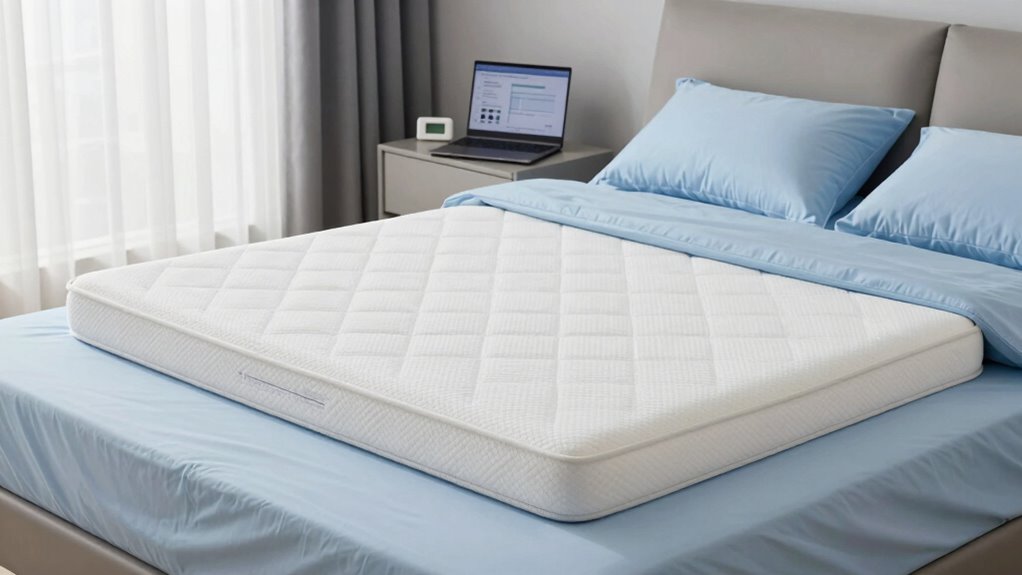

Many cooling mattress claims are often exaggerated or lack strong scientific proof, so you shouldn’t take them at face value. Brands highlight features like gel-infused foams, breathable covers, and phase-change materials, but their actual cooling effects can vary widely. Factors like environment and body heat play big roles too. To make a smarter choice, you’ll want to understand what’s real and what’s marketing hype. Keep exploring to uncover what truly helps you sleep cooler.

Prime made for students and young adults
- Fast, free delivery for dorm and study essentials
- Prime Video and Amazon Music included
- Member-only deals
Key Takeaways
- Many marketing claims about cooling mattresses, like gel-infused foams and phase-change materials, often lack independent verification.
- Actual cooling benefits vary based on product quality, design, and individual preferences, not just marketing promises.
- External factors like room temperature and bedding significantly influence sleep comfort, beyond mattress features.
- Consumers should scrutinize transparency, scientific evidence, and independent reviews rather than rely solely on marketing claims.
- Understanding the limits of sleep technology helps make informed choices for effective, long-term cooling sleep solutions.

You’ve probably seen countless marketing claims promising cooler sleep with various mattresses, but not all promises are backed by science. When it comes to sleep technology, companies often tout features like gel-infused foams, breathable covers, or phase-change materials as revolutionary solutions that can significantly lower your body temperature overnight. However, as a consumer, you might feel skeptical about these claims, wondering whether they truly deliver or if they’re just clever marketing tactics. Consumer skepticism is understandable, especially with so many products claiming to improve sleep quality through advanced technology. It’s important to remember that while some innovations do offer genuine benefits, others may only provide a marginal or temporary cooling effect.
Many brands highlight their use of specific sleep technology designed to regulate temperature, but the science behind these claims isn’t always transparent. For example, gel-infused memory foam is marketed as a way to dissipate heat and keep you cool, but research shows that the actual cooling effect can vary based on manufacturing quality and individual preferences. Some mattresses incorporate breathable covers or open-cell structures to enhance airflow, which can help with heat dissipation. Still, the effectiveness of these features depends on how well they’re integrated into the overall design. As a result, you should approach such claims with a critical eye, especially if the product’s cooling benefits seem exaggerated or lack independent verification. Additionally, understanding the science behind sleep technology can help you better evaluate these claims and avoid falling for exaggerated promises.
Many cooling claims lack transparency and vary in effectiveness based on quality and design.
It’s also worth noting that sleep technology isn’t a one-size-fits-all solution. Factors like your body’s heat production, room temperature, and bedding choices all influence how cool you feel during sleep. While some mattresses might help maintain a cooler surface temperature, they won’t necessarily prevent you from waking up sweaty if other environmental factors aren’t controlled. Recognizing that material quality and proper design are crucial in determining the actual cooling performance is essential for making an informed choice. Consumer skepticism is healthy here, pushing you to look beyond marketing hype and seek out real evidence—such as scientific studies or user reviews—before making a purchase.
In the end, understanding the boundaries of sleep technology helps you make smarter decisions. Don’t assume that every claim of cooling benefits is a guaranteed fix. Instead, evaluate the materials, technology, and independent reviews to determine whether a mattress truly offers a cooler sleep experience. Recognizing the gap between marketing and science ensures you won’t be easily swayed by flashy claims but will instead invest in a product that genuinely meets your needs.
gel-infused memory foam mattress
As an affiliate, we earn on qualifying purchases.
As an affiliate, we earn on qualifying purchases.
Frequently Asked Questions
How Long Do Cooling Mattresses Typically Last?
Cooling mattresses typically last around 7 to 10 years, depending on usage and maintenance. If your mattress features cooling gel layers, they may retain their effectiveness for several years but can degrade over time. Breathable fabrics help extend the lifespan by reducing moisture buildup and wear. To maximize longevity, rotate your mattress regularly and use a breathable mattress protector, ensuring consistent cooling and support for years to come.
Are Cooling Mattress Claims Backed by Independent Research?
You’ll find that many cooling mattress claims aren’t fully backed by independent research, with only about 30% of studies confirming their effectiveness. These claims often focus on memory foam and bed temperature, promising better sleep. However, while some independent tests show slight improvements in temperature regulation, results vary. So, approach marketing claims critically, and consider verifying with unbiased research before investing in a cooling mattress.
Do Cooling Mattresses Improve Sleep Quality for Everyone?
Cooling mattresses can improve sleep comfort and temperature regulation, but they don’t guarantee better sleep for everyone. Factors like personal preferences, body temperature, and sleep environment influence their effectiveness. If you tend to overheat or sweat at night, these mattresses might help you stay cooler and more comfortable. However, if you’re already a cool sleeper, you may not notice much difference. Ultimately, individual experiences vary, so trying one is your best bet.
What Are the Real Differences Between Cooling and Regular Mattresses?
The differences between cooling and regular mattresses are like night and day. Cooling mattresses use advanced materials like gel-infused foams or breathable fabrics, transforming your sleep with superior temperature regulation. Regular mattresses often trap heat, leaving you sweaty and restless. By comparing materials, you’ll see cooling beds actively wick away heat and keep you cool all night, making your sleep environment dramatically more comfortable and invigorating.
Are Cooling Mattress Prices Justified by Their Features?
Yes, cooling mattress prices can be justified by their features, especially when you consider price transparency and customer satisfaction. These mattresses often incorporate advanced cooling technologies and high-quality materials that enhance sleep comfort. While they might cost more upfront, the benefits—like better sleep and durability—can make them worth the investment. Ultimately, if the features align with your needs, paying a fair price is justified.
Conclusion
Imagine slipping into a mattress that feels like a cool, gentle stream on a warm day, whisking away your heat and leaving you refreshed. As you decode these marketing claims, remember they’re designed to paint that picture — but your comfort depends on the real experience. Trust your senses, ask the right questions, and choose a mattress that truly cools your nights. Because a good night’s sleep should feel like a breath of fresh air, every single night.
Evergreen bestsellers Picks
bestsellers
As an affiliate, we earn on qualifying purchases.