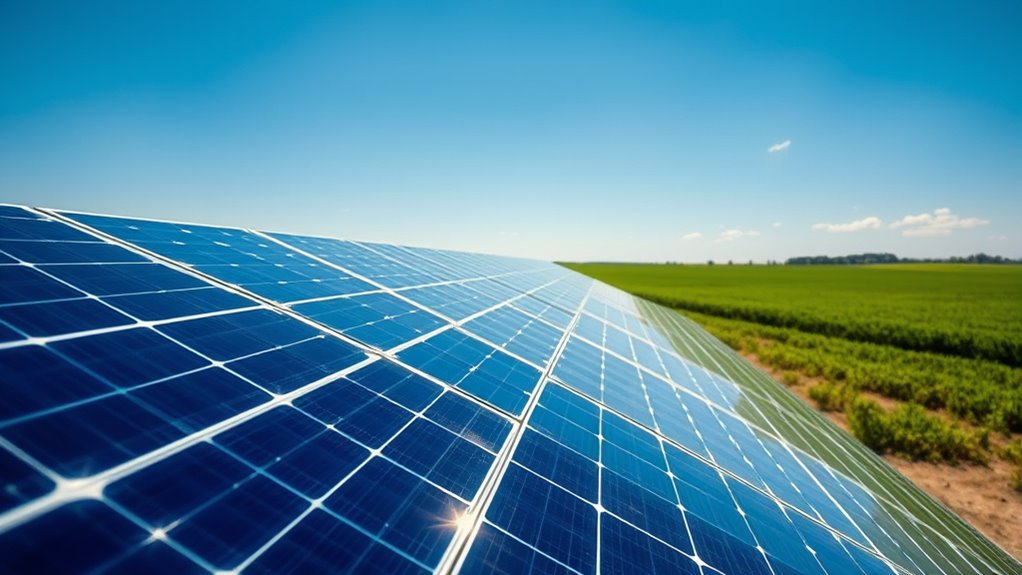
Understanding solar power means recognizing how sunlight is captured by panels and converted into usable electricity. Modern solar panels with efficiencies over 20% generate more power from limited space, while batteries store excess energy for use when the sun isn’t shining. Smart systems optimize energy flow, and innovations like bifacial panels and advanced batteries improve reliability. To learn more about making solar power work best for you, explore the many ways these technologies are advancing and evolving.
Key Takeaways
- Solar power converts sunlight into electricity using solar panels with varying efficiencies.
- Excess energy is stored in batteries for use during cloudy days or at night.
- An inverter transforms the generated DC electricity into AC for home and business use.
- Technological innovations, like bifacial panels and advanced batteries, enhance system performance.
- Proper setup and integration ensure maximum efficiency, reliability, and cost savings in solar power systems.
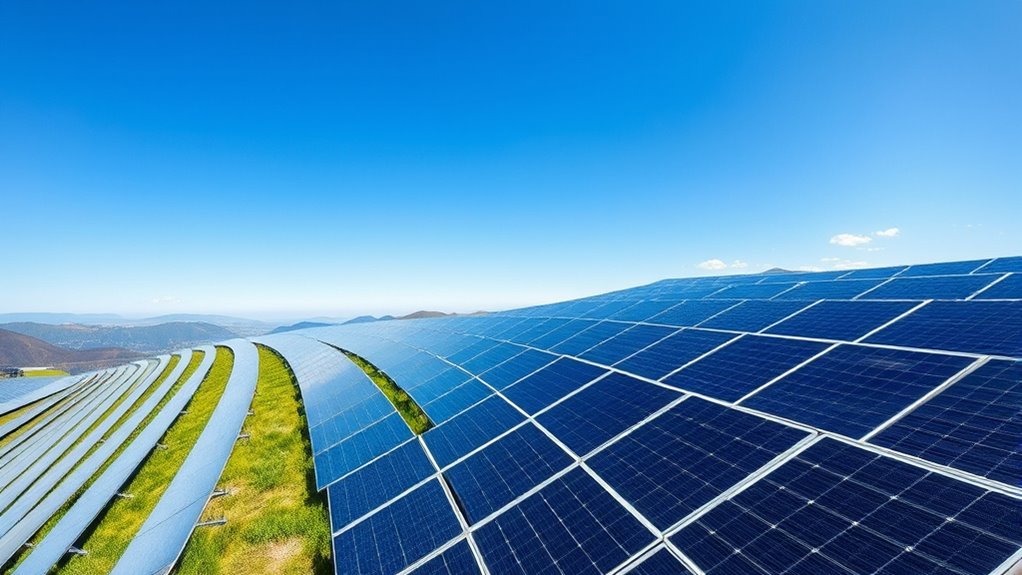
Have you ever wondered how solar power works and why it’s becoming such a popular energy source? It all begins with solar panels, which harness sunlight and convert it into usable electricity. The efficiency of these panels is vital because it determines how much sunlight gets turned into power. Higher solar panel efficiency means you can generate more electricity from the same amount of sunlight, making your investment more effective. Modern panels are designed to capture as much light as possible, with some reaching efficiencies of over 20%. This means if you have a limited roof space, choosing high-efficiency panels allows you to maximize energy production without needing extra panels.
High-efficiency solar panels maximize energy output in limited space, making your investment more effective.
But capturing solar energy is only part of the equation. The challenge lies in storing this energy so you can use it when the sun isn’t shining. That’s where solar energy storage comes into play. Most systems incorporate batteries that store excess power generated during sunny days. When the sun sets or clouds block the sunlight, you draw from these stored reserves. This process guarantees a steady power supply, reducing reliance on the grid and lowering your energy bills. Advances in battery technology have greatly improved storage capacity and lifespan, making solar energy storage more reliable and affordable.
Understanding how solar power works also involves knowing about the overall system setup. After sunlight hits the solar panels, the direct current (DC) electricity produced is converted into alternating current (AC) by an inverter. This AC power is what you use to run your appliances and lights. Any excess energy can be sent back to the grid or stored for later use, depending on your system setup. The integration of smart technology helps monitor and optimize energy production and consumption, ensuring you get the most out of your solar investment.
Efficiency and storage are interconnected because the more effectively your panels convert sunlight, the more energy you generate, and the better your storage system can work to keep that energy accessible when needed. Improvements in solar panel technology, such as bifacial panels that capture sunlight from both sides, further boost efficiency. Meanwhile, innovations in battery design, like lithium-ion systems, provide longer-lasting and more capacity for storing energy. Additionally, understanding sound vibrations used in sound healing science can inspire new approaches to energy transmission and material optimization. Together, these advancements help make solar power a more practical and sustainable choice for homeowners and businesses alike. As you explore solar power, understanding these components will help you make informed decisions, guaranteeing you maximize your system’s efficiency and reliability for years to come.
Frequently Asked Questions
How Do Solar Panels Perform in Cloudy Weather?
In cloudy weather, solar panel efficiency drops, but they still generate electricity. You might notice a reduction of about 10-25% in energy production compared to sunny days. Even with overcast skies, your panels can produce enough power to meet basic needs. Keep in mind that the denser the clouds, the less sunlight reaches your panels, but they remain functional, providing steady energy even in less ideal conditions.
What Is the Lifespan of a Typical Solar Power System?
Like a sturdy oak standing tall, a solar power system typically lasts 25 to 30 years. You can enhance solar panel durability by performing regular system maintenance, which helps catch issues early. With proper care, your investment keeps shining, and the system continues to generate clean energy efficiently. Remember, the longevity of your solar setup depends on quality components and diligent upkeep, ensuring many years of sustainable power.
Are There Government Incentives for Installing Solar Panels?
Yes, you can benefit from government incentives when installing solar panels. Many regions offer tax credits that reduce your overall costs, making solar more affordable. Rebate programs are also available, providing direct financial incentives after installation. These programs aim to encourage renewable energy adoption, so it’s worth checking your local or federal government websites to see what specific incentives you qualify for, helping you save money while going green.
How Does Shading Affect Solar Panel Efficiency?
Shading on your solar panels is like clouds dimming the sun’s spotlight, causing efficiency loss. When panel shading occurs, less sunlight hits the cells, reducing energy production. Even a small shadow cast by a tree or chimney can considerably impact overall performance. To keep your system shining bright, consider strategic placement and shading mitigation techniques, ensuring your panels soak up every drop of sunlight and maintain their energy-creating prowess.
Can Solar Power Meet the Energy Needs of Large Households?
Yes, solar power can meet the energy needs of large households if you carefully evaluate your solar capacity requirements. You’ll need a sizable solar panel system to generate enough energy for your high consumption. By installing an appropriately sized system, optimizing panel placement, and possibly using energy-efficient appliances, you guarantee your large household’s energy needs are adequately covered, reducing reliance on grid power and lowering your bills.
Conclusion
Now that you understand solar power, you’re holding the key to unleashing unlimited, earth-saving energy! Imagine powering your entire life with the sun’s incredible, never-ending fire—no more bills, no pollution, just pure, solar-powered awesomeness. With just a few simple steps, you could be a superhero saving the planet one ray at a time. So go ahead, harness that mighty sun and turn your home into a powerhouse of unstoppable, solar-powered greatness!