
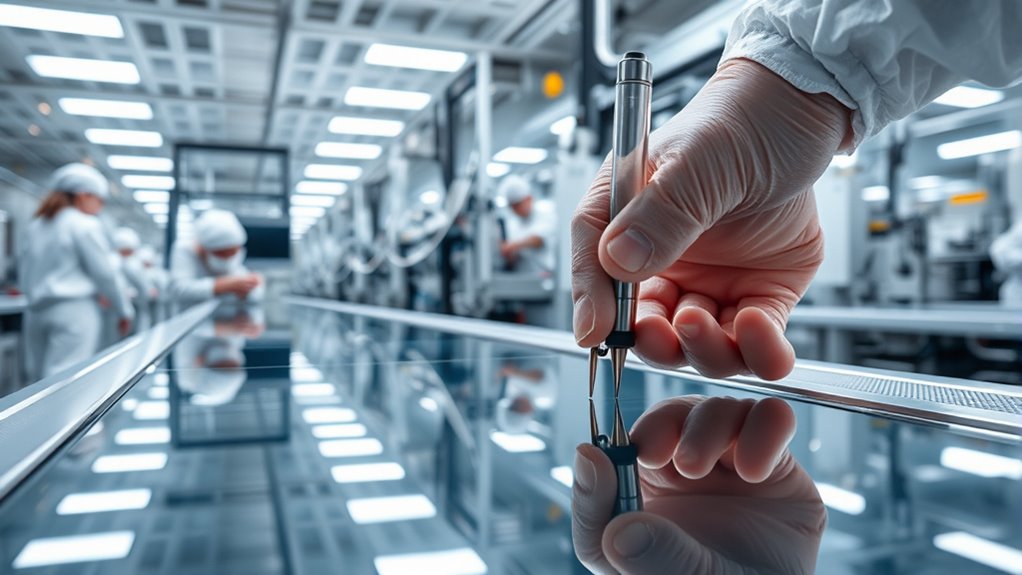

You’ll find that major manufacturers like Samsung Display, LG Display, and BOE Technology produce the screens for iPhones, supplying both OLED and LCD panels. They use advanced techniques such as lithography, thin-film deposition, and etching to craft high-quality, durable displays with accurate colors. These companies operate under strict quality control standards to guarantee reliability and performance. If you want to explore how these screens are made and even more details, keep exploring this fascinating process.
Key Takeaways
- Samsung Display, LG Display, and BOE Technology are the main suppliers of iPhone screens.
- They produce OLED and LCD displays using advanced manufacturing techniques.
- Strict quality control ensures screens meet Apple’s standards for durability and color accuracy.
- The supply chain involves complex logistics, including transportation and customs across multiple countries.
- Components like glass layers and indium tin oxide are carefully sourced and integrated into the production process.

Have you ever wondered who actually makes the screens for your iPhone? It’s a complex process that involves a global network of manufacturers, each playing a essential role in bringing the final product to life. The journey begins with the manufacturing processes, which are highly specialized and require precision at every step. Companies like Samsung Display, LG Display, and BOE Technology are among the key suppliers that produce OLED and LCD screens for Apple. These manufacturers utilize advanced techniques such as thin-film deposition, lithography, and etching to craft the tiny, intricate components that make up your phone’s display. The manufacturing process is meticulous, often involving multiple stages of quality control to ensure each screen meets strict standards for clarity, durability, and color accuracy. It’s not just about creating a display; it’s about creating a product that seamlessly integrates with your device, functioning flawlessly under various conditions. Additionally, the trustworthiness of these manufacturers is constantly monitored to ensure safety and quality standards are upheld. Behind the scenes, supply chain logistics play an equally critical role. Once the screens are manufactured, they must be transported across continents to assembly plants where they’ll be integrated into the finished iPhone. This involves a complex web of shipping routes, customs clearances, and inventory management. Apple relies on just-in-time supply chain strategies to minimize delays and keep production running smoothly. The logistics must account for potential disruptions, such as geopolitical issues or transportation strikes, which can impact the timely delivery of parts. From raw materials like indium tin oxide for touchscreens to the delicate glass layers, every component is carefully sourced and routed through a tightly coordinated supply chain. This ensures that the right parts arrive at the right time, avoiding costly delays and maintaining the tight schedules demanded by Apple’s production targets. The entire process requires seamless coordination between manufacturing facilities, logistics providers, and assembly lines. Any hiccup can cause delays, but these companies have honed their systems over years to maintain efficiency and quality. When you hold an iPhone in your hand, it’s easy to forget the enormous effort involved in producing its screen. Behind that sleek display lies a sophisticated blend of manufacturing processes and intricate supply chain logistics, all working in harmony. This global collaboration ensures that your iPhone’s screen is not only high quality but also reliably available, reflecting the impressive complexity behind something as simple as the display on your device.
Frequently Asked Questions
Are Iphone Screens Assembled Domestically or Abroad?
You’ll find that iPhone screens are assembled abroad, mainly in manufacturing locations across China and other Asian countries. Apple relies on a complex supply chain, sourcing high-quality components from various suppliers worldwide, then assembling the screens in these manufacturing locations. This global approach helps keep costs down and guarantees production efficiency, allowing Apple to deliver the sleek, high-quality screens you expect in your iPhone.
How Long Does It Take to Produce an Iphone Screen?
Like a well-rehearsed symphony, producing an iPhone screen takes about a few weeks. The process involves meticulous supply chain logistics and precise material sourcing, ensuring each component aligns perfectly. From sourcing high-quality glass and OLED panels to assembly and quality checks, every step is carefully coordinated. You can imagine it as a delicate dance, where timing and coordination are vital to deliver a seamless, flawless display for your device.
What Are the Most Common Defects in Iphone Screens?
You’ll often notice defects like dead pixels, cracks, or touch sensitivity issues in iPhone screens. During screen manufacturing, defect analysis helps identify these problems early. Common defects include discoloration, scratches, and backlight problems, which can impact display quality. To avoid these issues, manufacturers perform rigorous testing. If you experience any of these defects, contacting Apple or a certified repair center guarantees proper diagnosis and fixes, restoring your screen’s clarity and functionality.
Do Third-Party Manufacturers Produce Compatible Replacement Screens?
Yes, third-party manufacturers produce compatible replacement screens, but their screen manufacturing quality varies. You should carefully research brands and read reviews to guarantee you’re getting a screen that meets your standards. Lower-quality screens may cause issues like poor display quality or touch sensitivity. To avoid problems, choose reputable brands known for high replacement quality. This way, you’ll enjoy a reliable replacement that maintains your iPhone’s performance and visual clarity.
How Has Technology Improved Iphone Screen Durability?
Did you know that iPhone screens now last 30% longer thanks to advances in screen material? Technology has greatly improved durability through enhanced glass composition and rigorous durability testing. These innovations make your device more resistant to scratches and impacts, giving you peace of mind. By continuously refining screen material, Apple guarantees your iPhone can withstand daily wear and tear, extending its lifespan and keeping your display crystal clear longer.
Conclusion
So, now you know who makes iPhone screens—mainly trusted companies like Samsung and LG. They work tirelessly behind the scenes to deliver the quality you expect. Remember, “The devil is in the details,” and these manufacturers ensure every detail is perfect. Next time you glance at your iPhone, appreciate the craftsmanship that goes into its screen. It’s a reminder that even the smallest parts, when done right, make a big difference.