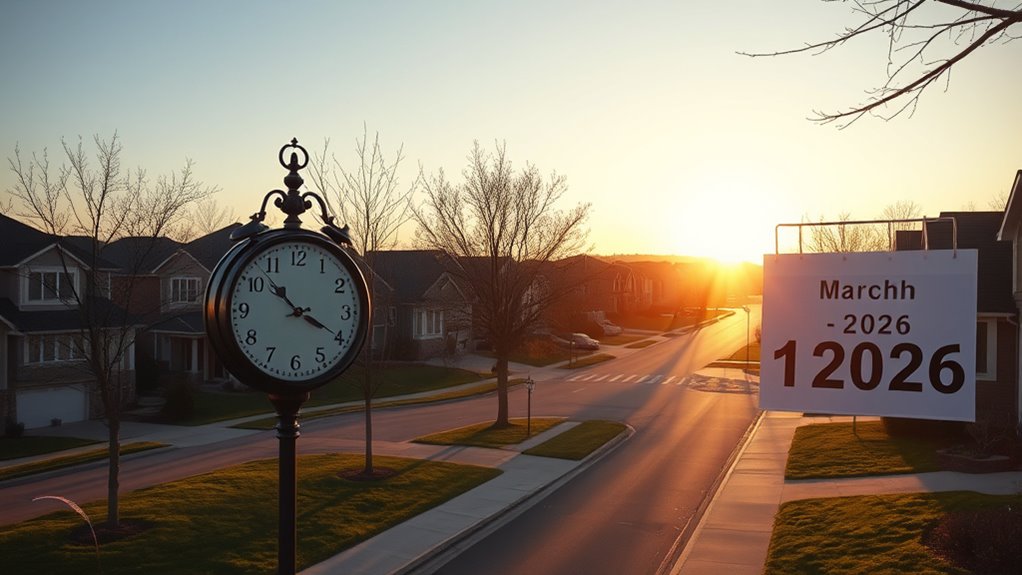

Daylight Saving Time in 2026 starts on Sunday, March 8, and ends on Sunday, November 1. You’ll need to set your clocks forward in spring and back in fall, following typical U.S. schedules. This pattern helps maximize daylight during warmer months and is based on long-standing regulations. If you stay aware of these dates, you can plan ahead and guarantee your activities aren’t disrupted by time changes. Keep going to learn more about how these dates are determined and what it means for you.
Key Takeaways
- Daylight Saving Time in the U.S. begins on March 8, 2026, the second Sunday in March.
- The start date follows the Energy Policy Act of 2005 guidelines.
- DST ends on November 1, 2026, the first Sunday in November.
- Most regions follow this schedule, but some areas may have different rules.
- Knowing the start date helps in planning events and adjusting schedules accordingly.
If you’re wondering when daylight saving time begins in 2026, you’ll be glad to know that most regions follow a predictable schedule. The start and end dates are generally guided by time change regulations established by governments and regulatory bodies. These rules are designed to provide consistency across years, making it easier for you to plan your activities and manage schedules. Historically, daylight saving time has followed a pattern rooted in historical daylight saving trends that date back over a century. These trends were initially introduced to conserve energy and optimize daylight hours, especially during wartime and economic shifts. Over the years, many regions have maintained similar dates to uphold these traditions, though some areas have made adjustments based on local needs or policy changes.
In the United States, daylight saving time typically begins on the second Sunday in March. For 2026, that means it will start on March 8. This date aligns with the longstanding federal guidelines established by the Energy Policy Act of 2005, which standardized the second Sunday in March as the beginning of DST. The regulations are designed to synchronize clocks and ensure consistency nationwide, although some states and territories may choose to opt out or follow different rules based on their own policies. The end of daylight saving time usually occurs on the first Sunday in November, which for 2026 will be November 1. These dates have remained relatively stable over recent decades, reflecting a clear adherence to historical daylight saving trends that prioritize maximizing daylight in the evening hours during the warmer months. Additionally, time change regulations are periodically reviewed and adjusted based on regional needs and energy policies.
Understanding these patterns can help you better prepare for the time change. If you’re involved in planning events, travel, or work schedules, knowing the official start dates based on the current regulations ensures you’re not caught off guard. It’s also worth noting that some regions and countries outside the U.S. follow different schedules, often based on local legislation or historical daylight saving trends specific to their climate and needs. As daylight saving time continues to evolve globally, staying informed about the specific rules in your region helps you adapt seamlessly. Overall, the schedule for 2026 remains consistent with recent years, providing a familiar framework rooted in a long history of daylight saving practices. So, mark your calendar for March 8, 2026, and prepare for the clock change that kicks off the warmer months ahead.
digital clock with daylight saving time adjustment
As an affiliate, we earn on qualifying purchases.
As an affiliate, we earn on qualifying purchases.
Frequently Asked Questions
Will the Start Date of DST Change in 2026?
The start date of DST in 2026 will likely follow the usual pattern, beginning in March and ending in November, with the time change requiring a clock adjustment. While it generally stays consistent, some regions might adjust their schedules, so it’s wise to keep an eye on local announcements. You’ll need to be prepared for the clock adjustment, so set your clocks forward or back accordingly to stay on schedule.
How Does DST Impact Energy Consumption in 2026?
In 2026, Daylight Saving Time is expected to reduce energy consumption by about 1% annually. You’ll notice this shift impacts your energy savings and influences consumer behavior, encouraging more outdoor activities and less indoor lighting during longer evenings. This adjustment aims to optimize daylight hours, ultimately helping you save energy and reduce costs. Embracing DST in 2026 could lead to more sustainable habits and a positive environmental impact.
Are There Regions in 2026 That Won’t Observe DST?
In 2026, some regions won’t observe DST due to regional exemptions or cultural differences. You might find certain areas, especially in parts of Asia, Africa, and some countries in the Middle East, choosing to skip the time change entirely. These decisions often reflect local customs, energy policies, or historical reasons, so it’s good to check local government updates to stay informed about whether DST applies where you are.
What Are the Health Effects of DST in 2026?
In 2026, DST can feel like a rollercoaster, impacting your health profoundly. You might experience sleep disruption, making it harder to rest and recharge. Mental health can also take a hit, causing mood swings or increased stress. These effects are often temporary but can be intense, so it’s essential to adjust your schedule gradually and prioritize good sleep habits to minimize the negative impact of DST on your well-being.
How Do Public Transportation Schedules Adapt to DST in 2026?
Public transit systems typically adapt their schedule adjustments to DST in 2026 by updating departure and arrival times, ensuring they align with the new daylight hours. You’ll notice schedule changes on buses, trains, and subways, often announced in advance. Transit authorities aim to minimize disruptions, so check your local transit website or app for the latest schedule updates and plan your travel accordingly during the DST shift.
Conclusion
So, now that you know the start date for daylight saving time in 2026, are you prepared to adjust your clocks and routines? It’s a small change that can impact your daily life, but staying aware helps you stay in sync with the world around you. As the days grow longer, will you embrace the extra sunlight and make the most of it? Remember, a little preparation goes a long way in making shifts smoother.