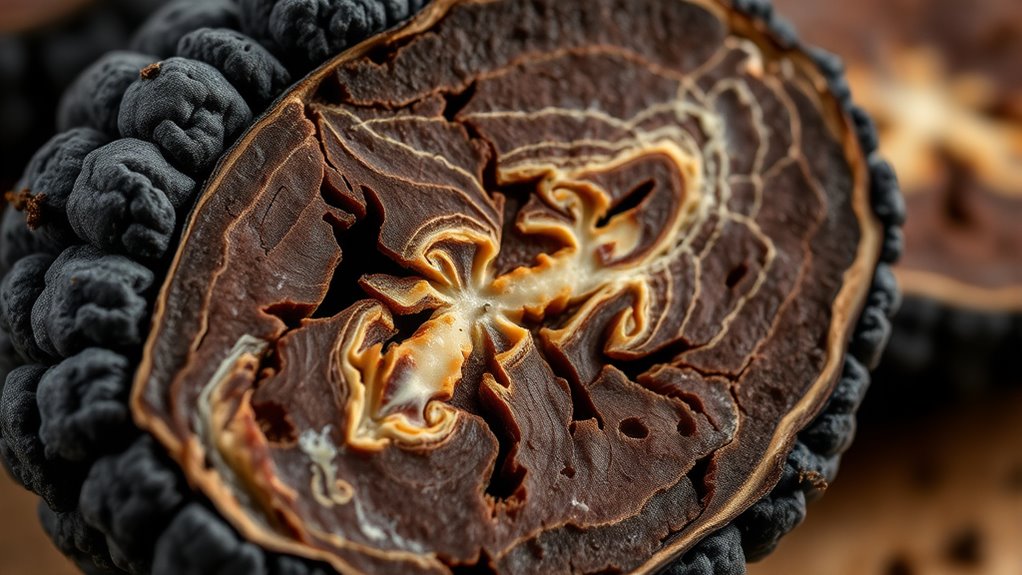

Truffles have a distinctive, powerful aroma that combines earthy, musky, nutty, and slightly garlicky notes. Their scent is complex and tempting, often described as rich and irresistible. When freshly harvested or sliced, the smell is especially intense and inviting, adding depth to dishes. This unique aroma is what makes truffles so prized in gourmet cuisine. If you want to explore more about this fascinating scent, you’ll find plenty of interesting details ahead.
Key Takeaways
- Truffles have a distinctive aroma combining earthy, musky, nutty, and slightly garlicky notes.
- The scent is robust, alluring, and hints at a complex, forest-floor aroma.
- When sliced or grated, truffles release a potent, fragrant aroma that enhances dishes.
- The aroma is most intense when close to ripe truffles, guiding harvesters during collection.
- Proper storage preserves the truffle’s complex scent, which diminishes with heat and air exposure.
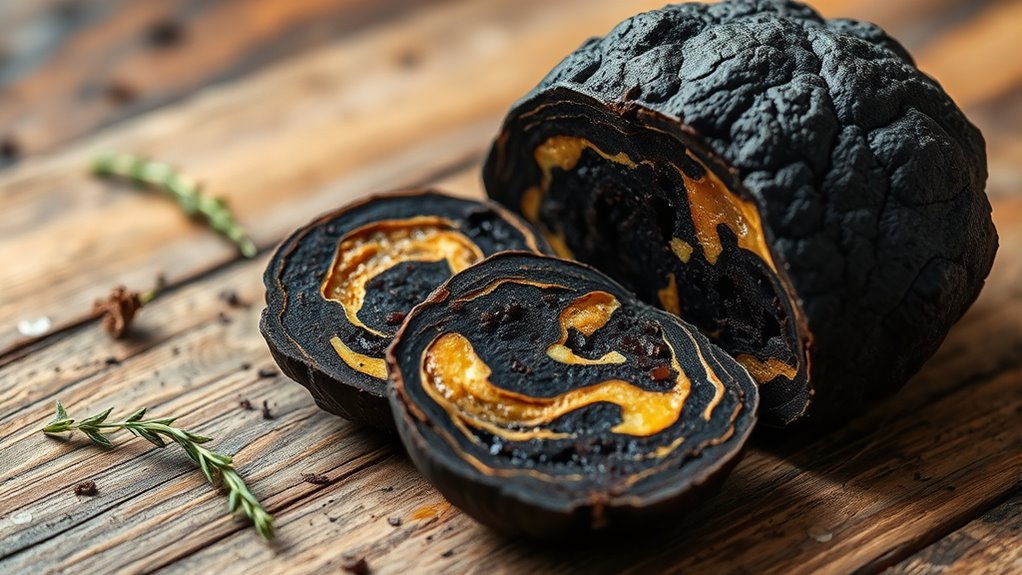
Have you ever wondered what makes truffles such a prized delicacy? It all starts with their unique aroma, which captivates chefs and connoisseurs alike. The scent of a truffle is both earthy and intoxicating, a complex blend of musky, nutty, and slightly garlicky notes. This distinctive smell is the reason truffle harvesting is so highly valued. Skilled foragers, often using specially trained dogs or pigs, search for these subterranean fungi because of their potent aroma. When you’re close to a ripe truffle, the scent becomes unmistakable, guiding harvesters directly to the treasure beneath the soil. This aroma is what makes truffles so sought after for culinary uses, transforming simple dishes into luxurious creations. Additionally, the aroma’s potency and complexity are what make truffles such a coveted ingredient in gourmet cooking.
In the kitchen, the smell of truffles is like no other. When sliced or grated, they release a fragrant burst that instantly elevates any dish. The aroma is both earthy and slightly sweet, with hints of forest floor, moss, and even a touch of mushroomy richness. This scent doesn’t just add flavor; it creates an aromatic experience that excites the senses. Chefs often use truffles to enhance pasta, risotto, eggs, or even butter, knowing that their distinctive smell will intensify as they cook. The aroma’s potency is why a small amount can make a dish feel decadent and special. It’s also why truffles are so carefully handled—exposure to air and heat can diminish their fragrance, so they’re best added just before serving.
Truffle harvesting requires patience and a keen sense of smell. The process involves searching for these fungi in the right soil and under the right conditions, typically in regions like France, Italy, or Spain. The scent of a mature truffle guides the harvesters to dig carefully, avoiding damaging the delicate fungi. Once collected, the aroma remains intact if stored properly, preserving its culinary magic. The smell of freshly harvested truffles is often described as robust and alluring, with a depth that hints at their complex flavor profile. This aroma is what fuels the desire to incorporate them into gourmet dishes and why they’re considered a culinary treasure. To conclude, the smell of a truffle is the key to its allure—rich, earthy, and irresistibly fragrant—making it a true delicacy that transforms any dish into an extraordinary experience.
Top picks for "truffle smell like"
Open Amazon search results for this keyword.
As an affiliate, we earn on qualifying purchases.
Frequently Asked Questions
Do All Truffle Varieties Have the Same Scent?
Not all truffle varieties have the same scent. You’ll notice differences in their truffle aroma profiles, which can range from earthy and musky to garlicky and nutty. Truffle scent variations depend on the type, age, and environment they grow in. So, when you explore different varieties, expect unique aromas that make each truffle experience distinct. This diversity keeps truffles exciting and versatile for culinary creations.
How Does Truffle Smell Change With Age?
As truffles age, their aroma evolution shifts, often becoming more intense and earthy. You’ll notice the aging scent profile deepens, with hints of musk and woods developing over time. Fresh truffles have a sharper, more pungent aroma, while aged ones exude a richer, more complex scent. Keep in mind, the exact changes depend on storage conditions, but generally, aging enhances the truffle’s aromatic richness.
Can You Identify Truffle Freshness by Smell Alone?
You can often tell if a truffle is fresh by its smell, like reading an open book’s scent. Fresh truffles have a strong, earthy aroma that highlights their truffle aroma profiles, essential in truffle cultivation. If the smell is faint or moldy, it’s a sign they’re past their prime. Trust your nose—freshness is key to capturing the true essence of this prized delicacy.
Does Cooking Alter the Truffle’s Aroma?
Cooking does alter the truffle’s aroma, often diminishing its intensity. The truffle aroma variations become less pronounced when heated, but you can preserve its scent by using scent preservation techniques like adding it at the end of cooking or lightly sautéing. To enjoy the full depth of the truffle’s scent, avoid overcooking and consider infusing dishes with fresh truffle oils or shavings for maximum aroma preservation.
Are There Synthetic Scents Similar to Real Truffles?
You’ll find synthetic scents that mimic the rich, earthy aroma profiles of real truffles, capturing their musky, savory essence. These artificial aromas often evoke notes of soil, mushroom, and subtle musk, making them surprisingly close to authentic truffle scent experiences. While they lack the complexity of genuine truffles, synthetic scent comparisons provide an affordable, accessible way to enjoy the truffle aroma profiles without the cost or rarity.
Conclusion
So, next time you catch a whiff of a truffle, don’t dismiss it as just earthy or musty. Imagine walking through a damp forest, where the air is rich with a complex aroma of musk, garlic, and a hint of sweetness. That enticing scent isn’t overwhelming; it’s inviting, almost like a secret waiting to be uncovered. Once you recognize it, you’ll see—truffle smell isn’t just unique, it’s an irresistible invitation to savor something truly special.