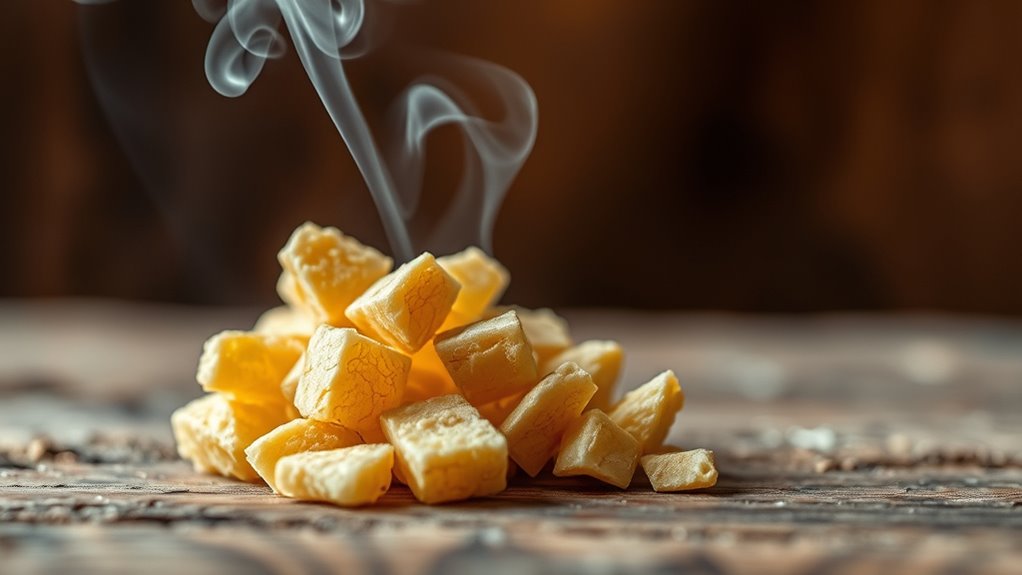
Frankincense smells like a rich, complex blend of earthy, woody, and citrusy notes, with warm balsamic undertones and a hint of sweetness. Its aroma is often described as grounding and calming, evoking a sense of spirituality and serenity. You might also notice subtle spicy and resinous hints that add depth and mystique. If you want to explore more about this intriguing scent and its calming qualities, keep exploring how it’s used in aromatherapy and tradition.
Key Takeaways
- Frankincense has a complex aroma featuring earthy, woody, and citrusy notes.
- It offers warm, balsamic, and slightly sweet scents with hints of spice and resin.
- The scent is deeply grounding, calming, and promotes relaxation and clarity.
- Its aroma evokes spirituality, mystique, and connects to ancient sacred rituals.
- The fragrance is versatile, often used in incense, essential oils, and diffusers for a calming effect.
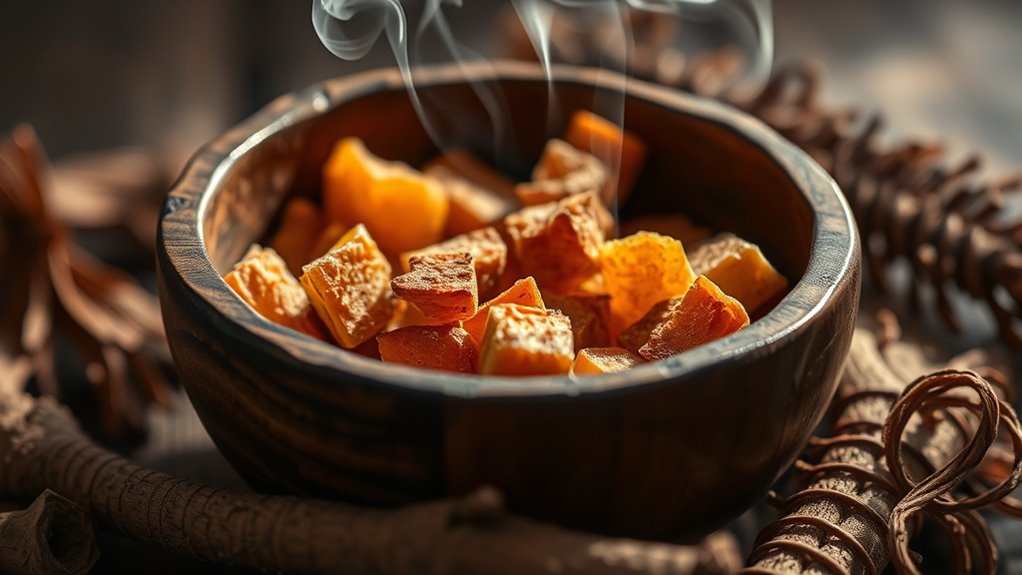
Ever wonder what makes frankincense’s aroma so enchanting? It’s a scent that has captivated people for centuries, offering more than just its pleasing smell. When you smell frankincense, you’re experiencing a complex blend of earthy, woody, and slightly citrusy notes that create an aura of calm and spirituality. This aroma is often described as warm, balsamic, and slightly sweet, with hints of spice and resin. Its unique scent profile is what makes it so versatile in aromatherapy benefits, where it’s used to promote relaxation, reduce stress, and deepen meditation practices. Historically, frankincense has played a significant role in religious ceremonies, rituals, and traditional medicine, making its scent deeply rooted in cultural and spiritual practices across civilizations. As you inhale its fragrance, you might imagine ancient temples and sacred rites, where the aroma was believed to carry prayers to the heavens. This historical use has only heightened its mystique and continues to influence how we perceive its scent today.
The aroma of frankincense is not just pleasant; it’s also deeply grounding. Its scent has a calming effect on the mind and body, helping you find balance amidst daily chaos. When used in aromatherapy, frankincense is often diffused or applied topically in diluted form to harness its benefits. Many find that its scent encourages introspection and clarity, making it a favorite in meditation and yoga sessions. Its woody and resinous qualities evoke a sense of stability and rootedness, which is why it’s been favored for centuries as a spiritual aid. Additionally, the rich history of frankincense emphasizes its significance in cultural practices, highlighting its enduring importance across different civilizations. The historical uses of frankincense reveal a long-standing belief in its power to purify spaces, elevate spiritual consciousness, and even support physical health. In ancient Egypt, it was burned as an incense to sanctify temples and prepare offerings to gods. During the Middle Ages, it was used in medicinal salves and ointments to treat ailments, often valued for its aromatic and therapeutic properties.
Today, people continue to value frankincense for its scent and its connection to tradition. Its aroma combines the ancient with the modern, offering a sensory experience that’s both calming and spiritually uplifting. Whether in incense, essential oils, or diffusers, frankincense’s smell remains timeless, embodying centuries of cultural significance. When you encounter its distinctive fragrance, you’re not just smelling a pleasant aroma—you’re connecting with a rich history of uses and benefits that have endured through the ages.
Top picks for "frankincense smell like"
Open Amazon search results for this keyword.
As an affiliate, we earn on qualifying purchases.
Frequently Asked Questions
Does Frankincense Smell Different Depending on Its Origin?
Yes, frankincense aroma varies depending on its origin, leading to distinct scent variations. You might notice that African frankincense has a woody, citrusy scent, while Boswellia sacra from Oman offers a sweeter, resinous aroma. These subtle differences can influence how you perceive its scent, making each type unique. When choosing frankincense, consider its origin to find the aroma that best suits your preferences and intended use.
How Does Aging Affect Frankincense’s Scent?
Aging transforms frankincense’s scent like a wise old storyteller revealing new layers. Over time, aging effects deepen its aroma, making it richer and more complex. You’ll notice the scent longevity extends, with warm, resinous notes lingering longer in the air. As it matures, frankincense’s aroma becomes more refined, embracing hints of earthiness and sweetness, turning each whiff into a journey through time and tradition.
Is Frankincense Scent Similar Across Various Species?
You’ll find that the Frankincense aroma varies across different species, so the scent consistency isn’t uniform. Some species have a more citrusy or spicy aroma, while others smell earthier or sweeter. These differences stem from the resin’s chemical composition. When you explore various Frankincense types, you’ll notice subtle variations, but overall, the scent maintains a warm, woody, and slightly spicy character that’s recognizable across species.
Can Frankincense Smell Change When Burned Versus Used in Oil?
When you burn frankincense, its aroma intensity often becomes richer and more complex, creating a warm, resinous scent that fills the air. Using it in oil may result in a subtler, more delicate aroma, with scent longevity lasting longer over time. Burning enhances the fragrance’s depth, while oils provide a softer, lingering scent. Both methods offer distinct experiences, allowing you to enjoy frankincense’s unique aroma in different ways.
Does Frankincense Have a Scent That Appeals to Everyone?
Imagine you’re stepping into a grand cathedral, and frankincense’s aroma fills the air. You’ll find that its scent appeals differently to everyone, as aroma preferences and scent perception vary widely. Some love its warm, resinous notes, while others might find it too earthy or pungent. It’s a unique fragrance that resonates with many, but it doesn’t necessarily appeal to all. Your personal taste shapes how you perceive its scent.
Conclusion
So, there you have it. Frankincense smells like a fancy spa and a medieval church had a lovechild—rich, woody, with a hint of citrus. It’s basically the perfume version of “I’m mysterious and spiritual,” but without the need for incense-burning yoga classes. Next time you catch that divine aroma, just remember: you’re inhaling centuries of sacred rituals and a dash of ancient royalty, all wrapped up in a tiny resin. Who knew incense could be so glamorous?