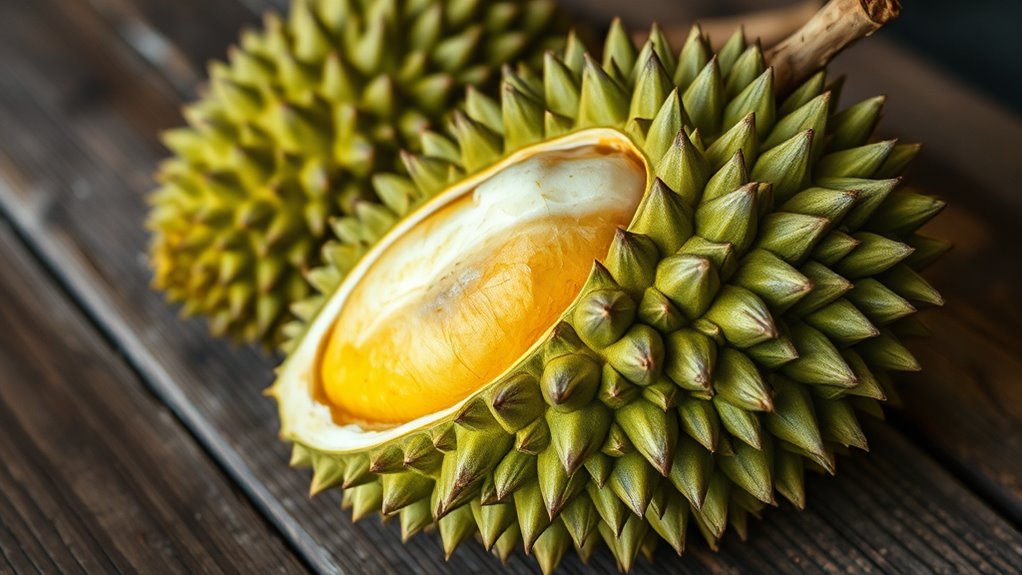

Durian’s smell is instantly recognizable for its powerful, pungent aroma, which can be both alluring and overwhelming. You’ll notice a complex scent with sweet custard, almonds, and tropical spices combined with sulfur compounds and volatile acids that give it a strong, sometimes rotten odor. The aroma quickly fills the air and lingers, making it polarizing—some love it, others find it overwhelming. If you want to understand what makes durian’s smell so unique, keep exploring more.
Key Takeaways
- Durian has a powerful, pungent aroma that many compare to rotten onions or decayed garbage.
- Its scent is complex, with notes of sweet custard, almonds, tropical spices, and sulfur compounds.
- The smell fills the air quickly and can linger for hours, especially in enclosed spaces.
- Reactions vary; some find the aroma alluring, while others find it overwhelming or off-putting.
- Ventilation and small portions can help mitigate the intensity of durian’s distinctive smell.
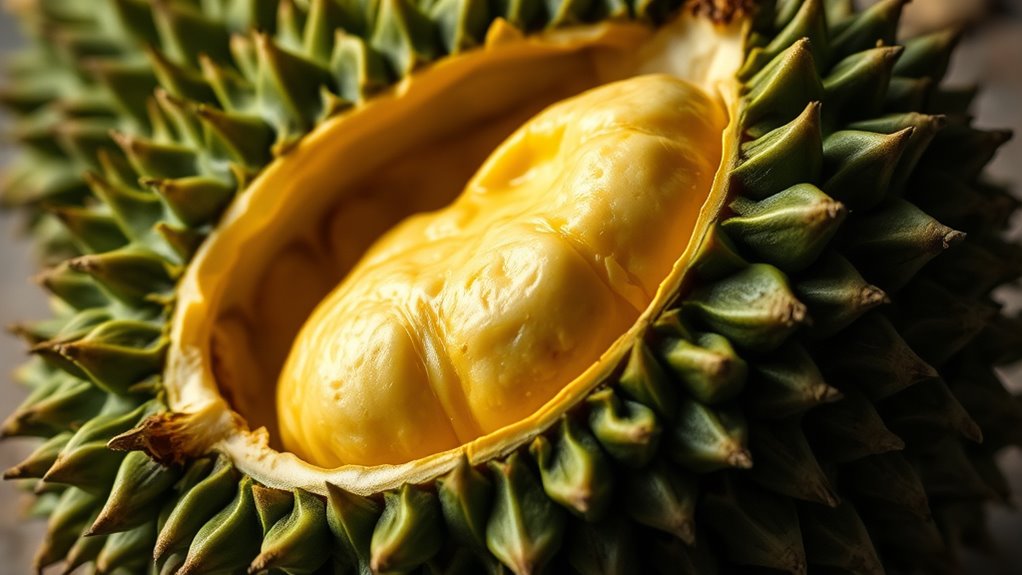
Ever wondered what durian smells like? If you’ve never encountered it before, you’re probably curious about that distinctive scent. Durian is famous—or perhaps infamous—for its fragrant aroma, which can be both alluring and off-putting depending on who you ask. When you first get close to a ripe durian, you’ll notice a powerful, unmistakable smell that hits you almost immediately. It’s a pungent odor that is unlike any other fruit, and it’s what makes durian so polarizing. Some people say it smells heavenly, like a mix of sweet custard, almonds, and tropical spices, while others describe it as a strong, overpowering stench reminiscent of rotten onions or decayed garbage.
Durian’s pungent aroma is polarizing—heavenly to some, overwhelming to others.
The fragrant aroma of durian is complex. It has a rich sweetness that suggests ripe fruit and honey, but that sweetness is layered with a pungent odor that can be overwhelming. This pungency comes from sulfur compounds and volatile acids that are released as the fruit ripens, creating that signature smell. When you’re near a durian, the smell can fill the air quickly, especially if it’s stored in a closed space or in large quantities. It’s so intense that many hotels, public transportation systems, and even some countries have regulations banning durian from being carried on certain public transport because of its disruptive aroma.
Despite its pungent odor, many who love durian describe the flavor as incredibly delicious, often comparing it to a custard-like texture with hints of caramel, almond, and vanilla. The smell, however, can be a barrier for newcomers. It’s not unusual for first-timers to be taken aback by how strong and persistent the aroma is. Sometimes, the smell can linger in the room for hours, making it a challenge to enjoy durian indoors unless it’s well-ventilated. The pungent odor is what gives durian its reputation—some say it’s a love-it or hate-it fruit, with little middle ground.
If you’re considering trying durian, it’s best to start with a small piece or in a place where the smell is less concentrated. The fragrant aroma can be enticing once you get used to it, and many connoisseurs find that once you accept the pungent odor as part of the experience, the fruit’s unique taste becomes more appealing. Just remember, that strong, pungent odor is part of what makes durian so memorable—an aroma that’s both a warning and an invitation to explore one of the most distinctive fruits in the world.

Zero Odor – Multi-Purpose Strong Odor Eliminator for Home, Office, Car, Bathroom, Hotel, Room Deodorizer, and Odor Neutralizer, 16oz
Eliminate Odors in Kitchen, Bathroom, Nursery, Basement and more. Smoke, Pet odor eliminator for home Even Skunk Odor
As an affiliate, we earn on qualifying purchases.
As an affiliate, we earn on qualifying purchases.
Frequently Asked Questions
Is Durian Smell Different When Ripe Versus Unripe?
Yes, durian smells different when ripe versus unripe. When ripe, it releases a sweet aroma that’s more inviting, though still pungent to some. An unripe durian tends to have a milder, less pungent odor, with less of the signature sweet aroma. As it ripens, the smell intensifies, becoming stronger and more pungent, but the sweet notes also become more prominent, making it more appealing to fans.
Can the Smell Be Masked or Reduced?
You can mask or reduce durian’s strong odor by trying various masking techniques like wrapping it tightly in plastic or aluminum foil, which helps contain the smell. You could also place it near odor absorbers like charcoal or coffee grounds to aid odor reduction. Ventilating the area or using fans helps disperse the scent. These methods make it easier to enjoy durian without overwhelming your senses.
How Do Cultural Perceptions Influence Durian Smell Acceptance?
Cultural perceptions heavily influence your acceptance of durian’s aroma. In some cultures, the smell is celebrated and viewed as a delicacy, while others find it off-putting. Your openness depends on exposure, tradition, and social norms surrounding aroma perceptions. As you become more familiar with durian’s unique scent, you’re more likely to develop cultural acceptance, appreciating its flavor despite initial aversions rooted in differing aroma perceptions.
Does the Smell Vary Among Durian Varieties?
The smell varies among durian varieties more than you might think, with some emitting an aroma intensity that could wake the dead. You’ll find that the smell consistency differs markedly, from mildly fragrant to overwhelmingly pungent. Certain varieties like Musang King tend to have a more refined aroma, while others pack a powerful punch. So, yes, the scent profile isn’t uniform, and each variety offers a unique olfactory experience.
Is Durian Smell Harmful or Dangerous?
The durian odor isn’t harmful or dangerous; it’s mainly a strong scent that can be overwhelming for some. The scent intensity varies among varieties, but it generally doesn’t pose health risks. If you’re sensitive to strong smells, you might find the durian odor unpleasant, but it’s safe to eat. Just enjoy it in moderation and guarantee good ventilation if the scent becomes too intense for your liking.

INFINITKIN Smell Proof Box, Large Airtight Storage Box with Combination Lock – Waterproof & Durable Smell Proof Container for Travel & Home, Great Gift Choice
Odor Free Always Discreet: Experience the next level of discretion with our thick advanced carbon linings that absorb…
As an affiliate, we earn on qualifying purchases.
As an affiliate, we earn on qualifying purchases.
Conclusion
Don’t let the strong smell scare you off from trying durian. Yes, it’s pungent and bold, but once you get past the initial nose-wrinkling, you’ll discover a rich, creamy flavor that’s truly unique. Think of it like a sweet, custardy fruit with hints of almonds and caramel. If you keep an open mind, you’ll find that durian’s aroma is just the first step to experiencing its delicious, tropical allure.

BINO | Produce Saver – 6.8 Cup/1.6L | Fridge Storage Containers for Fruits and Vegetables | Adjustable Air Vent, Removable Basket | BPA-Free Fridge Organizers
Clever Design: The BINO produce saver is made of a durable material that is easy to clean and…
As an affiliate, we earn on qualifying purchases.
As an affiliate, we earn on qualifying purchases.

Hotel Scent Diffuser, House Scent Machine, 5000 Sq.Ft of Coverage, 500ml Large Capacity Aromatherapy Machine, Scent Diffusers for Home Large Room, Office Waterless Essential Oil Diffuser
[Scent Diffuser for Whole Home] The home Scent diffuser uses the latest cold air Scent diffuser technology to…
As an affiliate, we earn on qualifying purchases.
As an affiliate, we earn on qualifying purchases.