

If you’re looking to upgrade your home with smart sensors in 2025, I recommend checking out top options like the Aeotec MultiSensor 7, Zooz’s temperature, humidity, and open/close sensors, and the Enbrighten motion sensor light. These devices provide reliable detection, strong security features, and easy integration with Z-Wave hubs. Keep in mind factors like range, durability, and security when choosing. Stick with me to explore each of these sensors and find the perfect match for your smart home.
Key Takeaways
- Multi-function sensors like Aeotec MultiSensor 7 provide comprehensive environmental monitoring for smarter automation.
- Long-range sensors such as Zooz ZSE70 extend Z-Wave communication up to 1300 feet indoors and outdoors.
- Secure recessed door sensors with Z-Wave S2 encryption ensure reliable, encrypted security for home entry points.
- Motion sensors with integrated lighting, like Enbrighten, enable seamless smart lighting automation.
- Compatibility with major hubs (SmartThings, Hubitat) and features like SmartStart streamline setup and integration.
Aeotec MultiSensor 7 (6-in-1 Zwave Sensor)
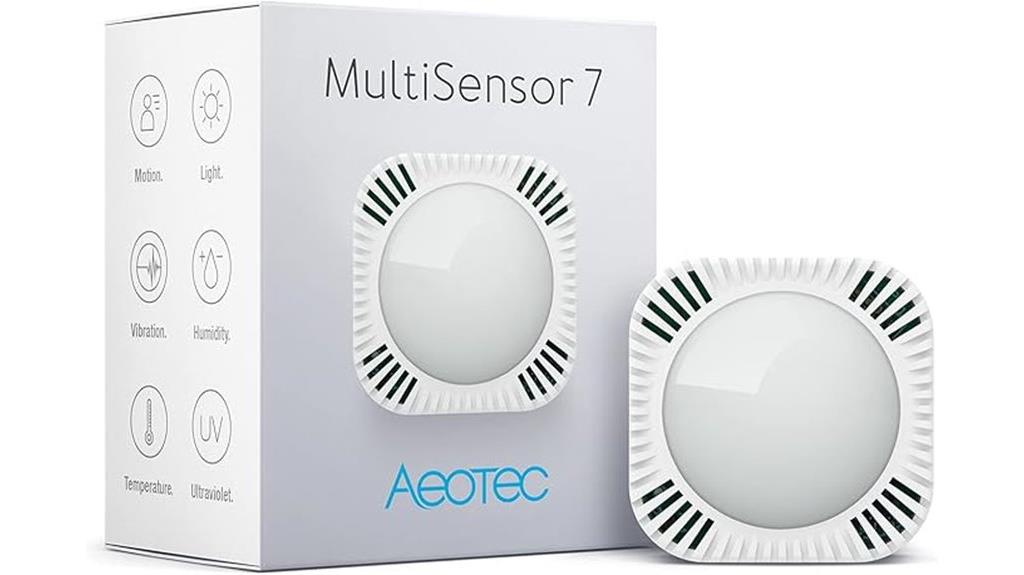
If you’re looking for a versatile and reliable Z-Wave sensor that can handle multiple environmental monitoring tasks, the Aeotec MultiSensor 7 is an excellent choice. This 6-in-1 sensor combines motion, temperature, light, humidity, UV, and vibration detection in a compact, discreet design. Its use of the latest 700 Series Z-Wave Plus technology guarantees enhanced performance and dependability. The device is SmartStart enabled, making setup quick and simple with compatible hubs like SmartThings. With wireless batteries or optional USB power, it offers flexible installation options. Overall, the MultiSensor 7 is perfect for all-encompassing home automation and security.
Best For: smart home enthusiasts and security-conscious homeowners seeking comprehensive environmental monitoring in a compact, easy-to-install device.
Pros:
- Combines six detection functions (motion, temperature, light, humidity, UV, vibration) in one sensor for versatile use
- Uses the latest 700 Series Z-Wave Plus technology for enhanced reliability and performance
- Compact design allows discreet installation in various environments, including corners and recessed fixtures
Cons:
- Requires a Z-Wave compatible hub for operation, which may add to setup complexity
- Battery-powered option necessitates periodic replacements or recharging unless powered via USB
- Limited details on weather resistance; may not be suitable for outdoor use without additional protection
Zooz 800 Series Z-Wave Temperature and Humidity Sensor
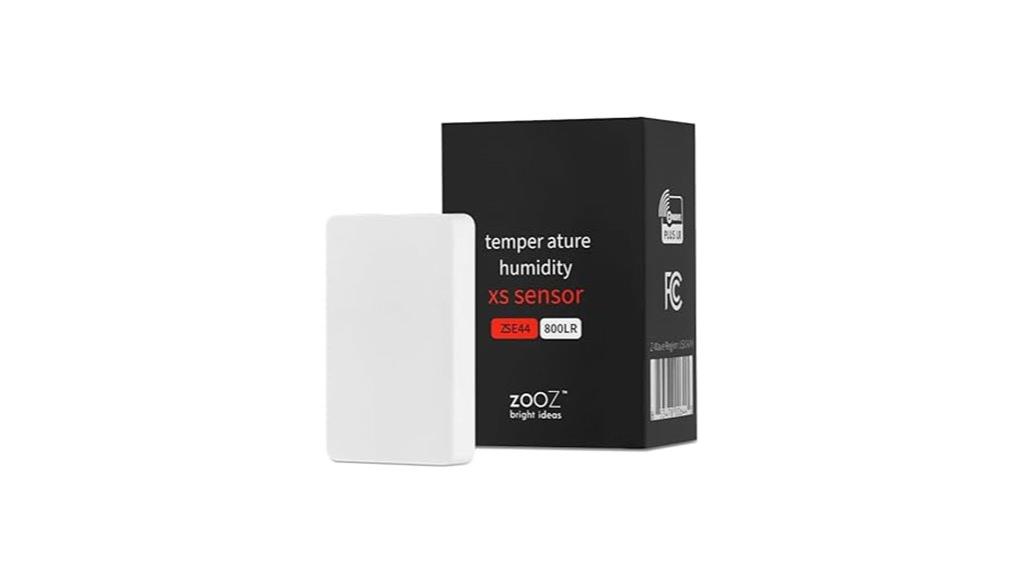
The Zooz 800 Series Z-Wave Temperature and Humidity Sensor is an excellent choice for homeowners seeking reliable, extended-range monitoring of indoor and outdoor environments. It works with popular hubs like SmartThings, Hubitat, and Home Assistant, but not alarm panels. The compact design blends seamlessly into decor, while the rubber-coated outdoor version resists water and corrosion. With Z-Wave Plus certification and up to 1300 feet range, it ensures strong connectivity. It tracks temperature and humidity to optimize comfort and air quality, using a long-lasting CR2450 battery. A perfect addition for anyone wanting precise, secure environmental data in their smart home.
Best For: homeowners seeking reliable, long-range indoor and outdoor environmental monitoring compatible with popular Z-Wave hubs.
Pros:
- Supports Z-Wave Plus and Long Range technology for extended coverage up to 1300 feet.
- Compact, discreet design with outdoor protection options, including water-resistant coating.
- Enables secure, encrypted data transmission with S2 security and SmartStart.
Cons:
- Not compatible with alarm panels or non-Z-Wave systems.
- Requires a Z-Wave hub for access to data and integration with smart assistants.
- Outdoor mounting may require additional accessories like an outdoor bracket (sold separately).
Zooz 800 Series Z-Wave Open/Close Sensor (ZSE41 800LR)
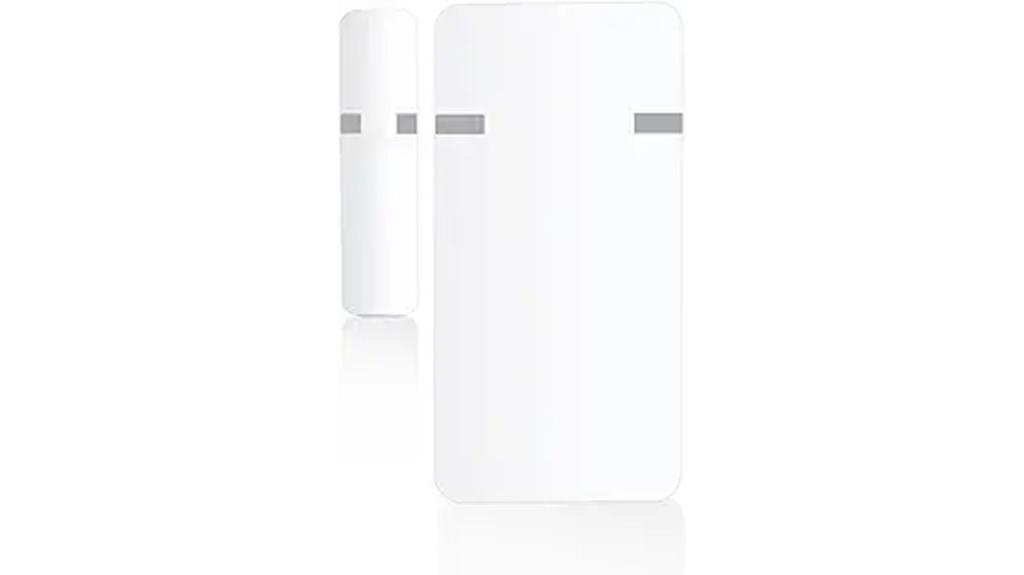
Designed for those seeking reliable and long-range door and window monitoring, the Zooz 800 Series Z-Wave Open/Close Sensor (ZSE41 800LR) stands out with its impressive 1300-foot Z-Wave Long Range capability. It’s compatible with popular open Z-Wave systems like SmartThings, Hubitat, and Ring Alarm, but not with alarm panels such as Vivint or ADT. The slim, discreet design makes it easy to mount indoors or outdoors (with optional waterproof case). Equipped with S2 security and SmartStart encryption, it provides instant alerts when doors or windows open. Its long battery life, waterproof coating, and extended range make it ideal for large or outdoor properties.
Best For: homeowners and DIY security enthusiasts needing reliable long-range door and window sensors for indoor and outdoor use.
Pros:
- Long-range Z-Wave connectivity up to 1300 feet for versatile placement
- Compatible with popular Z-Wave hubs like SmartThings, Hubitat, and Ring Alarm
- Waterproof coating and outdoor case option ideal for external installations
Cons:
- Not compatible with certain alarm panels such as Vivint, Qolsys, or ADT
- Requires a Z-Wave hub for operation, adding to the overall cost
- Sensor gap limited to 0.25 inches, which may restrict certain mounting options
Zwave Recessed Door Sensor (Aeotec, 7)
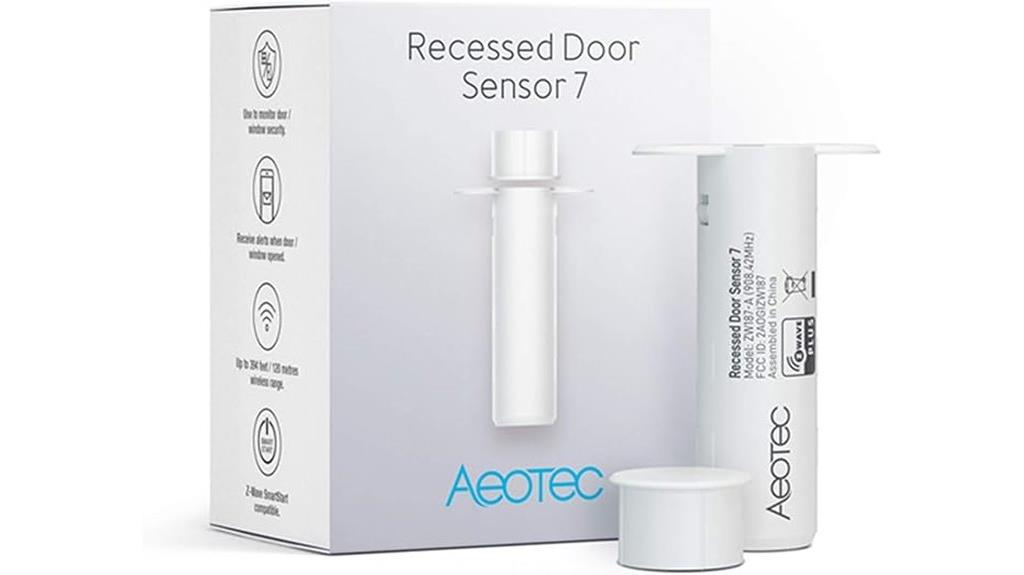
The Aeotec Recessed Door Sensor 7 stands out as an ideal choice for those seeking a secure, Z-Wave Plus V2-enabled sensor that combines easy installation with extended battery life. Its SmartStart QR code allows for quick, plug-and-play setup, making installation straightforward. Built with the Aeotec 700 series, it supports Z-Wave Security 2 (S2), ensuring your home stays protected. The sensor is optimized for up to 66% less battery consumption, providing over three years of reliable operation with the included CR123A battery. Compatible with major smart hubs like SmartThings and Hubitat, it offers remote monitoring and seamless integration for smarter, safer homes.
Best For: homeowners and security enthusiasts seeking a secure, easy-to-install Z-Wave door sensor with long-lasting battery life and advanced security features.
Pros:
- Supports Z-Wave Security 2 (S2) framework for enhanced safety and encryption.
- Quick setup with SmartStart QR code for seamless installation.
- Offers over 3 years of operation with optimized battery consumption.
Cons:
- Customer ratings are moderate at 3.7 stars, indicating mixed reviews.
- Compatible with specific smart hubs, which may limit its integration options for some users.
- Slightly larger dimensions compared to standard sensors, which might require more installation space.
Enbrighten Z-Wave Smart Motion Sensor Light
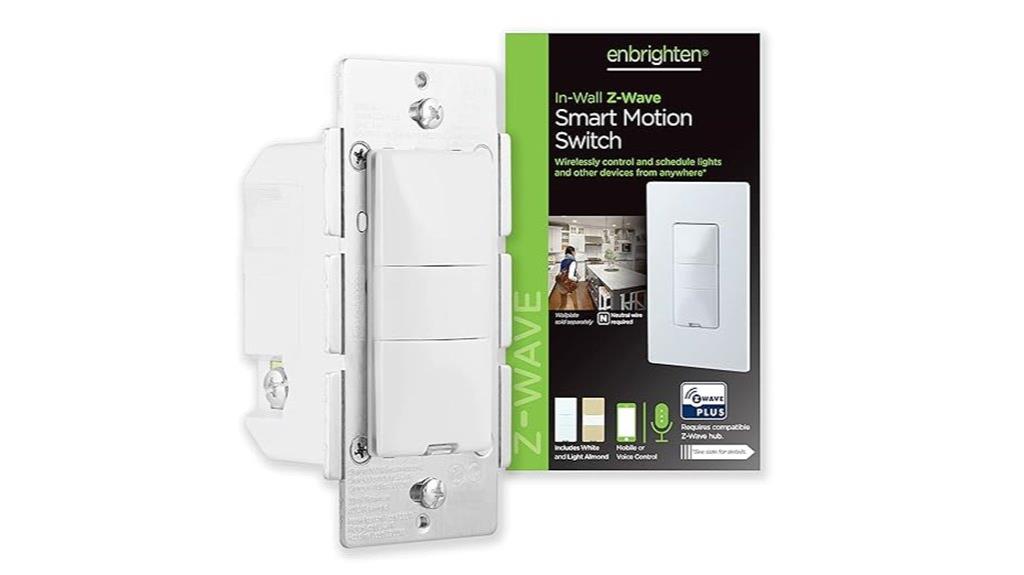
If you’re looking to automate your home lighting seamlessly, the Enbrighten Z-Wave Smart Motion Sensor Light is an excellent choice, especially for those who want a reliable, battery-free sensor integrated with their in-wall switches. It combines motion detection with switch control, working with Z-Wave Plus hubs like SmartThings and Wink. It supports multiple wiring setups, offers customizable detection modes, sensitivity, and timeout settings, and extends Z-Wave range up to 150 feet. Installation can be complex, particularly in multi-way circuits, but once set up, it provides reliable, maintenance-free operation. This device effectively enhances safety, convenience, and energy efficiency in busy areas like hallways and basements.
Best For: homeowners seeking a reliable, integrated Z-Wave smart switch with battery-free motion detection to automate lighting in high-traffic or hard-to-reach areas.
Pros:
- Combines motion sensing with in-wall switch control for seamless automation
- Battery-free motion sensor reduces maintenance and replacement costs
- Customizable detection modes, sensitivity, and timeout settings for tailored operation
Cons:
- Installation can be complex, especially in existing multi-way wiring setups
- May require professional installation or wiring adjustments for proper setup
- Potential for false triggers in certain environments due to sensitivity settings
Philio 4-in-1 Z-Wave Multisensor

For those seeking an all-in-one sensor that combines motion detection, door/window monitoring, light measurement, and temperature tracking, the Philio 4-in-1 Z-Wave Multisensor is an excellent choice. Its compact design and Z-Wave Plus compatibility make it easy to integrate with popular hubs like SmartThings and Hubitat. The PIR motion sensor detects movement within 10 meters, while the door/window sensor tracks open/close status. It measures ambient light up to 500 lux and temperature from -10°C to 70°C. Battery-powered with a lithium cell, it’s easy to install, reliable, and perfect for enhancing home security, energy efficiency, and environmental monitoring.
Best For: homeowners and DIY smart home enthusiasts seeking an affordable, all-in-one sensor for security, occupancy detection, and environmental monitoring with easy Z-Wave Plus integration.
Pros:
- Combines four sensors in one compact, unobtrusive device, offering great value.
- Easy to install using screws or double-sided tape, with straightforward pairing procedures.
- Provides reliable motion detection, door/window monitoring, and environmental data like light and temperature.
Cons:
- Initial setup can be complicated with some hubs, requiring community drivers and parameter adjustments.
- Occasional communication issues reported with certain platforms such as SmartThings.
- Documentation and online manuals are often lacking or poorly written, making configuration more challenging.
Zooz Motion Sensor ZSE70, Z-Wave Long Range
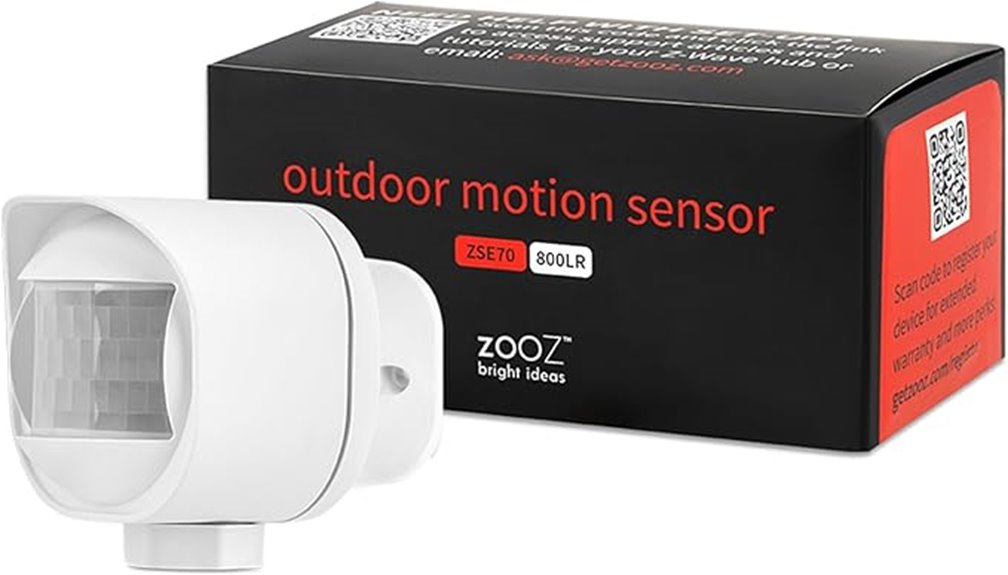
Looking for a motion sensor that offers reliable detection over long distances? The Zooz Motion Sensor ZSE70 with Z-Wave Long Range is a perfect choice. It detects motion within a 30-foot radius and sends instant alerts to your Z-Wave hub, boosting security and automation. Beyond motion, it monitors indoor and outdoor temperatures, allowing smart devices to react accordingly. Its Z-Wave Long Range technology extends connectivity up to 1,300 feet, ideal for large properties. Flexible installation options include batteries or a 12V power supply, and it also functions as a Z-Wave repeater. Plus, it features secure S2 encryption and comes with a solid warranty.
Best For: homeowners or property managers seeking reliable long-range motion detection and environmental monitoring for large indoor or outdoor spaces.
Pros:
- Extended Z-Wave Long Range connectivity up to 1,300 feet for large properties.
- Combines motion detection with indoor/outdoor temperature monitoring for enhanced automation.
- Flexible installation options with batteries or 12V power supply, and functions as a Z-Wave repeater.
Cons:
- Not compatible with Z-Wave alarm panels.
- Requires a Z-Wave hub (sold separately) for alerts and automation.
- May need custom driver setup for some open Z-Wave hubs like SmartThings.
Zooz Z-Wave Long Range Q Sensor (ZSE11 800LR)

The Zooz Z-Wave Long Range Q Sensor (ZSE11 800LR) is an excellent choice for homeowners seeking discreet, multi-sensor monitoring with extended range capabilities. It combines motion, temperature, humidity, and light sensors in a compact, modern design that’s perfect for indoor use. With Z-Wave Long Range support, it can reach up to 1300 feet in open space, ideal for larger homes. Power options include batteries or USB, with USB offering continuous operation and acting as a Z-Wave repeater. While motion detection is highly reliable, temperature, humidity, and especially light sensing can be inaccurate, so it’s best suited for automation triggers rather than precise measurements.
Best For: homeowners seeking discreet, multi-sensor indoor monitoring with extended Z-Wave Long Range coverage and flexible power options for automation triggers.
Pros:
- Reliable motion detection with a quick response time and good field of view
- Supports USB power for continuous operation and acts as a Z-Wave repeater to extend network range
- Compact, discreet design suitable for indoor placement and easy wall mounting
Cons:
- Inaccurate temperature and humidity readings, often requiring calibration or adjustments
- Poor low-light detection performance, with under-reporting or zero readings below ~40 lux
- Occasional sensor failures and inconsistent measurements reported by some users
Aeotec ZWA012 Z-Wave Plus v2 Door / Window Sensor 7 Pro, Gen7
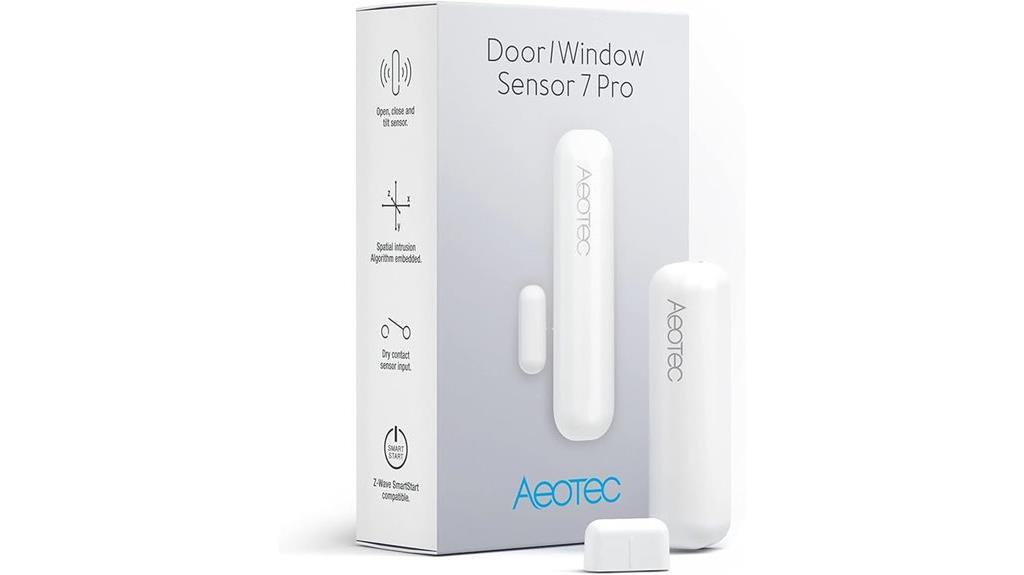
If you want a compact, reliable sensor that combines multiple security functions, the Aeotec ZWA012 Z-Wave Plus v2 Door/Window Sensor 7 Pro, Gen7, is an excellent choice. Its small size—just 2.8 inches long—houses magnetic contact, dry relay, and tilt sensors, making it versatile for various monitoring needs. With a battery life of over three years and reduced power consumption, it’s perfect for discreet, long-term use. Compatible with Z-Wave Plus and S2, setup is quick via QR code with SmartStart support. It works seamlessly with major platforms like SmartThings and HomeSeer, providing dependable security alerts for your home.
Best For: homeowners seeking a discreet, multi-function security sensor that offers long battery life and easy integration with popular smart home platforms.
Pros:
- Compact size (2.8 inches) for versatile placement and discreet monitoring
- Combines magnetic contact, dry contact relay, and tilt sensors for comprehensive security coverage
- Over 3 years of battery life with reduced power consumption, reducing maintenance needs
Cons:
- Customer rating of 3.8/5 stars indicates some users may experience issues or dissatisfaction
- Requires Z-Wave compatible hub or platform for operation, limiting compatibility with non-Z-Wave systems
- The small size may make installation on certain surfaces challenging without proper mounting accessories
Zooz 800 Series Z-Wave Signal Sensor for Smoke & CO Detectors

The Zooz 800 Series Z-Wave Signal Sensor is an excellent choice for homeowners wanting to upgrade their existing smoke and CO detectors with smart automation capabilities. It adds Z-Wave connectivity to hard-wired detectors, enabling alerts and automation triggers without replacing your current alarms. Compatible with advanced Z-Wave hubs like SmartThings, Hubitat, and Home Assistant, it supports long-range communication and mesh network stability. Installation is straightforward inside junction boxes or detector enclosures, and it can control relays for lighting or sirens. Designed for indoor use, it provides reliable smoke and CO detection alerts, enhancing your home’s safety with smart automation features.
Best For: homeowners seeking to add smart automation and alert capabilities to their existing hard-wired smoke and CO detectors without replacing them.
Pros:
- Easy to install inside junction boxes or detector enclosures with included pigtail wires
- Supports long-range Z-Wave communication and mesh network stability for reliable alerts
- Compatible with popular hubs like SmartThings, Hubitat, and Home Assistant for seamless integration
Cons:
- Limited to indoor use and not rated for outdoor environments
- Max relay load is 5A, which may restrict certain automation devices
- Occasional responsiveness issues may require circuit breaker resets, especially in metal junction boxes
HomeSeer MS100 G8 Motion Sensor (Z-Wave)
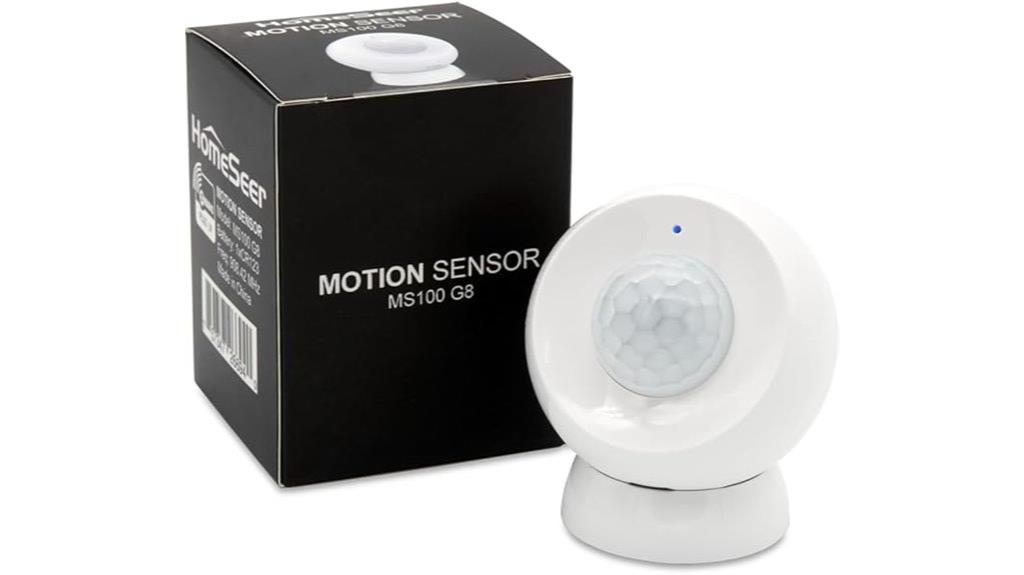
HomeSeer MS100 G8 Motion Sensor (Z-Wave) is an excellent choice for users seeking reliable, long-range motion detection that seamlessly integrates into larger smart home setups. Its Z-Wave 800 series chip ensures a strong, stable wireless connection, while Z-Wave LR technology extends communication distances—perfect for larger homes or outdoor spaces. The sensor detects motion and monitors inactivity, enabling automations like turning off lights or adjusting thermostats when rooms are empty. Powered by long-lasting batteries or a micro USB, it offers versatile placement options. Compatibility with major hubs like HomeSeer, SmartThings, and Hubitat makes integration straightforward, complemented by easy installation via magnetic mounts or screw hardware.
Best For: smart home enthusiasts seeking a reliable, long-range motion sensor that easily integrates with major Z-Wave hubs for comprehensive automation.
Pros:
- Strong Z-Wave 800 series chip ensures a stable, reliable wireless connection.
- Supports Z-Wave LR technology, extending communication range for larger or outdoor areas.
- Flexible installation options with battery power or micro USB, plus magnetic mounting for easy setup.
Cons:
- Requires a Z-Wave compatible hub for operation, which may add to overall system cost.
- Battery life may need monitoring and replacement over time.
- Installation may be limited by sensor placement restrictions depending on mounting surface.
Zooz 800 Series Z-Wave Water Leak Sensor (ZSE42 800LR)
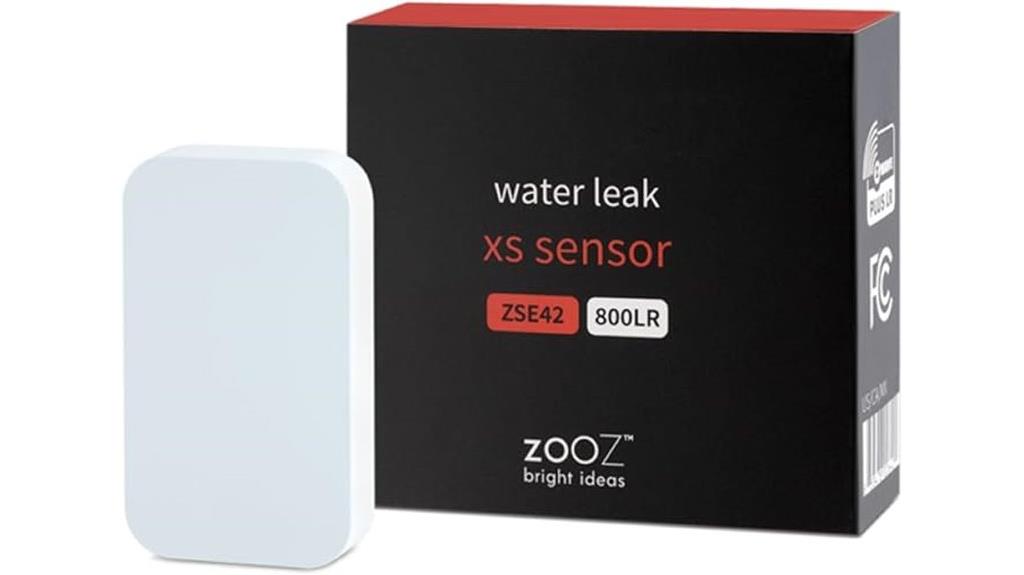
For homeowners seeking a reliable water leak detector that integrates seamlessly with open Z-Wave systems, the Zooz 800 Series Z-Wave Water Leak Sensor (ZSE42 800LR) stands out. It detects water leaks early, helping prevent costly damage, and sends alerts directly to your phone via your Z-Wave hub. Its IP66-rated, compact design makes it suitable for indoor use under appliances or in vulnerable areas. With a long-range Z-Wave chip and S2 encryption, it ensures secure, extended coverage. Easy to install and manage through compatible hubs, this sensor offers peace of mind, backed by a five-year warranty and lifetime support.
Best For: homeowners seeking a reliable, secure, and easy-to-integrate Z-Wave water leak sensor for indoor leak detection and prevention.
Pros:
- Supports open Z-Wave systems like SmartThings, Hubitat, and Home Assistant for versatile compatibility
- IP66-rated and compact design suitable for discreet indoor placement
- Extended range with Z-Wave Long Range and secure S2 encryption for peace of mind
Cons:
- Not compatible with alarm panels or certain security systems such as Ring or Vivint
- Requires a Z-Wave hub for operation; cannot work standalone or with smart speakers alone
- Limited to indoor use only, not suitable for outdoor environments
Factors to Consider When Choosing Z‑Wave Smart Sensors

When selecting Z-Wave smart sensors, I consider factors like compatibility with my hub, sensor accuracy, and how far the signals reach. I also look at power options and how long the batteries last, along with how easy it is to install and match my home’s design. Finally, security and data privacy are critical to guarantee my system stays protected.
Compatibility With Hubs
Ensuring your Z-Wave smart sensor works smoothly with your hub starts with verifying compatibility. First, check that the sensor is supported by your specific hub, like SmartThings, Hubitat, or HomeSeer, by reviewing the device’s supported list. Make sure the sensor supports the same Z-Wave protocol version and security features, such as Z-Wave Plus or S2 security, for seamless operation. Confirm that the sensor’s frequency matches your regional Z-Wave frequency, whether 908.4 MHz in the US or 868.4 MHz in Europe, to avoid communication issues. Additionally, determine if the sensor works with open Z-Wave systems or proprietary platforms, as some devices may not integrate with certain ecosystems. Features like SmartStart or Z-Wave Long Range can also impact compatibility, especially in larger or more complex networks.
Sensor Accuracy and Range
Choosing the right Z-Wave smart sensor depends heavily on its accuracy and range, as these factors directly impact how well it monitors your environment. Sensor accuracy varies by type and quality—high-quality sensors deliver more precise readings, which is essential for reliable automation. The effective range determines how far a sensor can detect motion, light, or other changes, but environmental factors like interference, obstructions, and placement can reduce this distance. Some sensors offer adjustable sensitivity or calibration, helping improve precision in challenging environments. While Z-Wave sensors, especially those with Long Range tech, can reach up to 1300 feet outdoors, real-world conditions often limit this. Carefully considering accuracy and range ensures your sensors perform reliably and suit your home’s specific needs.
Power Options and Battery Life
Selecting the right power option for your Z-Wave smart sensor is essential because it affects installation flexibility and ongoing maintenance. Battery-powered sensors are portable and easy to install but need replacements every 1 to 3 years, depending on usage and battery type. Many include low-battery alerts, so you’re warned before losing functionality. Wired or USB-powered sensors offer continuous operation without the hassle of changing batteries, making them ideal for fixed locations. However, they may require more complex installation. Battery life varies based on device features, power consumption, and usage patterns, so always check manufacturer specs for expected longevity. Your choice depends on balancing convenience with long-term reliability, ensuring your smart home remains responsive and maintenance needs are manageable.
Installation Complexity and Design
When installing Z-Wave smart sensors, the complexity of the process can vary considerably based on their design and mounting options. Some sensors support simple DIY installation with screws or double-sided tape, making setup quick and hassle-free. Others require professional wiring or more complex configurations, increasing installation time. It’s essential to consider the sensor’s physical size and shape to ensure it blends discreetly into your environment without blocking other devices or fixtures. Check if setup involves scanning QR codes, pressing multiple buttons, or navigating complex network settings—these can complicate installation. Additionally, whether the sensor is designed for indoor or outdoor use impacts installation choices; features like waterproofing or tamper resistance are vital for outdoor placement. Compatibility with existing infrastructure, such as recessed fittings or surface mounts, also influences ease of installation.
Security and Data Privacy
Security and data privacy are critical considerations when integrating Z-Wave smart sensors into your home system. I look for sensors that support strong security protocols like S2 encryption to protect data during transmission from eavesdropping and tampering. Features like SmartStart QR codes make setup more secure and streamlined, reducing exposure during installation. I also check if the sensors receive regular firmware updates that address security vulnerabilities and improve data privacy. Ensuring the sensors operate within a secure mesh network is essential to prevent unauthorized access and keep data confined to my home system. Finally, I review the manufacturer’s privacy policy to understand how my data is stored, shared, and protected, especially when integrating with cloud services or third-party platforms.
Frequently Asked Questions
How Do Z-Wave Sensors Integrate With Existing Smart Home Ecosystems?
Z-Wave sensors seamlessly integrate with existing smart home ecosystems by connecting to a central hub that supports Z-Wave technology. I simply add the sensors to my hub’s network, and they automatically sync with my other smart devices. This setup allows me to automate actions, like turning on lights when motion is detected or adjusting thermostats based on door sensors, making my home smarter and more responsive.
What Is the Typical Battery Life for Z-Wave Sensors in Daily Use?
Think of Z-Wave sensors like diligent bees—constantly working without a break. In daily use, I find their battery life typically ranges from six months to two years, depending on the model and usage frequency. Sensors that send frequent updates drain batteries faster, while those with low power settings last longer. Regularly replacing or recharging batteries keeps my smart home humming smoothly, just like a well-oiled machine.
Are Z-Wave Sensors Resistant to Environmental Factors Like Water or Extreme Temperatures?
Z-wave sensors vary in environmental resistance, but many are designed to handle water and extreme temperatures. I’ve found that outdoor models often come with waterproof casings and temperature tolerance ranges, making them ideal for harsh conditions. Still, it’s essential to verify each sensor’s specifications, as some may be better suited for outdoor use than others. I always recommend selecting sensors specifically rated for your environment to ensure durability and reliable performance.
How Secure Are Z-Wave Sensors Against Hacking or Unauthorized Access?
I believe Z-Wave sensors are quite secure against hacking, thanks to their robust encryption protocols like AES-128. Imagine your smart home as a fortress; each sensor acts like a locked gate, making unauthorized access difficult. While no system is completely invulnerable, Z-Wave’s encryption and frequent firmware updates markedly minimize risks, giving me confidence in their security for my connected home.
Can Multiple Z-Wave Sensors Work Together for Advanced Automation Scenarios?
Absolutely, multiple Z-Wave sensors can work together for advanced automation. I often set up various sensors to coordinate actions seamlessly—like turning on lights when motion is detected in different rooms or adjusting thermostats based on door sensors. Z-Wave’s mesh network allows these devices to communicate efficiently, creating smarter, more responsive environments. It’s a flexible system that enables me to customize automation scenarios to fit my daily routines perfectly.
Conclusion
Choosing the right Z-Wave sensors can truly transform your home into a smarter, safer space. Remember, a chain is only as strong as its weakest link—so pick sensors that cover all your needs. With the right technology in place, you’ll be better equipped to catch problems early and enjoy peace of mind. After all, an ounce of prevention is worth a pound of cure, making your home smarter and safer for years to come.