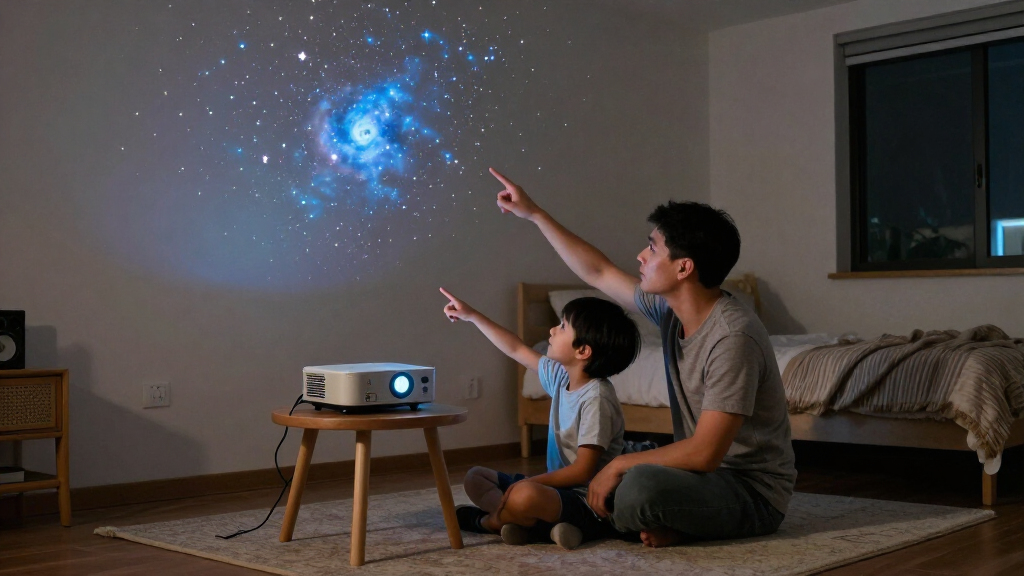
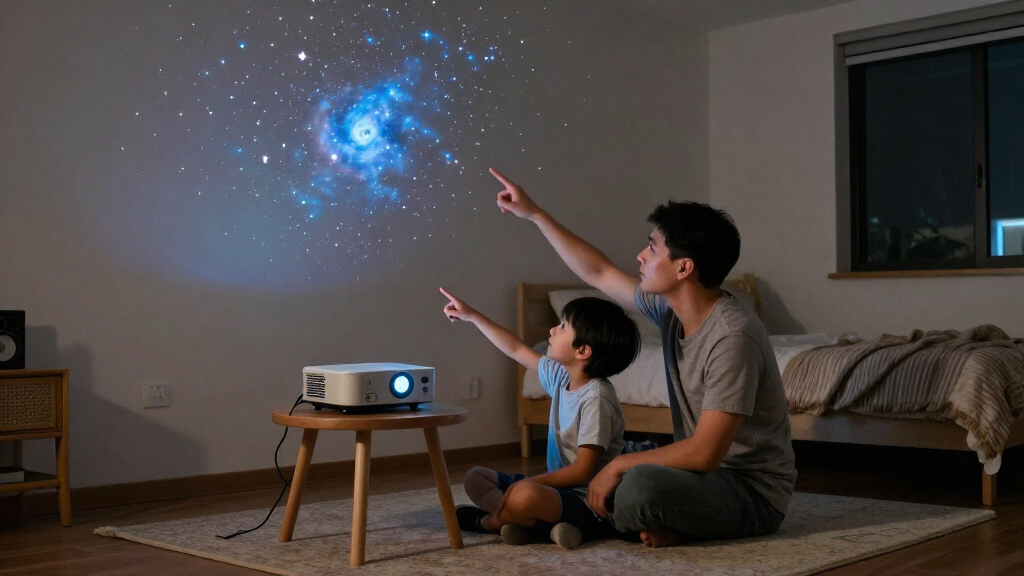
Home planetarium projectors range from disc-based star viewers designed for sharper celestial detail to colorful galaxy lights built around scenes, sound, and app controls. My best overall pick is the POCOCO Galaxy Star Projector with 2-Megapixel Lens and 5K Discs, which puts projection clarity and replaceable astronomy discs ahead of extra effects. The Govee Galaxy Light Star Projector 2 Pro stands out for its 4 MP lens, while the Thames & Kosmos Planetarium Projector and Astronomy Set suits families who want an educational activity as well as a room display. The main tradeoff is between celestial detail and immersive atmosphere: disc models focus on projected images, while scene-rich galaxy lights add color, sound, and controls. Read on for the full comparison, ranking logic, and advice on choosing a projector that fits your room and routine.

Prime made for students and young adults
- Fast, free delivery for dorm and study essentials
- Prime Video and Amazon Music included
- Member-only deals
Key Takeaways
- Optics and projection format separate the leading picks. The POCOCO model with a 2-megapixel lens and 5K discs prioritizes celestial image detail, while the Govee 4 MP model offers a higher-resolution lens specification for buyers focused on image clarity.
- Disc-based projectors and scene-based galaxy lights serve different purposes. POCOCO and other film-disc options focus on changing astronomy images; models advertising dozens of scenes, Bluetooth, and app controls lean toward ambient room effects.
- Battery power changes where a projector can be used. The rechargeable POCOCO version offers more placement freedom than a unit that needs a nearby outlet, but buyers should weigh that convenience against charging and runtime needs.
- More listed scenes do not automatically mean a better planetarium. The 60-, 65-, and 66-scene models offer variety, but buyers seeking a star-field lesson may prefer clearly identified astronomy discs or a dedicated astronomy set.
- The Thames & Kosmos set has a different job from the bedroom mood lights. Its astronomy-set positioning makes it a stronger match for guided learning, while astronaut-shaped and sound-equipped models emphasize decor and bedtime ambience.
| POCOCO Galaxy Star Projector with 2-Megapixel Lens and 5K Discs |  | Best for Cordless Planetarium Viewing | Lens: 2-megapixel | Disc detail: 5K | Included films: 2 | VIEW LATEST PRICE | See Our Full Breakdown |
| POCOCO Galaxy Star Projector with Rechargeable Battery and 5K Discs |  | Best for Longer Cordless Sessions | Lens: 2-megapixel optical lens | Disc quality: 5K Ultra HD | Light source: 1W LED | VIEW LATEST PRICE | See Our Full Breakdown |
| 3D Galaxy Projector with Bluetooth Speaker, App Control, and 60 Scenes |  | Best for App-Controlled Room Ambience | Built-in scenes: 60 moving scenes | Connectivity: Bluetooth 5.3 | Audio: Built-in speaker, nature sounds, white noise, relaxing music, and phone audio | VIEW LATEST PRICE | See Our Full Breakdown |
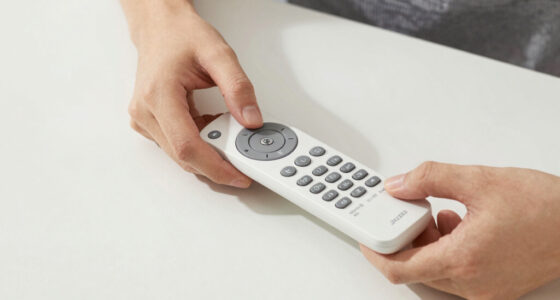
| Rovmiment Galaxy Star Projector with Bluetooth Speaker and 65 Scenes |  | Best for Remote-Controlled Scene Variety | Projection scenes: 65 dynamic scenes | Light source: 1W LED | Power source: Corded electric | VIEW LATEST PRICE | See Our Full Breakdown |
| Govee Galaxy Light Star Projector 2 Pro with 4 MP HD Lens |  | Best Premium Disc-Based Pick | Lens: 4 megapixels | Projection angle: 90° | Coverage area: Up to 301 sq. ft. | VIEW LATEST PRICE | See Our Full Breakdown |
| Astronaut Galaxy Star Projector with Remote and Timer |  | Best Decorative Astronaut Pick | Brand: Mooyran | Light source: LED | Lighting effects: Eight nebula effects and breathing green stars | VIEW LATEST PRICE | See Our Full Breakdown |
| Galaxy Projector with 16 Space Displays, 29 Soothing Sounds, Bluetooth Speaker, Remote and Timer |  | Best for Bedtime Audio Variety | Projection displays: 16 HD scenes | Built-in sounds: 29 | Bluetooth: Version 5.3 | VIEW LATEST PRICE | See Our Full Breakdown |
| 13-in-1 Galaxy Projector Night Light |  | Best Simple Astronomy Disc Set | Projection scenes: 13 | Included discs: 13 projection discs, one pre-installed | Projection distance: Up to 16.4 ft; recommended within 9.84 ft | VIEW LATEST PRICE | See Our Full Breakdown |
| Rossetta 3D Projector with 66 Scenes and Bluetooth Speaker |  | Best for Theme Variety and Gatherings | Projection scenes: 66 | Themes: 20 | Projection distance: 10–20 ft | VIEW LATEST PRICE | See Our Full Breakdown |
| Jioote 3D Galaxy Projector with Bluetooth Speaker and Remote |  | Best for Mixed-Theme Room Effects | Brand and model: Jioote BL-3D02 | Projection themes: 12 | Projection angle: 220° adjustable | VIEW LATEST PRICE | See Our Full Breakdown |
| Galaxy Star Night Light Projector with 13 Projection Films |  | Best for Dual-Purpose Night Lighting | Light source: LED | Light source wattage: 5 watts | Projection films: 13 | VIEW LATEST PRICE | See Our Full Breakdown |
| FlyLily Astronaut Galaxy Projector with 13 HD Film Discs |  | Best for Adjustable Astronaut-Themed Projection | Projection discs: 13 HD film discs | Light source: LED | Power source: Corded electric, 5 volts | VIEW LATEST PRICE | See Our Full Breakdown |
| POCOCO Galaxy Star Projector with Immersive Planet Series Discs, 10 Discs |  | Best for Cord-Free Planetary Sessions | Total discs: 10 | Included disc types: 2 galaxy discs and 8 planet-series discs | Lens: 2 megapixels | VIEW LATEST PRICE | See Our Full Breakdown |
| Galaxy Projector Pro with 13 Planetarium Discs, 360° Rotation and Timer |  | Best for Flexible Room Coverage | Projection discs: 13 (one built in) | Projection distance: 1.5–16 feet; optimal distance 9.84 feet | Projection area: 135–754 sq ft | VIEW LATEST PRICE | See Our Full Breakdown |
| Thames & Kosmos Planetarium Projector and Astronomy Set |  | Best for Educational Star Maps | Model: 678004 | Age range: 8 years and up | Power: USB-C | VIEW LATEST PRICE | See Our Full Breakdown |
| home planetarium projector | Light source | Power |
|---|---|---|
| POCOCO Galaxy Star Projector w | 1W LED | — |
| POCOCO Galaxy Star Projector w | 1W LED | AC and battery |
| 3D Galaxy Projector with Bluet | — | — |
| Rovmiment Galaxy Star Projecto | 1W LED | — |
| Govee Galaxy Light Star Projec | — | — |
| Astronaut Galaxy Star Projecto | LED | Corded electric; adapter and battery not included |
| Galaxy Projector with 16 Space | — | USB |
| 13-in-1 Galaxy Projector Night | — | USB-C, 5 V DC; recommended 5V/2A adapter not included |
| Rossetta 3D Projector with 66 | — | Corded electric; 19 V DC |
| Jioote 3D Galaxy Projector wit | White LED | Corded electric; 19 V DC |
| Galaxy Star Night Light Projec | LED | USB |
| FlyLily Astronaut Galaxy Proje | LED | — |
| POCOCO Galaxy Star Projector w | LED | — |
| Galaxy Projector Pro with 13 P | LED | — |
| Thames & Kosmos Planetarium Pr | — | USB-C |
More Details on Our Top Picks
POCOCO Galaxy Star Projector with 2-Megapixel Lens and 5K Discs
I’d choose this POCOCO when the priority is a disc-based star display rather than a room full of animated effects. Its 2-megapixel lens and etched 5K discs show stars, constellations, the Milky Way, and planets, while adjustable focus helps sharpen the image for the ceiling or another surface. Battery or USB-C power gives it more placement flexibility than the corded Govee Galaxy Light Star Projector 2 Pro, though the Govee includes eight discs and this model includes just two films. Rotation and a 30-degree angle adjustment add useful control, and the low-power LED suits a softer bedtime glow. I’d skip it if you want a broad selection of scenes or its timer details need to be unambiguous: the listed 15-, 30-, and 60-minute settings conflict with the stated two-hour auto-off.
Pros:- Etched 5K discs project stars, constellations, the Milky Way, and planets.
- Battery or USB-C power allows more flexible placement than corded models such as the Rovmiment.
- Adjustable focus, 30-degree angle, and disc rotation help tailor the ceiling projection.
- Low-power 1W LED produces a soft glow suited to bedtime use.
Cons:- Only two films are included, limiting subject variety compared with the Govee’s eight discs.
- Timer information conflicts between the 15-, 30-, and 60-minute settings and the two-hour auto-off description.
Best for: Bedtime users who want a focused star-and-constellation projection and the option to place the projector away from an outlet.
Not ideal for: Buyers who want many interchangeable sky scenes or rely on clearly specified timer behavior.
- Lens:2-megapixel
- Disc detail:5K
- Included films:2
- Light source:1W LED
- Adjustable angle:30°
- Power options:Battery or USB-C
- Timer settings:15, 30, and 60 minutes; also described with a 2-hour auto-off
- Throw distance:1.5–6 (unit not specified)
Our verdict“Choose this POCOCO for a cordless, disc-based star display, but skip it if you need more films or precise timer information.”
POCOCO Galaxy Star Projector with Rechargeable Battery and 5K Discs
This POCOCO is the stronger pick for buyers who want a known cordless runtime: its battery is listed for up to six hours, while the similar white POCOCO B0FJW7K81S offers battery power but does not specify runtime. Both use a 2-megapixel lens, 5K discs, a 1W LED, and adjustable positioning, so the key distinction is not the projected format but how confidently you can plan a longer session away from an outlet. Rotation and a 30-degree adjustment let you aim the disc projection at a ceiling or wall. The tradeoff is a narrow scope: this is for star and galaxy discs, not the app-controlled moving scenes and audio offered by the 3D Galaxy Projector with Bluetooth Speaker. It also includes only one light source and is not water resistant, so it belongs indoors.
Pros:- Battery life is specified at up to six hours for cordless use.
- 5K interchangeable discs and a 2-megapixel lens provide detailed star and galaxy patterns.
- Adjustable positioning and disc rotation help direct the projection.
- 15-, 30-, and 60-minute timers plus a two-hour automatic shutoff support hands-free use.
Cons:- The single light source and disc-based format offer less variety than scene-and-audio models such as the Rovmiment.
- It is not water resistant, limiting use to dry indoor settings.
Best for: People who want to run a disc-based star or galaxy projection for extended periods without keeping the projector plugged in.
Not ideal for: Buyers seeking animated scene variety, built-in sound, or a projector for damp or outdoor settings.
- Lens:2-megapixel optical lens
- Disc quality:5K Ultra HD
- Light source:1W LED
- Power:AC and battery
- Battery life:Up to 6 hours
- Timer settings:15, 30, and 60 minutes; automatic shutoff after 2 hours
- Adjustable angle:30°
- Water resistance:Not water resistant
Our verdict“Pick this POCOCO if long cordless sessions matter more than animated scenes, audio, or a wide choice of films.”
3D Galaxy Projector with Bluetooth Speaker, App Control, and 60 Scenes
I’d rank this above the disc-based POCOCO models for buyers who want a changing ambient room display, not a more literal planetarium view. Its 60 moving scenes, five brightness levels, and built-in nature sounds, white noise, and music make it a flexible bedroom or living-room light. App, remote, and body controls give more ways to adjust it than the remote-only Rovmiment, and the 270-degree tilt plus rotating base help aim the image without shifting the whole setup. The tradeoff is that its scenes are not interchangeable astronomical discs, so shoppers focused on stars and constellations may prefer either POCOCO. Projection quality also depends on a dim room and smooth surface; the remote needs line of sight, and unplugging resets the light and volume settings. I’d favor it for atmosphere and audio, not scientific sky detail.
Pros:- Combines 60 moving scenes with a speaker, nature sounds, white noise, and music.
- App, infrared remote, and body controls offer several ways to adjust settings.
- 270-degree tilt and a horizontally rotating base support flexible aiming.
- Five brightness levels and 1-, 2-, and 4-hour timers suit different room and bedtime needs.
Cons:- Images look best in a dim room on a smooth surface.
- Remote control requires a 4–5 m line of sight.
- Unplugging resets the light and volume settings instead of retaining the previous setup.
Best for: Bedroom or living-room users who want moving ambient scenes, built-in sounds, and app-based adjustments in one device.
Not ideal for: Buyers who want disc-based star charts, dependable saved settings after unplugging, or remote control without a clear line of sight.
- Built-in scenes:60 moving scenes
- Connectivity:Bluetooth 5.3
- Audio:Built-in speaker, nature sounds, white noise, relaxing music, and phone audio
- Controls:App, infrared remote, and body controls
- Aiming:270° manual tilt and horizontally rotating base
- Brightness:5 levels, from 10% to 100%
- Timers:1, 2, or 4 hours; automatic shutoff after 4 hours without a timer
- Image coverage:15–60 m²
Our verdict“Choose this model for app-controlled moving ambience and sound, rather than a disc-based projection of stars and constellations.”
Rovmiment Galaxy Star Projector with Bluetooth Speaker and 65 Scenes
The Rovmiment is a straightforward choice when scene variety and remote operation matter more than cordless placement or app features. Its 65 dynamic scenes include twinkling and shooting-star effects, and built-in soundscapes plus Bluetooth streaming make it more of an ambient night-light system than a traditional disc planetarium. Compared with the similar 60-scene 3D Galaxy Projector, this model offers five more listed scenes but relies on a remote rather than app, remote, and body controls. The 270-degree bracket, manual focus, and five dimming levels give useful control over a ceiling or wall display. The main compromise is the cord: unlike either POCOCO, it cannot be placed freely without nearby power. It also needs a 10–16 ft projection distance for its recommended sharpness and contrast, so small rooms may not suit its intended setup.
Pros:- 65 dynamic scenes include twinkling and shooting-star effects.
- Bluetooth streaming and built-in soundscapes add audio without a separate speaker.
- 270-degree tilt, manual focus, and five brightness levels support flexible setup.
- Remote control and sleep timers make it convenient for bedside use.
Cons:- Corded electric power limits placement compared with the battery-powered POCOCO projectors.
- The recommended 10–16 ft distance may be impractical in smaller rooms.
- The control setup is remote-based, without the app controls offered by the 3D Galaxy model.
Best for: Bedroom users with a suitable projection distance who want many dynamic scenes, Bluetooth audio, and remote adjustments.
Not ideal for: People who need a battery-powered projector, app-based control, or a sharp image from a short distance.
- Projection scenes:65 dynamic scenes
- Light source:1W LED
- Power source:Corded electric
- Projection coverage:15–50 m²
- Recommended projection distance:3–5 m
- Bracket tilt:270°
- Brightness:5 dimming levels, 10%–100%
- Timer:1, 2, or 4 hours; also described as 4-hour automatic shutdown
Our verdict“Choose the Rovmiment for remote-controlled moving scenes and audio if you have an outlet and enough distance for projection.”
Govee Galaxy Light Star Projector 2 Pro with 4 MP HD Lens
For a disc-based home planetarium, I’d put the Govee ahead of the two POCOCO options when film selection and smart-home control matter most. Its 4-megapixel lens and glass-injected film support focused projections, while eight discs and 20-plus scenes offer more variety than the two-film POCOCO B0FJW7K81S. App, voice, and physical-button controls—including Matter, SmartThings, Alexa, and Google Assistant compatibility—make it the most connected pick here. The tradeoffs are substantial: it is corded, weighs 2.01 kg, and is designed for dark rooms, so it is less flexible as a portable bedtime projector than the rechargeable POCOCO B0C23FYQRB. Its 360-degree positioning and stated coverage of up to 301 sq. ft. suit broader room layouts, but this remains a large, mains-powered choice rather than a grab-and-go star lamp.
Pros:- 4-megapixel lens and glass-injected film support focused scene projection.
- Eight film discs and 20-plus scenes provide more variety than either POCOCO model listed here.
- App, physical-button, and voice controls work with Matter, SmartThings, Alexa, and Google Assistant.
- 360-degree positioning and coverage up to 301 sq. ft. suit varied room layouts.
Cons:- Corded electric power makes it less portable than the rechargeable POCOCO B0C23FYQRB.
- Designed for dark-room use, limiting its impact when ambient light is present.
- At 2.01 kg and 10.71 × 8.07 × 7.87 inches, it is less compact than the scene projectors in this lineup.
Best for: Smart-home users who want a corded disc projector with multiple films, app or voice control, and broad room coverage.
Not ideal for: Buyers who need cordless portability, a lightweight bedside unit, or useful projection in a bright room.
- Lens:4 megapixels
- Projection angle:90°
- Coverage area:Up to 301 sq. ft.
- Maximum light output:230 lumens
- Power source:Corded electric
- Film discs:8
- Scenes:20+
- Controls and compatibility:Govee Home app, Matter, SmartThings, Alexa, Google Assistant, and physical button
- Auto-off timer:2 hours
Our verdict“Pick the Govee for smart-home control and a broader disc selection, provided you have a dark room and do not need cordless use.”
Astronaut Galaxy Star Projector with Remote and Timer
The Mooyran makes the most sense for buyers who want a playful room light as much as a sky effect. Its eight nebula patterns pair with breathing green stars, and the magnetic head and poseable arm let you change the projection direction while keeping the astronaut as part of the display. A remote adjusts brightness, motion, and star breathing, while the 45- and 90-minute timers suit shorter bedtime routines. Compared with the 13-in-1 Galaxy Projector Night Light, this has fewer astronomy scenes and no stated focus adjustment; its appeal is character and atmosphere, not a broad disc-based tour of the sky. The adapter is not included, and it needs corded power, so buyers should plan for a compatible supply and a nearby outlet.
Pros:- Eight nebula effects combine with breathing green stars for a layered room display
- Remote adjusts brightness, rotation speed, and star breathing rate
- 45- and 90-minute auto-off choices suit bedtime use
- Magnetic head and poseable arm make projection direction adjustable
Cons:- Power adapter and battery are not included
- Corded operation limits placement to spots near a power source
- Nebula-and-star effects offer less astronomy subject variety than disc-based models
Best for: Children and families who want an astronaut-shaped bedside accent with adjustable nebula lighting and a short sleep timer
Not ideal for: Buyers seeking detailed astronomy scenes, adjustable image focus, or a projector that works without a nearby power outlet
- Brand:Mooyran
- Light source:LED
- Lighting effects:Eight nebula effects and breathing green stars
- Controls:Remote control; adjustable brightness, rotation speed, and breathing rate
- Timer:45 or 90 minutes
- Power:Corded electric; adapter and battery not included
- Dimensions:4.84 × 1.44 × 9.64 in
- Weight:14.4 oz
Our verdict“Choose the Mooyran if an adjustable astronaut decor light matters more than a wide selection of astronomy projections.”
Galaxy Projector with 16 Space Displays, 29 Soothing Sounds, Bluetooth Speaker, Remote and Timer
This model is the strongest fit for households that want a projection-and-audio bedtime setup in one USB-powered unit. It offers 16 space and dinosaur displays, 29 soothing sounds, and a Bluetooth 5.3 speaker, so it can serve both as a scene projector and as a way to play audio from another device. Adjustable focus and 360° rotation make aiming easier than with the Mooyran astronaut, whose main draw is its character design and nebula effects. The selectable 1-, 2-, and 4-hour timer also covers longer listening sessions than the Mooyran’s shorter shutoff choices. Its stated best clarity is around 9.84 feet, even though the maximum projection distance is longer; buyers with large rooms or bright ambient light should not treat the coverage figures as a guarantee of crisp scenes. USB power is required.
Pros:- Sixteen space and dinosaur displays provide more subject variety than the Mooyran’s nebula effects
- Twenty-nine built-in sounds and Bluetooth 5.3 add flexible audio options
- Focus adjustment and 360° rotation help with positioning
- Remote and 1-, 2-, or 4-hour shutoff timer are included
Cons:- Requires USB power rather than standalone battery operation
- Best stated projection clarity is around 9.84 ft
- Combining scenes, sound, and a speaker may be unnecessary for buyers seeking a simple astronomy projector
Best for: Parents or caregivers who want varied space scenes, built-in sounds, and Bluetooth audio for a child’s bedtime routine
Not ideal for: Buyers who need a battery-powered projector or expect sharp scenes across a large, brightly lit room
- Projection displays:16 HD scenes
- Built-in sounds:29
- Bluetooth:Version 5.3
- Projection distance:Up to 16.4 ft; optimal distance 9.84 ft
- Coverage area:135–754 sq ft
- Rotation:360°
- Timer:1, 2, or 4 hours
- Power:USB
Our verdict“Pick this model if bedtime audio and varied scenes matter more than a purely astronomy-focused projection experience.”
13-in-1 Galaxy Projector Night Light
Unlike the sound-focused 16-display projector, this model keeps the proposition centered on 13 astronomy scenes and straightforward room projection. Its included discs, focus adjustment, and two rotation speeds give buyers more control over what appears and how it moves, while the 360° angle adjustment helps aim the image toward a ceiling, wall, or floor. The 1-, 2-, and 4-hour timer options are useful for different routines, and the stated quiet operation suits a bedroom. Projection clarity is recommended within 9.84 feet, so it is a better match for ordinary bedroom distances than for filling a large room from across it. Bright ambient light can wash out the image. USB-C power also means it needs a cable and a compatible 5V/2A adapter, which is not included.
Pros:- Thirteen astronomy scenes come with brief subject introductions
- Focus adjustment and 360° angle adjustment help tailor placement
- Two rotation speeds allow a slower or more animated display
- 1-, 2-, and 4-hour auto-off options support different routines
Cons:- The required 5V/2A power adapter is not included
- Bright rooms can reduce image clarity
- Recommended viewing distance is within 9.84 ft for clearer projection
Best for: Bedroom users who want astronomy-themed scenes on discs, adjustable aiming, and a choice of automatic shutoff times
Not ideal for: Buyers who want built-in audio, battery-powered placement, or clear projections in bright rooms or at long distances
- Projection scenes:13
- Included discs:13 projection discs, one pre-installed
- Projection distance:Up to 16.4 ft; recommended within 9.84 ft
- Projection coverage:135–754 sq ft
- Rotation:360° angle adjustment; two speeds
- Timer:1 hour, 2 hours, or default 4-hour auto-off
- Power:USB-C, 5 V DC; recommended 5V/2A adapter not included
- Dimensions and weight:5.7 × 5.7 × 4.33 in; 1.2 lbs
Our verdict“Choose this projector for a focused astronomy-disc experience in a dim bedroom, not for audio features or long-distance room coverage.”
Rossetta 3D Projector with 66 Scenes and Bluetooth Speaker
The Rossetta stands out for breadth: 66 projections across 20 themes make it a more flexible room-effect device than the 13-in-1 Galaxy Projector Night Light, which is more narrowly focused on astronomy scenes. Adjustable focus, brightness, and a 220° angle let owners adapt the display for relaxation or a gathering, while the Bluetooth speaker and built-in background sound add an audio layer. That versatility is also the tradeoff for a planetarium roundup: this is a multi-purpose effects projector, not a dedicated star or planet disc system. Its stated 10–20 ft projection distance and 130–385 sq. ft. coverage give useful placement guidance, but corded power and plastic construction make it less suited to portable use. Timer choices are limited to one or two hours.
Pros:- Sixty-six scenes across 20 themes provide more variety than the 13-in-1 astronomy model
- Adjustable focus, brightness, and projection angle help tailor the display
- Bluetooth speaker and built-in background sound add audio options
- 1- and 2-hour timer settings are available
Cons:- Broad theme coverage makes it less specialized as a home planetarium projector
- Corded electric power limits placement
- Plastic construction may not suit buyers seeking a more substantial housing
Best for: People who want one corded device for varied themed room effects, background audio, and occasional gatherings
Not ideal for: Astronomy enthusiasts who want a focused planetarium presentation, or users who need a portable projector with longer timer choices
- Projection scenes:66
- Themes:20
- Projection distance:10–20 ft
- Coverage area:130–385 sq. ft.
- Adjustable angle:220 degrees
- Timer:1 or 2 hours
- Audio:Bluetooth speaker and built-in background sound
- Power:Corded electric; 19 V DC
Our verdict“Pick the Rossetta for varied room effects and audio, but choose a disc-focused projector if astronomy accuracy is your priority.”
Jioote 3D Galaxy Projector with Bluetooth Speaker and Remote
The Jioote is a practical choice for buyers who want a single table-mounted projector for space alongside ocean, wildlife, and dinosaur scenes. Its 12 themes, adjustable focus and brightness, and 220° projection angle provide useful control over a room display, while the remote and Bluetooth speaker add convenience beyond the scene itself. Compared with the Rossetta’s 66 scenes across 20 themes, the Jioote offers a smaller library, so it suits buyers who prefer a simpler selection over maximum variety. Its selectable one- and two-hour timers, plus automatic shutdown after four hours, cover both shorter bedtime sessions and longer use. The unit still needs corded power, and its plastic construction is a tradeoff for buyers expecting a more robust housing.
Pros:- Twelve themes include space, ocean, wildlife, and dinosaur scenes
- Adjustable focus, brightness, and 220° projection angle help customize the display
- Bluetooth speaker and remote control are included
- One- and two-hour timers plus four-hour automatic shutdown offer several shutoff choices
Cons:- Twelve themes provide less variety than the Rossetta’s 66 scenes across 20 themes
- Corded electric power restricts placement
- Plastic construction may feel less substantial than buyers expect
Best for: Households that want a remotely controlled table projector with a modest mix of space and non-space themes
Not ideal for: Buyers seeking the largest scene library, cordless operation, or a projector dedicated to astronomy discs
- Brand and model:Jioote BL-3D02
- Projection themes:12
- Projection angle:220° adjustable
- Light source:White LED
- Power:Corded electric; 19 V DC
- Wattage:38 W
- Special features:Dimmable, adjustable focus, Bluetooth speaker, remote control, auto timer
- Dimensions:7.9 × 4.9 × 5.8 in
Our verdict“Choose the Jioote for a remotely controlled mixed-theme projector, while the Rossetta is the better fit if scene variety leads your decision.”
Galaxy Star Night Light Projector with 13 Projection Films
I’d pick this model when a room needs both a star projection and a practical color-changing night light. Its 13 films offer more scene variety than the Thames & Kosmos Planetarium Projector and Astronomy Set, which includes four image disks, while 360° rotation lets the projection move across more than one part of a room. Dimmable brightness is useful when the projector should add atmosphere without overwhelming a bedtime routine. The tradeoff is that the listing gives no battery operation, so placement depends on a USB connection, and its plastic construction is less substantial than a dedicated educational projector. I’d treat it as an ambient bedroom light with projection, not a detailed astronomy tool: there’s no stated focus adjustment or projection distance for tailoring the image.
Pros:- Combines star projection with a color-changing night-light mode.
- Includes 13 projection films for varied scenes.
- 360° rotation and dimmable brightness allow flexible ambient use.
- USB power supports placement near a suitable USB connection.
Cons:- No battery operation is specified, limiting use away from a power connection.
- Plastic construction may feel less substantial than a more dedicated projector.
- No focus adjustment or recommended projection distance is listed.
Best for: Bedroom users who want a USB-powered star projector and a dimmable, color-changing night light in one device.
Not ideal for: Buyers seeking a portable, battery-powered projector or precise astronomy projections with adjustable focus and a specified projection distance.
- Light source:LED
- Light source wattage:5 watts
- Projection films:13
- Lighting modes:Star projection and color-changing night light
- Rotation:360°
- Brightness:Dimmable
- Power:USB
- Material:Plastic
Our verdict“Choose this for flexible bedroom ambiance and night lighting, but skip it if portability or focused astronomy imagery matters more.”
FlyLily Astronaut Galaxy Projector with 13 HD Film Discs
The FlyLily pairs an astronaut-shaped body with 13 HD film discs, giving it a more playful presentation than the straightforward tabletop Galaxy Projector Pro with 13 Planetarium Discs. Its focus-adjustable lens helps sharpen the image for the recommended distance of about 2 meters, while magnetic positioning makes it easier to aim at a wall or ceiling. Touch-controlled colored lighting and an automatic shutoff timer add bedtime convenience. The main compromise is that the 13 scenes come on physical discs, so changing the subject means swapping them by hand; this is less immediate than choosing among digital scenes. The projector is also best used in a completely dark room, so ambient light can reduce the effect. I’d favor it for families who value characterful design and adjustable aiming over effortless scene changes.
Pros:- Includes 13 HD astronomy-themed film discs.
- Adjustable focus helps refine the image at the recommended distance.
- Magnetic positioning supports varied projection angles.
- Touch controls and automatic shutoff timers suit bedtime use.
Cons:- Film discs must be changed manually to switch scenes.
- Projection works best in a completely dark environment.
- Corded electric power limits placement away from a connection.
Best for: Families choosing a tabletop projector for a dark bedroom who want an astronaut design, adjustable focus, and manually selectable astronomy scenes.
Not ideal for: Buyers who want vivid projections in a lit room or instant scene switching without handling physical discs.
- Projection discs:13 HD film discs
- Light source:LED
- Power source:Corded electric, 5 volts
- Maximum light output:400 lumens
- Wattage:4 watts
- Controls:Touch control
- Timer:1 or 2 hours; 4-hour automatic shutdown
- Recommended projection distance:2 meters (6.56 feet)
- Dimensions:6.4 × 5.08 × 9.02 inches
Our verdict“Pick the FlyLily for an adjustable, character-led projector with physical astronomy scenes, provided you don’t mind manual disc changes.”
POCOCO Galaxy Star Projector with Immersive Planet Series Discs, 10 Discs
Among these options, this POCOCO is the clearest choice for cord-free use: its rechargeable battery runs for up to six hours, unlike the USB-powered Galaxy Projector Pro with 13 Planetarium Discs. The ten included discs split between galaxy and planet-series views, while the 2-megapixel lens and 5K discs are intended to retain detail in the projected image. That makes it better suited to someone who wants to move a tabletop projector between rooms without managing a power cable. Its limits are equally clear: the listed 1-watt output is soft, and the product is designed for indoor use, so it is not the pick for a bright room or broad, high-impact coverage. Compared with the FlyLily’s 13 discs, it offers fewer scenes, but gains wireless flexibility.
Pros:- Rechargeable battery provides up to 6 hours of wireless use.
- Includes 10 discs covering galaxy and planet-series scenes.
- 2-megapixel lens and 5K discs are designed for detailed projections.
- Tabletop form makes it practical to reposition indoors.
Cons:- The 1-watt light output is soft and may not suit buyers seeking a stronger projection.
- Designed for indoor use rather than outdoor viewing.
- Includes fewer discs than the 13-disc FlyLily and Galaxy Projector Pro.
Best for: People who want to move a tabletop planetarium projector between indoor rooms and value rechargeable, cable-free operation.
Not ideal for: Buyers who need bright projections, outdoor use, or the broadest selection of included scenes.
- Total discs:10
- Included disc types:2 galaxy discs and 8 planet-series discs
- Lens:2 megapixels
- Disc resolution:5K
- Light source:LED
- Wattage:1 watt
- Battery life:Up to 6 hours
- Mounting type:Tabletop
- Usage:Indoor
Our verdict“Choose this POCOCO for portable indoor sessions and planetary variety, but favor a higher-output option if projection brightness is your priority.”
Galaxy Projector Pro with 13 Planetarium Discs, 360° Rotation and Timer
I rank the Galaxy Projector Pro highly for buyers who want to aim a focused celestial projection around a room rather than rely on a fixed angle. Its adjustable focus and 360° rotation work with a stated projection range of 1.5–16 feet, supporting placement on a table and projection onto walls, floors, or ceilings. It also includes 13 celestial discs, with scenes such as the Solar System, Milky Way, and constellations. Compared with the FlyLily Astronaut Galaxy Projector, this model gives up the character-shaped design and magnetic positioning, but offers a broader stated projection distance and area. A timer and noiseless operation suit evening use. Its key limitation is the USB power connection: unlike the rechargeable POCOCO, it cannot be moved freely without access to power.
Pros:- Includes 13 celestial projection discs, with one built in.
- 360° rotation and adjustable focus support flexible aiming.
- Projects onto walls, floors, or ceilings across a stated 1.5–16-foot range.
- Timer options and noiseless operation suit quiet evening use.
Cons:- Requires a corded USB power connection.
- Recommended for use in a dark indoor environment.
- Table-mount design offers less placement freedom than a battery-powered model.
Best for: Households that want a focus-adjustable projector with broad placement options and timer-controlled use in a dark room.
Not ideal for: People who need a battery-powered projector or want to use it where USB power is unavailable.
- Projection discs:13 (one built in)
- Projection distance:1.5–16 feet; optimal distance 9.84 feet
- Projection area:135–754 sq ft
- Rotation:360°
- Timer:1 or 2 hours; 4-hour automatic shutoff by default
- Power source:Corded electric; USB-powered
- Wattage:13 watts
- Light source:LED
- Weight:0.62 kg
Our verdict“Choose the Galaxy Projector Pro for adjustable focus and broad room coverage, unless you need rechargeable portability.”
Thames & Kosmos Planetarium Projector and Astronomy Set
This is the most education-focused option in the group: its rotating star maps cover both hemispheres, while a second projection mode adds space-themed images. That makes it a stronger fit for guided astronomy learning than the Galaxy Projector Pro, whose 13 discs emphasize a wider range of celestial scenes without a stated star-map teaching focus. The Thames & Kosmos set includes two star maps, four image disks, and a color poster, giving families materials to use beyond the projected display. Its short auto-off choices—15, 30, or 60 minutes—are suited to bedtime routines. The tradeoff is a fixed set of visuals: it has fewer image disks than the other disc-based projectors here, and projections need a darkened room. I’d choose it for structured learning, not maximum scene variety.
Pros:- Projects rotating, astronomically accurate star maps for both hemispheres.
- A second projector mode displays space-themed images.
- Includes two star maps, four image disks, and a color educational poster.
- Selectable 15-, 30-, or 60-minute auto-off timer supports bedtime use.
Cons:- The included star maps and image disks provide a fixed set of visuals.
- Four image disks offer less scene variety than the 13-disc Galaxy Projector Pro.
- Projections require a darkened room.
Best for: Families with children aged 8 and up who want to explore star maps for both hemispheres alongside space-themed images.
Not ideal for: Buyers who prioritize a large selection of interchangeable scenes or need projections that remain clear in a bright room.
- Model:678004
- Age range:8 years and up
- Power:USB-C
- Projection modes:Rotating star map and space-themed images
- Image disks:4
- Auto-off timer:15, 30, or 60 minutes
- Placement:Tabletop or wall-mounted
- Included components:Pre-assembled projector, USB-C power cord, 2 star maps, 4 image disks, color poster, instruction sheet
Our verdict“Choose Thames & Kosmos for family astronomy learning and accurate hemisphere star maps, not for the widest projection collection.”
How We Picked
I compared the 15 options by how well each serves the specific promise of a home planetarium projector: projecting a useful or enjoyable view of space indoors. The main criteria were the projection approach and stated lens or disc details, the range and relevance of included content, and practical controls such as timers, remotes, app operation, rotation, and battery power. I also weighed whether a model appears aimed at astronomy viewing, general ambient lighting, or hands-on learning, since those uses are not interchangeable.
The ranking favors clear purpose, useful projection content, and buyer fit over a long feature list alone. Disc-based models with astronomy-focused content rank ahead for readers who want a more planetarium-like display; scene-rich models remain appealing when color, music, and easy room ambience matter more. Portability, ease of setup, and educational value shape the specialist placements. Product names and supplied features do not establish image performance beyond their stated specifications, so I treat claims such as lens resolution as comparison points rather than proof of real-world results.
| home planetarium projector | Power |
|---|---|
| POCOCO Galaxy Star Projector w | — |
| POCOCO Galaxy Star Projector w | AC and battery |
| 3D Galaxy Projector with Bluet | — |
| Rovmiment Galaxy Star Projecto | — |
| Govee Galaxy Light Star Projec | — |
| Astronaut Galaxy Star Projecto | Corded electric; adapter and battery not included |
| Galaxy Projector with 16 Space | USB |
| 13-in-1 Galaxy Projector Night | USB-C, 5 V DC; recommended 5V/2A adapter not included |
| Rossetta 3D Projector with 66 | Corded electric; 19 V DC |
| Jioote 3D Galaxy Projector wit | Corded electric; 19 V DC |
| Galaxy Star Night Light Projec | USB |
| FlyLily Astronaut Galaxy Proje | — |
| POCOCO Galaxy Star Projector w | — |
| Galaxy Projector Pro with 13 P | — |
| Thames & Kosmos Planetarium Pr | USB-C |
Factors to Consider When Choosing Home Planetarium Projectors
Before choosing, decide what you mean by “planetarium.” Some home projectors display astronomy-oriented films or discs; others fill a room with colorful nebula effects and pair them with music or app controls. The following factors help separate a space-themed night light from a projector that better fits your viewing, learning, or decorating plans.
Decide Whether You Want Astronomy Images or Ambient Effects
Start with the image you want to see, not the number of advertised modes. A disc-based unit can make it easier to switch between defined celestial images, while a scene-based projector may blend moving colors and patterns for a more decorative effect. These formats can both create a space-themed room, but they do not necessarily deliver the same kind of viewing. A common mistake is assuming that a large scene count means more astronomical content; check whether the scenes are named or described as specific space images. If the projector is meant to support curiosity about planets or stars, prioritize identifiable astronomy content and any included learning material. For relaxing light, a broader selection of colors and motion may matter more than scientific specificity.
Read Lens and Disc Claims as Clues, Not Guarantees
Lens resolution and disc specifications offer useful comparison points, but they cannot tell you everything about a projected image. Room darkness, projection distance, wall or ceiling texture, and focus adjustment can all affect what you see. A higher stated megapixel figure may appeal to detail-focused buyers, yet it should not replace checking which discs are included and whether replacement content is available. Before buying, look for clear product information about focus, image size, and supported discs rather than relying on a headline specification alone. Also decide whether you prefer a small, focused image or a broad ceiling display; the latter can trade apparent detail for coverage. This check can prevent paying for a feature that does not match your room or viewing distance.
Match Controls to How You Will Use It
Remote, app, timer, rotation, and sound features matter most when they fit a real routine. A timer can be useful for a bedtime display, while app control may help someone who wants to change scenes without reaching for the projector. A built-in Bluetooth speaker adds convenience, but it may not replace a separate speaker for listeners who care about sound quality. More controls can also mean more setup steps, so a simple remote-operated unit may suit children or occasional use better than an app-heavy model. Check whether essential functions still work from the device itself if a phone is unavailable or inconvenient. Choose controls that reduce friction rather than adding features you are unlikely to use.
Plan for Power, Placement, and Room Conditions
Think through where the projector will sit before choosing a power setup. A rechargeable model can be placed away from an outlet, but it introduces charging and runtime questions; a plugged-in model may be easier for a fixed bedside location. Projection also depends on a reasonably dark room, and nearby lamps or bright windows can wash out the display. Ceiling height and available wall space affect how large the image appears, so check whether the placement you have in mind leaves room to adjust focus and angle. Do not assume a rotating projector can cover every surface without repositioning. A quick room check can matter more than a small difference in listed features.
Choose Between Bedtime Decor and Hands-On Learning
For a calming bedroom display, a timer, quiet operation information, and straightforward controls may matter more than a large collection of astronomy accessories. For family use, ask whether the product includes material that encourages active learning or simply supplies images to project. An astronomy set can offer a different kind of value from a decorative galaxy lamp, even if it has fewer lighting effects. Check age guidance, setup requirements, and whether an adult will need to explain or assemble parts. One common buying mismatch is choosing a visually rich mood light for a child expecting a structured astronomy activity. Let the intended user and activity decide which features deserve priority.
Compare Ongoing Content and Ownership Needs
Included discs or films are only part of the ownership picture. Check whether replacement or additional content is available, whether the projector uses a consistent format, and how easily discs can be stored without damage. For app-controlled products, check what the app does and whether core projection functions depend on it. A projector with many built-in scenes may need no extra content, while a disc system may offer a more deliberate way to change what is shown. Consider where accessories will live and whether the unit will be used often enough to justify managing them. This broader check helps distinguish a simple all-in-one light from a system built around changing projection material.
Frequently Asked Questions
Are home planetarium projectors the same as galaxy lights?
Not always. Some products use astronomy-oriented discs or films to project defined celestial images, while galaxy lights often emphasize colored nebula effects, motion, music, and room ambience. Product names can blur that distinction, so check the included content and how the images are described. If your priority is a decorative ceiling display, scene-based lighting may suit you. If you want more astronomy-focused viewing, look for clearly identified planet or star discs and any accompanying learning material.
Will a planetarium projector show clearly in a room with some light?
Ambient light can reduce contrast and make projected details harder to see, particularly on a pale ceiling or wall. For the clearest display, plan to dim the room and avoid placing the projector near a bright window or lamp. Surface texture and projection distance also affect how crisp the image appears. A stronger stated lens specification does not remove these room limits. If you cannot darken the space, a colorful ambient effect may be more satisfying than expecting fine star or planet detail.
Should I choose a disc-based projector or one with built-in scenes?
Choose based on what you want to change and how you want to use the projector. Disc-based models suit buyers who want to select from specific films or astronomy images, while built-in scene models can be convenient for quickly changing mood and color. Check whether discs can be replaced or expanded before treating them as a long-term content system. For simple bedtime lighting, built-in scenes and a timer may be enough. For astronomy interest, prioritize the content itself over a high scene count.
Is battery power worth choosing for a bedroom projector?
Battery power is useful when you want to place the projector away from an outlet, move it between rooms, or avoid a cable near a bed. The tradeoff is that you need to manage charging and check the stated runtime against how long you expect each session to last. For a fixed bedside setup, a plugged-in model may be simpler and remove battery upkeep. Compare the power arrangement alongside placement rather than treating portability as an automatic advantage. If the projector will stay in one spot, other factors such as content and controls may matter more.
What should I prioritize when buying a projector for a child?
Start by deciding whether the child wants a calming light, a space-themed decoration, or an activity that teaches astronomy. A timer and simple controls can help with bedtime use, while an astronomy set may better support guided exploration with an adult. Check age guidance and whether small accessories or setup steps need adult supervision. Do not assume an astronaut shape or a large collection of scenes makes a product educational. Match the projector to the child’s interest and the amount of hands-on involvement your household wants.
Conclusion
For the strongest all-around balance of planetarium-style content and stated optics, I’d start with the POCOCO Galaxy Star Projector with 2-Megapixel Lens and 5K Discs. The best value in this lineup is the 13-in-1 Galaxy Projector Night Light for buyers who want a straightforward set of projection options, while the best premium choice is the Govee Galaxy Light Star Projector 2 Pro for shoppers drawn to its 4 MP HD lens specification. Beginners who want an approachable, playful room display may prefer the Astronaut Galaxy Star Projector with Remote and Timer; families seeking a more educational activity should look at the Thames & Kosmos Planetarium Projector and Astronomy Set. For flexible placement, compare the rechargeable POCOCO model; for music and scene variety, choose among the Bluetooth-equipped scene projectors. The right pick depends on whether you value astronomy-focused images, ambient effects, portability, or learning most.