The best educational science toys for kids turn curiosity into hands-on learning, but the right choice depends on a child’s age, interests, and tolerance for adult help. I rank the National Geographic Earth Science Kit as the best overall for its broad mix of activities, while SNAP CIRCUITS Jr. stands out for building real electronics skills and the Doctor Jupiter My First Science Experiments Kit is a gentler starting point for younger children. Large experiment counts can offer variety, but they may also mean more setup, supplies, or repeated activity types. Focused kits such as microscopes and magnet toys trade breadth for a clearer subject and easier way to match a child’s interests. Read on for the full breakdown and guidance on choosing a kit that will get used beyond the first experiment.

Prime made for students and young adults
- Fast, free delivery for dorm and study essentials
- Prime Video and Amazon Music included
- Member-only deals
Key Takeaways
- The Earth Science Kit ranks first for breadth: its 100-plus activities make it a stronger all-round choice than a single-topic microscope or electronics kit.
- Age fit matters more than a large experiment count: Doctor Jupiter is designed for younger beginners, while many chemistry and electronics options are aimed at children around eight and up.
- SNAP CIRCUITS Jr. offers a distinct kind of learning: its snap-together projects teach circuits through repeatable builds rather than one-off demonstrations.
- Microscope kits serve different needs: the Talking Microscope emphasizes guided learning, while Uarzt’s kit adds portability and National Geographic’s model centers on magnification.
- More activities do not always mean easier use: 150- and 420-project claims may appeal to children who want variety, but parents should check the parts, instructions, and adult involvement required.
| National Geographic Earth Science Kit with 100+ Activities for Kids 8-12 | 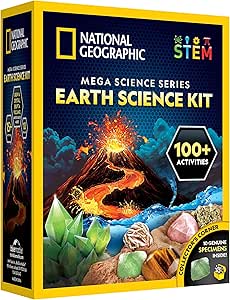 | Best for Earth Science Variety | Brand: Blue Marble | Recommended age: 8–12 years | Activity count: 100+ activities stated; description lists more than 15 experiment activities | VIEW LATEST PRICE | See Our Full Breakdown |
| Doctor Jupiter My First Science Experiments Kit for Kids Ages 4+ |  | Best for Young Beginners | Brand: Doctor Jupiter | Recommended age: 4 years and up | Experiment count: 100+ | VIEW LATEST PRICE | See Our Full Breakdown |
| SNAP CIRCUITS Jr. SC-100 STEM Electronics Kit, 100+ Projects, Ages 8+ |  | Best for Learning Electronics | Brand: Snap Circuits / Elenco | Model: SC-100 | Recommended age: 8 years and up | VIEW LATEST PRICE | See Our Full Breakdown |
| Learning Resources STEM Explorers Magnet Movers |  | Best Compact Physics Starter | Brand: Learning Resources | Recommended age: 5 years and up | Piece count: 39 | VIEW LATEST PRICE | See Our Full Breakdown |
| UNGLINGA 150 Experiments Science Kits for Kids Chemistry Lab S.T.E.MToys |  | Best for Broad Experiment Variety | Brand: UNGLINGA | Experiment count: 150 | Subjects: Earth science, surface tension, chemistry, and physics | VIEW LATEST PRICE | See Our Full Breakdown |
| National Geographic Science Magic Kit, Science Kit for Kids with 100+ Unique Experiments and Magic Tricks |  | Best for Variety and Performance | Age range: 8 years and up | Activities: 100+ tricks and experiments | Educational objective: STEM | VIEW LATEST PRICE | See Our Full Breakdown |
| Educational Insights GeoSafari Talking Microscope |  | Best for Preschool Science Introductions | Audio content: More than 100 facts and quiz questions | Slides: 20 slides with 60 full-color images | Play modes: Fact Mode and Quiz Mode | VIEW LATEST PRICE | See Our Full Breakdown |
| National Geographic Magic Chemistry Set with 10 Tricks for Kids Ages 8-12 |  | Best for a Focused First Science-Magic Kit | Age range: 8–12 years | Activities: 10 science tricks | Educational objective: STEM | VIEW LATEST PRICE | See Our Full Breakdown |
| Uarzt 58-Piece Kids Microscope Kit with Carrying Case |  | Best for Hands-On Microscope Practice | Piece count: 58 | Target age: 5–12 years | Magnification: Up to 1200x | VIEW LATEST PRICE | See Our Full Breakdown |
| UNGLINGA 40+ Experiments Science Kit for Kids Chemistry Set STEM Toy |  | Best for Creative Chemistry Projects | Activities: More than 40 experiments | Theme: Scientist | Instructions: Step-by-step manual with child-friendly illustrations | VIEW LATEST PRICE | See Our Full Breakdown |
| National Geographic Amazing Chemistry Set with 100+ Experiments Ages 8-12 |  | Best for Extending Chemistry Play | Recommended age: 8 years and up | Experiment count: 100+ total; materials for 15 included experiments and a guide to 85 more | Subject: Chemistry | VIEW LATEST PRICE | See Our Full Breakdown |
| SMILESSKIDDO Science Kits Electronics STEM Kit 420+ Projects 35 Parts |  | Best for Circuit Experiment Variety | Listed project count: 420+ projects | Circuit parts: 35 | Manual: 37 pages; describes 118 builds | VIEW LATEST PRICE | See Our Full Breakdown |
| National Geographic Junior Chemistry Set with 50 Experiments for Kids |  | Best for First-Time Science Play | Recommended age: 4 years and up | Experiment count: 50 | Subject: Chemistry | VIEW LATEST PRICE | See Our Full Breakdown |
| National Geographic Microscope for Kids with Up to 400x Magnification |  | Best for Microscopic Discovery | Recommended age: 6 years and up | Maximum magnification: 400x | Lighting: LED lights above and below | VIEW LATEST PRICE | See Our Full Breakdown |
| Science Kit for Kids, 80 Science Lab Experiments, Scientist Role Play |  | Best for Variety-Filled Lab Play | Recommended age: 6 years and up, per description | Experiment count: 80 | Theme: Scientist role play and science experiments | VIEW LATEST PRICE | See Our Full Breakdown |
| educational science toys for kid | Dimensions | Recommended age | Weight |
|---|---|---|---|
| National Geographic Earth Scie | — | 8–12 years | — |
| Doctor Jupiter My First Scienc | — | 4 years and up | — |
| SNAP CIRCUITS Jr. SC-100 STEM | — | 8 years and up | — |
| Learning Resources STEM Explor | — | 5 years and up | — |
| UNGLINGA 150 Experiments Scien | — | — | — |
| National Geographic Science Ma | 8.86 x 3.15 x 12 inches | — | 1.5 pounds |
| Educational Insights GeoSafari | 10.1 x 8.1 x 5.6 inches | — | 1.5 pounds |
| National Geographic Magic Chem | 7.28 x 2.95 x 10.04 inches | — | 12.96 ounces |
| Uarzt 58-Piece Kids Microscope | — | — | — |
| UNGLINGA 40+ Experiments Scien | 8 x 5.7 x 2.7 inches | — | 0.32 kg |
| National Geographic Amazing Ch | 8.78 x 3.19 x 11.93 inches | 8 years and up | 1.8 pounds |
| SMILESSKIDDO Science Kits Elec | 14.5 x 11 x 3.1 inches | — | 1.13 kg |
| National Geographic Junior Che | 11 x 4.22 x 9.64 inches | 4 years and up | — |
| National Geographic Microscope | 11 x 6.7 x 12 inches | 6 years and up | 1.8 pounds |
| Science Kit for Kids | 1 x 1 x 1 inches (listed) | 6 years and up, per description | 0.75 kg |
More Details on Our Top Picks
National Geographic Earth Science Kit with 100+ Activities for Kids 8-12
Earth science range is the reason I’d put this kit ahead of narrower, single-topic picks: its activities include a volcano, crystal growing, water tornadoes, and two geologic dig projects. The full-color learning guide adds explanations, so the experiments can connect to ideas about rocks, crystals, and natural forces rather than stopping at the spectacle. Compared with the UNGLINGA 150 Experiments Science Kit, this option has a clearer Earth-science focus, while UNGLINGA spans chemistry and physics as well. Its stated 100+ activities make it sound especially expansive, but the description lists more than 15 experiment activities, so I wouldn’t assume every activity is a separate, fully supplied experiment. Digging and growing projects may also take more time and cleanup than a quick demonstration. It suits curious kids who want a themed science box, not families seeking electronics or one-session experiments.
Pros:- Combines several Earth-science themes, including crystals, volcanoes, and geology
- Full-color learning guide explains the science behind activities
- Includes two geologic dig projects as well as demonstrations
- Designed to support shared experiments with family, friends, or classmates
Cons:- The description names more than 15 experiment activities despite the 100+ activities claim, making the activity count difficult to interpret
- Growing and digging projects can require more time and cleanup than short demonstrations
- Earth-science focus offers less variety across subjects than the UNGLINGA 150 Experiments Science Kit
Best for: Families with children ages 8–12 who are especially interested in rocks, volcanoes, crystals, and Earth science projects.
Not ideal for: Buyers seeking a tightly focused electronics kit or a large set of quick, self-contained experiments; some activities involve growing or digging projects.
- Brand:Blue Marble
- Recommended age:8–12 years
- Activity count:100+ activities stated; description lists more than 15 experiment activities
- Subject:Earth sciences
- Highlighted activities:Crystal growing, volcano experiments, water tornadoes, and two geologic dig projects
- Learning material:Full-color learning guide
- Item dimensions:8.66 × 3.15 × 12 inches
- Item weight:2.6 pounds
Our verdict“Choose this kit for an 8–12-year-old who wants guided Earth-science projects, and skip it if broad chemistry or electronics coverage matters more.”
Doctor Jupiter My First Science Experiments Kit for Kids Ages 4+
For preschool-age scientists, I’d favor Doctor Jupiter My First Science Experiments Kit over the older-child kits in this lineup. Its age recommendation starts at 4, and illustrated, step-by-step instructions can help a child follow a simple investigation with an adult nearby. The included beakers, flask, funnel, spray bottles, and other tools give activities a recognizable lab feel; examples such as Walking Water and Water Fireworks introduce observation and cause-and-effect without the circuit-building challenge of Snap Circuits Jr. SC-100. The kit lists 100+ experiments, but that number doesn’t mean every activity will be independent or use only the included supplies. Some need adult guidance, and families may need to manage liquids, materials, and cleanup. Compared with the more Earth-science-centered National Geographic kit, this is a better first step for broad, simple experiments, not a focused geology set.
Pros:- Recommended for children as young as 4
- Illustrated, step-by-step instructions support early participation
- Includes lab-style tools such as beakers, a flask, and a funnel
- Examples introduce observation and cause-and-effect through hands-on activities
Cons:- Some experiments may require adult guidance
- The activity count does not establish that every experiment is fully supplied or independent
- Offers less specialized depth than Snap Circuits Jr. for electronics or the National Geographic Earth Science Kit for geology
Best for: Caregivers looking for an illustrated, hands-on first science kit for a child aged 4 or older who can explore with adult support.
Not ideal for: Older children ready for deeper electronics or geology projects, or families expecting a young child to run experiments without supervision.
- Brand:Doctor Jupiter
- Recommended age:4 years and up
- Experiment count:100+
- Included tools:2 beakers, 1 conical flask, 1 spatula, 2 stirring sticks, 2 spray bottles, 2 cups, 1 funnel, 1 pair of safety goggles, and 1 tray
- Other included materials:Food essences, food additives, dried leaves, and food colors
- Instruction materials:Instruction manual and bonus experiment booklet
- Example experiments:Walking Water and Water Fireworks
- Safety standard:ASTM F963-17
Our verdict“Pick this as a supported first experiment kit for a young child, rather than as a more advanced or self-directed science set.”
SNAP CIRCUITS Jr. SC-100 STEM Electronics Kit, 100+ Projects, Ages 8+
Working circuits give this kit a distinct educational payoff: children connect numbered, color-coded components on a grid and see how switches, sounds, and other parts function in an electrical system. Unlike the chemistry and Earth-science kits here, Snap Circuits Jr. SC-100 stays focused on electronics, with projects that include a musical doorbell, a sound-activated switch, and a flying saucer. The snap-together format avoids soldering and extra tools, making it more approachable than traditional electronics construction. Its project manual arranges activities from simpler to more complex, so children can build skills over time. The tradeoff is the subject’s narrow scope: it won’t offer the range of materials-based experiments found in the UNGLINGA 150 Experiments Science Kit. It also requires two AA batteries, which are not included, and the stated 100+ projects rely on a relatively small component set.
Pros:- Color-coded, numbered components make circuit connections easier to follow
- Snap-together construction requires no soldering or tools
- Project manual progresses from simple builds to more complex activities
- Projects demonstrate switches, sound, and other electronics concepts through working devices
Cons:- Requires two AA batteries, which are not included
- Focuses on electronics rather than offering broad science-topic variety
- The 100+ project claim is built around a limited set of components
Best for: Children ages 8 and up who want to build working circuits and learn electronics through guided projects.
Not ideal for: Families looking for chemistry, geology, or broad science-topic coverage, or buyers who want a battery-ready kit straight from the box.
- Brand:Snap Circuits / Elenco
- Model:SC-100
- Recommended age:8 years and up
- Project count:100+ projects
- Components:28 electrical components listed; product descriptions also reference 29 parts
- Included pieces:Snap grid, electrical components, and project manual
- Power:Requires two AA batteries; not included
- Item dimensions:12 × 9.5 × 1.75 inches
Our verdict“Choose Snap Circuits Jr. for a school-age child ready to learn electronics by building, not for a general experiment sampler.”
Learning Resources STEM Explorers Magnet Movers
Magnetism made tangible is the strength of Magnet Movers: children can test attraction, repulsion, and movement with physical pieces rather than watching a demonstration. Ten guided challenges offer structure, while the set’s 39 pieces leave room for open-ended trials. I’d choose it over Snap Circuits Jr. SC-100 for a younger child who is just starting to make predictions and observe cause and effect; Snap Circuits is better for older kids ready to assemble functional electronics. Magnet Movers is also a more contained topic than the multi-subject Doctor Jupiter My First Science Experiments Kit, which offers a wider range of activities. That focus is both its advantage and its limit: children who master basic magnetic interactions may want more depth, and the listed challenges do not indicate a large curriculum of experiments. Its small pieces also call for sensible storage after play.
Pros:- Makes attraction, repulsion, and motion available for hands-on exploration
- Includes 10 guided challenges to help children get started
- 39-piece set supports additional open-ended experiments
- Sized and described for repeated home or classroom use
Cons:- Focuses on magnetism rather than a broad range of science topics
- Ten guided challenges may offer limited structure for children seeking a longer sequence of lessons
- Small components need organized storage between activities
Best for: Families and classrooms introducing children ages 5 and up to magnetic attraction, repulsion, and motion through short, guided activities.
Not ideal for: Older children seeking multi-topic experiments or extended project progression, or families who prefer a science kit centered on chemistry or electronics.
- Brand:Learning Resources
- Recommended age:5 years and up
- Piece count:39
- Guided activities:10 challenges
- Subject:Magnetism and physics
- Included components:Magnetic wand, magnets, rings, balls, chips, and activity cards
- Item dimensions:8.3 × 8.1 × 2.8 inches
- Item weight:0.36 kg
Our verdict“Pick Magnet Movers for an accessible introduction to magnetic forces, but choose a broader kit if your child wants varied experiments.”
UNGLINGA 150 Experiments Science Kits for Kids Chemistry Lab S.T.E.MToys
Children who want to switch between science topics may get more mileage from the UNGLINGA 150 Experiments Science Kit than from the focused National Geographic Earth Science Kit. Its described subject range includes Earth science, surface tension, chemistry, and physics, and the illustrated manual lays out experiments step by step. The kit also includes child-friendly lab tools and goggles, while some projects use ordinary household items; that mix can support many kinds of hands-on exploration without every activity needing a specialized component. The tradeoff is that “almost” all tools and materials are included, not every supply, so caregivers may need to gather extras and help with setup. Its 150-experiment claim is broad, and the supplied details don’t clarify how many activities are complete from the box. I’d choose this for variety, not for a focused electronics pathway like Snap Circuits Jr. SC-100.
Pros:- Covers several science areas, including Earth science, chemistry, physics, and surface tension
- Illustrated, step-by-step manual supports guided experiments
- Includes lab tools and safety goggles for a scientist-style activity setup
- Household-material activities can extend experiments beyond the kit’s supplied tools
Cons:- Some experiments require regular household items that are not included
- The supplied details do not clarify how many of the 150 experiments are fully equipped in the box
- Broad subject coverage is less focused than the National Geographic Earth Science Kit or Snap Circuits Jr.
Best for: Families seeking a broad home science set for children who enjoy moving among chemistry, physics, surface tension, and Earth-science activities.
Not ideal for: Buyers who want every experiment to use only included materials, or children seeking a structured, electronics-specific build sequence.
- Brand:UNGLINGA
- Experiment count:150
- Subjects:Earth science, surface tension, chemistry, and physics
- Instruction format:Illustrated, step-by-step scientific manual
- Included safety item:Goggles
- Materials:Lab tools and child-friendly materials; some activities use household items
- Item dimensions:11.42 × 8.67 × 3.94 inches
- Material type:Plastic
Our verdict“Choose UNGLINGA for a varied experiment menu and accept that some activities will call for household supplies and adult help.”
National Geographic Science Magic Kit, Science Kit for Kids with 100+ Unique Experiments and Magic Tricks
The 100-plus tricks and experiments make this a strong choice for children who want a science activity to share, not just complete on their own. Its magic framing can give chemistry demonstrations an audience and a reason to repeat them, while the wide activity count offers more variety than the 10-trick National Geographic Magic Chemistry Set. That larger scope is the main advantage, but the supplied details do not list specific experiments or included tools, so I would check the kit contents if a child has a favorite type of activity or needs a ready-to-go setup. Designed for ages 8 and up, it is a better fit for school-age kids than preschoolers. Compared with the UNGLINGA 40+ Experiments kit, this pick leans more toward science-as-magic entertainment than a general collection of hands-on projects.
Pros:- More than 100 listed tricks and experiments provide a broad range of activities.
- Magic presentation can make demonstrations engaging to perform and share.
- Designed for children ages 8 and up.
- Manual operation requires no batteries.
Cons:- The supplied product details do not specify the individual experiments or included tools.
- The performance-led format may suit showmanship more than children seeking a focused introduction to a science topic.
Best for: School-age children who enjoy performing demonstrations for family and want a broad selection of science-themed magic activities.
Not ideal for: Younger children, or buyers who want a clearly listed inventory of lab tools and experiment materials before choosing a kit.
- Age range:8 years and up
- Activities:100+ tricks and experiments
- Educational objective:STEM
- Power:Manual; no batteries required
- Players:1
- Set name:Mega Science Kit
- Dimensions:8.86 x 3.15 x 12 inches
- Weight:1.5 pounds
- Materials:Metal and paper
Our verdict“Choose this for an older child who wants many science-themed tricks to perform, but choose the 10-trick National Geographic set if a shorter, more specifically described magic kit is a better fit.”
Educational Insights GeoSafari Talking Microscope
For a preschooler who is not ready to manage loose slides and lab tools, this microscope offers a more guided first step into observation. It comes with 20 prepared slides and 60 images, plus Fact and Quiz modes with more than 100 spoken facts and questions voiced by Bindi Irwin. That structure gives a young child prompts to notice and learn, while the Uarzt 58-Piece Kids Microscope Kit asks more of children through blank slides and hands-on tools. The tradeoff is that this is a preloaded experience: children explore the included images rather than preparing their own specimens. It also needs three AAA batteries, which are not included. I’d pick it for supported, early learning; older kids wanting open-ended microscope practice may get more from the Uarzt kit.
Pros:- Twenty prepared slides display 60 full-color images.
- Fact and Quiz modes pair observation with spoken learning prompts.
- Audio is voiced by Bindi Irwin and includes more than 100 facts and quiz questions.
- Slide storage compartment keeps the supplied slides together.
Cons:- Three AAA batteries are required and are not included.
- Prepared images offer less specimen-making practice than the Uarzt 58-Piece Kids Microscope Kit.
- The guided, audio-led format may feel limiting to older children seeking independent investigation.
Best for: Parents and teachers seeking a guided microscope activity for preschool-age children who benefit from audio prompts and prepared images.
Not ideal for: Children ready to prepare specimens themselves, or families who want a battery-free microscope with open-ended lab tools.
- Audio content:More than 100 facts and quiz questions
- Slides:20 slides with 60 full-color images
- Play modes:Fact Mode and Quiz Mode
- Batteries:3 AAA batteries, not included
- Power:Battery powered
- Material:Plastic
- Dimensions:10.1 x 8.1 x 5.6 inches
- Weight:1.5 pounds
- Warranty:1-year warranty against manufacturer defects
Our verdict“Pick this for a young child who needs a guided, listen-and-look introduction to science, not for a budding microscopist who wants to prepare samples.”
National Geographic Magic Chemistry Set with 10 Tricks for Kids Ages 8-12
This kit makes the most sense for a child who wants to learn a handful of demonstrations and then show them to an audience. Its 10 science tricks include examples such as making a coin float and changing water color, with a wand, white gloves, and an illustrated guide that explains the science behind the effects. The guide helps this feel more educational than a prop-based magic set, and the listed tools are included so the activities can start without a separate lab-kit purchase. Compared with the 100-plus-activity National Geographic Science Magic Kit, this one offers less breadth but clearer detail about what the tricks involve. That shorter list can suit beginners, though children seeking a long-running series of varied projects may outgrow it sooner. It is aimed at ages 8–12 and does not require batteries.
Pros:- Ten specified science tricks provide a manageable starting set.
- Illustrated instructions explain the science behind the demonstrations.
- Wand and white gloves support the performance theme.
- Tools for the listed experiments are included, and no batteries are required.
Cons:- Ten activities offer less variety than the 100-plus National Geographic Science Magic Kit.
- The magic-performance focus may be less appealing to children seeking sustained, open-ended investigation.
Best for: Ages 8–12 who want a compact, clearly described introduction to science demonstrations they can perform for others.
Not ideal for: Children who want a large catalog of experiments or prefer open-ended microscope work, such as the Uarzt 58-Piece Kids Microscope Kit.
- Age range:8–12 years
- Activities:10 science tricks
- Educational objective:STEM
- Included props:Magic wand and white gloves
- Instructions:Illustrated, kid-friendly guide with science explanations
- Power:Manual; no batteries required
- Dimensions:7.28 x 2.95 x 10.04 inches
- Weight:12.96 ounces
- Material:Paper
Our verdict“Choose this for a beginner who wants a defined set of science tricks with explanations, rather than the broader activity count of the larger National Geographic kit.”
Uarzt 58-Piece Kids Microscope Kit with Carrying Case
Unlike the GeoSafari Talking Microscope, which guides preschoolers through prepared pictures and audio, the Uarzt kit gives children more of the tools involved in basic specimen exploration. It includes 13 prepared slides, 31 blank slides, and lab accessories such as tweezers and a dropper, so kids can move from viewing examples toward preparing their own samples. The case also gives the many pieces a place to live between activities, making this more practical for families who want to store or carry a small science setup. The advertised magnification reaches up to 1200x, but this is described as a beginner toy, not professional lab equipment; I would not choose it for advanced microscopy. Two AA batteries are also required and not included. Compared with the guided GeoSafari, this is the better fit for hands-on practice, but it needs more adult support.
Pros:- Includes 13 prepared slides and 31 blank slides for viewing and sample-making practice.
- Tweezers, a dropper, and other lab tools support hands-on exploration.
- Carrying case helps organize and transport the kit.
- LED light and stated magnification up to 1200x provide introductory viewing features.
Cons:- Two AA batteries are required and are not included.
- The product is an introductory toy rather than professional laboratory equipment.
- Loose tools and blank slides may require adult help, especially for younger children.
Best for: Families or classrooms with children ages 5–12 who want slides, basic lab tools, and a portable kit for introductory specimen exploration.
Not ideal for: Buyers expecting professional-grade microscope performance, or preschoolers who need a simpler, audio-guided experience like the GeoSafari Talking Microscope.
- Piece count:58
- Target age:5–12 years
- Magnification:Up to 1200x
- Light source:LED
- Slides:13 prepared and 31 blank
- Power:2 AA batteries, not included
- Microscope dimensions:4.6 x 2.75 x 8.15 inches
- Brand:Uarzt
Our verdict“Choose this over the GeoSafari Talking Microscope when a child is ready to handle slides and tools, while keeping expectations at beginner-kit level.”
UNGLINGA 40+ Experiments Science Kit for Kids Chemistry Set STEM Toy
The UNGLINGA kit suits children who want to make things as part of their science play, with examples including bouncy balls and lava lamps. Its 40-plus activities and illustrated, step-by-step manual offer a broad project menu without the magic-show framing of the National Geographic Magic Chemistry Set. That makes it a better match for kids who want to follow a project and see a tangible result, rather than rehearse a trick for an audience. The instructions are described as child-friendly, though some activities need common household items beyond the kit, so “all-inclusive” does not mean every material is supplied. Details provided do not specify an age range or list every experiment, which makes it harder to judge suitability in advance. Compared with the 100-plus National Geographic Science Magic Kit, this offers fewer activities but a more craft-and-creation-oriented emphasis.
Pros:- More than 40 activities offer variety across multiple sessions.
- Project examples include making bouncy balls and lava lamps.
- Step-by-step illustrated instructions are designed for young learners.
- Hands-on activities connect science ideas with tangible results.
Cons:- Some experiments require common household items not included in the kit.
- The supplied details do not state a target age range.
- The activity list is not fully specified, making it harder to match projects to a child’s interests.
Best for: Children who enjoy guided, hands-on chemistry projects with visible results and adults who can supply occasional household materials.
Not ideal for: Gift buyers who need a stated age range or a complete itemized activity list, and families who want every material supplied.
- Activities:More than 40 experiments
- Theme:Scientist
- Instructions:Step-by-step manual with child-friendly illustrations
- Included materials:Kit materials included; some common household items are needed
- Material type:Plastic
- Dimensions:8 x 5.7 x 2.7 inches
- Weight:0.32 kg
Our verdict“Pick this for a child who likes making chemistry-themed projects and has an adult nearby to supply household extras, rather than for a fully specified, self-contained kit.”
National Geographic Amazing Chemistry Set with 100+ Experiments Ages 8-12
I’d choose this set for an older child who wants a starter batch of supplied chemistry activities and a path to keep experimenting afterward. Its 15 experiments with included materials cover reactions, crystals, and color changes, while the guide adds 85 activities using common household items. That mix gives it a longer runway than the National Geographic Junior Chemistry Set, which is aimed at younger beginners, but the extra experiments are not all ready-to-go from the box. Test tubes, beakers, and pipettes add a lab-like feel and introduce basic tool use. The tradeoff is that adult help and household supplies may be needed, and the chemistry focus is narrower than the National Geographic Earth Science Kit’s broader topics.
Pros:- Includes materials for 15 chemistry experiments
- Adds 85 experiments using common household items
- Lab tools support practical measuring and transferring
- Activities include crystals, reactions, and color changes
Cons:- Most of the 100-plus activities do not have all materials included
- Chemistry projects may need adult supervision and setup
- Focused on chemistry rather than a broad mix of science topics
Best for: Families with children ages 8–12 who want hands-on chemistry now and household-material activities to continue later.
Not ideal for: Younger children seeking simple, mostly self-guided activities, or families who want every listed experiment to use included materials.
- Recommended age:8 years and up
- Experiment count:100+ total; materials for 15 included experiments and a guide to 85 more
- Subject:Chemistry
- Included tools:Test tubes, beakers, and pipettes
- Highlighted activities:Crystal growing and chemical reactions
- Dimensions:8.78 x 3.19 x 11.93 inches
- Weight:1.8 pounds
Our verdict“Pick this for an 8–12-year-old who is ready for chemistry activities and can use household supplies to extend the kit.”
SMILESSKIDDO Science Kits Electronics STEM Kit 420+ Projects 35 Parts
Among these picks, this is the electronics-focused alternative to the chemistry labs: it gives children 35 snap-together circuit parts and a manual describing 118 builds, including projects with lights and a spray module. The product title advertises 420-plus projects, but the supplied description specifically explains 118 build instructions, so I’d judge it by that documented guide rather than assume every advertised project has its own directions. Compared with the SNAP CIRCUITS Jr. SC-100 kit, this set’s listed parts and project counts suggest a different, broader combination of components, though the descriptions do not establish equivalent instruction depth. No soldering is needed, which lowers the barrier to experimenting; AA batteries are not included, and the age range is presented inconsistently, so adult guidance is sensible for younger users.
Pros:- Snap-together circuit parts avoid soldering and extra tools
- 37-page illustrated manual describes 118 builds
- Introduces series and parallel connections
- 35 components support combinations beyond a single fixed project
Cons:- Requires AA batteries, which are not included
- Product information gives conflicting age ranges
- The 420-plus project claim is not matched by 420 documented instructions in the supplied details
Best for: Families or classrooms seeking a reusable, no-solder introduction to series and parallel circuits for children who can follow illustrated build steps.
Not ideal for: Buyers who need batteries included, clear age guidance for a preschooler, or a kit centered on chemistry, biology, or earth science.
- Listed project count:420+ projects
- Circuit parts:35
- Manual:37 pages; describes 118 builds
- Circuit concepts:Series and parallel connections
- Assembly:Snap together; no soldering required
- Battery requirement:AA batteries required; not included
- Dimensions:14.5 x 11 x 3.1 inches
- Weight:1.13 kg
Our verdict“Choose this for hands-on circuit learning if you’re comfortable supplying batteries and using the documented 118-build guide as the practical reference.”
National Geographic Junior Chemistry Set with 50 Experiments for Kids
For a young child’s first structured science activities, I’d favor this set over the National Geographic Amazing Chemistry Set: it is marked for ages 4 and up and pairs illustrated, step-by-step directions with more than 20 child-friendly lab tools. Its 50 experiments use familiar household materials such as baking soda and vinegar, giving an adult and child a way to explore basic reactions without requiring a box full of specialized chemicals. That accessibility is the main advantage, not advanced chemistry; older children ready for a broader set of supplied experiments may get more from the Amazing Chemistry Set. Adult participation remains a practical expectation for younger kids handling tools and preparing activities, and projects that depend on household ingredients still require some preparation outside the kit.
Pros:- Designed for children ages 4 and up
- 50 hands-on experiments use common household items
- More than 20 child-friendly lab tools are included
- Illustrated directions make activity steps easier for beginners to follow
Cons:- Household ingredients are needed for the experiments
- Young users will need adult help with setup and handling
- Introductory activities may not hold the interest of older or experienced children
Best for: Parents introducing preschool and early-elementary children to supervised experiments with familiar household ingredients and simple illustrated instructions.
Not ideal for: Older children who want more advanced chemistry, experiments with all materials supplied, or activities they can complete independently.
- Recommended age:4 years and up
- Experiment count:50
- Subject:Chemistry
- Lab tools:20+ child-friendly tools
- Included components:Test tubes, goggles, and other lab tools
- Common experiment materials:Household items such as baking soda and vinegar
- Battery requirement:No battery required
- Dimensions:11 x 4.22 x 9.64 inches
Our verdict“Choose this as a guided first chemistry set for a young child, rather than as an advanced or fully self-contained lab.”
National Geographic Microscope for Kids with Up to 400x Magnification
I’d pick this microscope for a child more interested in examining specimens than mixing solutions. It pairs three magnification levels up to 400x with lights above and below the stage, allowing exploration of prepared slides as well as objects collected or prepared at home. The included six plant slides, six rocks and minerals, and six blank slides give a beginner several ways to start. Compared with the Uarzt 58-Piece Kids Microscope Kit, this listing gives clear details about the lighting and specimen selection, while the Uarzt’s carrying case may suit families who prioritize storage and portability. Microscopy is a different kind of play from the National Geographic Junior Chemistry Set: it rewards careful positioning and observation rather than quick visible reactions. The plastic body and need for batteries may be limiting for some households.
Pros:- Three magnification settings reach up to 400x
- Top and bottom LED lighting supports different specimen views
- Includes prepared plant slides, rocks and minerals, and blank slides
- Large focus knobs and adjustable platform support beginner use
Cons:- Battery powered, so batteries may need to be supplied separately
- Plastic enclosure may not suit buyers seeking a more rugged instrument
- Microscope play depends on careful focusing and may feel less active than chemistry experiments
Best for: Children ages 6 and up who enjoy close observation and families wanting starter slides, rock specimens, and activities in one microscope kit.
Not ideal for: Kids who prefer fast, messy experiments, families wanting a documented carrying case, or buyers seeking a metal-bodied classroom instrument.
- Recommended age:6 years and up
- Maximum magnification:400x
- Lighting:LED lights above and below
- Included slides:6 prepared plant slides and 6 blank slides
- Other specimens:6 rocks and minerals
- Included tools:Pipette, specimen dish, and tweezers
- Power source:Battery powered
- Dimensions:11 x 6.7 x 12 inches
- Weight:1.8 pounds
Our verdict“Choose this for a child who wants to inspect slides and natural specimens, not for one seeking chemistry-style reactions.”
Science Kit for Kids, 80 Science Lab Experiments, Scientist Role Play
This kit suits families looking for a broad set of showy, hands-on activities rather than a single science specialty. Its 80 experiments include familiar crowd-pleasers such as a volcano, rainbow fountain, and balloon-blowing bottle, with guidance cards that describe steps and scientific principles. The supplied assortment—goggles, test tubes, droppers, measuring tools, and several activity materials—supports a strong scientist-role-play angle. Compared with the National Geographic Amazing Chemistry Set, it lists a wider mix of tools and materials but does not provide the same clearly stated split between supplied experiments and household-material extensions. The product is described for ages 6 and up, while its title also calls out older children; I’d expect adult supervision for setup and handling. Its broad activity count comes with a planning tradeoff: the description does not identify which household supplies each experiment may require.
Pros:- Lists 80 experiments across several colorful activity types
- Includes goggles, test tubes, droppers, measuring tools, and other lab accessories
- Guidance cards provide steps and scientific principles
- Reusable bottles are described as tightly closed for storing supplied chemicals
Cons:- Product title and description give different age cues
- The listed information does not clarify material requirements for every experiment
- Large tool assortment may require adult help to organize and supervise
Best for: Families with children around age 6 and up who enjoy varied, colorful experiments and pretend-lab tools, with an adult available to help.
Not ideal for: Buyers who need a clearly specified age range, highly detailed curriculum, or confirmation that every experiment has all required materials included.
- Recommended age:6 years and up, per description
- Experiment count:80
- Theme:Scientist role play and science experiments
- Included safety gear:Goggles and 2 pairs of gloves
- Included lab tools:Test tubes, petri dishes, droppers, measuring cups, and measuring spoons
- Listed materials:6 chemical materials, 5 pigments, and 2 effervescent tablets
- Weight:0.75 kg
- Dimensions:1 x 1 x 1 inches (listed)
Our verdict“Pick this for supervised, varied role-play science sessions if you can check activity instructions and supply needs as you go.”
How We Picked
I ranked these educational science toys for kids by how well their subject, activities, and expected age range work together. I gave more weight to clear, hands-on learning and repeat use than to a high advertised activity count alone. I also compared how distinct each toy’s learning experience is: broad kits cover several topics, while microscopes, magnet activities, and circuit sets offer focused practice.
The ordering favors options that suit a wider range of young learners and make their educational purpose clear, then places more specialized or age-dependent choices for families with a particular interest. I also considered the practical tradeoffs buyers may face, including setup, adult support, portability, and whether a kit’s format encourages independent exploration. Where the product details do not establish how much consumable material is included or how long activities take, I avoid treating those points as guarantees.
Factors to Consider When Choosing Educational Science Toys For Kids
Before choosing a kit, I would match the activity to the child and the household, not just the subject printed on the box. These factors can help distinguish a toy that sparks repeated exploration from one that looks impressive but gets used once.
Match the activity to the child’s age and independence
Age guidance is a useful starting point, but a child’s patience with instructions and small parts matters just as much. Younger children often get more from short activities with visible results and an adult nearby than from a large set of multi-step experiments. Older children may be ready to follow written procedures, compare outcomes, and troubleshoot a circuit or specimen. A common mistake is buying for the child’s future ability rather than what they can enjoy now. If a toy needs frequent adult setup, treat that as part of the purchase decision rather than assuming the child will use it alone. Choose a little room to grow, but not so much complexity that the first activity becomes a barrier.
Choose breadth or depth based on how curiosity shows up
A multi-topic kit can be a good fit for a child who likes sampling different ideas, while a focused tool can support a child who already asks about rocks, tiny organisms, magnets, or electricity. Broad kits reduce the risk of choosing the wrong subject, but they may offer less practice in any one area. Focused kits can create a more coherent learning path, though interest in that topic needs to last beyond the first session. Parents sometimes assume that a larger experiment count means more educational depth; the number alone does not show how varied or repeatable the activities are. Look for a range of actions—building, observing, testing, and recording—rather than relying only on the headline count. Pay more for breadth only when your child is likely to sample it.
Check what the experiment count leaves out
Activity totals do not tell you whether projects use reusable pieces, household materials, or supplies that run out. Before buying, check the kit contents and instructions for any mention of refills, preparation, cleanup, and supervision. A lower-count set with sturdy reusable parts may support more repeat play than a higher-count kit built around one-time demonstrations. Chemistry activities also vary in how much adult involvement they need, so consider whether you can be present during setup and cleanup. Avoid treating a large number on the box as a promise of dozens of fully independent projects. The practical question is how many activities your family can actually complete with the time and materials available.
Treat electronics and chemistry as different kinds of learning
Circuit kits teach cause and effect through assembling and changing connections; chemistry kits often focus on following a procedure and observing a reaction. Neither format is automatically more educational, but they suit different ways of learning. A child who likes construction and troubleshooting may stick with electronics longer, while a child drawn to mixing and visible changes may prefer experiments. Check whether the project steps invite prediction and variation or mainly ask the child to reproduce a result. For chemistry, make sure the expected adult role and cleanup fit your home routine. For electronics, consider whether the parts are designed for repeated assembly and whether the instructions support independent problem-solving.
Think about storage, portability, and repeat use
Science toys can involve small components, samples, paper instructions, or experiment supplies that need to stay organized. A carrying case can help a microscope kit travel, while a larger collection may need a dedicated shelf or labeled containers at home. Portability matters most if the child will use the kit in more than one room or take it on visits; it matters less if the toy will live at a regular work surface. A common buying mistake is overlooking the space needed to lay out an experiment and keep parts from getting lost. Consider where the kit will be stored and whether its pieces can be packed away between sessions. A manageable setup can make repeat use more likely than a bigger assortment that is hard to reset.
Frequently Asked Questions
Which type of science toy is the best starting point for a child who has not shown a clear interest yet?
I would start with a broad, age-appropriate kit if the child enjoys trying different activities, since it lets them sample more than one science topic. For a younger child, a simpler set such as Doctor Jupiter’s beginner-oriented experiments may be easier to approach than a chemistry or electronics kit aimed at older kids. A focused microscope or circuit set makes more sense when the child already has a specific interest. The key is to pick activities that can be started without a long setup. If you are unsure, choose variety and manageable steps over the biggest advertised project count.
Does a kit with more experiments offer better learning value?
Not necessarily: an activity count does not reveal how different the projects are, how much equipment they need, or whether supplies can be reused. A kit with fewer, more repeatable builds can give a child more practice with the same concept. Broad sets can still be a good fit for children who like variety, provided the activities are accessible and the instructions are clear. Check the included parts and whether projects rely on household materials or consumables. I would compare the kind of learning and repeat use, not just the number printed on the package.
Should I choose a chemistry kit, microscope, or electronics set?
Choose based on what the child likes to do, not only the science subject. Chemistry suits children who enjoy following steps and watching materials change; a microscope supports close observation; an electronics kit is better for building, testing, and troubleshooting. A child who likes open-ended questions may enjoy a tool that can be used with new objects or configurations over time. Also account for adult availability: chemistry activities may need closer supervision, while small parts in electronics and microscope kits still call for care. If the child has no clear preference, a broad kit can be a lower-commitment way to explore several interests.
How much adult help should I expect to provide?
That depends on the child’s age, reading ability, and the activity format, so product age guidance should not be treated as a guarantee of independent use. Younger children commonly need help with setup, following steps, and putting materials away. Chemistry projects can call for adult oversight, while circuit building may need a grown-up to help interpret instructions or solve a connection problem. Before buying, review the product instructions and listed contents if available, then consider when you can sit with the child. A kit that suits your household’s supervision routine is more likely to get used regularly.
What should I check before choosing a microscope kit for a child?
Look beyond the stated magnification and ask how the microscope supports a child’s first observations. Guided prompts or talking explanations can make the experience more approachable, while a carrying case can help with storage and travel. Check what samples, slides, or accessories are included and whether the child will need extra materials to begin. Younger users may need help focusing and handling small parts, so a high magnification figure alone does not guarantee an easier experience. Choose the model whose teaching style and included accessories match how your child is likely to explore.
Conclusion
For most families, I recommend the National Geographic Earth Science Kit as the best overall choice because its broad activity mix makes it a flexible starting point. For best value in learning variety, consider the UNGLINGA 40+ Experiments Science Kit if a chemistry-focused set suits the child; it trades the breadth of the Earth Science kit for a narrower subject. The National Geographic Amazing Chemistry Set is my best premium-style pick for families seeking a larger chemistry-centered activity collection, while Doctor Jupiter My First Science Experiments Kit is best for beginners and younger children. For specific interests, choose SNAP CIRCUITS Jr. for hands-on electronics, Educational Insights GeoSafari Talking Microscope for guided observation, or Learning Resources STEM Explorers Magnet Movers for magnetic play. Match the kit to the child’s age, interest, and the amount of adult help you can offer, and the choice becomes much clearer.