

Choosing among educational science kits for kids mostly comes down to three questions: how old your child is, how much supervision you want to give, and whether you prefer one dramatic wow-factor project or dozens of smaller experiments. My best overall pick is the National Geographic Amazing Chemistry Set with 100+ Experiments, because it balances experiment volume, clear instructions, and refill-friendly supplies better than anything else in this lineup. For younger kids ages 4 to 8, the Doctor Jupiter My First Science Kit is the safest and most accessible starting point, while the UNGILINGA 150 Experiments Kit offers the widest topic spread for families who want chemistry, physics, and earth science in one box. The main tradeoff you will face is breadth versus depth: big multi-experiment kits cover more ground but sometimes feel thin, while focused kits like the volcano or terrarium deliver a more memorable single experience. Read on for the full ranked breakdown.

Prime made for students and young adults
- Fast, free delivery for dorm and study essentials
- Prime Video and Amazon Music included
- Member-only deals
Key Takeaways
- National Geographic dominated this comparison with five of the fourteen slots, but its kits vary widely: the Amazing Chemistry Set earned best overall while the Magic Chemistry Set’s 10 tricks felt thin for the price.
- The single biggest differentiator was instruction quality, not experiment count. The UNGILINGA 150-experiment kit and National Geographic Earth Science Kit punch above their weight because their manuals actually explain the science, not just the steps.
- Kits aimed at ages 4-8 (Doctor Jupiter My First, Butterfly EduFields) consistently required more parental involvement than their packaging suggested, so budget your time, not just your money.
- Specialty picks outperformed general kits within their niche: the 58-Piece Microscope Kit and VATOS circuit kit teach skills no chemistry set can, but they demand a specific interest to be worth buying.
- Refill availability quietly separated good value from wasted money. Volcano and terrarium kits are one-and-done unless extra supplies are cheap and easy to find, which factored heavily into rankings.
| National Geographic Ultimate Volcano Science Kit for Kids Ages 8-12 |  | Best Themed Deep-Dive | Brand: Blue Marble / National Geographic | Age Range: 8 years and up | Educational Objective: STEM, Geology, Earth Science | VIEW LATEST PRICE | See Our Full Breakdown |
| UNGLINGA 150 Experiments Science Kit for Kids – Chemistry, Physics, Earth Science | 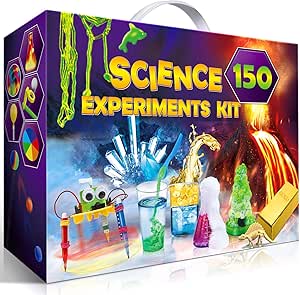 | Best Variety for the Price | Brand: UNGLINGA | Age Range: 8 years and up | Number of Experiments: 150 | VIEW LATEST PRICE | See Our Full Breakdown |
| National Geographic Junior Chemistry Set with 50 Experiments for Kids |  | Best for Preschool Scientists | Brand: Blue Marble / National Geographic | Age Range: 4 years and up | Educational Objective: STEM, early chemistry | VIEW LATEST PRICE | See Our Full Breakdown |
| Doctor Jupiter Ultimate Science Experiments Kit for Kids Ages 8+ |  | Best Gift-Ready Starter Kit | Brand: Doctor Jupiter | Age Range: 8 years and up | Number of Experiments: 50+ | VIEW LATEST PRICE | See Our Full Breakdown |
| National Geographic Magic Chemistry Set with 10 Tricks for Kids Ages 8-12 |  | Best for Reluctant Scientists | Brand: National Geographic | Age Range: 8-12 years | Number of Experiments: 10 magic tricks | VIEW LATEST PRICE | See Our Full Breakdown |
| Butterfly EduFields Girls Science Kit with 100+ Experiments |  | Best for Preschool Scientists | Age Range: 4 years & up | Number of Items: 30 | Components: Test tubes, measuring spoons, stir sticks, volcano mold, food colors, masks, gloves, instruction manual, bonus booklet | VIEW LATEST PRICE | See Our Full Breakdown |
| National Geographic Science Magic Kit with 100+ Experiments |  | Best for Reluctant Scientists | Brand: Blue Marble (National Geographic) | Age Range: 8 years and up | Included Components: Materials for 20 magic experiments, bonus booklet with 85+ additional experiments | VIEW LATEST PRICE | See Our Full Breakdown |
| Doctor Jupiter My First Science Experiments Kit |  | Best Value Intro Kit | Number of Experiments: 50+ | Recommended Age: 4+ | Safety Standards: ASTM F963-17 | VIEW LATEST PRICE | See Our Full Breakdown |
| 58-Piece Kids Microscope Kit |  | Best Longevity Pick | Magnification: 100X-1200X | Number of Pieces: 58 | Body Material: Metal | VIEW LATEST PRICE | See Our Full Breakdown |
| VATOS Science Circuit Kit for Kids, 68PCS Electronics Building Kit |  | Best for Future Engineers | Number of Pieces: 68 | Projects Included: 450+ | Power Modes: Battery-powered and hand-operated generator | VIEW LATEST PRICE | See Our Full Breakdown |
| Creativity for Kids Grow ‘N Glow Terrarium Kit |  | Best for Young Nature Lovers | Recommended Age: 6+ | Activity Type: Botany / craft hybrid terrarium | Includes: Plastic terrarium jar, potting mix, chia and wheatgrass seeds, glow-in-the-dark figurines, stickers | VIEW LATEST PRICE | See Our Full Breakdown |
| National Geographic Earth Science Kit with 100+ Activities for Kids 8-12 | 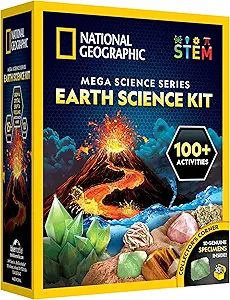 | Best for Broad Curiosity | Brand: Blue Marble (National Geographic) | Recommended Age: 8-12 years | Activities: 100+ science experiments and activities | VIEW LATEST PRICE | See Our Full Breakdown |
| UNGLINGA 40+ Experiments Science Kit for Kids Chemistry Set STEM Toy |  | Best Budget-Friendly Starter Set | Number of Experiments: Over 40 | Activity Type: Chemistry-focused STEM projects | Includes: All core materials; some household items required separately | VIEW LATEST PRICE | See Our Full Breakdown |
| National Geographic Amazing Chemistry Set with 100+ Experiments for Kids Ages 8-12 |  | Best Deep-Dive Chemistry Pick | Recommended Age: 8-12 years | Number of Experiments: 100+ (15 core plus 85 bonus) | Included Tools: Test tubes, beakers, pipettes | VIEW LATEST PRICE | See Our Full Breakdown |
| educational science kits for kid | Brand | Age Range | Number of Experiments |
|---|---|---|---|
| National Geographic Ultimate V | Blue Marble / National Geographic | 8 years and up | — |
| UNGLINGA 150 Experiments Scien | UNGLINGA | 8 years and up | 150 |
| National Geographic Junior Che | Blue Marble / National Geographic | 4 years and up | 50 |
| Doctor Jupiter Ultimate Scienc | Doctor Jupiter | 8 years and up | 50+ |
| National Geographic Magic Chem | National Geographic | 8-12 years | 10 magic tricks |
| Butterfly EduFields Girls Scie | — | 4 years & up | — |
| National Geographic Science Ma | Blue Marble (National Geographic) | 8 years and up | — |
| Doctor Jupiter My First Scienc | — | — | 50+ |
| 58-Piece Kids Microscope Kit | — | — | — |
| VATOS Science Circuit Kit for | — | — | — |
| Creativity for Kids Grow ‘N Gl | — | — | — |
| National Geographic Earth Scie | Blue Marble (National Geographic) | — | — |
| UNGLINGA 40+ Experiments Scien | — | — | Over 40 |
| National Geographic Amazing Ch | National Geographic | — | 100+ (15 core plus 85 bonus) |
More Details on Our Top Picks
National Geographic Ultimate Volcano Science Kit for Kids Ages 8-12
Most kits in this roundup chase breadth — dozens or hundreds of small experiments — while this one goes deep on a single subject, and that focus is its whole appeal. Kids build, paint, and erupt their own volcano, and the inclusion of real volcanic rock samples turns a one-time craft into an actual geology lesson. Compared with the National Geographic Earth Science Kit with 100+ Activities, which samples many topics briefly, this option builds sustained engagement with one concept over several sessions.
The tradeoff is obvious: after the included eruption powder runs out, you’re supplementing with baking soda and vinegar from the pantry. Setup involving plaster also takes patience and adult help for younger kids.
Pros:- Real volcanic rocks add genuine educational depth
- Reusable mold allows repeated eruptions
- Combines craft (painting) with science (chemistry and geology)
- Pop crystals add sensory excitement that keeps kids coming back
Cons:- Consumable eruption powder runs out and needs replacement
- Plaster setup is messy and complex for kids to do alone
- Covers only one narrow scientific topic
Best for: Kids ages 8-12 who already love geology or dinosaurs and want a project they can build and show off, not just consume
Not ideal for: Families wanting long-term variety on a single purchase — one themed kit can’t match the breadth of the UNGLINGA 150-experiment set
- Brand:Blue Marble / National Geographic
- Age Range:8 years and up
- Educational Objective:STEM, Geology, Earth Science
- Included Components:Volcano plaster, reusable mold, paints, paint brush, eruption powder, pop crystals, real volcanic rocks, learning guide
- Model Number:NGVOLCANOULT
- Manufacturer:JMW Sales, Inc.
- Warranty:Manufacturer’s warranty available
Our verdict“A strong pick for a child who thrives on a multi-day building project rather than quick, varied experiments.”
UNGLINGA 150 Experiments Science Kit for Kids – Chemistry, Physics, Earth Science
If the guiding question is ‘how much discovery can one box deliver,’ this kit wins on sheer volume: 150 experiments spanning chemistry, physics, and earth science. Compared with the Doctor Jupiter Ultimate Science Kit at roughly 50 experiments, this option roughly triples the activity count, making it the better choice for siblings sharing one kit or a child who burns through projects quickly.
The catch is that quantity comes with uneven depth — many experiments are simple demonstrations rather than repeatable investigations, and some require pantry items the box doesn’t include. The Butterfly EduFields Girls Science Kit offers friendlier materials for the 4-8 crowd, while this one leans toward kids who can read instructions independently.
Pros:- 150 experiments across multiple science disciplines
- Kid-friendly tools included for genuine hands-on work
- Well-illustrated manual kids can follow independently
- Exceptional cost-per-experiment value
Cons:- Some experiments require additional household items
- Limited safety documentation in the instructions
- Individual experiments are shallower than themed kits like the volcano set
Best for: Budget-conscious families with kids 8+ who want maximum experiment count and don’t mind gathering household supplies
Not ideal for: Parents of kids under 8 or those wanting a polished, safety-documented set — safety information is thin and several activities need adult supervision
- Brand:UNGLINGA
- Age Range:8 years and up
- Number of Experiments:150
- Subjects Covered:Chemistry, Physics, Earth Science
- Includes:Science tools and materials, illustrated instruction manual
- Recommended Uses:Educational, gifts, learning activities at home or school
Our verdict“The best value play in this lineup for families prioritizing quantity and variety over depth in any single topic.”
National Geographic Junior Chemistry Set with 50 Experiments for Kids
This set earns its spot by solving a problem most kits here ignore: age-appropriate science for 4-year-olds. While nearly every other option in this roundup starts at 8, this one pairs 20-plus durable, child-safe lab tools with 50 experiments built around household items like baking soda and vinegar, so the wow factor comes from safe reactions rather than anything hazardous.
Compared with the Doctor Jupiter My First Science Kit for Ages 4+, the National Geographic name brings a more polished, illustrated manual and real lab gear like test tubes and goggles, which makes little kids feel like genuine scientists. The drawback is pacing: a confident 8-year-old will outgrow these experiments fast, and not every activity includes all materials.
Pros:- One of the few quality kits rated for ages 4 and up
- 20+ durable, child-safe lab tools including goggles and test tubes
- 50 experiments with clear illustrated instructions
Cons:- Relies on household items not included in the box
- Too basic for older elementary kids
- Adult supervision still needed for several activities
Best for: Parents of children ages 4-7 who want an introduction to STEM concepts with durable tools and safe, simple experiments
Not ideal for: Kids 8 and up — the experiments will feel babyish next to the Magic Chemistry Set or the 150-experiment UNGLINGA kit
- Brand:Blue Marble / National Geographic
- Age Range:4 years and up
- Educational Objective:STEM, early chemistry
- Number of Experiments:50
- Included Components:Test tubes, goggles, and 20+ lab tools with instruction guide
- Model Number:NGJRCHEMT
Our verdict“The clear first-science-kit choice for preschool and early-elementary kids, as long as parents expect to stay involved.”
Doctor Jupiter Ultimate Science Experiments Kit for Kids Ages 8+
Doctor Jupiter’s kit lands high on the bestseller charts for a reason: it strikes a balanced middle ground between the one-trick volcano kit and the sprawling 150-experiment UNGLINGA box. With 50+ experiments, clearly written manuals, and materials certified to ASTM safety standards, it’s the most giftable option here — a claim backed by its #4 ranking in educational science kits.
What separates it from the National Geographic Amazing Chemistry Set is breadth beyond chemistry alone, plus a starter-chemical assortment (citric acid, Epsom salt, crystal powder, glow powder) that enables genuinely satisfying reactions out of the box. The tradeoff: like the UNGLINGA kit, some experiments still require pantry items, and younger siblings under 8 are left out entirely — Doctor Jupiter’s own My First Science Kit covers that gap.
Pros:- 50+ experiments with genuinely engaging reactions like glow and crystal growth
- Materials meet ASTM safety standards
- Manuals written for kids and parents to follow together
Cons:- Some experiments require extra household items
- Excludes younger children with a firm 8+ age floor
- Fewer total experiments than the similarly priced UNGLINGA 150 kit
Best for: Gift-givers (birthdays, holidays) seeking a polished, safe, well-rounded kit for a child 8+ who is new to home science
Not ideal for: Families with kids under 8, or buyers who already own a large multi-experiment set — there’s overlap with the UNGLINGA lineup
- Brand:Doctor Jupiter
- Age Range:8 years and up
- Number of Experiments:50+
- Included Components:Baking soda, citric acid, Epsom salt, crystal powder, glow powder, instruction manuals
- Part Number:USK Starter
- Manufacturer:Metis Learning Solutions Private Limited
- Safety Certification:ASTM safety standards
Our verdict“A dependable, safety-certified gift pick that trades maximum experiment count for polish and reliability.”
National Geographic Magic Chemistry Set with 10 Tricks for Kids Ages 8-12
Some kids don’t want to ‘do science’ — they want to perform. This kit is the hook: 10 chemistry experiments disguised as magic tricks, complete with a wand, gloves, and show-ready effects like floating coins and color-changing water. It’s the smallest kit on this list by far, but that misses the point — the payoff is a performance to show family, which builds confidence in kids who resist traditional STEM sets.
Compared with the larger National Geographic Science Magic Kit with 100+ Experiments, this version is cheaper and less intimidating, making it a low-risk entry point. But a curious kid will exhaust all 10 tricks within a few sessions, so families wanting longevity should step up to the bigger magic kit or the Doctor Jupiter set instead.
Pros:- Magic framing motivates kids who resist traditional science kits
- All tools, wand, and gloves included — nothing extra to buy
- Each trick doubles as a real chemistry lesson
- Compact and affordable as a stocking-stuffer or small gift
Cons:- Only 10 experiments — the shortest lifespan of any kit here
- Narrow 8-12 age window
- Adult supervision needed for several tricks
Best for: Kids ages 8-12 who love performing and magic but are lukewarm about science — this converts showmanship into STEM interest
Not ideal for: Kids who devour experiments quickly — 10 tricks won’t last a weekend compared with the 150-experiment UNGLINGA set
- Brand:National Geographic
- Age Range:8-12 years
- Number of Experiments:10 magic tricks
- Educational Objective:Chemistry through magic performance
- Included Components:Experiment tools, magic wand, gloves, illustrated experiment guide
- Format:All-in-one performance kit
Our verdict“A gateway kit best treated as an appetizer that turns magic-loving kids into scientists — not a main course.”
Butterfly EduFields Girls Science Kit with 100+ Experiments
Most kits in this roundup start at age 6 or 8, which leaves younger kids watching from the sidelines. Butterfly EduFields fills that gap with experiments scaled down for the 4-to-8 crowd — think color mixing and volcano eruptions rather than precise chemistry. The kit includes real lab touches like test tubes, gloves, and masks, which makes little ones feel like genuine scientists without the frustration older-kid kits would cause. Compared with the Doctor Jupiter My First Science Kit, this option trades some depth for a wider age appeal and more experiment variety. The tradeoff is honest: a 10-year-old will outgrow it fast, and the small parts mean close supervision for the youngest users.
Pros:- Over 100 experiments scaled for young attention spans
- Includes protective gear like gloves and masks for realistic lab play
- Meets ASTM F963-17 safety standards
- Kid-friendly instruction manual with a bonus experiment booklet
Cons:- Small parts pose a choking hazard for kids under 4
- Older siblings will find the experiments too basic
- Nearly every activity requires an adult helper
Best for: Parents of 4-to-6-year-olds who want a first science kit that builds confidence before graduating to bigger chemistry sets
Not ideal for: Families with kids over 8 — the activities are too simple to hold their interest compared with National Geographic kits
- Age Range:4 years & up
- Number of Items:30
- Components:Test tubes, measuring spoons, stir sticks, volcano mold, food colors, masks, gloves, instruction manual, bonus booklet
- Safety Standards:ASTM F963-17
- Model Number:518
- Manufacturer:Butterfly EduFields
Our verdict“A gentle, safety-conscious on-ramp to science for preschoolers who aren’t ready for the 8+ chemistry sets elsewhere in this guide.”
National Geographic Science Magic Kit with 100+ Experiments
The clever move here is packaging: this kit converts science into magic tricks, which works on kids who roll their eyes at a chemistry set. You get materials for 20 polished tricks plus a bonus booklet with 85+ more, so the total project count rivals the National Geographic Amazing Chemistry Set. Compared with that chemistry-focused sibling kit, this one leans on performance and showmanship — your child learns the science, then demonstrates it to family. The Blue Marble brand backing means instruction quality is reliably clear. Be aware that only 20 experiments come with included materials; the rest need pantry staples, and the trick-based framing may feel gimmicky to a kid who already loves straight-up lab work like the VATOS circuit kit offers.
Pros:- Over 100 combined experiments and magic tricks
- Bonus booklet with 85+ additional activities extends longevity
- Strong brand reputation for clear, educational instructions
- Blends STEM learning with performance and creativity
Cons:- Only 20 experiments include materials; the rest require household items
- Adult supervision needed for several tricks
- Single set — heavy users will exhaust the included supplies
Best for: Parents of showmanship-minded 8-to-12-year-olds who resist traditional science activities but love performing
Not ideal for: Kids who want pure lab experiments — the magic framing adds steps without adding chemistry depth
- Brand:Blue Marble (National Geographic)
- Age Range:8 years and up
- Included Components:Materials for 20 magic experiments, bonus booklet with 85+ additional experiments
- Model Number:NGMEGAMAGIC
- UPC:816448027680
Our verdict“The smartest choice in this lineup for converting a magic-obsessed kid into a science fan.”
Doctor Jupiter My First Science Experiments Kit
When budget is the deciding factor, this Doctor Jupiter kit delivers the most guided fun per dollar for the 4+ crowd. Its 50+ experiments — volcanoes, oobleck, even perfume-making — cover the classic wow moments without the higher price of the Butterfly EduFields kit, which offers more experiments but at a younger skew and similar ingredient simplicity. The illustrated instructions are unusually good for this price tier, letting early readers take the lead while a parent supervises. Compared with the Doctor Jupiter Ultimate Science Kit for Ages 8+, this version keeps everything messier, simpler, and more tactile. The compromises are real: some experiments require pantry items you may not have, and the included plastic tools are functional rather than durable.
Pros:- 50+ experiments at an accessible price point
- Well-illustrated instructions kids can follow semi-independently
- Promotes screen-free, hands-on STEM learning
- Materials meet ASTM F963-17 safety standards
Cons:- Some experiments need additional household items
- Included tools prioritize low cost over durability
- Constant adult supervision required for younger kids
Best for: Budget-conscious gift-givers who want a complete-feeling starter kit for a 4-to-7-year-old
Not ideal for: Buyers wanting zero extra shopping — several experiments require additional household ingredients
- Number of Experiments:50+
- Recommended Age:4+
- Safety Standards:ASTM F963-17
- Signature Activities:Volcanoes, oobleck, perfume-making
- Learning Focus:STEM, critical thinking, problem-solving
- Instruction Style:Illustrated, easy-to-follow manual
Our verdict“The cheapest credible entry point into science play in this roundup, best paired with a well-stocked pantry.”
58-Piece Kids Microscope Kit
Every other kit in this roundup gets consumed — experiments run out, chemicals get used up. A microscope never runs out of experiments, because a leaf, a fingerprint, or a drop of pond water becomes the next project. This 58-piece set includes prepared specimens, blank slides, and lab tools, plus a metal body that outclasses the plastic construction typical at this price. The 100X-1200X magnification range is genuinely useful for a 5-to-12-year-old exploring insects and plants, though a serious middle-schooler will eventually hit its ceiling. Compared with the VATOS circuit kit, which also offers open-ended building, this one skews toward biology and observation rather than engineering. Remember to add 2 AA batteries to your cart — they aren’t included.
Pros:- Reusable tool rather than a consumable kit — no expiration on play value
- 58 pieces including prepared specimens and lab accessories
- Metal body with LED illumination for clearer viewing than plastic rivals
- Works equally well for home school or classroom settings
Cons:- Requires 2 AA batteries not included
- Magnification limited for older or advanced users
- Prepared specimens run out, leaving kids to source their own samples
Best for: Families who want an open-ended science tool that stays engaging for years instead of a consumable experiment kit
Not ideal for: Advanced students — the magnification range tops out where serious hobbyist microscopes begin
- Magnification:100X-1200X
- Number of Pieces:58
- Body Material:Metal
- Light Source:LED
- Recommended Age:5-12
- Dimensions:4.6″L x 2.75″W x 8.15″H
- Batteries:2 AA required (not included)
Our verdict“The best investment for a curious kid who will still be exploring slides long after the volcano kits are empty.”
VATOS Science Circuit Kit for Kids, 68PCS Electronics Building Kit
Chemistry kits dominate this roundup, so the VATOS circuit kit stands apart by teaching electricity, optics, and energy — subjects almost nobody else here touches. With 450+ projects including illuminated castles, electric fans, and rotational imaging displays, the project count dwarfs anything else in this guide, including the UNGLINGA 150 Experiments kit. The hand-crank generator is the standout feature: kids can see their own muscle power converted into light and motion, a lesson no food-coloring volcano delivers. Snap-together insulated cables keep assembly safe for the 6+ range, though younger builders will need an adult for the more involved projects. The main limitation is focus — a kid who wants bubbling reactions and color changes will find this kit dry, and batteries for the standard power mode aren’t in the box.
Pros:- 450+ projects, the largest project count in this roundup
- Covers circuits, optics, and energy instead of just chemistry
- Hand-operated generator teaches power generation without batteries
- Insulated snap cables make assembly safe for independent play
Cons:- Batteries not included for the standard power mode
- Complex projects frustrate kids at the younger end of the range
- Narrow age window of 6-12 limits sibling sharing
Best for: Engineering-minded 7-to-12-year-olds who’d rather build circuits and light things up than mix chemicals
Not ideal for: Kids drawn to chemistry-style reactions — there are no bubbling, fizzing, or color-change experiments here
- Number of Pieces:68
- Projects Included:450+
- Power Modes:Battery-powered and hand-operated generator
- Recommended Age:6+
- Material:High-quality ABS
- Includes:22 circuit cables, 4 four-head converters
- Learning Focus:Circuits, optics, energy concepts
Our verdict“The clear pick for hands-on kids who think in wires and switches instead of beakers and bubbles.”
Creativity for Kids Grow ‘N Glow Terrarium Kit
Amid a lineup dominated by multi-experiment chemistry sets, this terrarium kit takes a different approach: one slow project instead of forty quick ones. Kids build a mini ecosystem, plant chia and wheatgrass seeds, and watch it sprout within days — then decorate it with glow-in-the-dark figurines. Compared with the National Geographic Earth Science Kit, the payoff here is quieter but longer-lasting, because the terrarium becomes a living decoration rather than a finished experiment. The tradeoff is real, though: it’s essentially single-use for planting, and younger children may struggle with the small components. This pick makes the most sense for parents who want to teach patience and nurturing alongside science, rather than fast reaction-based excitement.
Pros:- Combines STEM learning with arts and crafts in one activity
- Fast 3-4 day grow time keeps kids engaged
- Teaches responsibility and plant-care habits
- Glow-in-the-dark elements add lasting decorative appeal
Cons:- Limited to a single planting cycle with included seeds
- Requires regular watering and patience kids may not have
- Small figurines and seeds are tricky for younger children
Best for: Parents of kids aged 6-8 who want a calm, craft-meets-science project that teaches responsibility over several days
Not ideal for: Families seeking repeatable experiments — once the seeds are planted, the core activity is done
- Recommended Age:6+
- Activity Type:Botany / craft hybrid terrarium
- Includes:Plastic terrarium jar, potting mix, chia and wheatgrass seeds, glow-in-the-dark figurines, stickers
- Grow Time:3-4 days
- Experiments:Single ongoing project
- Reuse Potential:Limited — one planting cycle with included supplies
Our verdict“A gentle, one-project kit best for younger kids who’d rather grow something than mix chemicals.”
National Geographic Earth Science Kit with 100+ Activities for Kids 8-12
Where the Amazing Chemistry Set goes deep on one discipline, this kit spreads across geology, volcanoes, crystals, and earth science — a breadth-first approach that suits kids who haven’t settled on a favorite science yet. With over 100 activities and a full-color learning guide, it stands out for turning each experiment into a mini lesson rather than a one-off spectacle. Compared with the UNGLINGA 40+ Experiments kit, the volume here is dramatically higher, though many activities are smaller-scale demonstrations rather than full experiments. The tradeoff: some projects demand adult supervision and household supplies, and younger kids in the 8-12 range may find certain geology concepts abstract without help.
Pros:- Over 100 activities spanning multiple earth science topics
- Detailed full-color learning guide explains the science behind each activity
- Award-winning kit from a reputable brand
- Broader topic coverage than chemistry-only alternatives
Cons:- Some experiments require adult supervision and household items
- Complexity skews toward the older end of the age range
- Many activities are quick demonstrations rather than repeatable experiments
Best for: Kids aged 8-12 who like variety and want to sample volcanoes, crystals, and geology before committing to one specialty
Not ideal for: Households without an adult willing to help — several activities require supervision and materials from the kitchen
- Brand:Blue Marble (National Geographic)
- Recommended Age:8-12 years
- Activities:100+ science experiments and activities
- Topics:Volcanoes, crystal growing, geologic digs, earth science
- Guide:Full-color detailed learning guide
- Objective:STEM education
- Warranty:Backed by exceptional customer service
Our verdict“The most versatile pick in the roundup for kids who want to try a bit of everything earth science has to offer.”
UNGLINGA 40+ Experiments Science Kit for Kids Chemistry Set STEM Toy
This is the low-commitment entry point of the chemistry-focused options. At roughly a third of the experiment count of the National Geographic Amazing Chemistry Set, it trades volume for affordability and simplicity — the illustrated, step-by-step instructions are among the friendliest for first-time young scientists. Activities like bouncy balls and lava lamps deliver immediate, satisfying results, which matters for kids who lose interest if nothing happens fast. The compromises are predictable: some household items aren’t included, so expect supply-gathering between experiments, and younger children will need an adult nearby. Compared with the Doctor Jupiter My First Science Kit, this skews slightly older but offers more chemistry depth per dollar.
Pros:- Affordable entry point for hands-on chemistry
- Clear, child-friendly illustrated instructions
- All core materials included for immediate setup
- Fun, visual experiments like lava lamps with quick payoffs
Cons:- Some experiments require household items not in the box
- Smaller experiment library than similarly priced competitors
- Younger children need adult supervision throughout
Best for: Budget-conscious parents testing whether their child enjoys chemistry before investing in a larger 100+ experiment set
Not ideal for: Kids who already devour science kits — 40 experiments will run out quickly compared to bigger alternatives
- Number of Experiments:Over 40
- Activity Type:Chemistry-focused STEM projects
- Includes:All core materials; some household items required separately
- Instructions:Step-by-step, child-friendly illustrations
- Adult Supervision:Recommended for younger children
- Positioning:Budget starter chemistry set
Our verdict“A sensible, low-risk first chemistry set — just don’t expect it to satisfy a seasoned junior scientist for long.”
National Geographic Amazing Chemistry Set with 100+ Experiments for Kids Ages 8-12
This is the kit for the kid who has already decided chemistry is their thing. Unlike the Earth Science Kit’s breadth-first approach, this one goes all-in on chemistry with color-changing solutions, glowing test tubes, crystal growth, and 85 bonus experiments extending play well past the initial 15. The standout difference from the UNGLINGA 40+ set is the inclusion of real scientific tools — test tubes, beakers, and pipettes — which makes kids feel like actual chemists rather than crafters following a recipe. The tradeoff: it’s chemistry-only, so a child with broader interests may find the theme repetitive, and younger users in the 8-12 range will need supervision plus a few household supplies for certain experiments.
Pros:- 100+ experiments plus 85 bonus activities for exceptional longevity
- Includes real lab equipment: test tubes, beakers, pipettes
- Extensive experiment guide supports independent learning
- Reputable National Geographic brand with strong educational pedigree
Cons:- Limited to chemistry — no physics, geology, or biology coverage
- Some experiments need household items not included
- Younger children require adult supervision for safety
Best for: Kids aged 8-12 who are specifically fascinated by chemistry and want real lab tools, not just toy components
Not ideal for: Kids with general science curiosity — the single-discipline focus can’t match the variety of the Earth Science Kit
- Recommended Age:8-12 years
- Number of Experiments:100+ (15 core plus 85 bonus)
- Included Tools:Test tubes, beakers, pipettes
- Focus:Chemistry only
- Guide:Extensive experiment guide with bonus activities
- Adult Supervision:Required for younger children
- Brand:National Geographic
Our verdict“The deepest chemistry experience in the lineup — ideal for a committed young chemist, overkill for a generalist.”

How We Picked
I evaluated each kit against five buyer-relevant criteria: age-appropriateness (does the difficulty match the stated age range, and can a child actually do the steps), instruction clarity (whether the manual teaches the underlying science or just lists steps), safety and supervision needs (common ingredients, required protective gear, how much adult help is realistic), replay value (whether experiments can be repeated or extended, and whether refills are affordable), and value per experiment (total cost divided by genuinely distinct activities, not padded counts).
The ranking logic favors kits that a child can return to repeatedly over one-shot spectaculars, which is why multi-experiment chemistry sets fill the top slots and single-project kits sit lower despite being excellent at what they do. I also weighted how honestly each kit markets itself: a ‘100+ experiments’ claim that counts color variations as separate experiments lost points against a kit with 40 genuinely distinct projects. Specialty tools like the microscope and circuit kit were judged within their own niche, then slotted by how broadly they appeal to a general buyer.
| educational science kits for kid | Brand |
|---|---|
| National Geographic Ultimate V | Blue Marble / National Geographic |
| UNGLINGA 150 Experiments Scien | UNGLINGA |
| National Geographic Junior Che | Blue Marble / National Geographic |
| Doctor Jupiter Ultimate Scienc | Doctor Jupiter |
| National Geographic Magic Chem | National Geographic |
| Butterfly EduFields Girls Scie | — |
| National Geographic Science Ma | Blue Marble (National Geographic) |
| Doctor Jupiter My First Scienc | — |
| 58-Piece Kids Microscope Kit | — |
| VATOS Science Circuit Kit for | — |
| Creativity for Kids Grow ‘N Gl | — |
| National Geographic Earth Scie | Blue Marble (National Geographic) |
| UNGLINGA 40+ Experiments Scien | — |
| National Geographic Amazing Ch | National Geographic |
Factors to Consider When Choosing Educational Science Kits For Kids
Before picking a kit, it helps to understand what actually drives satisfaction in this category. These are the factors that separated the winners from the shelf-sitters in my comparison.Match the Kit to the Child’s Actual Age, Not the Box Range
Manufacturer age ranges are often generous, and this comparison made that pattern obvious. Kits labeled for ages 4-8 typically assume an adult is doing half the work: measuring, pouring, and explaining. A child at the bottom of a stated range will need you at the table for nearly every experiment, while a child at the top may find the same kit babyish. My advice is to buy toward the middle-to-upper end of the age range for gift-giving, and toward the lower end only if you plan to do the kit together. Also pay attention to fine-motor demands, which the box rarely mentions. A six-year-old can understand a baking-soda reaction but will struggle with droppers and small measuring cups. If your child gets frustrated easily, kits with fewer, bigger experiments beat kits with many fiddly steps every time.
Experiment Count Is the Most Misleading Number on the Box
‘100+ experiments’ is a marketing framework, not a fact you can compare across brands. Some manufacturers count every color or shape variation of the same activity as a separate experiment, which is how a 100-experiment kit can contain maybe 25 genuinely distinct projects. When comparing kits, look at how many different materials and reaction types are included rather than the headline number. A kit with 40 truly different experiments almost always beats a padded 150-experiment kit in lasting engagement. Also check whether the experiments build on each other. The best kits in this roundup sequence activities so concepts compound, while padded kits present 100 disconnected five-minute diversions. Read the activity list on the box or product page if it is shown, because that reveals more than any count.
One-Shot Kits Versus Replayable Kits
This is the tradeoff most buyers underestimate. A volcano kit or terrarium is a single memorable event, and there is real value in that: a dramatic eruption can spark an interest that lasts for years. But once the baking soda is spent and the crystals have grown, the kit is done. General chemistry sets cost more upfront but deliver a dozen or more sessions, and many can be extended with kitchen supplies like vinegar, food coloring, and dish soap. Before buying a one-shot kit, check whether refills or replacement powders are sold separately and what they cost, because some branded refill packs cost nearly as much as a new kit. If your budget covers only one purchase this year and you want maximum hours of engagement, a broad chemistry set is the safer bet. If you want a birthday-morning spectacle, the one-shot kits do that job better than anything else.
Supervision, Safety, and Mess Expectations
Nearly every kit in this category uses household-safe ingredients, but ‘safe’ does not mean ‘neat’ or ‘independent.’ Expect fizzing overflow, dyed liquids, and powder spills with almost any chemistry set, and plan the location accordingly: a kitchen table beats a carpeted bedroom every time. Kits that include goggles and gloves in the box scored higher in my comparison because they remove a purchasing hurdle and set the right safety habits early. Check what the kit requires you to supply, too. Many assume you have vinegar, cooking oil, or dish soap on hand, which is usually fine, but a few spring less common items on you midway through the manual. For kids under eight, treat the manual’s supervision guidance as a floor, not a ceiling, and expect to lead at least the first several experiments yourself.
Does the Kit Teach Science or Just Perform Tricks?
The difference between a good educational kit and a dressed-up toy is whether the manual explains why something happens. Some kits in this space, especially magic-themed ones, present experiments as illusions to perform and skip the chemistry entirely. That can be a great hook for a reluctant learner, but it transfers less knowledge per session. Look for kits with explanations of the reaction, follow-up questions, or ‘try this next’ variations, because those features are what turn a fun afternoon into actual learning. The strongest manuals in my comparison connected each activity to a real-world concept kids could recognize later. If your goal is genuine STEM learning rather than entertainment, read manual excerpts in reviews before buying, since the quality gap between brands is wide.
Specialty Kits: Buy the Interest, Not the Kit
Microscopes, circuit kits, and terrariums are wonderful, but they only pay off when they match a specific interest. A child who asks constant questions about how things work will get hundreds of hours from an electronics building kit, while a child without that curiosity may open it once. The reverse is true of general chemistry sets, which rely on universal appeal but go less deep on any single topic. A sensible strategy many families use is to start with a broad kit, watch which experiments light the child up, then follow up with the specialty kit that matches that interest a few months later. Also note that specialty kits have longer usable lifespans: a good microscope or circuit set can serve a child for several years as their skills grow, while a chemistry set is typically consumed within weeks.
Frequently Asked Questions
What age is the right age to start with a science kit?
Most children are ready around age four, but the kit type matters more than the number. Kits designed for preschoolers, like the Doctor Jupiter My First Science Kit, use color mixing, bubbles, and simple reactions that a four-year-old can grasp with an adult doing the measuring. Between six and eight, kids can take over more of the hands-on work and handle kits with 40 to 100 experiments, though reading support is still usually needed. From about eight onward, children can work through well-written manuals largely independently, which is why so many kits in this category target ages 8-12. Starting too early rarely causes harm, but it can waste a kit you would get more value from a year or two later.
Are the chemicals in these kits actually safe for kids?
For the kits in this roundup, yes, with reasonable precautions. The chemistry sets here are built around household-safe materials like citric acid, baking soda, red cabbage powder, and vegetable dyes rather than genuine laboratory reagents, which is why they are sold as toys rather than lab equipment. The real risks are minor: splashes in eyes, stained clothing, and accidental ingestion of powders by younger siblings. Goggles and a supervised workspace handle nearly all of it, and the kits that include protective gear make that easier. The one habit worth enforcing is washing hands after every session, mostly to build good lab practice for when they eventually encounter real chemistry later in school.
Is a big 100+ experiment kit better than a smaller focused one?
It depends on what you are buying for, and the comparison revealed a clear split. Big kits win on hours of engagement per dollar and give kids a buffet of topics, which is great when you are not sure what interests them yet. Smaller kits, like the 10-trick Magic Chemistry Set or the volcano kit, tend to have more polished, dramatic single experiences with better production value per activity. The catch with big kits is quality variance: some of the ‘experiments’ are thin variations of each other, so check reviews for whether the count feels honest. If you are gifting for a single occasion, a focused kit creates a stronger memory. If you want a rainy-day activity bank for the whole season, go big.
What extra supplies do I need to buy beyond what’s in the box?
Almost every kit in this category assumes you will add common household items, and the manual usually lists them early. Plan on having vinegar, baking soda (if not included), dish soap, cooking oil, food coloring, paper towels, and a few cups or bowls on hand. Watercolor markers and a flashlight occasionally appear on supply lists for specific experiments in earth science and circuit kits. The surprise costs come from kits that consume included powders quickly, particularly volcano and crystal-growing kits, where a refill pack may be needed after just a few uses. Before the first session, read the supply list cover to cover and gather everything, because hunting for vinegar mid-experiment is the fastest way to lose a child’s attention.
Which type of science kit holds a kid’s attention the longest?
In this comparison, open-ended building kits and microscopes held attention longest, followed by broad chemistry sets, with one-project kits finishing fastest. The VATOS circuit kit stands out for longevity because 450+ project combinations mean the kit keeps offering new challenges long after the first build, and the microscope rewards repeated exploration of whatever your child can find around the house. Broad chemistry sets typically deliver eight to fifteen solid sessions before running low on supplies. One-shot kits like the volcano and terrarium provide one or two excellent sessions, but the terrarium earns bonus longevity since the plants keep growing for months. Match the format to your child: tinkerers stay engaged longest with circuits, observers with microscopes, and experimenters with chemistry sets.
Conclusion
After comparing all fourteen kits, the right choice comes down to who is opening the box. For the best overall pick, I recommend the National Geographic Amazing Chemistry Set: it combines volume, honest experiment variety, strong instruction quality, and brand reliability in a way no other kit here matches. For the best value, the UNGILINGA 150 Experiments Kit delivers the lowest cost per genuine activity and covers three science disciplines, making it ideal for families on a budget or buyers unsure which branch of science will click. On the premium end, the National Geographic Science Magic Kit and the 58-Piece Microscope Kit justify their higher prices through polish and durability, with the microscope offering years of use rather than weeks.
For beginners and younger kids ages 4-8, the Doctor Jupiter My First Science Kit is the clear starting point, and the Butterfly EduFields kit is a solid alternative if you want a larger experiment library. For specific needs: choose the VATOS circuit kit for a child fascinated by electronics, the Grow ‘N Glow Terrarium for a patient, nature-loving child, the volcano kit for a one-time spectacular gift, and the National Geographic Earth Science Kit for a child who likes variety across dig, erupt, grow, and build activities rather than pure chemistry. Whatever you pick, plan to be involved for at least the first few sessions, because the adult conversation around an experiment is often what makes it stick.