
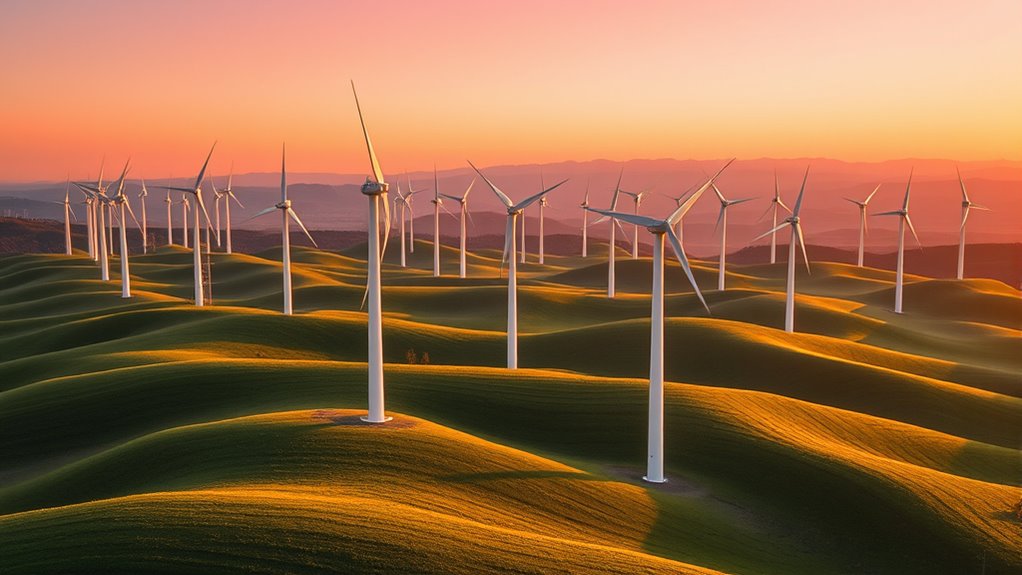

Wind power captures the kinetic energy of moving air using turbines with specially designed blades. These blades are shaped to maximize aerodynamic efficiency, mimicking airplane wings to generate lift and rotate the turbines. The location, size, and advanced control systems of turbines play a vital role in capturing wind energy effectively. As technology advances, turbines become better at producing power even in weaker breezes. Keep exploring to discover how science makes wind energy more efficient.
Key Takeaways
- Wind power converts kinetic energy from moving air into electricity using turbines.
- Blade design and aerodynamics are essential for maximizing energy capture and efficiency.
- Turbines are placed in open, windy locations like offshore sites or ridges for optimal energy generation.
- Advanced technologies such as variable pitch blades and yaw control improve turbine performance and reliability.
- Continuous innovations in materials and design enhance wind power’s sustainability and effectiveness.
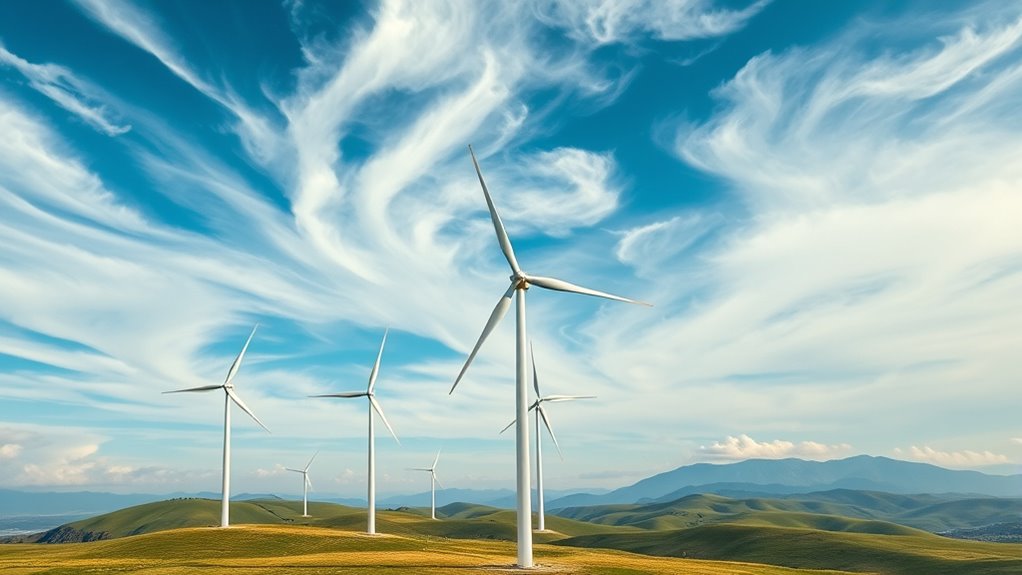
Have you ever wondered how wind can generate electricity? It might seem simple—just harness the breeze, right? But behind the scenes, there’s a fascinating science that makes this possible. The key lies in understanding aerodynamics efficiency and turbine technology. These elements determine how effectively wind energy is captured and converted into usable electricity. When wind flows over a turbine, the design of its blades plays a vital role. Aerodynamics efficiency refers to how well the blades are shaped to maximize energy capture while minimizing drag. The more aerodynamic the blades, the better they can harness even weak breezes, making wind turbines more productive and cost-effective. Modern turbine technology has advanced considerably, incorporating sleek blade designs, lightweight materials, and smart control systems that optimize performance in real-time.
Aerodynamic blade design and advanced technology maximize wind energy efficiency and productivity.
You might notice that turbines are often positioned in open, windy areas—like ridges, plains, or offshore sites. That’s because these locations typically have higher wind speeds and more consistent flow patterns. But even in these prime spots, turbine efficiency depends heavily on blade design and orientation. Engineers have developed blades with curved profiles that mimic the lift principles of airplane wings, allowing turbines to spin more smoothly and generate more electricity from the same wind speed. These aerodynamic improvements mean turbines can operate effectively at lower wind speeds, expanding the range of locations suitable for wind farms. Additionally, understanding aeroelasticity helps engineers design blades that withstand environmental stresses while maintaining efficiency.
Turbine technology keeps evolving, with innovations like variable pitch blades and yaw control systems. Variable pitch blades can rotate to adjust their angle, capturing the maximum amount of wind without overloading the system. Yaw control ensures the turbine faces into the wind constantly, which is essential for maintaining ideal aerodynamics efficiency. These advancements work together to boost overall energy output and reduce maintenance costs. Additionally, taller turbines with longer blades can access faster winds higher up, further improving efficiency. This combination of cutting-edge turbine technology and aerodynamic optimization has made wind power one of the most promising renewable sources of energy today.
As you can see, the science behind wind power involves much more than just catching the breeze. It’s about refining every aspect—blade design, materials, control systems—to guarantee turbines operate at peak efficiency. The ongoing innovations in turbine technology mean wind energy will continue to grow as a sustainable, reliable power source. So next time you see a wind turbine spinning, remember the intricate science that makes it possible—an elegant blend of aerodynamics efficiency and advanced engineering working in harmony to turn wind into electricity.
Frequently Asked Questions
How Does Wind Power Compare to Other Renewable Energy Sources?
Wind power generally offers a favorable cost comparison to other renewable sources, making it more affordable for many projects. Its scalability potential is high, allowing you to install small turbines for local use or large wind farms for national energy needs. Compared to solar or hydro, wind can generate electricity continuously in suitable locations, providing a reliable, cost-effective, and scalable renewable energy option for your sustainability goals.
What Are the Visual Impacts of Wind Turbines on Landscapes?
You’ll notice that wind turbines can cause visual intrusion and landscape disruption, especially in scenic areas. Their tall, moving blades stand out against natural horizons, sometimes altering the character of a landscape. While they provide clean energy, their presence might detract from natural beauty or historic views. It’s a balance between harnessing renewable power and preserving the visual integrity of the landscape you value.
How Does Wind Power Affect Local Wildlife and Ecosystems?
You should know that wind power can impact local wildlife and ecosystems by affecting bird migration patterns and causing habitat disruption. Birds may collide with turbines, especially during migration, leading to injuries or fatalities. Additionally, constructing wind farms can disturb habitats, displacing species and altering ecosystems. To minimize these effects, careful site selection and turbine design are essential, helping to protect wildlife while harnessing renewable energy effectively.
What Are the Common Challenges in Offshore Wind Farm Development?
Imagine steering through choppy seas filled with towering turbines—offshore wind farm development faces challenges like complex marine logistics and grid integration. You must coordinate shipping, installation, and maintenance in unpredictable weather. Ensuring reliable power transfer to the mainland requires overcoming technical hurdles and balancing environmental concerns. These obstacles demand careful planning, extensive resources, and innovative solutions to turn offshore wind into a sustainable energy source.
Can Wind Turbines Operate Efficiently in Low Wind Speed Areas?
Wind turbines can operate in low wind speed areas, but their efficiency drops markedly. When wind speeds are low, turbines generate less power, making them less effective overall. To improve turbine efficiency in these conditions, you might consider using larger blades or more advanced technology designed for low wind environments. However, keep in mind that low wind speeds still limit the energy output, so it’s important to assess if the investment is worthwhile.
Conclusion
Now that you’ve glimpsed the power of the wind, imagine harnessing its invisible force as if catching whispers from the sky. Wind turbines stand like giants, turning breezes into clean energy that fuels our future. By understanding and embracing this natural dance, you’re helping to steer our world toward a greener horizon. So, next time you feel the wind, think of it as nature’s silent symphony, waiting to be transformed into the energy that keeps our lives moving.