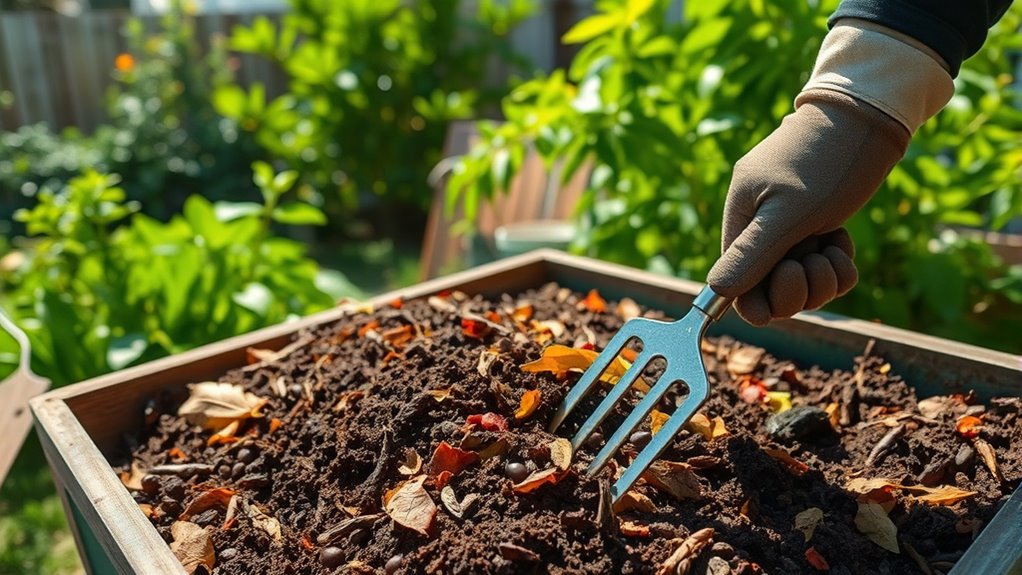

Composting works by naturally breaking down organic waste like fruit peels, grass clippings, and leaves through the activity of microbes, fungi, and microorganisms. These tiny workers consume the waste, releasing heat and transforming it into nutrient-rich, soil-like compost. Proper layering of greens and browns, along with turning the pile for oxygen, speeds up this process. Keep exploring to discover how you can turn everyday waste into healthy soil for your garden.
Key Takeaways
- Microorganisms like bacteria and fungi decompose organic waste into nutrient-rich compost.
- Proper layering of greens (nitrogen-rich) and browns (carbon-rich) optimizes microbial activity.
- Turning or aerating the compost supply oxygen, speeding up microbial breakdown.
- The decomposition process generates heat, transforming waste into dark, crumbly soil-like material.
- Mature compost enriches soil with nutrients, improving plant growth and reducing environmental waste.
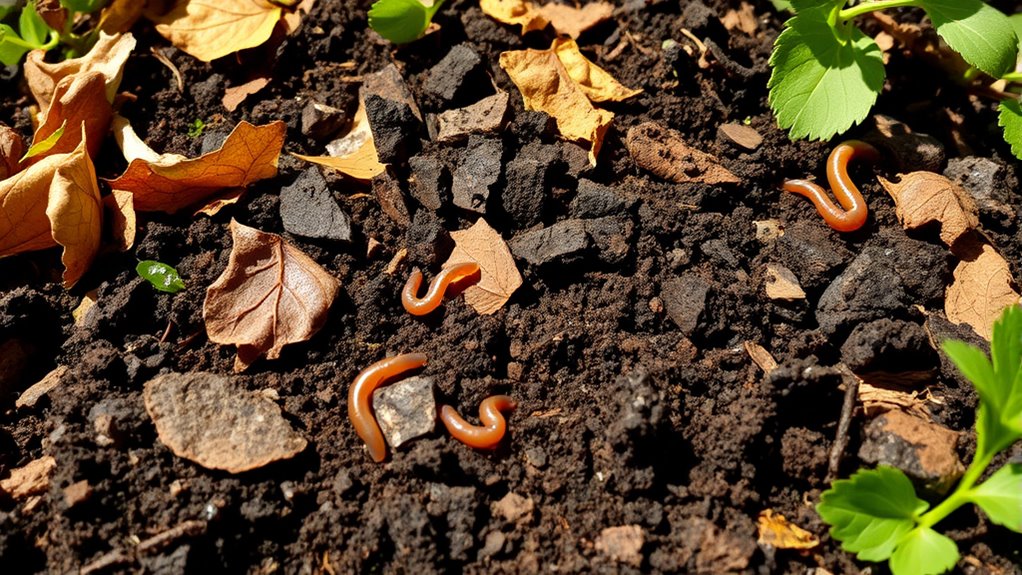
Have you ever wondered how organic waste transforms into rich soil? It’s a fascinating process that directly impacts soil health, turning everyday scraps into something valuable for your garden or farm. When you start composting, you’re fundamentally giving organic waste a second life, helping it break down naturally and enrich the soil. This process isn’t just about waste reduction; it’s about creating a nutrient-dense medium that supports healthy plant growth. Composting accelerates natural decomposition, allowing microbes, fungi, and other microorganisms to do the heavy lifting. These tiny workers digest the organic waste, breaking it down into simpler compounds that become part of the soil. As organic waste decomposes, it releases essential nutrients like nitrogen, phosphorus, and potassium, which plants need to thrive. This transformation enhances soil health by improving its structure, moisture retention, and fertility, making your garden more productive and resilient.
The process begins when you collect organic waste such as fruit peels, vegetable scraps, coffee grounds, grass clippings, and leaves. When these materials are properly layered in a compost bin or pile, they create the perfect environment for microbial activity. The key is to maintain a good balance of “greens” (nitrogen-rich materials) and “browns” (carbon-rich materials). Greens include fresh kitchen scraps, while browns are dry leaves or shredded paper. This balance fuels the microbes that break down the organic waste efficiently. As microbes consume the waste, they generate heat, turning your compost pile into a lively, warming environment. Turning or aerating the compost regularly ensures oxygen reaches the microbes, speeding up decomposition and preventing unpleasant odors. Additionally, understanding the microbial process involved can help you optimize your composting efforts.
Over time, the organic waste shrinks and darkens, transforming into a crumbly, soil-like substance. This mature compost has a rich, earthy smell and is packed with nutrients. When you add it to your garden beds, it feeds the soil, boosting its natural fertility and encouraging robust plant growth. Composting is a natural cycle that mimics nature’s way of recycling organic waste into life-giving soil. It not only reduces landfill waste but also enhances soil health by replenishing essential nutrients and improving soil structure. So, by understanding how composting works, you’re participating in a sustainable process that benefits your plants, your garden, and the environment. It’s a simple yet powerful way to turn organic waste into a resource that nurtures the earth beneath your feet.
Frequently Asked Questions
Can Composting Be Done Indoors Effectively?
Yes, you can do indoor composting effectively. Choose a suitable compost bin with good airflow and place it in a cool, dry spot away from direct sunlight. Regularly add kitchen scraps like fruit and vegetable peels, and turn the compost to speed up decomposition. Keep the bin covered to control odors. With proper compost bin placement and maintenance, indoor composting becomes manageable and eco-friendly.
How Long Does It Take for Compost to Be Ready?
Imagine waiting for a cake to bake; compost takes roughly 3 to 6 months to reach maturity. During this time, you should monitor temperature regularly—ideally keeping it between 135°F and 160°F—to speed up decomposition. Factors like ingredients, aeration, and moisture affect how quickly compost matures. With patience and proper temperature monitoring, you’ll soon have rich, dark compost ready to nourish your garden.
Are There Any Odors Associated With Composting?
You might notice some odors during composting, but with proper odor control, it shouldn’t be unpleasant. A well-maintained compost pile typically has a earthy, compost smell rather than a foul odor. To keep odors at bay, turn your compost regularly, balance greens and browns, and avoid adding meat or dairy. This approach guarantees your compost stays odor-free and smells fresh, making the process more enjoyable.
What Are Common Pests Attracted to Compost Bins?
You might attract pests like flies, rodents, or ants to your compost bin if you don’t practice pest prevention. To avoid this, choose a compost bin design that keeps pests out, such as one with a secure lid and proper ventilation. Avoid adding meat, dairy, or oily foods, and turn your compost regularly. These steps help keep pests away, ensuring your composting process stays clean and efficient.
Is Composting Suitable for All Types of Organic Waste?
Composting is suitable for most types of organic waste, including food scraps and yard waste. You can compost fruit and vegetable peels, coffee grounds, grass clippings, and leaves. However, avoid adding meat, dairy, or oily foods, as they can attract pests and slow down the process. By balancing green and brown materials, you create nutrient-rich compost that benefits your garden and reduces waste efficiently.
Conclusion
As you start composting, you’ll notice how nature subtly guides you—turning kitchen scraps into rich soil feels like a small miracle. It’s funny how a simple pile can transform waste into something life-giving, almost as if the earth has been waiting for you to join in. With patience, you’ll see the magic unfold, reminding you that sometimes, the most profound changes come from the tiniest, unexpected coincidences in your daily routine.