
TL;DR

Prime made for students and young adults
- Fast, free delivery for dorm and study essentials
- Prime Video and Amazon Music included
- Member-only deals
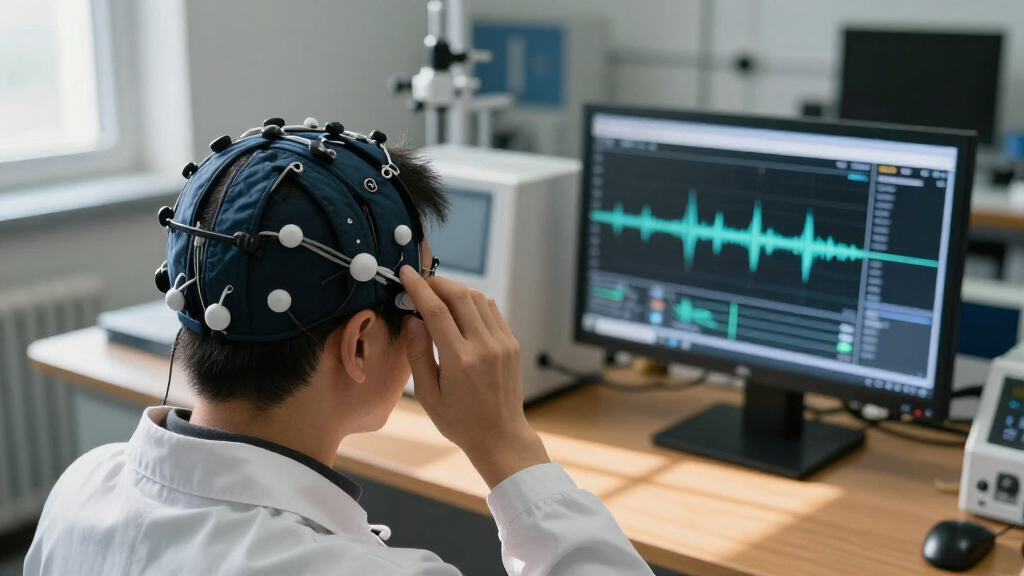
Researchers recording electrical activity inside the brains of people with severe epilepsy observed several complex traveling-wave patterns during memory tasks. The patterns differed between verbal recall and navigating a virtual environment, but the study does not establish that the waves cause memory processes.
A team studying electrical activity in awake human brains found that traveling waves can form more varied patterns than simple waves moving in one direction, with different patterns associated with different memory tasks. The findings, published in Nature Communications in April 2026, add evidence that these waves may relate to how the cortex processes information, though they do not show that the patterns cause the brain’s behavior.
Using intracranial electrodes, researchers recorded activity across brain regions while participants completed two memory exercises. One asked them to recall words shown on a screen; the other required them to navigate a virtual environment and remember where they had encountered objects. The researchers observed waves that appeared to spread outward from a location, converge toward one, or move in spiral-like patterns.
The work was led by neuroscientists including Joshua Jacobs and Anup Das of the University of Chicago, according to Quanta Magazine’s account of the study. Intracranial recordings can capture neural activity with more spatial and temporal detail than measurements taken from electrodes on the scalp. The electrodes were placed for clinical care of people with severe epilepsy, and the participants took part in research with permission.
The results extend earlier work on simpler traveling waves. In a 2024 Nature Human Behavior study, Jacobs, collaborator Uma Mohan and colleagues described waves moving across the cortex in opposite directions during memory tasks. The 2026 study reported additional patterns and found that wave activity varied with the task. The source material does not provide participant numbers, exact effect sizes or enough methodological detail to assess how broadly the results apply.
Wave Patterns and Memory Tasks
The findings matter because they challenge the idea that traveling waves are merely a general sign of neural activity. If particular wave patterns reliably accompany particular tasks, they could offer researchers a way to study how activity is organized across the cortex as people think and respond. The study identifies an association, not a proven mechanism: it does not establish that a wave pattern itself directs information or produces a memory.
That distinction is important because the brain must adapt its activity far faster than it can substantially change its connections. Neurons can alter their connections over days or months, while attention and memory demands can shift in seconds. Researchers quoted by Quanta propose that large-scale waves might help coordinate activity on those shorter timescales. The new observations make that possibility more concrete, but further work is needed to test it.
As an affiliate, we earn on qualifying purchases.
From Scalp Signals to Cortex
Since the 1920s, researchers have used electroencephalography (EEG) to measure electrical oscillations through electrodes on the scalp. Changes in rhythms often described as alpha, beta, gamma and theta accompany states such as attention, remembering and sleep. But scalp recordings provide a less detailed view of where activity occurs than electrodes placed inside the skull.
The 2026 research used clinical electrode placements to examine activity across the cortex while participants were awake and performing tasks. The approach gives researchers a close view of electrical patterns, but it is available only in particular clinical circumstances; it is not a routine method for studying healthy volunteers. Quanta also described the work as part of a broader shift in research, from asking whether traveling waves matter to investigating how they might participate in cortical processing.
In the earlier 2024 study, researchers reported waves traveling from the back of the brain toward the front, or in the reverse direction. Jacobs described those movements as potentially reflecting the direction in which information propagates. Mohan suggested they might help the brain shift rapidly between memory encoding and recall. Those interpretations provide a hypothesis for the newer work, not a conclusion established by the 2026 observations.
“The work coming out is moving this from ‘Are they relevant?’ to ‘This is a major motif of how the cortex processes information.’”
— Earl K. Miller, cognitive neuroscientist at the Massachusetts Institute of Technology
What the Recordings Cannot Show
The reported link between wave patterns and tasks does not establish whether the waves help carry out memory operations, arise as a byproduct of other neural processes, or do both. The source material also does not specify the number of participants, how often each pattern appeared, or whether the observations have been replicated independently. Those details affect how confidently the findings can be generalized.
Because electrodes were implanted for epilepsy care, the participants and recorded brain regions may not represent the wider population or the entire brain. The study’s results concern electrical activity measured during particular tasks; they do not show that the patterns can diagnose memory problems or guide treatment. The exact roles of the source, sink and spiral-like waves remain open questions.
Testing the Waves’ Role
The next step is to determine whether the patterns recur across more participants, tasks and brain regions, and whether they relate consistently to specific stages of remembering. Researchers would also need evidence that distinguishes a wave’s role in processing from its appearance as a consequence of other activity. The supplied report does not identify a scheduled follow-up study or a specific date for further results.
For now, the findings add detail to a developing line of research rather than settle how traveling waves work. Further recordings and tests of the proposed mechanisms will show whether the observed patterns are reliable markers of changing brain activity, active parts of information processing, or both.
Key Questions
What did the 2026 study find?
Researchers recorded source-like, sink-like and spiral-like waves in electrical activity inside the brains of awake participants. The patterns differed across verbal and spatial memory tasks, according to the report.
Does the study prove that brain waves create memories?
No. It found an association between wave patterns and task conditions. The results do not establish whether the waves cause memory processes or reflect other neural activity.
How did the researchers measure the activity?
They used electrodes placed inside the brain for clinical epilepsy care, recording with greater spatial and temporal detail than is generally available from scalp EEG.
What tasks did participants perform?
Participants recalled words displayed on a screen and navigated a virtual environment while remembering where objects appeared.
When was the study published?
The study was published in Nature Communications in April 2026. Quanta Magazine reported on it on September 30, 2026.
Source: hn
Halloween Picks
halloween
As an affiliate, we earn on qualifying purchases.