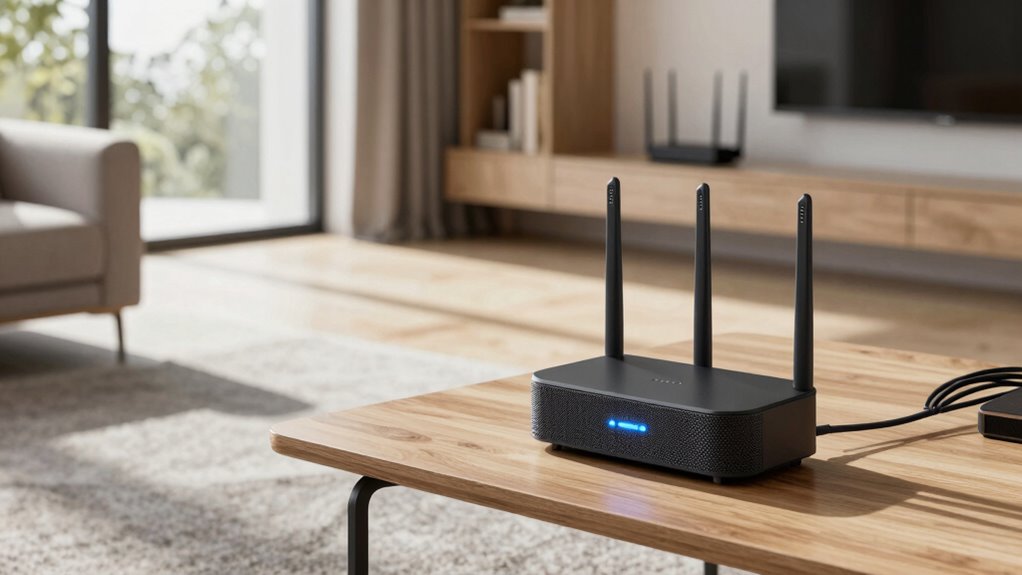

If you have a big home, mesh WiFi offers seamless coverage with multiple nodes that create a single, reliable network, making it easier to manage smart devices and stay secure. Traditional routers may work but often need extenders, which can cause signal issues and complicated setups. Mesh systems are user-friendly and designed for large spaces, ensuring consistent speeds and fewer dead zones. Keep exploring, and you’ll find more details to help you choose the best option for your home.

Prime made for students and young adults
- Fast, free delivery for dorm and study essentials
- Prime Video and Amazon Music included
- Member-only deals
Key Takeaways
- Mesh WiFi offers seamless, whole-home coverage ideal for large spaces, unlike traditional routers with limited range.
- Mesh systems simplify smart device integration and management across multiple rooms and devices.
- Built-in security features in mesh systems enhance network safety without manual updates.
- Mesh networks provide consistent, reliable performance with fewer dead zones compared to traditional routers and extenders.
- User-friendly setup and management make mesh systems preferable for large homes over complex traditional router setups.
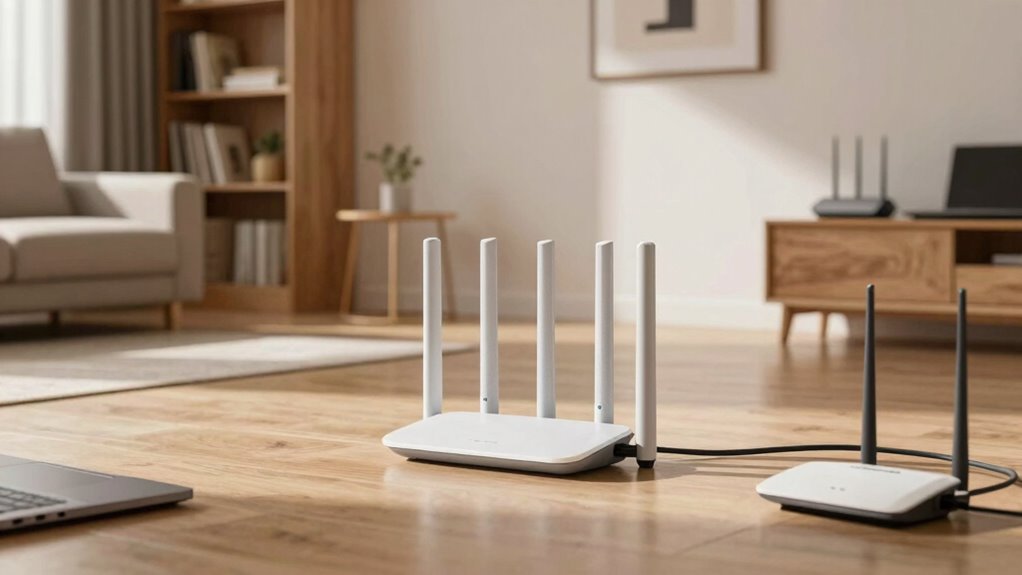
When it comes to covering a large home with reliable WiFi, choosing the right setup can make all the difference. If you’re considering mesh WiFi or traditional routers, it’s important to understand how each handles key features like smart device integration and network security. Mesh systems are designed to blanket your entire home with seamless coverage, which is vital when you have multiple rooms, thick walls, or expansive spaces. They use multiple nodes that work together to create a single, unified network. This setup makes connecting smart devices straightforward, allowing you to control everything from lights to thermostats without worrying about dead zones. Plus, many mesh systems come with built-in security features, like automatic updates and threat detection, helping keep your network safe from intruders. Additionally, mesh WiFi systems are often more easy to set up and manage, making them ideal for users who prefer a hassle-free experience.
Traditional routers, on the other hand, typically involve a single device that acts as the central hub for your network. They can be powerful and offer high-speed connections, but their coverage is limited, especially in larger homes. You might need to add range extenders or access points, which can complicate the setup and sometimes lead to inconsistent signals or multiple networks that aren’t seamlessly integrated. When it comes to smart device integration, a traditional router can work well if paired with compatible extenders, but managing multiple devices across different network segments can be tricky. Network security on these routers varies widely depending on the model, and you might need to manually update firmware or configure security settings to guarantee your network stays protected.
best mesh WiFi system for large homes
As an affiliate, we earn on qualifying purchases.
As an affiliate, we earn on qualifying purchases.
Frequently Asked Questions
How Do Mesh Systems Handle Multiple Device Connections Simultaneously?
Mesh systems handle multiple device connections simultaneously by intelligently distributing bandwidth across devices, ensuring each gets a fair share. They maintain signal stability by using multiple nodes that work together to provide consistent coverage throughout your big home. When many devices connect, the system dynamically adjusts, preventing congestion and lag. This way, you enjoy seamless streaming, gaming, and browsing without interruptions, even during peak usage times.
Can Mesh Wifi Systems Be Expanded Easily Over Time?
Absolutely, mesh WiFi systems are designed with expansion in mind, making it easy to enhance your network coverage and maintain signal consistency as your needs grow. You simply add more nodes to your existing setup, seamlessly extending coverage without hassle. This flexibility guarantees your big home stays connected, providing reliable internet everywhere. With mesh systems, you get a scalable solution that adapts effortlessly to your evolving network demands.
Are There Security Differences Between Mesh and Traditional Routers?
Yes, there are security differences. Mesh WiFi systems often offer advanced network encryption options and simplified firmware updates, which help protect your network. Traditional routers may require manual firmware updates and sometimes have weaker encryption standards. With mesh systems, you typically get more consistent security features across all nodes, making it easier to maintain a secure network in a big home. Always keep firmware updated to guarantee peak security.
What Is the Average Cost Difference for Large Home Setups?
Imagine buying a single, sturdy bridge versus a network of smaller bridges—your setup’s cost varies widely. For large homes, mesh WiFi costs typically range from $200 to $500, offering seamless coverage. Traditional routers might start around $100 but often require additional extenders, increasing costs. When considering budget, weigh the initial investment against long-term convenience and performance. A mesh system may seem pricier upfront but could save money on multiple extenders later.
How Does Installation Complexity Compare Between the Two Options?
You’ll find that mesh WiFi systems generally offer easier installation and setup simplicity compared to traditional routers. Mesh setups are designed for quick, straightforward installation, often with app-guided processes that make it accessible even for beginners. Traditional routers can be more complex, requiring manual configuration, multiple connections, and sometimes technical knowledge. Overall, mesh WiFi provides a more user-friendly experience, saving you time and effort during installation.
Conclusion
Choosing between mesh WiFi and traditional routers is like deciding between a sprawling, interconnected city and isolated, single neighborhoods. With mesh, your big home becomes a seamless network, where every room flows smoothly like a well-connected highway. Traditional routers, on the other hand, can feel like trying to patch together scattered islands. In the end, the right choice keeps your digital life effortlessly connected, turning your large home into a harmonious, high-speed haven.
Halloween Picks
halloween
As an affiliate, we earn on qualifying purchases.