
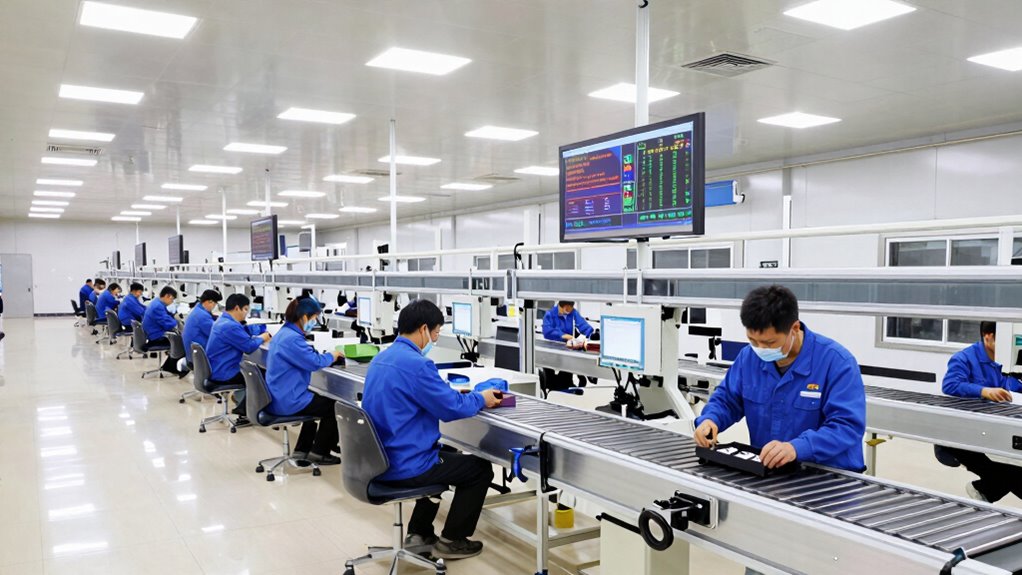

Lean manufacturing is a systematic approach that helps you improve efficiency by cutting waste, streamlining processes, and focusing on what customers value most. It emphasizes reducing inventory, minimizing unnecessary steps, and creating a smooth flow of materials and products. By encouraging continuous improvement and employee involvement, it fosters a culture of adaptability and sustainability. If you want to discover how these principles can transform your operations, there’s much more to explore.

Get school and study supplies delivered free — and shop member deals
- Fast, free delivery on millions of items
- Access to Prime Big Deal Days deals on October 6–7
- Prime Video, Amazon Music and more included
Key Takeaways
- Lean manufacturing focuses on maximizing customer value while minimizing waste and inefficiencies.
- It promotes continuous improvement (kaizen) and a culture of employee involvement.
- The approach streamlines processes, reduces inventory, and creates smooth workflows.
- Waste reduction and problem-solving are central to optimizing resource use and cycle times.
- It emphasizes organizational sustainability, responsiveness, and adapting systems for ongoing growth.

Have you ever wondered how companies reduce waste and boost efficiency simultaneously? That’s where lean manufacturing comes into play. It’s a systematic approach focused on maximizing value for customers while minimizing waste. By streamlining processes and eliminating unnecessary steps, lean manufacturing helps organizations operate more efficiently and with less resource expenditure. One of its key strategies is inventory reduction. Instead of overproducing or holding excessive stock, lean companies keep just enough inventory on hand to meet customer demand. This not only cuts costs associated with storage but also reduces the risk of products becoming obsolete or spoiled. The goal is to create a smooth flow of materials and products through the production process, which minimizes delays and bottlenecks.
You become a part of a continuous improvement cycle with lean manufacturing. This means always seeking ways to enhance processes, no matter how small the change might seem. Continuous improvement, or kaizen, encourages employees at all levels to identify inefficiencies and suggest solutions. It’s about fostering a culture where everyone is committed to making incremental enhancements that add up over time. This mindset guarantees that waste doesn’t creep back into the system and that the organization remains agile and responsive to customer needs.
Implementing lean manufacturing requires a deep understanding of your workflows. You analyze each step, question its necessity, and look for ways to eliminate redundancies. For example, you might discover that certain tasks can be combined or automated, or that materials can be arranged to reduce movement and handling. By doing so, you reduce cycle times and improve overall productivity. Because lean emphasizes just-in-time production, you synchronize manufacturing schedules closely with customer orders, which further reduces inventory levels and shortens lead times. Additionally, understanding the importance of waste reduction helps organizations identify areas where effort and resources can be better allocated. Recognizing the role of workflow analysis further supports the optimization process by pinpointing inefficiencies and streamlining operations. Moreover, fostering a culture of continuous improvement is essential to sustain these efficiencies over the long term. Embracing systematic problem solving enhances your ability to identify root causes of issues and implement lasting solutions, which is fundamental to the lean philosophy.
Furthermore, integrating principles of sustainable practices into lean manufacturing can contribute to environmental conservation by reducing resource consumption and minimizing waste. Moreover, lean manufacturing promotes respect for workers, empowering you to identify problems directly and participate in solving them. This participative environment accelerates continuous improvement because those closest to the work know best where inefficiencies hide. As you embrace lean principles, you become part of a dynamic system that constantly adapts and refines itself, always seeking smarter, leaner ways to deliver value. Fundamentally, lean manufacturing isn’t just a set of tools; it’s a mindset that drives your organization toward efficiency, waste reduction, and ongoing growth.
lean manufacturing process automation tools
As an affiliate, we earn on qualifying purchases.
As an affiliate, we earn on qualifying purchases.
Frequently Asked Questions
How Does Lean Manufacturing Differ From Traditional Manufacturing?
You’ll find that lean manufacturing differs from traditional methods by focusing on reducing waste and streamlining processes. You actively manage inventory to avoid excess, ensuring just-in-time delivery. Quality control is integrated into each step, preventing defects early. Unlike traditional manufacturing, which often emphasizes mass production and inventory buildup, lean emphasizes efficiency, flexibility, and continuous improvement, helping you minimize costs and deliver higher quality products faster.
What Industries Can Implement Lean Manufacturing Principles?
You can implement lean manufacturing principles across various industries, including automotive, healthcare, electronics, and even food production. By focusing on streamlining your supply chain and improving inventory management, you reduce waste and increase efficiency. Lean practices help you identify bottlenecks, optimize workflows, and deliver better value to your customers. No matter your industry, adopting lean methods can boost productivity, cut costs, and enhance overall operational performance.
What Are Common Challenges When Adopting Lean Manufacturing?
When adopting lean manufacturing, you’ll often face challenges like managing inventory effectively and ensuring proper employee training. Inventory management can become tricky as you reduce stock levels, risking shortages or excess. Additionally, employee training is essential but can be time-consuming, as staff need to learn lean principles and new processes. Overcoming resistance to change and maintaining continuous improvement are critical, so you must prioritize clear communication and ongoing support.
How Long Does It Take to See Results From Lean Initiatives?
You might expect instant results, but with lean initiatives, it usually takes months, sometimes even years, to see significant change. Ironically, the key to quick wins lies in employee training and embracing continuous improvement. As you invest time in refining processes and empowering your team, you’ll notice gradual but steady gains, proving that patience and persistent effort are essential for turning lean principles into real, lasting results.
Is Lean Manufacturing Suitable for Small Businesses?
Yes, lean manufacturing is suitable for small businesses because it boosts agility and efficiency. As a small business owner, you can easily adapt lean principles to your operations, reducing waste and improving quality. Implementing lean helps you stay competitive, respond quickly to market changes, and streamline processes. Its flexibility makes it ideal for small businesses looking to grow while maintaining high standards and minimizing costs.
Conclusion
Think of lean manufacturing as a finely tuned engine, where every part works in harmony to propel you forward. When you embrace its principles, you clear away the clutter and excess that slow you down, much like a gardener pruning away dead branches to let new growth thrive. By adopting lean, you’re not just streamlining processes—you’re planting the seeds for sustained success and innovation, ensuring your business blossoms with efficiency and purpose.
Fall Picks
fall essentials
As an affiliate, we earn on qualifying purchases.