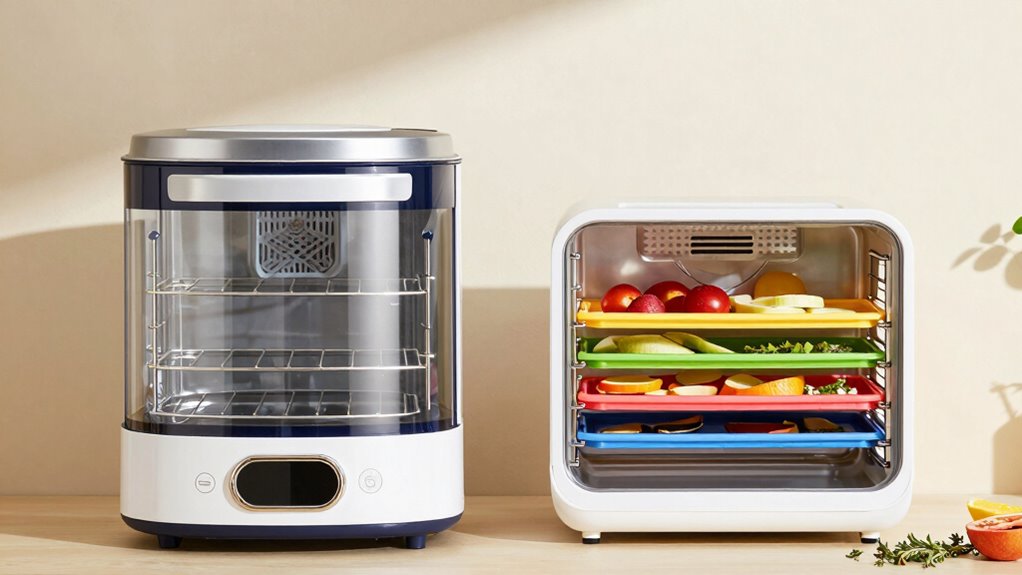

A freeze dryer uses vacuum and sublimation to quickly remove moisture, preserving nutrients, flavors, and textures better than a dehydrator, which relies on warm air to dry food gradually. Freeze drying keeps foods fresh longer and is ideal for fruits, vegetables, and cooked meals, while dehydration is faster and more affordable, perfect for herbs and snacks. To understand how these methods differ and which suits your needs, stay tuned for more insights.

Prime made for students and young adults
- Fast, free delivery for dorm and study essentials
- Prime Video and Amazon Music included
- Member-only deals
Key Takeaways
- Freeze dryers use vacuum and sublimation to preserve food, maintaining nutrients and flavor better than dehydrators.
- Dehydrators circulate warm air without vacuum, causing some nutrient loss and less optimal preservation quality.
- Freeze drying is slower and more expensive, while dehydrators are faster, more affordable, and suitable for everyday use.
- Freeze-dried foods last longer and retain original textures, ideal for long-term storage; dehydrated foods are great for quick snacks.
- The preservation process (sublimation vs heat/air) determines the food’s quality, shelf life, and suitable applications.

When choosing between a freeze dryer and a food dehydrator, understanding how each appliance works can help you make an informed decision. Both appliances help you preserve food, but they do so through different methods, impacting the quality and longevity of your preserved items. A freeze dryer uses vacuum preservation combined with sublimation, where it freezes food and then removes moisture by turning ice directly into vapor under low pressure. This process maintains the integrity of nutrients and flavors better than traditional dehydration. Because of this, freeze-dried foods tend to retain more of their original nutrients, making them a healthier choice if you’re looking to preserve vitamins and minerals over time. Additionally, vacuum preservation helps prevent spoilage caused by bacteria and mold, giving your food a longer shelf life without the need for preservatives or additives.
In contrast, a food dehydrator works by circulating warm air around the food, slowly removing moisture until it reaches a dry, preserved state. This method is faster and generally more affordable than freeze drying, making it a popular choice for home use. However, the heat can cause some nutrient loss, especially sensitive vitamins like C and B-complex, which degrade with exposure to high temperatures. While dehydration preserves food effectively and is simple to operate, it doesn’t match the nutrient retention capabilities of a freeze dryer. The process also doesn’t offer vacuum preservation, so food may be more vulnerable to oxidation and spoilage if not stored properly. Moreover, dehydration is often used for creating dried herbs and snacks, leveraging its quick turnaround and cost-effectiveness. The preservation process of dehydration is less complex than freeze drying, making it accessible for many home cooks. Understanding the science behind preservation can help you better appreciate the advantages and limitations of each method. Recognizing the different preservation techniques can also inform your choice based on how you plan to use the preserved foods.
If your main priority is maintaining the maximum nutritional value and enjoying long-lasting, high-quality preserved foods, a freeze dryer is the superior choice. It’s especially useful if you want to store fruits, vegetables, or cooked meals without losing their flavor or nutritional content. On the other hand, if you’re more concerned with convenience, cost, and speed, a food dehydrator offers a practical solution for everyday use. It’s perfect for making dried herbs, fruit leathers, or jerky, and it doesn’t require the complex setup that freeze drying does. Ultimately, your decision depends on your preservation goals, budget, and how much you value nutrient retention versus ease of use. For those interested in the science behind preservation, understanding the sublimation process can clarify why freeze drying is more effective at maintaining food quality.
As an affiliate, we earn on qualifying purchases.
Frequently Asked Questions
Which Method Retains More Nutrients in the Preserved Food?
A freeze dryer retains more nutrients in preserved food because it uses low temperatures and sublimation, which better preserves vitamins and minerals. This method maintains the original food texture and flavor, making it ideal for nutrient preservation. In contrast, food dehydrators operate at higher temperatures, which can degrade some nutrients and alter the food’s texture. If nutrient retention is your priority, a freeze dryer is the better choice.
How Long Does Each Process Typically Take?
You’ll find that freeze drying typically takes 24 to 48 hours, while food dehydrating usually lasts 6 to 12 hours. Freeze dryers better preserve flavor retention and nutrients, but they’re less energy efficient. Dehydrators are quicker and more energy-efficient, making them ideal for smaller batches. Your choice depends on how much time you have and the importance of flavor and nutrient retention in your preserved foods.
Are Freeze Dryers Suitable for All Food Types?
Sure, freeze dryers are all-powerful, but they’re not perfect for every food type. While they preserve food texture better than dehydration and excel at preservation techniques, delicate fruits or soft cheeses might not fare well. You might find yourself frustrated if you expect all foods to freeze-dry flawlessly. Irony hits—you get a versatile preservation tool, but it’s not a one-size-fits-all miracle. Choose wisely based on your food choices!
What Is the Initial Cost Difference Between the Two?
The cost comparison shows freeze dryers typically cost much more upfront than food dehydrators, often ranging from several thousand dollars to over ten thousand, while dehydrators usually cost a few hundred dollars. Freeze dryers are less energy-efficient due to their complex freezing process, but they preserve nutrients better. Dehydrators are more affordable and energy-efficient for small batches, making them a practical choice if you’re budget-conscious or need less extensive preservation.
Can Both Appliances Be Used Indoors Safely?
Sure, both appliances can be used indoors safely—if you follow the rules. Ironically, the key is proper indoor safety and careful appliance placement. A freeze dryer’s low noise and minimal heat make it suitable for indoor use, while a food dehydrator’s ventilation is essential to prevent moisture buildup. As long as you keep them in well-ventilated spaces and away from moisture-sensitive areas, you’re good to go.
Conclusion
Imagine you’re holding a jar of perfectly preserved berries, each piece bursting with flavor and vibrant color. That’s the magic of a freeze dryer, locking in freshness with a whisper of cold. A food dehydrator, on the other hand, gently dries out your snacks, leaving them crispy and warm. Whether you crave the crisp bite of dried fruit or the intact, frozen goodness of freeze-dried treats, choosing between them transforms your kitchen into a haven of endless preservation possibilities.
Fall Picks
fall essentials
As an affiliate, we earn on qualifying purchases.