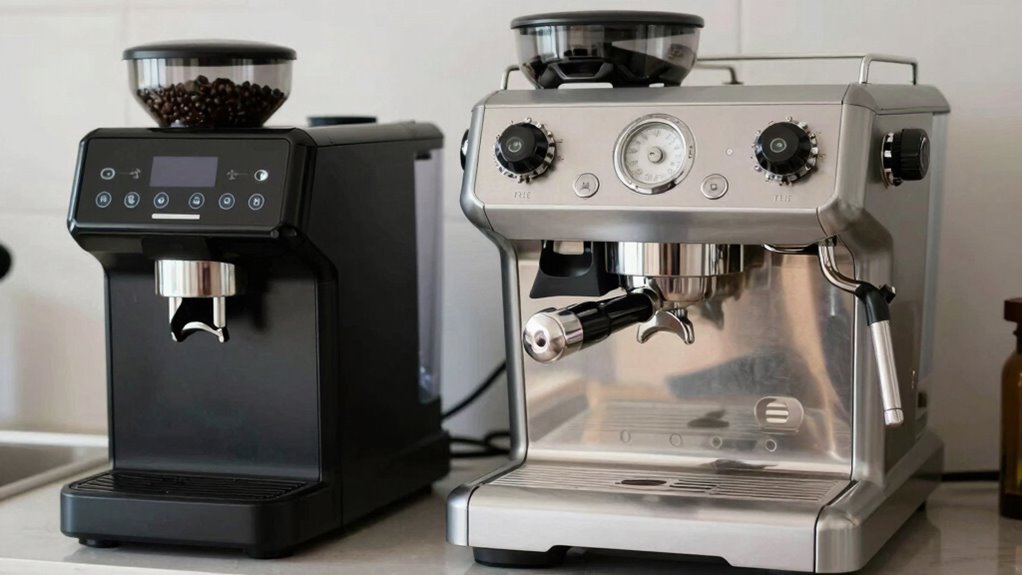

If you want a quick, fuss-free brew with consistent results, a bean-to-cup machine is ideal since it automates grinding, tamping, and brewing at the push of a button. But if you enjoy customizing your coffee and don’t mind more effort, a semi-automatic machine gives you control over grind size, tamp pressure, and extraction time. Consider your lifestyle and interest in coffee craft to find your fit—more details ahead can help clarify your choice.
Listen free for 30 days with Audible
Thousands of audiobooks and originals — cancel anytime.
As an affiliate, we earn on qualifying purchases.
Key Takeaways
- Choose a bean-to-cup machine for quick, consistent coffee with minimal effort; ideal for busy routines.
- Opt for semi-automatic if you enjoy customizing grind size, tamping, and brewing for a personalized coffee experience.
- Consider maintenance needs: bean-to-cup models require regular cleaning of multiple components, semi-automatics need less upkeep.
- Evaluate your willingness to invest time in learning and manual control versus convenience and automation.
- Select based on lifestyle: convenience-focused users prefer bean-to-cup, while enthusiasts valuing craft lean toward semi-automatic.
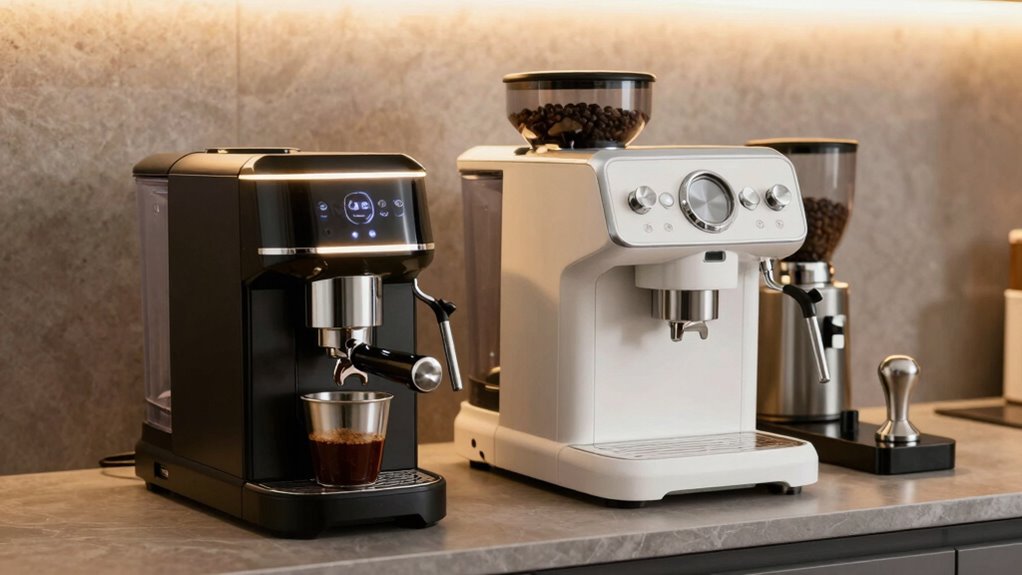
Choosing between a bean-to-cup machine and a semi-automatic espresso maker depends on how much control you want over your coffee and how much effort you’re willing to invest. If you prefer convenience with minimal fuss, a bean-to-cup machine might be more your style. These machines automatically grind fresh beans, dose, tamp, and brew your coffee at the push of a button. They offer consistent grind quality, which helps guarantee a steady grind consistency—crucial for brewing a balanced shot every time. Since most bean-to-cup models handle the entire process, they require less hands-on involvement, making them ideal if you’re after quick, reliable coffee without much maintenance.
However, it’s important to contemplate the maintenance requirements. Bean-to-cup machines often come with more components, like built-in grinders and milk frothers, which can need regular cleaning and descaling. If you drink coffee frequently, you’ll want to keep up with routine maintenance to ensure the machine runs smoothly and continues producing good-tasting drinks. Neglecting these tasks can lead to clogs or flavor issues, so think about whether you’re comfortable dedicating time to upkeep or prefer something more straightforward. Proper maintenance is essential for keeping your machine functioning well over time. Regular cleaning and descaling help preserve the grind quality, ensuring each brew remains consistent and flavorful. Additionally, investing in reliable biodiversity-friendly cleaning products can support sustainable practices and reduce environmental impact.
Furthermore, some models now incorporate eco-friendly features, which can appeal to environmentally-conscious users who want to minimize their environmental footprint. Incorporating sustainable practices into your routine can help you enjoy your coffee while also caring for the planet.
On the other hand, if you’re someone who enjoys having more control over your espresso and doesn’t mind a bit more effort, a semi-automatic espresso maker might suit you better. These machines give you the power to grind, tamp, and brew manually, allowing you to fine-tune variables like grind size, tamp pressure, and extraction time. This control can lead to more personalized and nuanced coffee, especially if you’re particular about your flavor profile.
That said, semi-automatic machines demand more from you in terms of skill and attention. You need to be attentive to grind consistency, adjusting your grind size to match your beans and desired strength, which takes practice. Maintenance is generally less complex than with bean-to-cup models, but you’ll still need to clean the portafilter, replace filters, and descale periodically. The process can be more hands-on, but it’s also more satisfying if you enjoy the craft of making coffee.
Ultimately, your choice hinges on how involved you want your brewing process to be. If convenience and consistency are your priorities, a bean-to-cup machine offers a straightforward solution. If you relish control and the art of coffee-making, a semi-automatic setup provides the flexibility you crave. Both options can fit into your routine, but understanding their differences helps you pick the right one for your lifestyle.

PHILIPS 3300 Series Fully Automatic Espresso Machine, LatteGo Milk System
- Six Coffee Presets: Espresso, coffee, iced, cappuccino, latte, hot water
- One-Touch Customization: Adjust strength, volume, milk level
- Intuitive Full Color Display: Easy to select and customize drinks
As an affiliate, we earn on qualifying purchases.
As an affiliate, we earn on qualifying purchases.
Frequently Asked Questions
Which Machine Is More Energy-Efficient?
A semi-automatic coffee machine typically uses less energy because it has fewer electronic components and features, making it more power-efficient overall. Bean-to-cup machines often consume more energy due to their built-in grinders and automatic functions, which require continual power. If energy consumption is your main concern, a semi-automatic model generally offers better power efficiency, helping you save on electricity while still enjoying quality coffee.
Can Semi-Automatic Machines Make Espresso?
Yes, semi-automatic machines can make espresso. You control the grinding consistency and extraction time, which affects your shot’s quality. While they don’t automatically froth milk, you can still create excellent espresso with practice. Experiment with your grind size and tamping to get the perfect extraction. For milk frothing, you’ll need to master steam wand techniques, but overall, semi-automatics give you great control over making rich, flavorful espresso.
Are Bean-To-Cup Machines Easier for Beginners?
Yes, bean-to-cup machines are generally easier for beginners because they feature beginner-friendly options like automatic grinding, brewing, and milk frothing, simplifying the process. They also offer a better user experience with intuitive controls and clear displays, reducing the learning curve. If you’re new to making coffee at home, a bean-to-cup machine helps you enjoy high-quality coffee with less effort and technical fuss.
How Long Does Maintenance Typically Take?
Maintenance usually takes around 15 to 30 minutes, depending on your cleaning frequency and the machine’s durability factors. Regularly cleaning your coffee machine, like descaling and cleaning the brew group, helps it last longer and performs better. Semi-automatic machines might need a bit more hands-on care, while bean-to-cup models often require thorough cleaning of grinders and internal parts. Staying consistent keeps your coffee tasting great and extends your machine’s lifespan.
What’s the Warranty Coverage for Each Type?
You should check each machine’s warranty policies for coverage differences. Bean-to-Cup machines often come with longer warranties, typically two years, covering parts and labor, while semi-automatic models might offer one-year coverage. The warranty duration and what’s included can vary by brand and retailer, so it’s smart to compare policies before buying. Knowing these details helps you understand how well your investment is protected against future repairs.
Conclusion
Choosing between a bean-to-cup and semi-automatic coffee machine is like picking your adventure—each offers a different brew of convenience and control. Imagine waking up to the aroma of freshly ground beans, just like a barista crafting your perfect cup. Whether you value simplicity or customization, your ideal machine shapes your mornings. Remember, the right choice isn’t just about coffee; it’s about making each sip a small, satisfying victory in your daily routine.
College move-in / dorm season Picks
dorm essentials
As an affiliate, we earn on qualifying purchases.