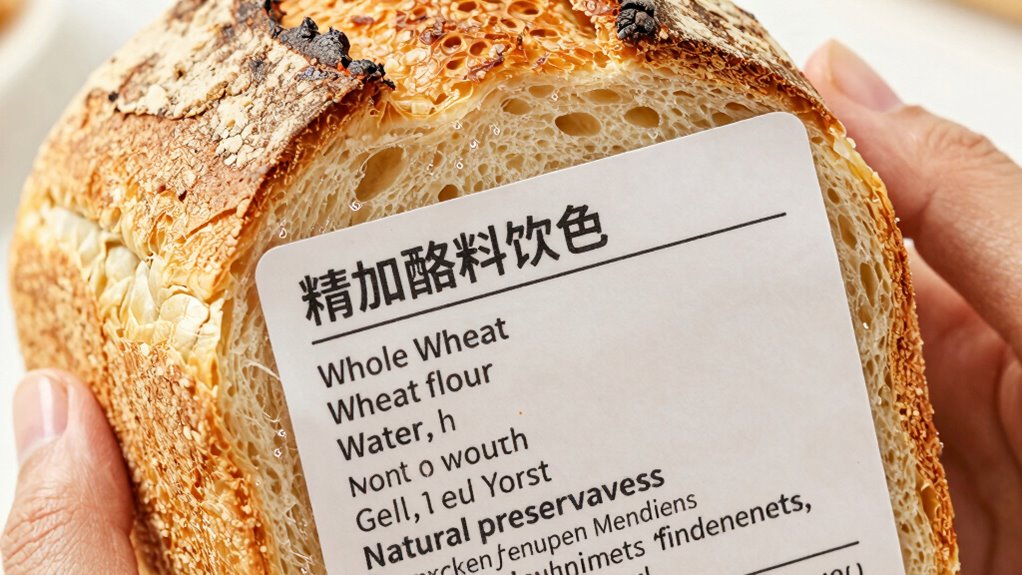

To understand bread labels, look at the ingredient list from top to bottom, since ingredients are listed by amount. Check for gluten sources like wheat, barley, or rye if you need gluten-free options. Be mindful of additives and preservatives such as azodicarbonamide or calcium propionate, which can affect sensitivities. Notice if the bread is made from whole grains versus refined flour and watch for added sugars. Keep exploring for tips to make healthier choices with confidence.
Listen free for 30 days with Audible
Thousands of audiobooks and originals — cancel anytime.
As an affiliate, we earn on qualifying purchases.
Key Takeaways
- Check for gluten sources like wheat, barley, or rye; opt for gluten-free ingredients like rice or almond flour.
- Review the ingredient order; ingredients listed first are in the highest quantity.
- Identify added sugars and artificial additives to assess healthfulness and processing level.
- Look for labels like “enriched” or “whole grain” to determine nutrient content and refinement level.
- Choose products with minimal preservatives and artificial ingredients for a cleaner, natural bread option.
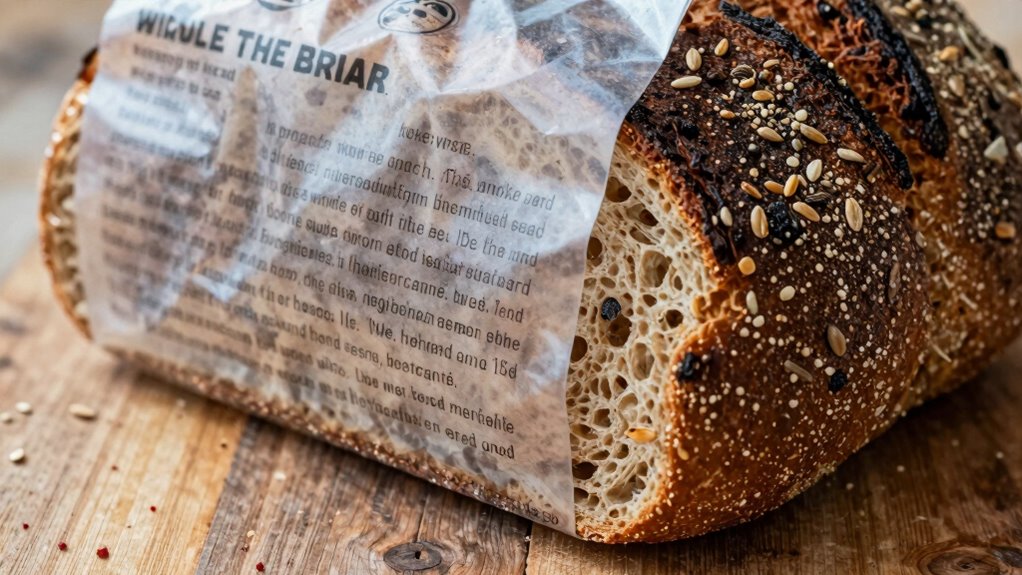
Understanding how to read ingredient lists on bread can help you make healthier choices and avoid unnecessary additives. When you look at the list, the first thing you should check is the gluten content, especially if you’re sensitive to gluten or have celiac disease. Typically, bread made from wheat, barley, or rye contains gluten, but some products label themselves as gluten-free. If avoiding gluten, look for ingredients like rice flour, almond flour, or other gluten-free options. Keep in mind that even bread marketed as gluten-free can sometimes contain trace amounts due to cross-contamination, so reading the label carefully is essential.
Check gluten content first to choose bread suitable for gluten sensitivities or celiac disease.
Next, pay attention to the additive types used in the bread. Many commercial bread products include preservatives, emulsifiers, or stabilizers to extend shelf life and improve texture. Common additive types include dough conditioners like azodicarbonamide, which helps with dough elasticity, or preservatives such as calcium propionate to prevent mold growth. While some additives are generally recognized as safe, others can cause sensitivities or allergic reactions. If you’re trying to avoid certain chemicals or prefer more natural options, look for bread with minimal or no added preservatives and artificial ingredients. Being aware of food additives can help you make more informed choices. Additionally, understanding the difference between naturally occurring and added ingredients can further assist in making healthier selections.
It’s also helpful to recognize that the ingredient list is usually arranged in order of quantity, from the most to the least. So, if sugar or refined flour appears at the top of the list, it indicates that these ingredients are the primary components of the bread. This can guide you in choosing bread that aligns with your dietary goals, such as selecting options with whole grains or lower sugar content. Be wary of products that include multiple types of added sugars, like high-fructose corn syrup, dextrose, or maltose, which can substantially increase the carbohydrate content and impact blood sugar levels. Paying attention to ingredient order can help you quickly identify the predominant ingredients. Also, understanding label terminology can help you better interpret various claims and descriptions on bread packaging.
Additionally, some bread labels include terms like “enriched” or “fortified,” indicating that nutrients like iron and B vitamins have been added back after processing. While these can be beneficial, it’s better to choose bread made from whole grains, as they contain more natural nutrients and fiber. When scrutinizing ingredient lists, look out for unnecessary additives, artificial flavors, or coloring agents, which are often used to enhance appearance but add little nutritional value. Being aware of added sugars and their effects can further help you select healthier options. Recognizing the importance of nutrient content can also guide you toward more nutritious choices.

365 by WFM, Gluten Free Multigrain Bread, 20 oz, Ambient
As an affiliate, we earn on qualifying purchases.
As an affiliate, we earn on qualifying purchases.
Frequently Asked Questions
Can Gluten-Free Bread Have Similar Ingredients to Regular Bread?
Yes, gluten-free bread can have similar ingredients to regular bread, but it uses gluten-free substitutes like rice flour, almond flour, or tapioca starch instead of wheat. When you look at ingredient labeling, you’ll notice these differences. While both types may share common ingredients like water and yeast, gluten-free options avoid gluten-containing grains, making it crucial to read labels carefully to verify the bread meets your dietary needs.
Are Organic Ingredients Listed Differently on Bread Labels?
Think of organic labeling as a clear window into a garden, showcasing ingredients in their purest form. On bread labels, organic ingredients are typically marked with official certifications, standing out from conventional ones. This transparency offers you a glimpse into ingredient transparency, ensuring what’s listed is truly organic. So, when you read the label, ask yourself if the ingredients shine with the authenticity of organic standards, guiding your choice toward healthier, more transparent options.
How Can I Identify Preservatives in Bread Ingredient Lists?
You can identify preservatives in bread ingredient lists by looking for common preservative types like sodium benzoate, potassium sorbate, or calcium propionate. These are often listed by name or code. Read ingredient labeling carefully, and note that preservatives might be grouped under additives or stabilizers. Being familiar with preservative types helps you quickly spot them and choose breads with fewer or no preservatives.
Do Ingredient Lists Differ Between Store-Bought and Homemade Bread?
Ever wonder if store-bought and homemade bread tell different stories through their ingredients? They do. Store-bought bread often contains artificial additives and preservatives, clearly listed on labels, due to ingredient sourcing and shelf life needs. In contrast, homemade bread usually has simpler, natural ingredients with no added preservatives or artificial agents. So, by reading ingredient lists, you can see how commercial bread often involves more processing than the bread you make yourself.
What Are Common Hidden Additives in Bread Ingredients?
Hidden preservatives and artificial additives often sneak into bread ingredients, even if you don’t expect them. Common ones include calcium propionate, which prevents mold, and azodicarbonamide, used to improve dough texture. You might also find emulsifiers or flavor enhancers that aren’t obvious. Always check ingredient lists carefully, as these hidden additives can be masked under vague terms, affecting your health and the bread’s overall quality.
Conclusion
By paying close attention to ingredient lists, you can choose healthier bread options. For example, if you see “whole wheat flour” at the top, you’re likely getting more fiber and nutrients. On the other hand, if added sugars or preservatives are listed early, it’s best to pick another loaf. Remember, reading labels helps you make smarter choices for your health and taste buds. So, next time you shop, use this knowledge to find the best bread for you!
Pool season Picks
robotic pool cleaners
As an affiliate, we earn on qualifying purchases.