
To make pickles, start by selecting fresh, firm cucumbers and sterilize your jars and lids. Prepare a brine with water, salt, and vinegar, then add pickling spices like dill, garlic, and peppercorns for flavor. Pack the cucumbers tightly into jars, add spices, and pour hot brine over them, ensuring they’re fully submerged. Seal the jars and store in a cool, dark place to ferment for several days to weeks. If you want to perfect your process, keep exploring the details ahead.
Key Takeaways
- Select fresh, firm cucumbers and sterilize jars before packing them tightly with spices.
- Prepare a hot brine with water, salt, and vinegar, then pour over cucumbers, ensuring they are fully submerged.
- Seal jars and store in a cool, dark place to ferment for several days to weeks, monitoring for bubbles and cloudiness.
- Check jars periodically without opening to observe active fermentation signs, avoiding oxygen exposure.
- Once desired flavor and crunch are achieved, transfer jars to the refrigerator to slow fermentation and preserve the pickles.
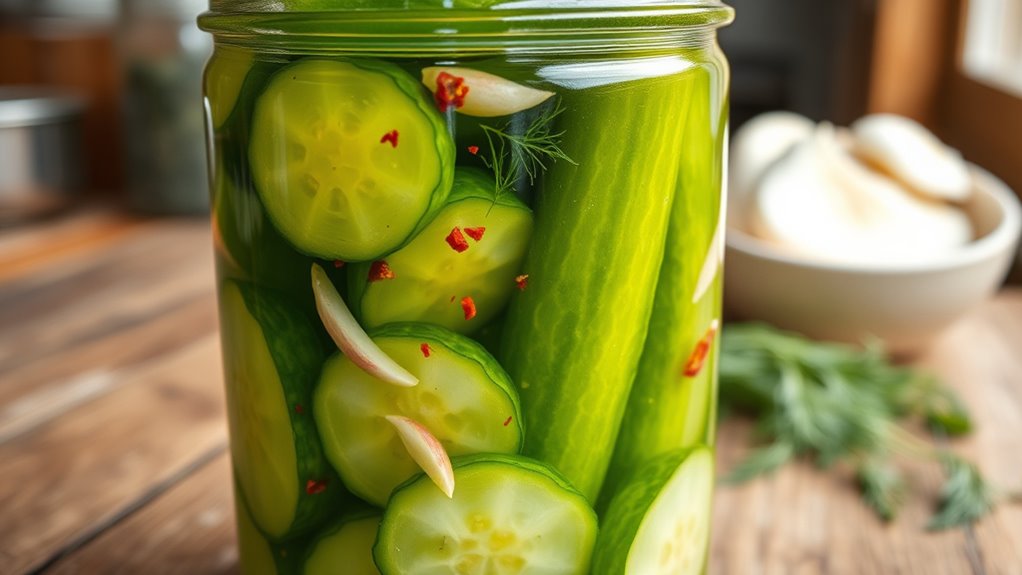
Making your own pickles at home is a simple and rewarding process that allows you to customize flavors and enjoy fresh, crunchy results. The key to great homemade pickles lies in understanding the fermentation process, which transforms ordinary cucumbers into tangy, flavorful treats. When you start, you’ll want to select fresh, firm cucumbers, preferably small and free from blemishes. Before beginning, sterilize your jars and lids to prevent unwanted bacteria from spoiling your pickles. Once your jars are ready, prepare a brine—typically a mixture of water, salt, and vinegar—that creates an environment conducive to fermentation while inhibiting spoilage.
Select fresh, firm cucumbers and sterilize jars to ensure perfect homemade pickles.
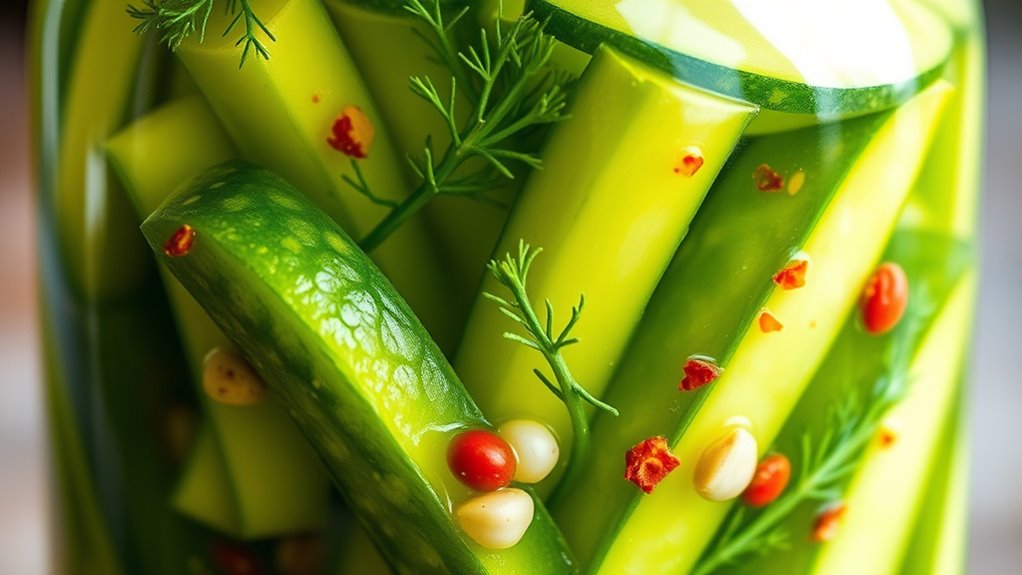
Adding pickling spices is where you can get creative and personalize your recipe. Common spices include dill seeds, garlic, peppercorns, mustard seeds, and bay leaves. These spices not only enhance flavor but also contribute to the preservation process. When packing your cucumbers into jars, distribute your chosen pickling spices evenly among the jars, ensuring each jar gets a balanced mix for full flavor. Pour the hot brine over the cucumbers, leaving some headspace at the top. It’s important to submerge the cucumbers completely to prevent mold growth during fermentation. You can use a fermentation weight or a clean, small jar to keep everything submerged.
Once sealed, the fermentation process begins. During this stage, natural bacteria convert the sugars in the cucumbers into lactic acid, which gives pickles their distinctive tang. This process can take anywhere from a few days to several weeks, depending on your desired sourness and ambient temperature. You’ll want to store the jars in a cool, dark place and check them periodically. You might see bubbles or cloudiness—these are signs of active fermentation, which is normal. Remember not to open the jars during the fermentation period, as introducing oxygen can spoil your pickles. Understanding fermentation is crucial for achieving the perfect tang and crunch.
After the fermentation has reached your preferred level of tanginess, you can transfer the jars to the refrigerator to slow down the process. Your homemade pickles are now ready to enjoy, offering a crisp, flavorful bite tailored to your taste. Making pickles at home allows you to experiment with different spices, brine ratios, and fermentation times, giving you control over the final flavor profile. With patience and attention to detail, you’ll soon be savoring homemade pickles that are far superior to store-bought varieties.
Frequently Asked Questions
Can I Make Pickles Without Vinegar?
Yes, you can make pickles without vinegar by using fermentation process and vinegar alternatives. Instead of vinegar, you rely on natural fermentation with salt and water, creating a brine that encourages beneficial bacteria growth. This method produces tangy, probiotic-rich pickles. Just guarantee you use the right salt-to-water ratio and keep everything submerged to prevent spoilage, and you’ll have delicious, vinegar-free fermented pickles.
How Long Do Homemade Pickles Last?
Perfectly preserved pickles stay for about 1 to 2 years if stored properly. You should store pickles in a cool, dark, and airtight environment to maximize their shelf life. Regularly check for signs of spoilage like mold or an off smell. Proper pickle storage guarantees they remain crisp and flavorful longer, making your homemade treasures safe and satisfying to enjoy over time.
What Are Some Alternative Spices for Flavor?
You can try spice blends like dill, mustard seeds, coriander, or turmeric for unique flavor variations. For a spicy kick, add red pepper flakes or black peppercorns. Experiment with garlic, cinnamon sticks, or bay leaves to create different aromatic profiles. These alternative spices add depth and complexity, letting you customize your pickles to match your taste preferences. Don’t hesitate to mix and match spices for the perfect flavor combo.
Can I Reuse Pickle Brine?
Yes, you can reuse pickle brine for preservation, but with caution. Reusing brine helps reduce waste and enhances flavor. Just strain out any solids, check for mold or off smells, and verify it still has a good acidity level. Keep in mind, repeated reuse may weaken the brine’s effectiveness, so use it within a few cycles. Proper brine reuse can keep your pickles tasty and safe.
Are There Gluten-Free Pickle Recipes?
Yes, you can make gluten-free pickles. Think of your ingredients as a garden of gluten-free ingredients—fresh garlic, dill, vinegar, and spices—that symbolize purity. Use gluten-free methods by avoiding wheat-based vinegars or additives. Stick to certified gluten-free ingredients, and your pickles will be safe and delicious. This way, you turn ordinary cucumbers into a flavorful, safe treasure chest that everyone can enjoy without worry.
Conclusion
Now that you know how to make pickles, you can enjoy a homemade snack anytime. Some believe fermentation boosts gut health due to beneficial probiotics, though scientific evidence is still evolving. Whether you prefer crunchy or tangy, crafting your own pickles lets you customize flavors and ingredients. So, go ahead—experiment with spices and veggies. Making pickles isn’t just fun; it’s a way to connect with tradition and possibly support your health, one jar at a time.