
To make natural deodorant, melt your base ingredients like beeswax, coconut oil, and shea butter, then stir in odor-absorbing powders such as arrowroot or baking soda, depending on your skin sensitivity. Add your favorite essential oils for scent, and pour the mixture into containers to cool and solidify. You can customize the scent, texture, and ingredients to suit your preferences and needs—continue to explore the various tips and options available for perfecting your own natural deodorant.
Key Takeaways
- Melt beeswax and shea butter, then stir in coconut oil to create a smooth base.
- Add odor-neutralizing powders like baking soda or arrowroot, along with essential oils for scent.
- Pour the mixture into containers and let it cool until solidified.
- Customize ingredients and scents to suit skin sensitivities and preferences.
- Store in a cool, dry place and apply as needed for natural odor protection.
Have you ever wondered if you can create your own natural deodorant at home? The good news is, you absolutely can, and it’s simpler than you might think. Making DIY recipes for natural deodorant allows you to control the ingredients, avoid harmful chemicals, and customize scents to your liking. Plus, it’s often more affordable than store-bought options. All you need are a few basic ingredients and a little bit of creativity.
Create your own natural deodorant at home with simple, customizable ingredients for a safer, more affordable alternative.
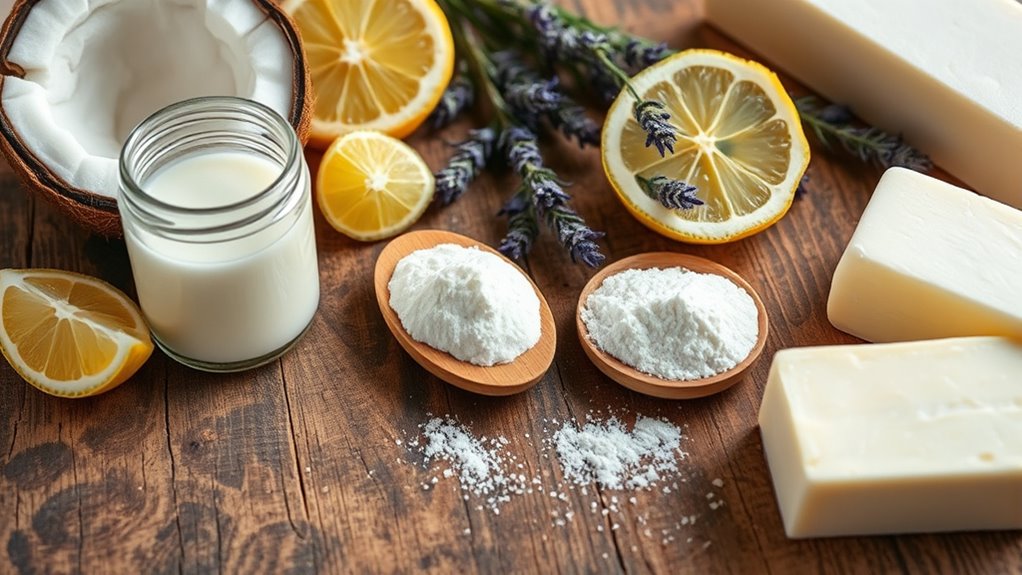
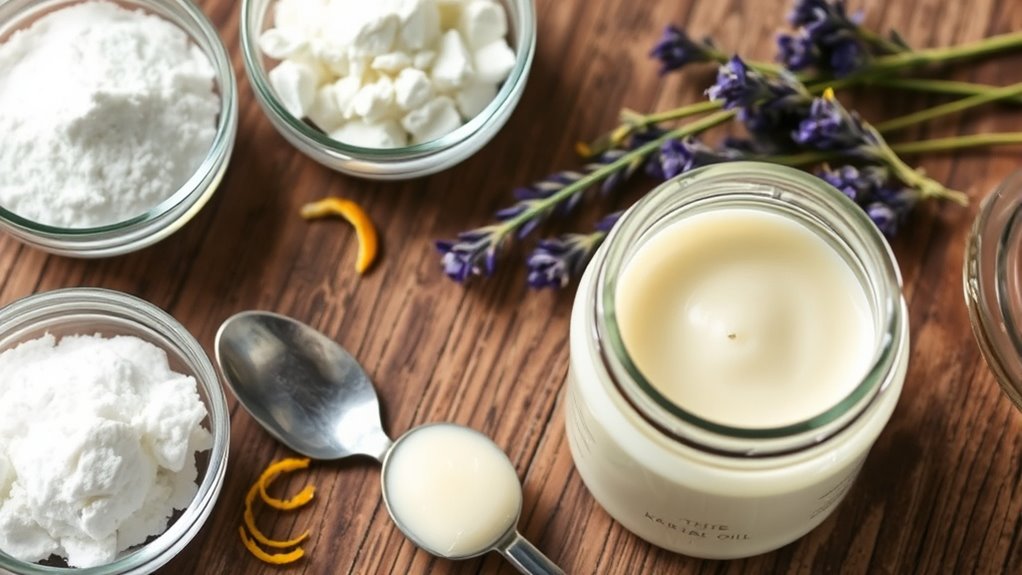
Start by gathering common ingredients like baking soda, coconut oil, beeswax, and shea butter. These serve as the base for many DIY recipes. Baking soda helps neutralize odor, while coconut oil acts as a natural antimicrobial and moisturizer. Beeswax gives the deodorant some structure and helps it solidify, especially if you prefer a stick application. Shea butter adds a smooth texture and extra hydration. If you’re sensitive to baking soda, ingredient substitutes like arrowroot powder or bentonite clay work well as odor absorbers and can reduce irritation. These substitutes are easy to incorporate into your recipes, allowing you to tailor your deodorant to your skin’s needs.
Once you’ve gathered your ingredients, melting and mixing is straightforward. Melt the beeswax and shea butter together in a double boiler, then stir in coconut oil until everything is well combined. Remove from heat and add your odor-fighting powders like baking soda or ingredient substitutes, along with essential oils for scent. Popular choices include lavender, tea tree, or lemon, which also have antimicrobial properties. Incorporate natural preservatives to extend the shelf life of your homemade deodorant. Pour the mixture into a container, like an empty deodorant stick or a small jar, and let it cool until solidified. That’s it—your homemade natural deodorant is ready to use.
If you want to tweak the recipe, you can experiment with ingredient substitutes to suit your preferences or skin sensitivities. For example, if baking soda causes irritation, swap it with arrowroot powder or cornstarch. Adjust the amount of coconut oil for a firmer or creamier texture. You can also try different essential oils to find a scent you love. Making your own deodorant gives you flexibility to customize it, making it more effective and pleasant for daily use.
In short, creating your own natural deodorant with DIY recipes is accessible and customizable. By understanding ingredient substitutes and mixing techniques, you can craft a product that works best for your skin and lifestyle. It’s a satisfying process that ensures you know exactly what’s going on your skin while saving money and reducing exposure to synthetic chemicals. Once you get the hang of it, you’ll likely never want to go back to commercial deodorants again.
Frequently Asked Questions
Can Natural Deodorant Completely Eliminate Odor?
Natural deodorant can considerably reduce odor, but it might not eliminate it completely for everyone. It works by controlling bacteria, which cause odor through chemical reactions with sweat. Since natural ingredients don’t block sweat but target bacteria, some odor may still occur, especially during intense activity. Consistent use helps your body adjust, and adding antibacterial ingredients like tea tree oil can improve odor control over time.
How Long Does Homemade Deodorant Last?
Your homemade deodorant typically lasts about 3 to 6 months, depending on ingredients and storage. To maximize its shelf life, store it in a cool, dry place away from sunlight. You should notice signs of spoilage, like an off smell or changes in texture, before it expires. Always use clean hands or a spatula to apply, and make small batches to guarantee freshness and effectiveness over time.
Is Natural Deodorant Safe for Sensitive Skin?
Surprisingly, natural deodorant is often safer for sensitive skin, despite the irony of it being “all-natural.” You might think ingredients like baking soda or essential oils could cause skin irritation, but they’re generally gentle if you choose your ingredients carefully. Always check ingredient safety and perform a patch test first. With mindful selection, natural deodorants can keep you fresh without irritating your skin, proving natural options are worth exploring.
Can I Add Essential Oils for Scent?
Yes, you can add essential oils for scent in your natural deodorant. Use essential oil blends to customize your scent and enjoy a invigorating aroma. Just remember to keep the amount small—about 10-15 drops—so it doesn’t irritate your skin. Mix the oils thoroughly into your deodorant base, and test a small patch first to ensure it suits your sensitive skin. This way, you get personalized scent customization and a pleasant experience.
Will Natural Deodorant Stain Clothing?
Natural deodorant can sometimes stain clothing, especially on natural fabrics like cotton or linen. These stains often happen because of ingredients like baking soda or essential oils. To prevent clothing stains, let the deodorant dry completely before dressing and apply it sparingly. Using natural fabrics, which are more prone to staining, may require extra care. Always do a patch test or test on a small fabric area first.
Conclusion
Now that you know how to make your own natural deodorant, you hold the power to choose what’s best for your body. Embrace this simple, eco-friendly switch and let your confidence shine through, free from harsh chemicals. Remember, it’s more than just a routine—it’s a small act of self-care and kindness to the planet. So go ahead, create, and enjoy the fresh, natural feeling that’s uniquely yours—because your well-being deserves it.