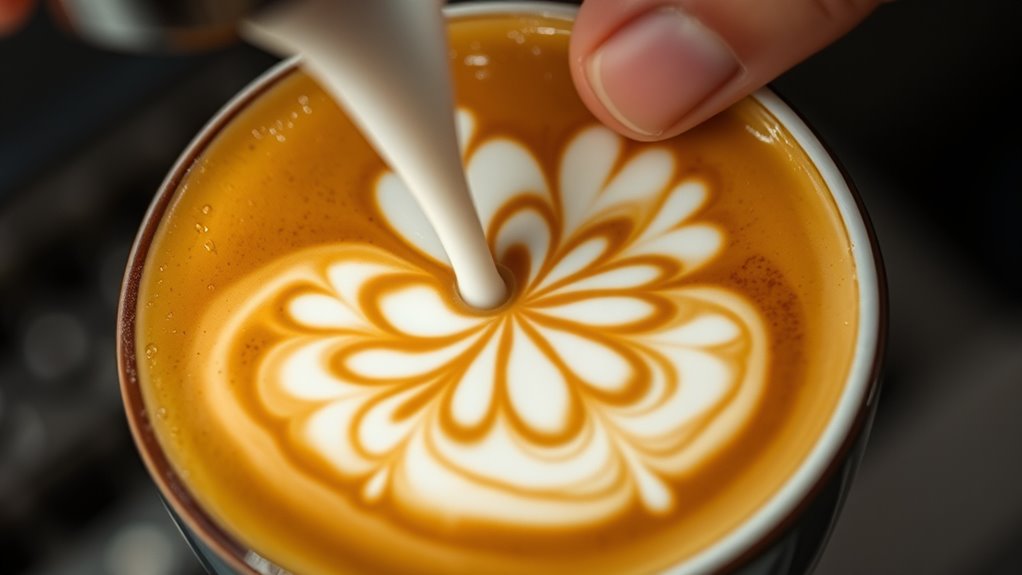

To make latte art, start by frothing fresh, cold milk to create smooth, velvety microfoam, keeping the wand just below the surface to introduce tiny bubbles. Pull a high-quality espresso shot with a rich crema foundation. Then, pour the milk steadily into the center of the espresso, gently shaping your pattern as you go. With practice, you’ll refine your pouring flow and design skills—keep exploring to master these techniques.
Key Takeaways
- Use fresh, cold milk and introduce microfoam by positioning the steam wand just below the surface.
- Ensure your espresso shot has a rich crema, extracted evenly for a smooth canvas.
- Create silky, velvety microfoam by swirling the milk after steaming to eliminate large bubbles.
- Pour milk steadily into the center of the espresso, controlling flow to shape patterns like hearts or rosettas.
- Practice pouring techniques and control to develop consistent, precise latte art designs.
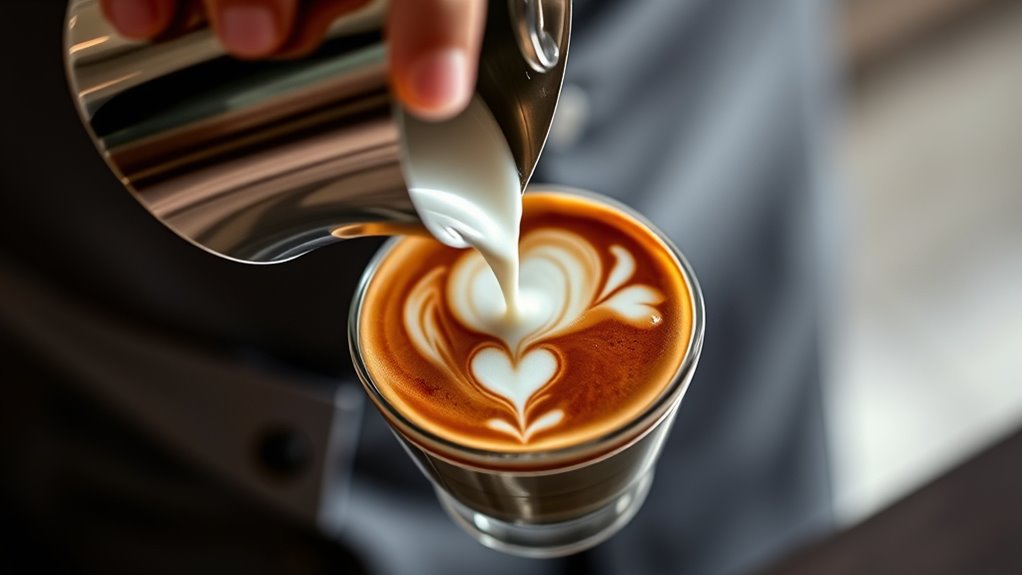
Creating beautiful latte art transforms a simple cup of coffee into a work of art, and anyone can learn how with practice. The foundation of great latte art lies in both milk foam techniques and the quality of your espresso shot. To start, you need to master how to produce the perfect milk foam. Use fresh, cold milk and a steam wand to create a silky, velvety microfoam. Position the steam wand just below the milk’s surface and turn it on, gradually introducing air to form tiny bubbles. As the milk heats, keep the wand near the surface to create a fine, thick foam. Once you have the right consistency, swirl the milk in the pitcher to eliminate larger bubbles and achieve a smooth, glossy texture. The goal is to have a milk that flows easily and pours seamlessly, which is essential for shaping your designs. Automation technologies play a role in developing more consistent and precise milk foam techniques, making it easier for baristas to perfect their craft.
Simultaneously, the quality of your espresso shot plays a major role. A well-pulled shot with a rich, thick crema provides a good base for latte art. Ensure your espresso machine is clean, and use fresh, finely ground coffee. Extract your shot with even pressure, aiming for about 25-30 seconds of brewing time. The resulting espresso should have a deep, caramel color with a creamy, persistent crema on top. This crema acts as the canvas for your latte art, helping the milk to spread smoothly and hold its shape. If your espresso lacks crema or appears thin, your latte art will suffer, so invest time in perfecting your shot first.
Frequently Asked Questions
What Milk Type Is Best for Latte Art?
You should use whole milk for the best latte art because it frothed milk easily and creates a smooth, creamy texture. Keep the milk temperature between 150-155°F to guarantee ideal frothing. When you steam the milk, aim for a silky, glossy consistency, which helps you pour and shape your design precisely. Using the right milk type and temperature makes your latte art sharper and more defined.
How Long Does It Take to Master Latte Art?
Mastering latte art is like planting a seed; it takes time to see blooms. With consistent practice, you’ll likely see progress in 3 to 6 months. Focus on perfecting your pouring technique and creating smooth, glossy milk foam. The more you practice, the more your designs will flourish. Be patient, stay persistent, and enjoy the journey—each cup brings you closer to turning milk into art.
Can I Make Latte Art With Decaf Coffee?
Yes, you can make latte art with decaf coffee. Just focus on decaf brewing methods that produce a rich, full-bodied brew. Achieving the right latte foam textures is key, so steam your milk properly to create smooth, microfoam. With good foam and a steady hand, you can create beautiful latte art just like with regular coffee. The only difference is ensuring your decaf is fresh and well-prepared.
What Tools Are Essential for Creating Latte Art?
You need a good espresso machine with a steam wand for milk frothing and precise pouring. A metal pitcher helps you control milk texture, making it easier to create smooth, velvety foam. Use a thermometer to monitor milk temperature, ensuring ideal frothing. Master pouring techniques by starting with a steady flow and controlling your hand movement. These tools and skills are essential for crafting beautiful latte art.
Does the Quality of Espresso Affect Latte Art?
Yes, the quality of espresso considerably affects your latte art. High-quality espresso provides a rich, balanced flavor and a smooth crema, which helps create a better contrast for your design. Additionally, good espresso allows you to achieve the ideal milk texture—velvety and glossy—making your milk pour more controllable. When both espresso quality and milk texture are ideal, your latte art will be more detailed and visually appealing.
Conclusion
As you master latte art, remember that each pour is a canvas, and your milk is the brush. Every swirl and leaf symbolizes your growing skill, turning simple coffee into a work of art. Embrace the process, knowing that with patience, your creations will bloom like a delicate flower. Let your passion flow through every design, transforming a ordinary drink into a small masterpiece—proof that your dedication turns everyday moments into something beautiful.