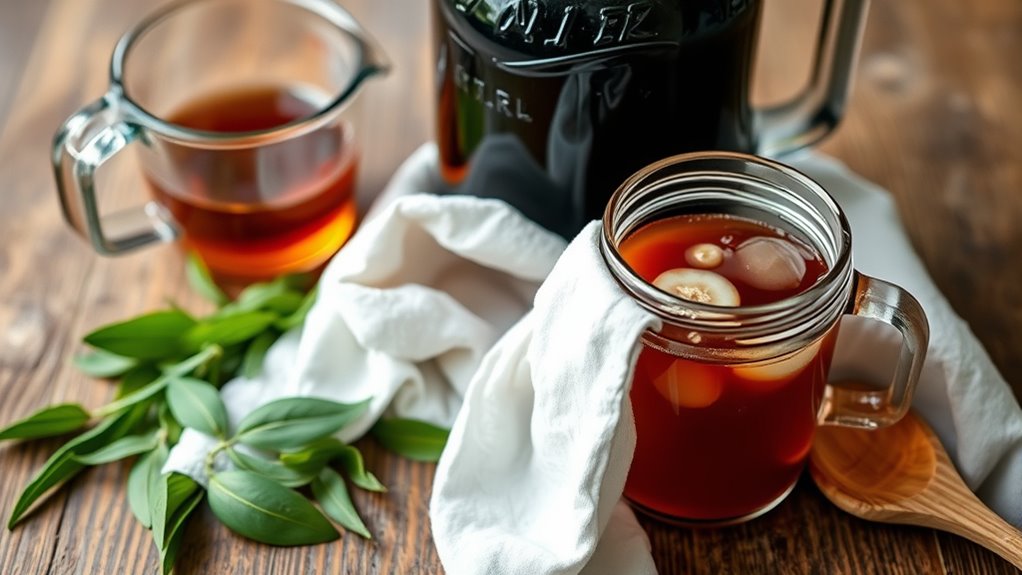

To make kombucha at home, start by brewing sweet tea and cooling it to room temperature. Add a SCOBY along with some starter tea from a previous batch or store-bought kombucha. Cover the jar with a cloth and let it ferment at 70-85°F for 7-14 days, depending on your taste. Once ready, you can flavor it with fruits or herbs and perform a secondary fermentation for carbonation. Keep exploring for more detailed steps and tips.
Key Takeaways
- Brew sweet tea, then cool it before adding a SCOBY and starter liquid to initiate fermentation.
- Maintain a consistent temperature of 70-85°F and cover the jar with a cloth to prevent contamination.
- Allow fermentation for 7-14 days, tasting periodically to achieve desired tartness.
- Remove the SCOBY after fermentation, then add fruits or herbs for flavoring if desired.
- Bottle the kombucha, seal, and ferment for additional days for carbonation, “burping” bottles daily to release excess pressure.
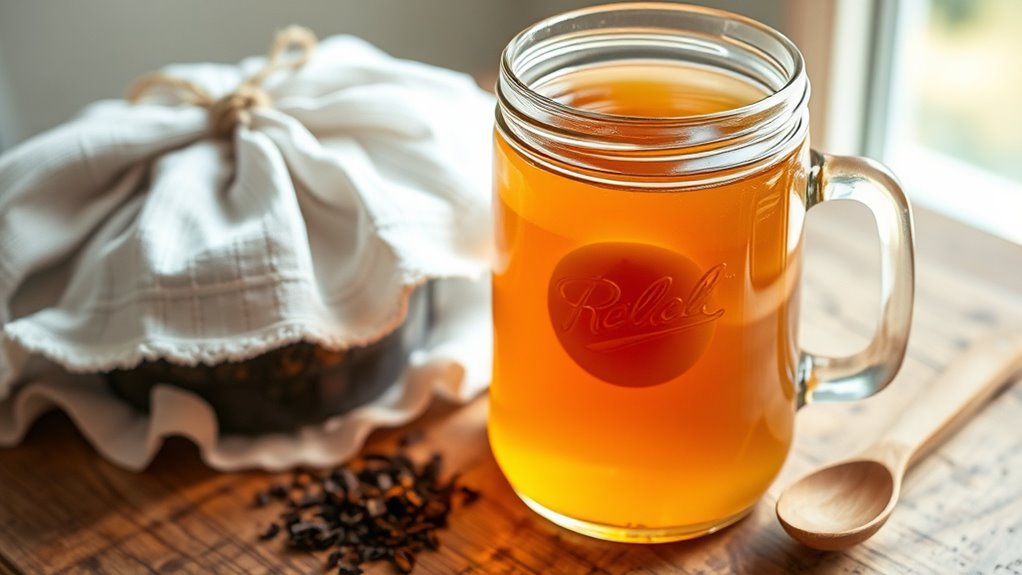
Making kombucha at home is a simple and rewarding process that anyone can learn. The first step involves understanding the fermentation process, which is the backbone of creating this tangy, fizzy beverage. During fermentation, the sweet tea you prepare is transformed by a symbiotic culture of bacteria and yeast, known as a SCOBY. This culture eats the sugar in the tea, producing acids, gases, and a small amount of alcohol, which gives kombucha its characteristic flavor and effervescence. As you start, you’ll notice the SCOBY floating on top of your jar, forming a protective layer that keeps out unwanted bacteria. The fermentation process typically takes about 7 to 14 days, depending on your taste preferences and environmental conditions. You can experiment with fermentation times to achieve a balance between sweetness and tartness, making the process flexible to your liking. Proper temperature control can significantly influence the fermentation speed and flavor development, so maintaining a consistent environment is beneficial for optimal fermentation.
One of the most exciting parts of making kombucha at home is flavor customization. Once your initial batch completes fermentation, you can remove the SCOBY and start adding your favorite flavors. Fruits, herbs, and spices are popular choices, and you can mix and match to craft unique blends. For example, adding fresh berries or citrus can enhance the fruitiness, while ginger or mint can provide an invigorating kick. To do this, simply pour your finished kombucha into bottles, leaving some space at the top, and add your chosen flavorings. Seal the bottles and allow them to undergo a secondary fermentation for a few days, which will develop carbonation and deepen the flavors. Be sure to burp the bottles daily to release excess pressure and prevent explosions.
Throughout this process, maintaining proper hygiene is essential to prevent contamination. Wash your hands and sterilize your jars and utensils thoroughly before each batch. Keep the brewing environment at a consistent temperature—ideally between 70-85°F (21-29°C)—to guarantee ideal fermentation. Monitoring the process regularly helps you understand how flavors develop and when your kombucha is ready to drink. As you gain experience, you’ll learn how to tweak variables like fermentation time, tea type, and flavor additions to craft kombucha tailored to your taste. Making kombucha at home allows you to enjoy a healthier, personalized beverage without the added sugars and preservatives often found in store-bought options. It’s a fun, creative process that results in a delicious, probiotic-rich drink you can truly call your own.
Frequently Asked Questions
Can I Use Flavored Tea to Make Kombucha?
Yes, you can use flavored tea to make kombucha, but be aware that the flavored tea benefits include adding unique tastes and aromas. Keep in mind, the tea flavor influence might affect the fermentation process and final flavor, so choose natural, low-sugar flavored teas for the best results. Avoid heavily processed or artificially flavored teas, as they can introduce unwanted chemicals that may hinder fermentation.
How Long Does Homemade Kombucha Last?
Your homemade kombucha typically lasts 1 to 3 weeks when stored properly. To extend its fermentation timeline, keep it refrigerated in a sealed glass bottle or jar. Proper storage methods, like keeping it cold and away from direct sunlight, help preserve its flavor and prevent over-fermentation. Always check for signs of spoilage, such as off smells or mold, before drinking. Proper storage guarantees your kombucha stays fresh and safe to enjoy.
Is It Safe to Reuse SCOBYS Indefinitely?
Like a wise old tree, your scoby’s longevity depends on proper care. You can reuse your scoby, but not indefinitely; over time, its reuse safety diminishes, risking contamination. Regularly inspect for mold, off smells, or discoloration. To guarantee safe fermentation, consider replacing your scoby every few batches or when it shows signs of deterioration. Proper storage and care help maintain its vitality and your kombucha’s safety.
What Are Common Signs of a Spoiled Kombucha?
You’ll know your kombucha has spoiled if you see visible mold, which appears as fuzzy or colorful spots, or if it develops an off-putting smell. Pay attention to fermentation indicators like excessive bubbling or unusual textures, which can signal over-fermentation or contamination. Always inspect for mold carefully, especially around the SCOBY, and discard the batch if you notice any signs of deterioration to ensure safety.
Can I Make Kombucha Without a Starter Liquid?
Think of brewing kombucha as planting a delicate seed—you need a starter liquid to kickstart fermentation. Without it, your brew’s journey is like sailing without a compass. You can try starter liquid alternatives like unpasteurized store-bought kombucha or a small amount of existing brew. Remember, sterilization methods like boiling or sanitizing utensils are key to prevent unwanted bacteria, ensuring your kombucha’s healthy voyage from the start.
Conclusion
Now, as you watch your homemade kombucha bubble and glow, you’ve created more than just a drink—you’ve crafted a living, invigorating masterpiece. With each gentle pour, you’ll see the golden liquid dance, inviting you to savor its tangy, fizzy charm. Your kitchen transforms into a cozy brew studio, filled with the aroma of fermentation. Enjoy every sip, knowing you’ve turned simple ingredients into a vibrant, healthful elixir—and that’s a truly rewarding feeling.