To make jam from fresh fruit, start by choosing ripe, high-quality produce and wash it thoroughly. Prepare the fruit by peeling, hulling, or chopping to release more juice. Combine the fruit with sugar and pectin following a trusted recipe, then bring the mixture to a boil while stirring. Test for doneness with a chilled spoon; remove foam, and pour the hot jam into sterilized jars. Properly sealing and storing will preserve your homemade jam—continue and discover how each step can be perfected.
Key Takeaways
- Select ripe, fresh fruit, wash thoroughly, and prepare by peeling or chopping as needed.
- Combine fruit, sugar, and pectin according to your trusted recipe, adjusting for desired sweetness and consistency.
- Bring the mixture to a rolling boil, stirring constantly, and test for doneness with a chilled plate wrinkle test.
- Ladle hot jam into sterilized jars, seal tightly, and process in a boiling water bath for preservation.
- Customize flavors with spices or citrus zest and store jars in a cool, dark place for year-round enjoyment.

Making jam from fresh fruit is a rewarding process that allows you to preserve the flavors of your favorite seasonal produce. When you master fruit preservation through jam making, you gain the ability to enjoy the taste of summer berries or orchard fruits all year round. The first step is choosing the right fruit; ripe, fresh, and high-quality produce will yield the best flavor and texture in your jam. You can experiment with a variety of fruits, from strawberries and raspberries to peaches and plums, using trusted jam recipes that suit each type. These recipes typically combine fruit, sugar, and pectin, which helps the jam set properly and ensures a good consistency.
Choose ripe, fresh fruits to ensure the best flavor and texture in your homemade jam.
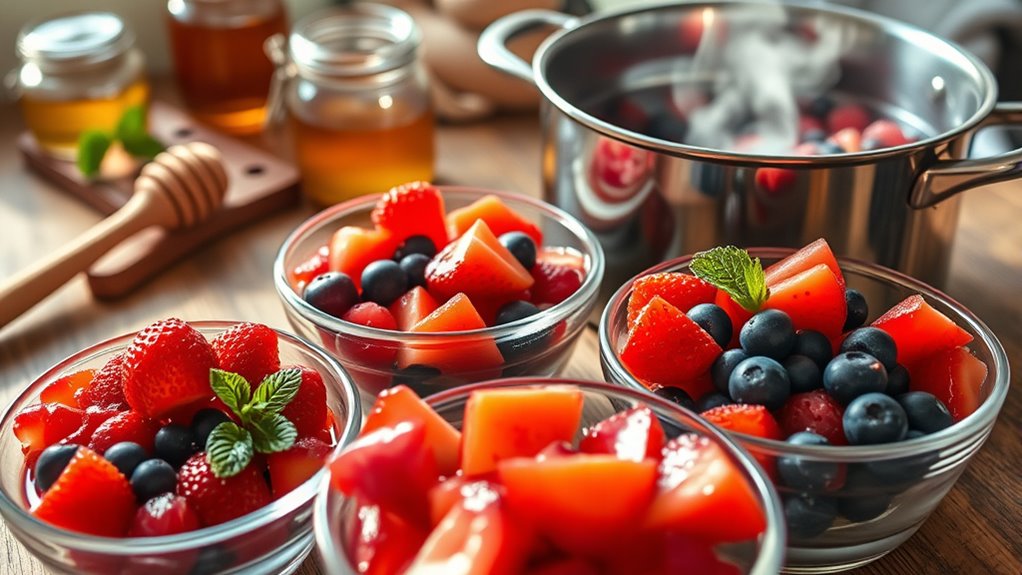
Before you start, wash your fruit thoroughly to remove dirt and any pesticides. For berries, simply rinse and hull if necessary; for larger fruits like peaches or apples, peel and chop them into manageable pieces. Cutting the fruit into smaller chunks helps release more juice and accelerates the cooking process. Once prepped, measure your fruit carefully, as precise measurements are key to successful fruit preservation. Many jam recipes specify the amount of sugar needed, which not only sweetens the jam but also acts as a preservative. Keep in mind that the type of sugar you use influences flavor—white sugar is standard, but honey or natural alternatives can add unique tastes.
Cooking your fruit mixture is where the magic begins. Combine your prepared fruit with sugar and a commercial or homemade pectin, following the instructions in your chosen jam recipes. Bring the mixture to a rolling boil over medium-high heat, stirring constantly to prevent burning. As the mixture boils, you’ll notice it thickening and releasing fragrant aromas. To test if your jam is ready, place a small spoonful on a chilled plate and run your finger through it; if it wrinkles and holds its shape, it’s done. Removing excess foam with a spoon is also a good idea to keep your jam clear and appealing. Additionally, understanding hygienic food handling practices can help ensure your jam remains safe for long-term storage.
Once your jam reaches the right consistency, ladle it into sterilized jars, leaving appropriate headspace. Seal the jars tightly and process them in a boiling water bath if you plan to store them for an extended period. Proper sealing creates an airtight environment, essential for long-term fruit preservation. As you become more familiar with making jam from fresh fruit, you’ll develop your own tweaks to the recipes—adding spices, citrus zest, or other flavorings. With patience and practice, you’ll produce delicious jams that capture the essence of seasonal fruits, allowing you to savor their flavors long after harvest time.

7 Piece Stainless Steel Canning Supplies Starter Kit – Beginners Jam Jelly Mason Jar Canning Kit with Water Bath Canning Rack, Canning Basket for Water Bath Canner, Canning Jar Rack, Funnel, Tools
✅ Complete 7-Piece Canning Tool Set Includes everything you need for safe and effective home canning: steamer rack,…
As an affiliate, we earn on qualifying purchases.
As an affiliate, we earn on qualifying purchases.
Frequently Asked Questions
How Long Does Homemade Jam Last Without Preservatives?
Homemade jam without preservatives typically lasts about 1 year if stored properly in sterilized jars and kept in a cool, dark place. To maximize your jam’s shelf life, guarantee you use proper homemade preservation techniques like boiling water baths. Once opened, refrigerate and consume within 3 to 4 weeks. Always check for signs of spoilage before enjoying your homemade jam to ensure safety and quality.
Can I Use Frozen Fruit Instead of Fresh?
Yes, you can use frozen fruit instead of fresh for making jam. Frozen fruit alternatives work well, especially when fresh options aren’t available. Just make sure to thaw the fruit properly using gentle thawing techniques like overnight refrigeration or microwave defrosting. Drain excess moisture before cooking to prevent a watery jam. Using frozen fruit is a convenient option that preserves flavor and texture, making your jam just as delicious.
What Are the Best Jars for Storing Jam?
Imagine a row of glossy glass jars, their clear surfaces showcasing vibrant, jewel-toned jam. When choosing jars for storage, opt for high-quality, airtight glass containers with wide mouths for easy filling and spooning. Look for jars with secure screw-top lids or rubber seals to keep your jam fresh. Follow storage tips by keeping jars in a cool, dark place, and always sterilize them beforehand to guarantee your jam stays delicious and safe.
How Do I Prevent Mold Growth on Jam?
To prevent mold growth on your jam, guarantee proper mold prevention by using sterilized jars and sealing them tightly. Follow storage tips like keeping jars in a cool, dark place and avoiding moisture exposure. Always use clean utensils when handling jam, and check for any signs of mold before consuming. Proper storage and hygiene are key to keeping your jam fresh and mold-free for longer periods.
Is It Safe to Can Jam Without Sterilizing Jars?
You shouldn’t can jam without sterilizing jars because jar sterilization is essential for mold prevention and safety. Skipping this step risks introducing bacteria or mold, which can spoil your jam and pose health hazards. Proper sterilization guarantees your jars are free of contaminants, keeping your jam safe for long-term storage. Always sterilize jars before filling them to prevent mold growth and ensure your jam remains fresh and safe to enjoy.

ComSaf Mini Mason Jars 4oz – 8 Pack, Regular Mouth Mason Jar with Lids and Seal Bands, Small Glass Canning Jar for Spice, Jam, Honey, Jelly, Dessert, Shower Wedding Favors, DIY Candles Decor
Airtight Lids: The small glass jars come with split-type sealing lids and bands, which ensure air tightness and…
As an affiliate, we earn on qualifying purchases.
As an affiliate, we earn on qualifying purchases.
Conclusion
Now that you know how easy it is to make jam from fresh fruit, you can enjoy a delicious, homemade spread anytime. Did you know that the global jam market is expected to grow by 5% annually? By making your own, you not only get to customize flavors but also reduce preservatives. So, grab your favorite fruits and start preserving the season’s best. Homemade jam is a sweet way to enjoy fruit year-round!

Fruit pectin Powder by Medley hills farm 1.5 Lbs. in Reusable Container – Premium Fruit pectin for canning jam or Jellies – 100% Natural & Vegan – Made in USA
Fruit Pectin Powder by Medley Hills Farm, Includes 1.5 lbs. of Fruit Pectin in Reusable container for easy…
As an affiliate, we earn on qualifying purchases.
As an affiliate, we earn on qualifying purchases.

Digital Candy Thermometer with Pot Clip, 10" Long Stainless Steel Probe, Instant Read Kitchen Thermometer for Cooking, Baking, and Candy Making
Pot Clip Design for Safer Operation: This candy thermometer digital with clip can be fixed to the pot…
As an affiliate, we earn on qualifying purchases.
As an affiliate, we earn on qualifying purchases.