
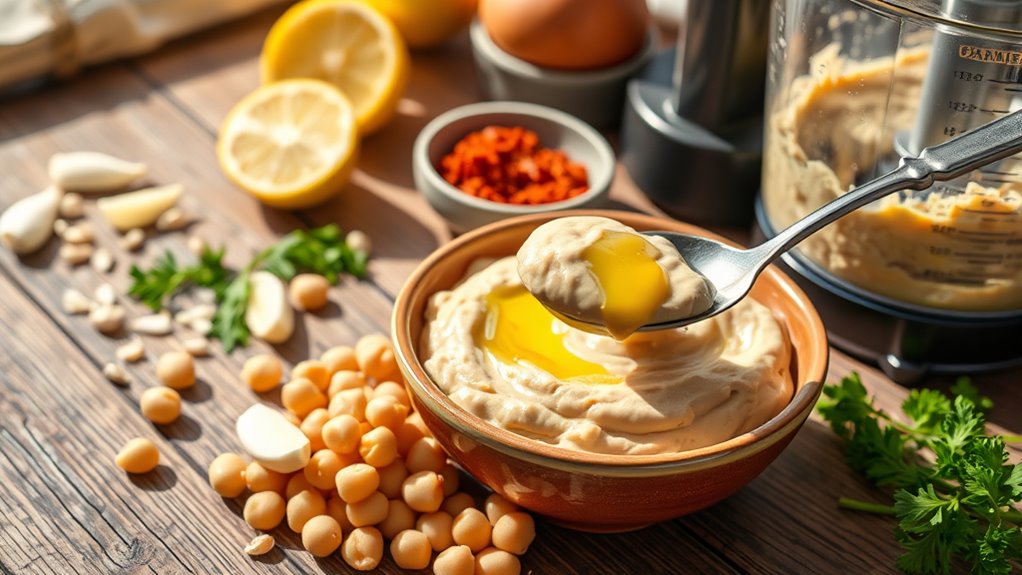

To make hummus at home, start by rinsing and draining canned chickpeas, then add them to a blender or food processor. Include tahini, lemon juice, garlic, olive oil, salt, and optional cumin. Blend until smooth, adding water or more olive oil if needed to reach the perfect creamy consistency. Adjust seasonings to taste, then transfer to a bowl, drizzle with olive oil, and garnish as desired. Keep going to discover tips for an even better homemade hummus.
Key Takeaways
- Gather and rinse canned or dried chickpeas, then drain and optionally peel for smoother hummus.
- Combine chickpeas, tahini, lemon juice, garlic, olive oil, salt, and optional spices in a blender or food processor.
- Blend until smooth and velvety, adding water or olive oil to achieve the desired creamy texture.
- Adjust seasonings to taste and transfer to a serving dish, drizzling with olive oil and garnishes if desired.
- Serve with vegetables, pita, or as a spread for a nutritious, homemade Mediterranean snack.
Have you ever wondered how to make delicious, creamy hummus from scratch? Crafting your own hummus allows you to enjoy fresh, flavorful dips that perfectly suit your taste. Plus, it’s a fantastic way to incorporate Mediterranean flavors into your diet while promoting healthy snacking. When you make hummus at home, you can control the ingredients, ensuring no unnecessary preservatives or additives sneak in. This makes it a nutritious choice for you and your family.
To begin, gather your ingredients: canned chickpeas, tahini, fresh lemon juice, garlic, olive oil, salt, and a pinch of cumin if you like. Using canned chickpeas is convenient, but for an extra silky texture, some prefer to cook dried chickpeas from scratch. However, canned ones work just fine if you’re short on time. Rinse the chickpeas thoroughly to remove excess salt and preservatives, then drain them well. You’ll want to peel some of the chickpeas if you’re aiming for an ultra-smooth hummus—simply pinch each one to remove the skin. This step is optional but makes a noticeable difference in texture.
Next, add the chickpeas to a food processor or blender. Pour in a generous spoonful of tahini, which provides that signature nutty flavor and creamy consistency. For a tangy kick, squeeze fresh lemon juice—start with one lemon and adjust to taste. Add a clove or two of garlic for depth, and drizzle in a good-quality olive oil. Season with salt and a pinch of cumin if you enjoy warm, earthy notes. Blend everything together, stopping to scrape down the sides as needed. Keep blending until your hummus reaches a smooth, velvety consistency. If it’s too thick, add a little cold water or more olive oil to loosen it up.
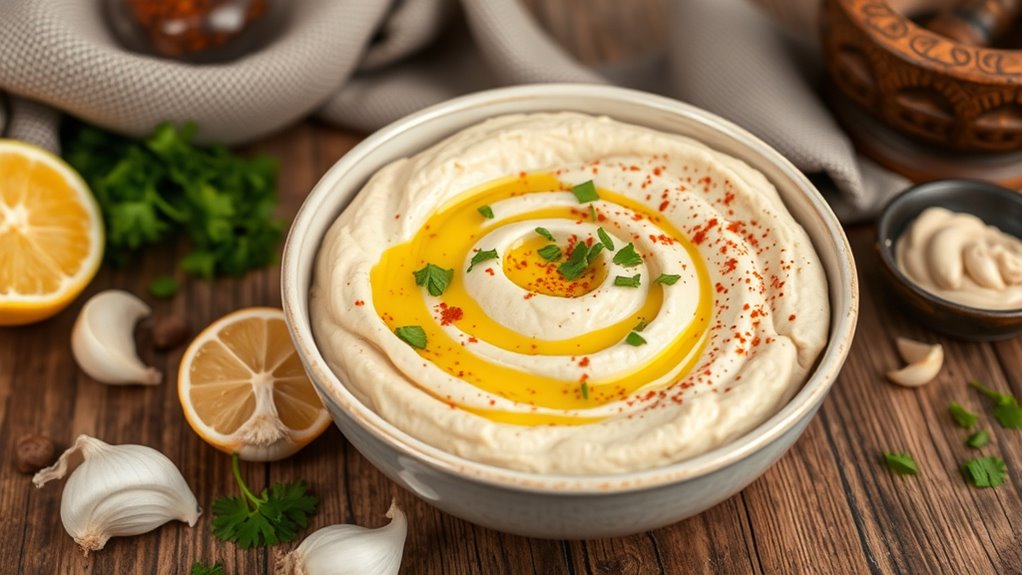
Taste your hummus and tweak the seasonings as necessary. You might want a bit more lemon for brightness or an extra pinch of salt. Once satisfied, transfer it to a serving bowl. To finish, drizzle a little olive oil on top and sprinkle with paprika or chopped herbs if desired. Serve your homemade hummus with fresh vegetable sticks, pita bread, or even as a spread for sandwiches. Not only does this homemade version burst with Mediterranean flavors, but it also makes for a wholesome, satisfying snack that’s perfect for any time of day. By making hummus yourself, you turn a simple ingredient into a versatile, healthy snack that’s both delicious and nourishing. Additionally, high-quality ingredients can significantly enhance the flavor and texture of your hummus.
Frequently Asked Questions
Can I Substitute Tahini With Other Ingredients?
Yes, you can substitute tahini with other ingredients. For tahini alternatives, try using Greek yogurt, sunflower seed butter, or tahini substitutes like tahini paste made from roasted sesame seeds. These substitution options give your hummus a similar creamy texture and nutty flavor. Keep in mind that each alternative may slightly alter the taste, so adjust seasonings accordingly to achieve your desired flavor profile.
How Long Does Homemade Hummus Stay Fresh?
Did you know homemade hummus typically stays fresh for about 4 to 7 days? To maximize storage duration and preserve freshness, keep it in an airtight container in the fridge. Always use clean utensils when serving to prevent contamination. If it develops an off smell, mold, or changes in color, it’s best to discard it. Proper storage helps you enjoy your homemade hummus safely for as long as possible.
Is It Possible to Make Hummus Vegan?
Yes, you can definitely make hummus vegan. You simply use plant-based options like tahini, olive oil, lemon juice, garlic, and chickpeas. For vegan substitutions, avoid traditional dairy or animal products and opt for ingredients that keep it plant-based. This way, you create a delicious, vegan hummus that’s perfect for any diet, and you can customize it with your favorite herbs and spices to enhance the flavor.
What Are the Best Alternatives for Lemon Juice?
Think of lemon juice as the sun shining on your hummus—bright and uplifting. If you need lemon substitutes, try using vinegar, such as apple cider or white wine vinegar, which act as flavor enhancers. You can also use a splash of lime juice or a bit of yogurt for tang. These alternatives add acidity, balancing flavors and ensuring your hummus stays delicious and vibrant.
How Can I Adjust Hummus for a Spicier Flavor?
To make your hummus spicier, you can adjust the ingredient quantities by adding more cayenne pepper, hot sauce, or crushed red pepper flakes. Start small, taste as you go, and gradually increase until you reach your desired spicy flavor. You might also consider blending in chopped jalapeños or a dash of chili powder for extra heat. These ingredient adjustments guarantee your hummus has the perfect spicy kick.
Conclusion
Now that you’ve learned how to make hummus, you can enjoy it whenever you want, customize it to your taste, and impress your friends with your skills. You can experiment with flavors, create new variations, and share your delicious dip with everyone. Making hummus at home isn’t just easy; it’s rewarding. So, embrace the process, enjoy the journey, and indulge in the creamy, flavorful results—because homemade hummus is simply worth it.