To make herbal tea blends, start with a base herb like chamomile or green rooibos, and add smaller amounts of flavorful herbs such as peppermint or lemon balm. Measure your ingredients carefully, gently crush or tear the herbs to release their aromas, and combine them in clean containers. Store your blend in airtight, moisture-proof jars. When ready, steep your mixture in hot water for 5-10 minutes, and keep experimenting to create your perfect cup. If you continue exploring, you’ll discover even more ways to customize your herbal infusions.
Key Takeaways
- Choose a base herb like chamomile or green rooibos for the foundation of your blend.
- Combine smaller amounts of stronger herbs such as lavender or lemon balm to add flavor.
- Measure ingredients precisely and gently crush herbs to release their aromas and oils.
- Store your herbal blends in airtight, lightproof containers to preserve freshness and potency.
- Steep the blend in hot water for 5-10 minutes, adjusting steeping time for optimal flavor and benefits.
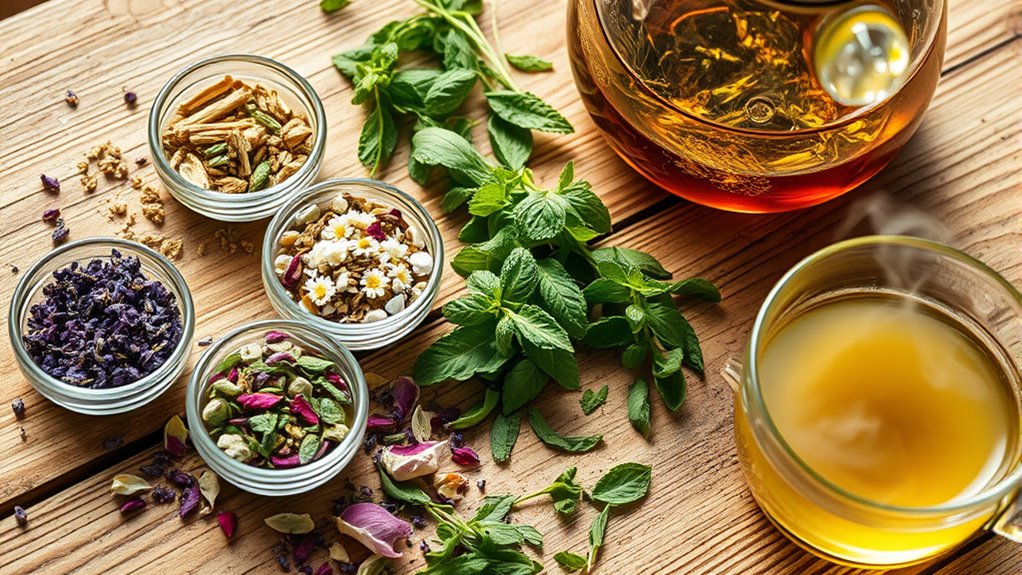
Have you ever wondered how to craft your own herbal tea blends at home? Creating personalized herbal tea varieties isn’t just fun—it’s a way to enjoy flavors tailored specifically to your taste and wellness needs. The key lies in understanding the different herbal tea varieties and mastering blending techniques that bring out their best qualities. When starting, gather a variety of dried herbs, flowers, and spices, each with unique flavors and health benefits. Common herbal tea varieties include chamomile for relaxation, peppermint for digestion, and hibiscus for a tangy boost of vitamin C. By exploring these options, you can develop a palette of ingredients that serve both your taste buds and your health goals.
Blending techniques are fundamental to making tea that’s balanced and harmonious. To begin, consider the flavor profiles of each herb. Some herbs, like lavender or lemon balm, add calming or citrus notes, while others like ginger or cinnamon provide warmth and spice. When creating a blend, start with a base herb—often a mild, soothing herb such as chamomile or green rooibos—and add smaller amounts of stronger flavors. This ensures no single ingredient dominates the mixture. Use a clean, dry container to combine your herbs, and always measure carefully to maintain consistency.
Once you’ve decided on your ingredients, experiment with ratios to find the perfect balance. For instance, a basic calming blend might include equal parts chamomile and lemon balm, with a hint of lavender. If you prefer a more invigorating mix, add a touch of peppermint or ginger. It’s helpful to keep notes of your ratios and herbs used, so you can replicate or refine your blends over time. When blending, gently crush or tear herbs to release their oils and aromas, but avoid pulverizing them into powder unless you’re making a finely ground tea. The goal is to preserve the integrity of each herb’s flavor while allowing their essences to meld.
Additionally, choosing high-quality herbs can significantly enhance the flavor and health benefits of your teas, especially when considering vacuums for storage, which help keep your herbs fresh and aromatic. Finally, store your herbal tea blends in airtight containers away from sunlight and moisture to preserve freshness. Steeping your custom blend is the next step—add hot water and let the herbs infuse for the right amount of time, usually 5 to 10 minutes. The beauty of making herbal tea blends at home is that you control every element, from ingredients to flavor intensity. With practice and experimentation, you’ll develop your own signature blends that not only taste great but also enhance your wellness routine.
Frequently Asked Questions
Can I Mix Different Herbs for a Single Tea Blend?
Yes, you can mix different herbs for a single tea blend. Just keep herb compatibility in mind, ensuring the flavors complement each other. Focus on balancing the flavors so one herb doesn’t overpower the others. Experiment with small amounts first, tasting as you go, to find a harmonious combination. Proper flavor balancing creates a delicious, well-rounded herbal tea that suits your taste preferences.
How Long Should I Steep Herbal Tea for Optimal Flavor?
Did you know that most herbal teas reach ideal flavor extraction in just 5 to 10 minutes? You should steep your herbal tea for this period to enjoy the best flavor. Steeping times vary depending on the herbs used, but generally, 5-10 minutes balances flavor and potency. Longer steeping can cause bitterness, so keep an eye on the clock for a perfect cup every time.
Are There Any Herbs I Should Avoid Mixing?
You should prevent mixing herbs that could cause herbal interactions or allergic reactions. For example, avoid combining herbs like St. John’s Wort with others that increase photosensitivity or interact with medications. Also, be cautious with herbs you’re allergic to, such as chamomile if you’re allergic to plants in the daisy family. Always research each herb’s potential interactions and your allergies to ensure safe, enjoyable blends.
How Do I Store Herbal Tea Blends Properly?
Think of your herbal tea blends as delicate whispers of flavor waiting to be heard. To maintain that herbal freshness, store your tea in an airtight container away from sunlight, heat, and moisture. Keep it in a cool, dark place where it can rest undisturbed. Proper tea storage ensures each brew remains vibrant and full of life, allowing your herbal treasures to stay as fresh as the day you made them.
Can I Make Herbal Tea Blends in Advance?
Yes, you can make herbal tea blends in advance. For ideal herbal tea storage, use dried herbs rather than fresh ones, as dried herbs stay fresher longer and retain flavor better. Store your blends in airtight containers away from light and heat. This helps preserve their aroma and potency, ensuring your herbal tea remains flavorful and enjoyable whenever you brew it. Just remember, dried herbs are best for long-term storage and pre-made blends.
Conclusion
Now that you know how to craft your own herbal tea blends, why settle for store-bought flavors? Experiment with different herbs and discover your perfect mix. Making your own tea not only personalizes your experience but also lets you enjoy the freshest, most natural ingredients. Isn’t it rewarding to create something uniquely yours? So go ahead, get creative, and brew a blend that truly suits your taste and mood. Your perfect cup awaits!