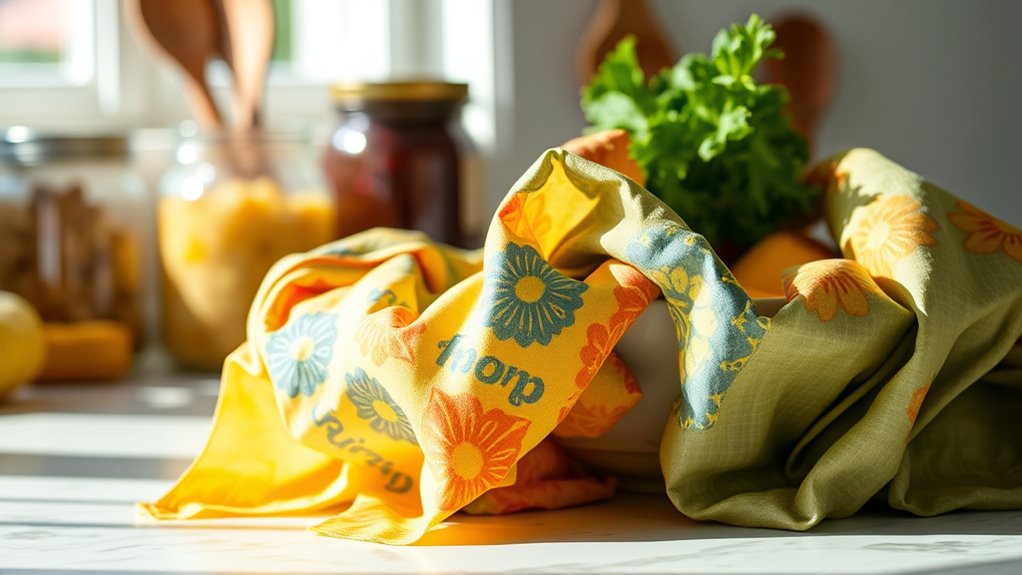

To make beeswax food wraps, start by cutting natural cotton fabric into your desired sizes. Melt beeswax pellets with optional pine resin and jojoba oil in an oven or double boiler. Use a brush or sponge to evenly coat the fabric with the melted mixture. Place the coated fabric in a warm oven to melt the beeswax fully, then cool and add more jojoba oil if needed for flexibility. If you want to discover more tips and techniques, keep exploring.
Key Takeaways
- Pre-cut natural cotton fabric into desired sizes and lay on parchment-lined baking sheet.
- Melt beeswax pellets with optional pine resin and jojoba oil; evenly apply with a brush or sponge.
- Bake at 185°F (85°C) until beeswax fully melts, then remove and let cool to harden.
- Apply jojoba oil after cooling to enhance flexibility and pliability of the wraps.
- Wash with cold water and mild soap, then fold or roll for storage and reuse.
Beeswax food wraps offer an eco-friendly alternative to plastic cling wrap for storing your food. Not only do they help reduce plastic waste, but they also promote sustainable packaging practices. Making your own beeswax wraps is a simple and rewarding project, especially if you’re looking for unique DIY gift ideas. When you craft these wraps yourself, you control the ingredients and materials, guaranteeing a natural, safe option for your food storage. Plus, creating your own wraps allows you to customize sizes, shapes, and even add personal touches, making them perfect for gifting.
Craft your own beeswax wraps for eco-friendly, customizable, and stylish food storage solutions.
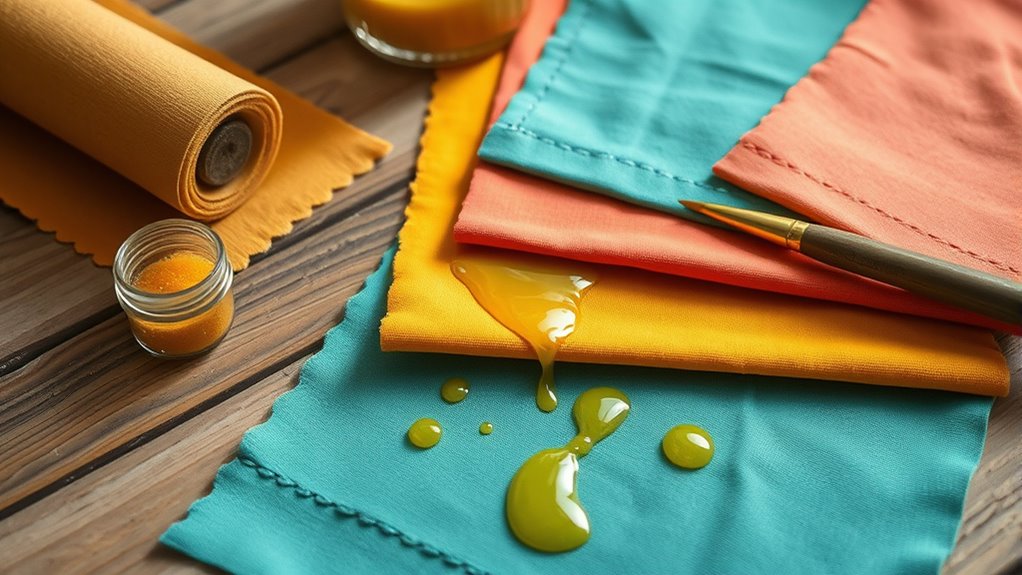
To get started, gather your supplies: natural cotton fabric, beeswax pellets or blocks, pine resin (optional, but it helps the wrap stick), and jojoba oil for added flexibility. You’ll also need a baking sheet, parchment paper, a paintbrush or sponge, and an oven preheated to about 185°F (85°C). Make sure your fabric is clean and cut into the sizes you want for wrapping different foods—small pieces for snacks, larger sheets for bowls or sandwiches. Choose fabrics that are tightly woven and untreated to assure safety and durability.
Begin by pre-cutting your fabric to the desired size. Spread a piece of parchment paper over your baking sheet, then place the fabric on top. Melt the beeswax pellets in a double boiler or microwave until fully liquid. If you’re using pine resin, add small pieces to the beeswax and stir until combined. Using a paintbrush or sponge, evenly coat the fabric with the melted beeswax mixture, making sure to cover all sides. For a more uniform coating, you can flip the fabric and repeat the process.
Next, place the coated fabric in the oven for a few minutes until the beeswax melts completely and seeps into the fibers. Remove it carefully and hang or lay flat to cool. As it cools, the beeswax will harden, creating a flexible, tacky surface perfect for wrapping food. To make your wraps more pliable and extend their lifespan, you can apply a small amount of jojoba oil after cooling.
Once your beeswax wraps are ready, you can use them to cover bowls, wrap sandwiches, or store fruits and vegetables. When not in use, fold or roll them up and store in a cool, dry place. These wraps are washable with cold water and mild soap, making them a reusable and sustainable packaging solution. They’re also excellent DIY gift ideas—handmade, eco-conscious, and practical, they show you care for both the environment and your loved ones. With a little effort, you can turn simple materials into beautiful, functional wraps that reduce reliance on single-use plastics while adding a personal touch to your gift-giving.
Frequently Asked Questions
Can Beeswax Wraps Be Used in the Microwave?
Beeswax wraps aren’t microwave safe because they lack heat resistance and could melt or catch fire. Using them in the microwave isn’t recommended, as it compromises their safety and effectiveness. For microwave safety, stick to containers designed for heat. Beeswax wraps work best for wrapping food at room temperature or in the fridge, but avoid exposing them to high heat to maintain their integrity and longevity.
How Long Do Beeswax Wraps Typically Last?
You might think beeswax wraps last forever, but their durability usually spans 6 months to a year. While they’re eco-friendly, their wrap lifespan depends on how often you use and wash them. Over time, the beeswax can wear thin or crack, reducing their effectiveness. So, if you’re hoping for a lifetime of sustainable wrapping, you’ll be pleasantly surprised—until you realize it’s time to replace them to maintain their beeswax durability.
Are Beeswax Wraps Safe for All Food Types?
Beeswax wraps are generally safe for most food types, but you should consider food safety and allergen concerns. Avoid wrapping raw meat or fish directly, as bacteria can transfer. If you’re allergic to beeswax or pollen, these wraps might not be suitable. Always wash the wraps regularly and inspect for signs of wear. Using them with cheese, fruits, and baked goods is usually safe, but stay cautious with allergenic or raw animal products.
How Do I Store Beeswax Wraps When Not in Use?
When you’re not using your beeswax wraps, store them in a cool, dry place away from direct sunlight. To keep them fresh, fold them neatly or roll them up, and avoid stacking heavy items on top. Use simple cleaning methods like cold water and mild soap after each use, then air dry. Follow these storage tips to maintain their flexibility and effectiveness, so your wraps last longer and stay in great condition.
Can I Reuse Beeswax Wraps After They Wear Out?
Think of beeswax wrap maintenance as giving your reusable cloth a gentle tune-up. Yes, you can reuse beeswax wraps after they wear out—just like turning old jeans into stylish patches. When they become thin or crack, consider recycling beeswax wraps by repurposing them for craft projects or composting. With a little care, your wraps can keep protecting and wrapping, making sustainability a part of your daily routine.
Conclusion
Now that you’ve learned how to craft your own beeswax food wraps, you hold the power to reduce waste and embrace sustainability. Remember, each wrap you create is like a tiny act of rebellion against plastic pollution—a proof to your commitment to the planet. As you reuse and renew these wraps, you’re not just protecting food; you’re nurturing the Earth’s future. Embrace this simple craft, and let it remind you that small actions can create ripples of change.