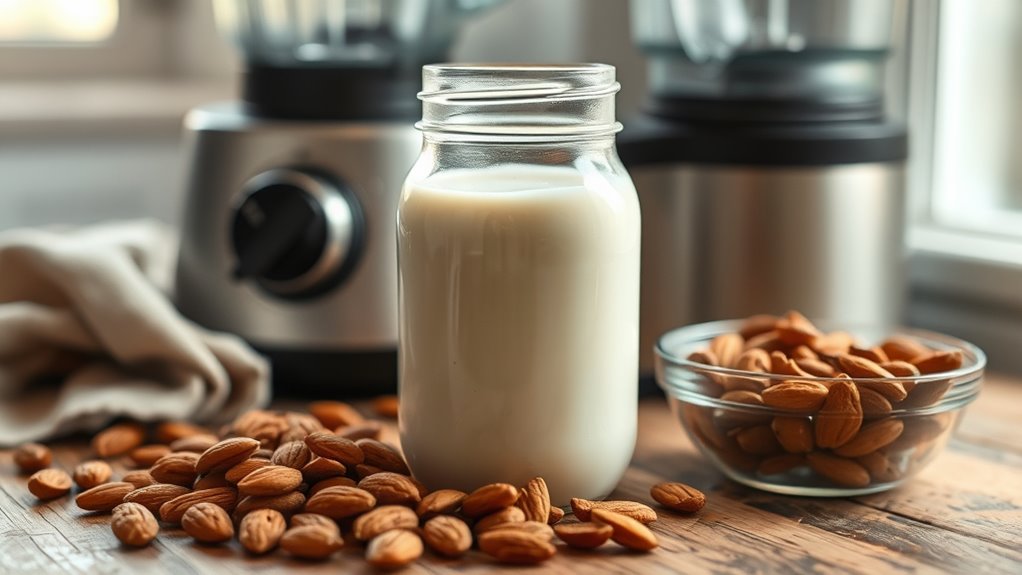

To make almond milk at home, soak raw almonds overnight to soften them, then drain and rinse. Blend 1 cup of almonds with 2-3 cups of water until smooth. Use a nut milk bag or fine strainer to squeeze out the liquid, separating the almond pulp. Transfer the milk to a jar, add flavorings if desired, and refrigerate for up to 3 days. If you’re curious about all the details, keep going for a complete guide.
Key Takeaways
- Soak raw almonds overnight to soften, then rinse thoroughly before blending.
- Combine 1 cup soaked almonds with 2-3 cups water in a high-speed blender.
- Blend on high for 1-2 minutes until mixture resembles milk.
- Strain the mixture through a nut milk bag or fine mesh to extract smooth almond milk.
- Store the milk in a sealed container in the refrigerator and shake before use.

Have you ever wondered how to make fresh almond milk at home? It’s simpler than you might think and lets you enjoy a creamy, natural beverage without the additives often found in store-bought versions. The first step starts with almond harvesting. If you’re using fresh almonds, make sure they’re mature and have been harvested at the right time, usually in late summer or early fall. You can buy almonds from the store or harvest them yourself if you have access to an almond tree. Once you have your almonds, give them a good rinse to remove any dirt or debris. If you’re using raw almonds, soaking them overnight helps soften them and makes the blending process easier, plus it can improve digestibility.
After soaking, draining and rinsing the almonds thoroughly is essential. Now, you’re ready to blend. Place the almonds in a high-speed blender along with fresh water—generally, a ratio of 1 cup of almonds to 2-3 cups of water works well. Blend on high for about 1-2 minutes until the almonds are finely ground and the mixture looks milky. Once blended, it’s time for milk straining. This step is vital because it separates the liquid from the almond pulp, giving you smooth, drinkable almond milk. You can use a nut milk bag, cheesecloth, or a fine mesh strainer. Position your strainer over a large bowl or jug, pour the blended mixture into it, and gently squeeze or press to extract as much liquid as possible. The leftover almond pulp can be stored or used in baking, smoothies, or oatmeal.
The milk straining process might take a little patience, but it’s worth it for the fresh, pure flavor. After straining, transfer your almond milk to a clean bottle or jar and refrigerate. Keep in mind that homemade almond milk doesn’t contain preservatives, so it’s best consumed within 2-3 days. Shake well before each use, as natural separation will occur. If you want to add a touch of sweetness or flavor, blend in a little vanilla, a sweetener like honey or maple syrup, or a pinch of salt during the blending process. Making almond milk at home allows you to control the ingredients, avoid additives, and enjoy a fresh, wholesome drink whenever you like. Just remember to harvest your almonds at the right time, soak them properly, and strain carefully for the best results. Additionally, incorporating nutritious ingredients can boost the health benefits of your homemade almond milk.
Frequently Asked Questions
Can I Use Roasted Almonds for Almond Milk?
Yes, you can use roasted almonds for almond milk. Roasting almonds enhances their flavor infusion, making your milk richer and nuttier. Keep in mind, roasted almonds have a stronger taste, so your almond milk will be more intense and possibly slightly darker. To achieve a smooth texture, soak the roasted almonds beforehand, blend thoroughly, and strain well. This method gives your almond milk a unique, toasted flavor that’s delicious and satisfying.
How Long Does Homemade Almond Milk Last?
You can expect homemade almond milk to last about 3 to 5 days when stored in the refrigerator. Keep it in an airtight container to maintain freshness. Watch for spoilage indicators like sour smell, off taste, or curdling, which suggest it’s gone bad. To extend shelf life, consider storing it in the freezer for up to a month, but note that texture may change upon thawing.
Is Homemade Almond Milk Suitable for Baking?
Yes, homemade almond milk is suitable for baking. Its nutritional benefits, like healthy fats and vitamin E, add extra value to your baked goods. Just keep in mind that it’s best to utilize it within 3-4 days for freshness and flavor. Store it in an airtight container in the fridge, and give it a shake before using, since homemade almond milk can separate. This ensures your baked treats stay delicious and nutritious.
Can I Add Flavorings to Almond Milk?
Yes, you can add flavorings to almond milk easily. You might try flavor combinations like vanilla with cinnamon, cocoa, or a hint of almond extract. For sweetening options, honey, maple syrup, or dates work well. Simply blend your chosen flavorings and sweeteners into the almond milk until smooth. This customization makes your almond milk perfect for coffee, cereal, or baking, adding a delightful twist to your favorite recipes.
Is Homemade Almond Milk Nut-Free?
You might think homemade almond milk is nut-free, but it’s not guaranteed. About 1 in 100 people with nut allergies could react to homemade versions if cross contamination occurs during processing or from shared equipment. If you or someone you’re serving has a nut allergy, it’s safest to buy certified nut-free almond milk or use alternative plant-based milks. Always check for cross contamination risks before consuming homemade options.
Conclusion
Now that you’ve mastered making almond milk at home, you’re officially more skilled than most store-bought brands. Who knew that blending some almonds and water could turn you into a dairy-free barista? So go ahead, enjoy your homemade almond milk—because nothing says “I’m health-conscious” like sipping on a drink you crafted yourself. Just don’t forget, all that effort might make your store-bought options feel a little too convenient now!