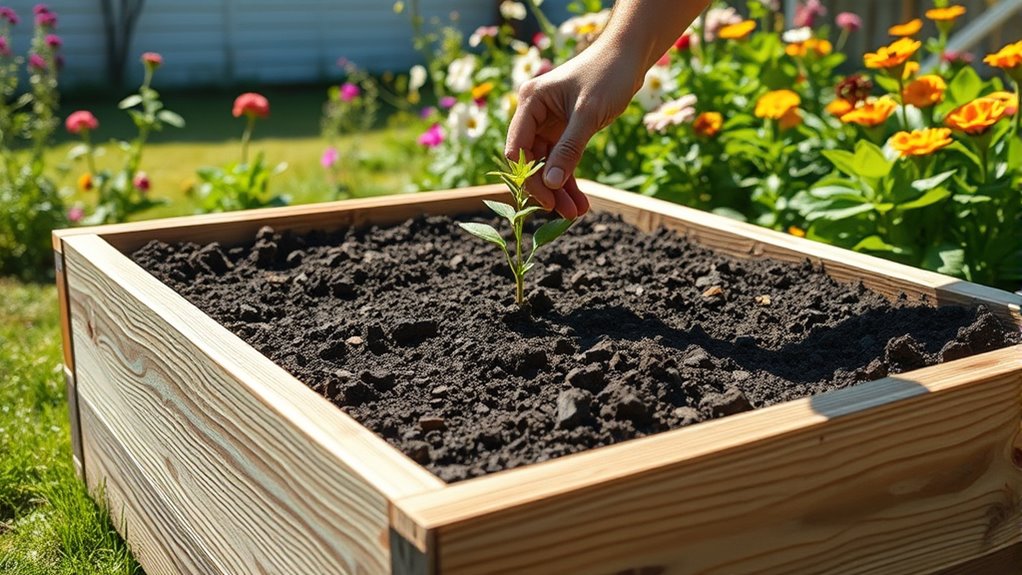

To make a raised garden bed, select a sunny spot with good drainage and clear the area of grass, weeds, and debris. Build a frame using durable materials like wood, ensuring it is level and accessible. Fill the bed with a mix of high-quality organic soil and compost for nutrient-rich growth. Properly water and mulch the bed to retain moisture and suppress weeds. Continue exploring for detailed steps to create a thriving garden space.
Key Takeaways
- Select a sunny, well-drained site and prepare the area by clearing debris and leveling the ground.
- Build the bed frame using durable materials like wood or stone, ensuring proper dimensions for your crops.
- Fill the bed with a mix of high-quality organic soil and compost to support healthy plant growth.
- Plant seeds or seedlings following spacing and depth guidelines, then water thoroughly after planting.
- Mulch around plants to retain moisture, suppress weeds, and regulate soil temperature.

Creating a raised garden bed is a simple way to improve your gardening space and boost plant health. The first step to guaranteeing a thriving garden is focusing on soil preparation. Unlike traditional garden beds, raised beds give you control over soil quality, so you should start by selecting a suitable location that gets ample sunlight and has good drainage. Remove any grass, weeds, or debris from the area to prevent competition for nutrients. Once the site is cleared, consider adding a layer of compost or organic matter to enrich the soil, which will provide your plants with essential nutrients and improve overall soil structure. Filling the bed with a mix of high-quality organic soil and compost creates an ideal environment for root development and water retention. Remember, the better your soil, the healthier your plants will grow, so don’t rush this step.
After preparing the soil, you’ll want to focus on proper planting techniques to guarantee your garden thrives. When planting, pay attention to the spacing recommendations for each plant to avoid overcrowding, which can lead to poor air circulation and disease. Dig planting holes slightly larger than the root ball, and gently loosen the roots if they’re tightly bound. This encourages roots to spread out and establish themselves quickly in their new environment. Water thoroughly after planting to settle the soil around the roots and eliminate air pockets. Mulching around your plants helps retain soil moisture, suppress weeds, and maintain consistent soil temperature, all of which support healthy growth. Additionally, selecting appropriate soil amendments can further enhance soil fertility and plant vitality.
Incorporate crop rotation practices if you plan to grow different vegetables or herbs over multiple seasons. This helps prevent soil depletion and reduces the risk of pests and diseases. If you’re planting in early spring, consider starting seeds indoors or purchasing young seedlings to give your plants a head start. Be sure to follow the specific planting depths and spacing guidelines for each crop, which will maximize your yield and overall health. Regularly monitor your garden for pests, watering needs, and signs of disease, adjusting your care routine accordingly.
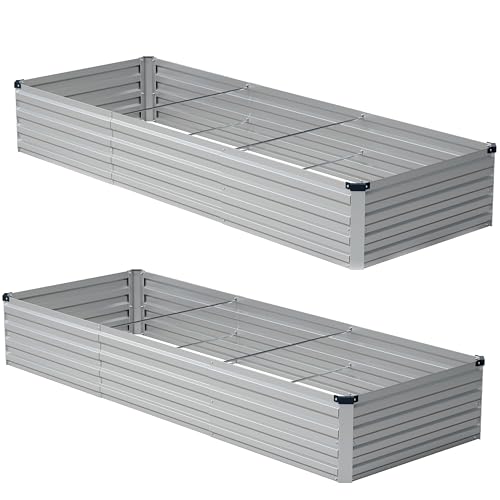
zunatu 10x2x1ft(2 Pack) Galvanized Raised Garden Bed,Outdoor Planter Boxes Metal Patio Kit Planting Bed for Vegetables Flowers,Silver
Specialized in Garden Bed: Size:10x2x1ft.Ideal choice for your gardens,yards and patio to grow vegetables,flowers,fruits and other plants.
As an affiliate, we earn on qualifying purchases.
As an affiliate, we earn on qualifying purchases.
Frequently Asked Questions
What Are the Best Materials for Raised Garden Beds?
You should choose cedar or composite wood for your raised garden bed because they offer excellent materials durability and withstand rot over time. If you prefer aesthetic options, consider using painted or stained wood to match your garden’s style. Recycled plastic and metal are also durable choices, providing long-lasting structures with modern looks. These materials help ensure your garden bed stays sturdy and attractive season after season.
How Deep Should I Build My Raised Bed?
You should build your raised bed at least 12 inches deep to guarantee healthy root growth and proper soil depth. If you’re growing root vegetables or larger plants, aim for 18 to 24 inches to support their development. The bed height directly influences soil quality and drainage, so don’t skimp—creating a sturdy, adequately deep garden bed guarantees lush, thriving plants from the very first planting.
Can I Build a Raised Bed on Concrete?
Yes, you can build a raised bed on concrete, but surface preparation is essential for concrete compatibility. First, clean the surface thoroughly to remove dirt and debris. Then, level the area and consider adding a layer of gravel or pavers to improve drainage and stability. Use appropriate anchors or brackets to secure the frame, ensuring your raised garden bed stays in place and protects the concrete surface.
How Do I Prevent Pests in My Raised Garden?
You can prevent pests in your raised garden by setting up pest barriers like row covers or netting to keep insects away. Additionally, practice companion planting; for example, planting marigolds or basil near your vegetables deters pests naturally. Regularly inspect your plants for signs of pests, remove affected leaves, and keep your garden clean. These strategies work together to protect your plants and ensure a healthy, pest-free garden.
What Is the Ideal Soil Mix for Raised Beds?
You’ll want a soil mix that’s like a fertile banquet for your plants. Combine equal parts of compost, peat moss or coconut coir, and vermiculite or coarse sand. This blend guarantees excellent soil drainage, preventing soggy roots, while organic amendments boost nutrients. Think of it as creating a cozy, nutrient-rich bed that encourages healthy growth and resilience, giving your garden the perfect foundation to flourish.
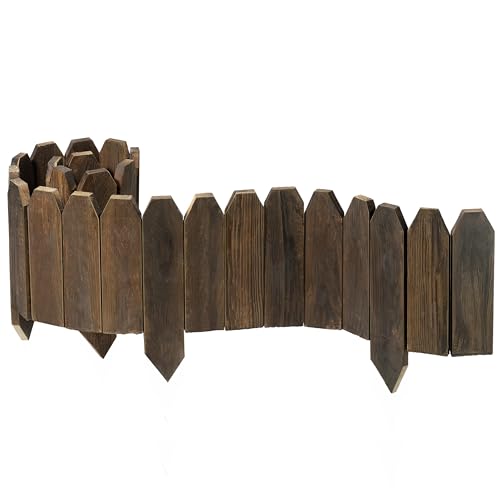
Wood Garden Edging, Wooden Fence Border Decorative Small Picket Panels for Flower Bed Barriers and Landscape Fencing (5.9" H x 47" L, 1 Pack)
Charred for Durability:Our wooden edging is treated with high-temperature carbonization to resist moisture, rot, and cracking—perfect for withstanding…
As an affiliate, we earn on qualifying purchases.
As an affiliate, we earn on qualifying purchases.
Conclusion
Building your raised garden bed is like planting the foundation for a flourishing oasis. With a little effort, you’ve created a sturdy frame that invites your plants to thrive and grow strong. Think of it as giving your garden a cozy home where roots can spread freely and dreams can blossom. Now, just add soil, seeds, and patience—your green paradise is waiting to burst into life, turning your backyard into a vibrant haven of growth.

Miracle-Gro Organic Outdoor Potting Mix – Plant Soil for Outdoor Container Plants, Contains Quick-Release Natural Fertilizer, OMRI Listed, 16 qt.
OUTDOOR POTTING SOIL: Miracle-Gro Organic Outdoor Potting Mix contains a quick-release natural plant fertilizer and also feeds plants…
As an affiliate, we earn on qualifying purchases.
As an affiliate, we earn on qualifying purchases.

HealthiStraw GardenStraw, 3 cu ft (20 lbs) All-Natural Mulch for Gardens, Vegetables & Lawn Seeding – Water-Conserving Wheat Straw – Thoroughly Cleaned, Sustainable
All-Natural & Clean Mulch —Sustainably sourced 100% non-GMO wheat straw is naturally filtered to remove dust, dirt, and…
As an affiliate, we earn on qualifying purchases.
As an affiliate, we earn on qualifying purchases.