


Parents comparing educational science kits are often choosing between two kinds of learning: figuring out how a system works by building it, or following an experiment to see a science concept in action. LEGO Education and science kits lean toward construction, mechanisms, coding, and iterative problem-solving. National Geographic kits more often package a focused activity, such as crystal growing, fossil excavation, or chemistry, into a ready-to-start project.

Prime made for students and young adults
- Fast, free delivery for dorm and study essentials
- Prime Video and Amazon Music included
- Member-only deals
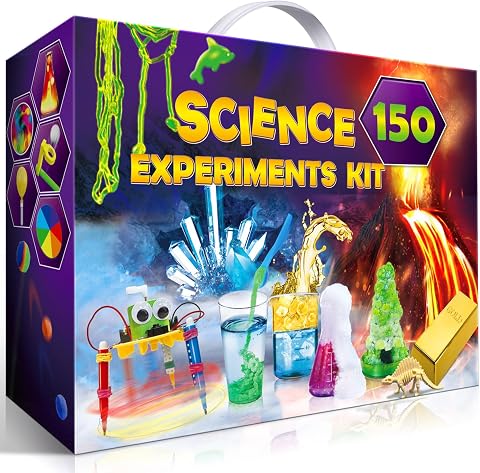
UNGLINGA 150 Experiments Science Kit for Kids – Chemistry Lab, STEM Toys
- ✔ Recommended age: 8 years and up
- ✔ Set name: 150 Experiments
- ✔ Science areas: Chemistry, physics, earth science, and more

Doctor Jupiter Preschool Science Kit for Kids Ages 3-5, Birthday Gift
- ✔ Age range: 3+ years
- ✔ Experiments: Over 100
- ✔ Included components: Beaker, conical flask, cups, stirring sticks, color-mixing tray, spatula, funnel, spray bottle, bubble wand, and more

National Geographic Science Magic Kit with 100+ Experiments for Kids 8-12
- ✔ Age range: 8 years and up
- ✔ Physical magic experiments: 20
- ✔ Bonus booklet: 85+ additional magic experiments
The difference affects more than the activity on the box. Building kits tend to reward repeated use and open-ended tinkering, while experiment kits can offer a quicker route to a visible result. LEGO can be the stronger fit for a child who likes assembling, testing, and rebuilding; National Geographic can suit a child who wants a specific discovery without committing to a larger construction project. Age, adult involvement, storage, and whether the kit can be used again should guide the choice as much as the topic.
At a Glance
| Criteria | LEGO Education and science kits | National Geographic science kits | Winner |
|---|---|---|---|
| Learning style | Build, test, and revise models | Follow experiments, observations, or guided activities | Depends |
| Range of topics | Mechanics, engineering, robotics, and coding, depending on set | Often focused on one subject or project, such as geology or chemistry | A |
| Repeat play | Usually high; parts can support new builds | Varies; consumables and single-project activities limit reuse | A |
| Time to a result | Often takes time to assemble and troubleshoot | Often delivers a defined activity or reveal relatively quickly | B |
| Adult involvement | Can be shared, especially for younger builders | May need help with setup, safety, or instructions | Depends |
| Age and skill fit | Best when a child enjoys construction and can manage the set’s complexity | Depends on the specific kit; simple themes can appeal to beginners | Depends |
| Value over time | Higher upfront cost can be offset by reusable parts | Often a lower-cost way to try a specific science topic | A |
UNGLINGA 150 Experiments Science Kit for Kids – Chemistry Lab, STEM Toys
For a school-age child who wants to try more than one kind of science, UNGLINGA’s 150-experiment format is the broadest fit in this lineup. The activities span chemistry, physics, and earth science, so the kit is better suited to varied exploration than Doctor Jupiter’s preschool-centered sensory activities or National Geographic’s magic-led approach. Its illustrated, step-by-step manual can help children follow a sequence, while lab tools and goggles make the process feel structured and hands-on.That breadth comes with a bit more work for the grown-up in the room. Some projects require additional household items, and experiments can get messy, so the stated experiment count does not mean every activity is ready to start straight from the box. Compared with National Geographic, UNGLINGA is the stronger choice when the goal is variety across science topics; compared with Doctor Jupiter, it is aimed at older learners who can take on more involved activities. We’d skip it for preschoolers or families looking for consistently low-mess, fully contained projects.
Pros:
- Covers chemistry, physics, earth science, and more.
- Includes lab-style tools and goggles for hands-on activities.
- Illustrated instructions give experiments a clear sequence.
- Offers more topic variety than the magic-focused National Geographic kit.
Cons:
- Some experiments call for household supplies beyond the kit.
- Messy projects may need close adult supervision and cleanup.
Best for: Families with children 8 and up who want a broad set of guided experiments across multiple science topics.
Not ideal for: Preschoolers, or households that need every activity to use only included materials and involve minimal cleanup.
Bottom line: We recommend UNGLINGA as the strongest all-round choice for older kids who want guided experiments across several science subjects.
“We recommend UNGLINGA as the strongest all-round choice for older kids who want guided experiments across several science subjects.”
Doctor Jupiter Preschool Science Kit for Kids Ages 3-5, Birthday Gift
Doctor Jupiter is the youngest-child pick in this comparison, built around familiar sensory ideas like colors, bubbles, water motion, sound, and simple reactions. That focus makes it a more natural starting point for ages 3 to 5 than either school-age kit: UNGLINGA spans more technical subject areas, and National Geographic uses magic experiments and written extension activities. The included beaker, cups, funnel, color-mixing tray, bubble wand, and other pieces give children objects to handle as they explore.The bright illustrated instructions and online activity access can make it easier for a parent to guide a short activity without turning it into a formal lesson. Its tradeoff is depth: experiments described as basic may become repetitive as a child grows, particularly beside UNGLINGA’s wider subject range. The kit also contains small parts, so age suitability does not remove the need for adult supervision. We’d choose it for a preschooler who enjoys simple, sensory discovery, but not for an older child looking for sustained challenges or a deep dive into several science disciplines.
Pros:
- Activities are aimed at early learners and familiar sensory concepts.
- Includes child-sized experiment pieces such as cups, a funnel, and a bubble wand.
- Bright illustrated directions support parent-guided play.
- Online activity access adds another source of instructions.
Cons:
- Simple activities may become repetitive for older or more experienced children.
- Small parts mean younger children need adult supervision.
Best for: Parents introducing hands-on science to children ages 3 to 5 through colors, bubbles, water, and other sensory activities.
Not ideal for: Older children who want complex experiments, or families seeking activities that require little supervision.
Bottom line: We’d pick Doctor Jupiter for a preschooler’s first science activities, while recognizing it offers less subject depth than the two kits for older kids.
“We’d pick Doctor Jupiter for a preschooler’s first science activities, while recognizing it offers less subject depth than the two kits for older kids.”
National Geographic Science Magic Kit with 100+ Experiments for Kids 8-12
This kit is for kids who enjoy a reveal as much as the explanation behind it. National Geographic combines magic-style presentation with science activities, giving an adult or child a natural way to talk through what appears surprising and what may be happening scientifically. Its 20 physical magic experiments are complemented by a booklet listing 85+ additional experiments, so it offers ideas beyond the supplied activity components.That format differs from UNGLINGA, which leads with a broad set of guided experiments and lab-style tools. National Geographic is a better match when presentation, tricks, and discussion are likely to keep a child engaged; it is less convincing for someone expecting every item in the total experiment count to be a physical, ready-to-do activity. Compared with Doctor Jupiter, it targets older children and asks for a different kind of engagement than preschool sensory play. The booklet adds range, but families should be comfortable sourcing or improvising for activities that rely on written guidance. We’d skip it if your child prefers a substantial collection of included materials or wants science topics without a magic framing.
Pros:
- Connects science activities with magic-style presentation.
- Includes 20 physical magic experiments for hands-on play.
- Bonus booklet provides 85+ additional experiment ideas.
- The format can encourage children to explain and present what they observe.
Cons:
- Many of the additional experiments are provided as booklet instructions rather than physical activities.
- Some metal components may feel heavy for younger children.
Best for: Children 8 and up who enjoy performing tricks and explaining the science behind surprising effects.
Not ideal for: Buyers who expect more than 20 physical magic experiments or want a broad, equipment-heavy science lab kit.
Bottom line: Choose National Geographic when magic and presentation will motivate a school-age child, keeping in mind that many extra activities are booklet-based.
“Choose National Geographic when magic and presentation will motivate a school-age child, keeping in mind that many extra activities are booklet-based.”
As an Amazon Associate we earn from qualifying purchases.
Key Differences
The clearest distinction is what the child does to learn. LEGO kits turn science and engineering into a construction problem: assemble a model, observe its behavior, then change something and try again. A child can explore cause and effect by altering a mechanism or testing a design. National Geographic kits more often center on a prescribed activity, such as examining a specimen or growing crystals. That can make a scientific idea easier to grasp quickly, though the lesson may be tied to the supplied project.
That difference shapes reuse and value. LEGO pieces are generally available for further building after the instructions are finished, so children can return to the kit or combine its parts with other compatible pieces. Many experiment kits deliver their main value through a particular activity, and some use materials that run out. The exact contents matter: a kit with durable tools or multiple experiments can be used more than once, while a single-use project may be better understood as an activity purchase than a long-term toy.
Neither format is automatically more educational. A child who loves following a question through an experiment may learn more from a focused kit than from a model they do not want to build. A child who likes making, tinkering, and solving construction problems may get more from LEGO. The best choice matches the kit’s actual activity to the child’s interests and the amount of adult help available.
Detailed Comparison
Learning style (major difference)
LEGO wins for children who learn by constructing a system, testing it, and revising their approach. The building process can make forces, motion, or simple engineering ideas concrete, but the child needs to stay engaged through assembly and troubleshooting. National Geographic wins when the goal is a guided observation or experiment with a clear question and result. This is a genuine format choice, so the winner depends on whether the child prefers open-ended building or a defined investigation.
Range of topics (LEGO Education and science kits wins — moderate)
LEGO has the broader potential across a collection of sets: different kits can cover mechanisms, engineering, robotics, or coding. National Geographic offers a broad catalog too, but each individual kit is commonly centered on a particular subject or activity, such as rocks or chemistry. LEGO has a moderate advantage for families seeking a continuing STEM play collection; a buyer seeking one particular topic may find the National Geographic option more directly matched.
Repeat play (LEGO Education and science kits wins — major)
LEGO is the stronger choice for repeat use because durable building pieces can support reconstruction and new designs after the original instructions are complete. National Geographic kits vary: tools and reusable materials can extend an activity, but projects involving consumed supplies or a one-time reveal may have less replay value. The gap is major when a LEGO set will join an existing collection, and smaller when the experiment kit includes several activities.
Time to a result (National Geographic science kits wins — moderate)
National Geographic often wins for a child who wants to begin a specific activity and reach a visible outcome without first assembling a larger model. Some projects still involve waiting, careful steps, or setup, so the box’s instructions and contents matter. LEGO usually asks for more build time before a model can be tested, but that assembly is part of the learning. The advantage is moderate and favors National Geographic for short, focused sessions.
Adult involvement (moderate difference)
There is no universal winner. Younger children may need a grown-up to interpret LEGO instructions, sort parts, or work through a tricky build. Experiment kits may also require an adult to handle setup, read safety guidance, or supervise materials. Compare the actual age guidance and steps for the individual kit: LEGO may be easier to revisit independently once built, while a simple experiment can be easier to start with help nearby.
Age and skill fit (moderate difference)
The label and instructions for the specific kit matter more than the brand name. LEGO offers sets with different build demands, while National Geographic’s subject-led activities range in complexity and supervision needs. For a child who already enjoys construction, a suitably leveled LEGO set can stretch patience and spatial reasoning. For a child drawn to a particular specimen or experiment, a matching National Geographic kit can make science feel accessible. This criterion is a close fit decision.
Value over time (LEGO Education and science kits wins — moderate)
LEGO is often better value for children who will reuse the pieces, especially if they can combine them with a home collection. The initial price can be higher, so paying more makes sense when the kit has durable parts and the child will build with them repeatedly. National Geographic can be the better value for a lower-cost, topic-specific activity or a gift meant to deliver one memorable project. Check whether supplies are reusable or replenishable before comparing sticker prices.
LEGO Education and science kits: Pros and Cons
Pros:
- Reusable pieces support rebuilding and original designs
- Strong fit for hands-on engineering and mechanism exploration
- Can complement other compatible LEGO collections
Cons:
- Often costs more upfront than a focused activity kit
- Assembly and troubleshooting take time
- Some children may prefer an experiment with a quicker, more visible result
National Geographic science kits: Pros and Cons
Pros:
- Focused activities can make a specific science topic tangible
- Often offers a defined project with a clear starting point
- Can be a lower-cost entry into a subject a child wants to explore
Cons:
- Some projects depend on consumables or offer limited replay
- A single kit may cover a narrower topic
- Setup, waiting time, or adult supervision can still be part of the activity
Who Should Choose What
Choose LEGO Education and science kits if:
- Your child enjoys building, tinkering, and trying a design more than once.
- You want durable parts that can support future builds or join an existing LEGO collection.
- You are willing to pay more upfront for a kit with potential for repeated use.
Choose National Geographic science kits if:
- Your child is curious about a specific subject such as geology, fossils, or chemistry.
- You want a guided activity with a defined experiment or discovery.
- You prefer a focused project and the kit’s supplies and activity count justify its price.
Skip both if: Skip both if the child is unlikely to use hands-on kits or if the activity’s age guidance, supervision needs, or materials do not fit your household.
Value for Money
LEGO’s higher upfront cost is worth paying when a child enjoys rebuilding and the set’s pieces will see continued use. In that case, the purchase functions as both a guided kit and a supply of reusable building materials. If the child is likely to follow the instructions once and then move on, that added flexibility may not justify the price.
National Geographic can be the better value when a child wants one particular experiment or discovery and the kit offers enough materials for its cost. Check whether the project can be repeated and whether supplies run out; a low price is less compelling if it buys only a brief activity. For lasting play, LEGO usually has the edge. For a targeted science experience, the focused kit can be the smarter spend.
Final Verdict
Choose LEGO for a child who likes constructing, testing, and making new designs, especially if reusable parts and repeat play matter enough to justify a higher initial price. Choose National Geographic for a child who wants a particular hands-on science activity and is motivated by a clear experiment or discovery. The biggest deciding factor is whether your child learns and plays more readily by building a system or by carrying out a focused investigation.
If you are buying without a specific topic in mind and want the kit to stay useful after the first session, LEGO is the stronger default. If you already know the subject that will excite the child, a well-matched National Geographic kit can be the more direct and better-value choice. Check each kit’s age guidance, contents, and adult supervision needs before buying.
Frequently Asked Questions
Which is better for a child who likes building?
LEGO is usually the better fit when the child enjoys assembling models, testing how they work, and rebuilding them. Choose a set with an age and skill level that matches the child.
Are National Geographic science kits reusable?
It depends on the kit. Tools or multiple experiments may allow repeat use, while projects with consumable materials or one-time discoveries can have less replay. Check the listed contents and activity instructions.
Is LEGO worth paying more for?
Often, if the child will reuse the pieces for new builds or combine them with other compatible LEGO parts. For a single topic-focused activity, a National Geographic kit may provide better value.
Which option needs less adult help?
Neither brand wins across every kit. Compare the age guidance, assembly steps, experiment setup, and safety notes. Both younger builders and young experimenters may need an adult nearby.