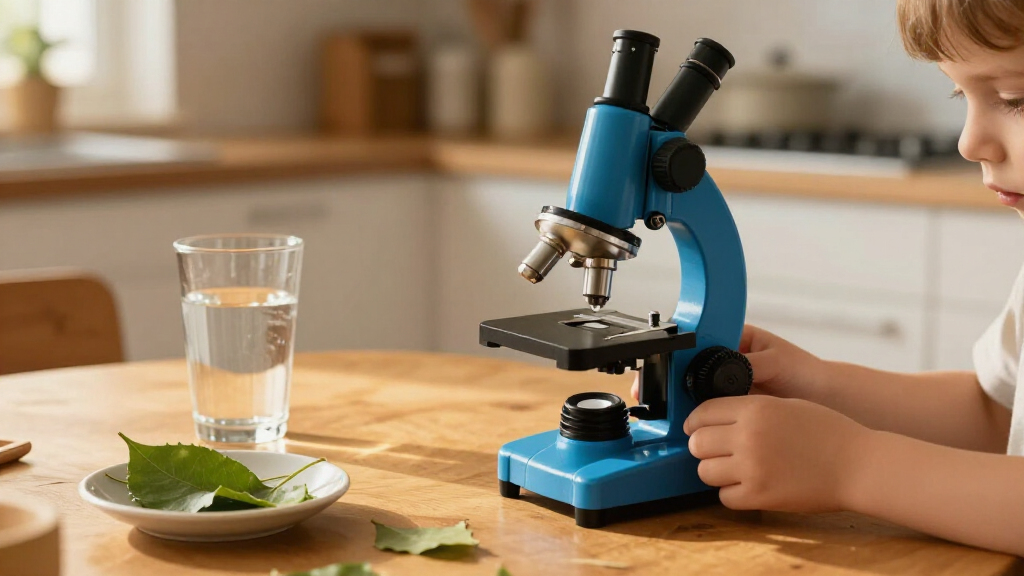
Choosing among educational microscopes for kids mostly comes down to one tradeoff: simple optical kits that teach real lab skills versus handheld digital models with screens and instant wow-factor. The National Geographic Junior Microscope Science Kit earns my best overall pick for balancing real glass optics, prepared slides, and an age-appropriate design that grows with a child. If your kid is younger than six, the GeoSafari Jr. My First Microscope is the gentlest entry point, while the BEAVERLAB Finder stands out as the premium handheld digital option with a large 4-inch screen and up to 1600X magnification. Cheaper 1000X handhelds vary widely in image clarity and build, so the headline magnification number is rarely the whole story. Keep reading for the full breakdown of all 15 models and which one fits your child’s age, patience, and budget.

Prime made for students and young adults
- Fast, free delivery for dorm and study essentials
- Prime Video and Amazon Music included
- Member-only deals
Key Takeaways
- Magnification claims are the biggest trap in this category: several handheld models advertise 1000X, but sensor quality and focusing precision matter far more than the number on the box — the BEAVERLAB Finder and Odatay 4K delivered visibly sharper images than similarly rated competitors.
- Screen-based digital models (BMDSAE, TOMLOV, Pozifu, Odatay, BEAVERLAB) win for instant engagement and sharing discoveries, but they don’t teach slide preparation or proper microscope technique the way optical kits like the AmScope M30 and National Geographic kits do.
- Age fit was the clearest dividing line: the GeoSafari Jr. My First Microscope and Talking Microscope suit ages 3–7, while the National Geographic and AmScope kits fit roughly 6–12, and handheld digitals work best for ages 8 and up.
- Kit completeness drove value more than the microscope itself — models bundling prepared slides, blank slides, tools, storage cases, and 32GB cards (the 58-Piece Kit and STEM Kit with Carrying Case) extended use far beyond day one.
- Every pick had a real weakness: handhelds struggle with stable focus at high zoom, optical kits need adult setup help, and talking microscopes get outgrown quickly — matching the flaw you can live with matters more than finding a flawless scope.
| BMDSAE 1000X Handheld Digital Microscope for Kids with 2.0-Inch IPS Screen |  | Best Pocket-Sized Digital Pick | Magnification: Up to 1000X | Screen: 2.0-inch IPS | Camera: 2MP | VIEW LATEST PRICE | See Our Full Breakdown |
| National Geographic Junior Microscope Science Kit |  | Best Guided Introduction for Young Kids | Magnification: 50x–250x | Brand: Blue Marble (National Geographic) | Model: RTMICROJR | VIEW LATEST PRICE | See Our Full Breakdown |
| Ashfly 1000X Handheld Digital Microscope for Kids |  | Best Value Handheld Digital | Magnification: 100X–1000X | Camera: 2MP | Display: 2-inch IPS color screen | VIEW LATEST PRICE | See Our Full Breakdown |
| AmScope M30-ABS-KT2-W Beginner Microscope STEM Kit, White |  | Best Traditional Lab Experience | Type: Compound microscope | Magnification: 300x / 600x / 1200x | Viewing head: Monocular | VIEW LATEST PRICE | See Our Full Breakdown |
| 58-Piece Kids Microscope Kit with 100x–1200x Magnification |  | Best Stocked Beginner Slide Kit | Brand: Uarzt | Pieces: 58 | Magnification: 100x–1200x | VIEW LATEST PRICE | See Our Full Breakdown |
| Educational Insights GeoSafari Jr. My First Microscope |  | Best for Preschoolers | Age range: 3 years and up | Magnification: 2.5x–8.5x | Eyepieces: Double viewing eyepiece | VIEW LATEST PRICE | See Our Full Breakdown |
| TOMLOV DM301K 640X Microscope for Kids |  | Best Traditional Starter Scope | Magnification: 640X | Recommended age: 6–12 years | Lighting: Dual LED lights | VIEW LATEST PRICE | See Our Full Breakdown |
| Pozifu Handheld Digital Microscope for Kids, 50X–1000X |  | Best Portable Pick | Magnification: 50X–1000X | Display: 2.0-inch IPS | Camera: 2MP, 1080P | VIEW LATEST PRICE | See Our Full Breakdown |
| Kids Digital Microscope with 1000× Zoom and 2.4-Inch Screen |  | Best for STEM Documentation | Magnification: Up to 1000× | Display: 2.4-inch IPS color screen | Image resolution: 1920 × 1080P | VIEW LATEST PRICE | See Our Full Breakdown |
| Odatay 4K Digital Microscope for Kids, 200–1000x Magnification, 2.4-Inch Screen, 32GB Card, Blue |  | Best Complete Kit | Magnification: 200–1000x, 4 levels | Camera: 4K HD | Display: 2.4-inch screen | VIEW LATEST PRICE | See Our Full Breakdown |
| Kids Digital Microscope STEM Kit with 32GB Card and Carrying Case |  | Best Complete Starter Kit | Magnification: 200x–1000x, 5 levels | Storage: 32GB memory card included | Battery life: Approximately 2.5 hours | VIEW LATEST PRICE | See Our Full Breakdown |
| 4K Handheld Digital Microscope for Kids, 200–1000X Magnification, 2.0-Inch IPS Screen, Blue |  | Best for Young Documentarians | Magnification: 200–1000X | Camera: 4K HD | Display: 2.0-inch IPS screen | VIEW LATEST PRICE | See Our Full Breakdown |
| BEAVERLAB Finder 4.0-Inch Handheld Digital Microscope for Kids, 100X–1600X |  | Best Screen and Sharing | Display: 4.0-inch IPS | Magnification: 100X–1600X | Imaging resolution: 1920 × 1080 | VIEW LATEST PRICE | See Our Full Breakdown |
| Educational Insights GeoSafari Talking Microscope | 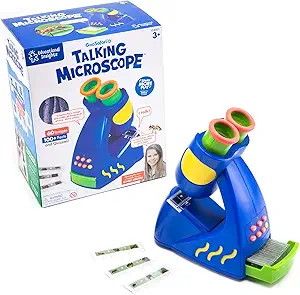 | Best for Preschoolers | Recommended age: 3–5 years | Slides: 20 prepared slides | Images: 60 full-color images | VIEW LATEST PRICE | See Our Full Breakdown |
| National Geographic Kids Microscope Kit, Up to 400x Magnification |  | Best Traditional Learning Experience | Maximum magnification: 400x | Magnification levels: 3 | Lighting: Upper and lower lights | VIEW LATEST PRICE | See Our Full Breakdown |
| educational microscopes for kid | Magnification | Lighting |
|---|---|---|
| BMDSAE 1000X Handheld Digital | Up to 1000X | 8 LEDs, 3 brightness modes |
| National Geographic Junior Mic | 50x–250x | Above and below specimen platform |
| Ashfly 1000X Handheld Digital | 100X–1000X | 8 LEDs, 4 brightness levels |
| AmScope M30-ABS-KT2-W Beginner | 300x / 600x / 1200x | LED and mirror illumination with color filter wheel |
| 58-Piece Kids Microscope Kit w | 100x–1200x | LED |
| Educational Insights GeoSafari | 2.5x–8.5x | Overhead LED |
| TOMLOV DM301K 640X Microscope | 640X | Dual LED lights |
| Pozifu Handheld Digital Micros | 50X–1000X | — |
| Kids Digital Microscope with 1 | Up to 1000× | — |
| Odatay 4K Digital Microscope f | 200–1000x, 4 levels | 8 LEDs, 3 brightness levels |
| Kids Digital Microscope STEM K | 200x–1000x, 5 levels | — |
| 4K Handheld Digital Microscope | 200–1000X | 8 LED lights, 3 brightness levels |
| BEAVERLAB Finder 4.0-Inch Hand | 100X–1600X | 8 adjustable lights |
| Educational Insights GeoSafari | — | — |
| National Geographic Kids Micro | — | Upper and lower lights |
More Details on Our Top Picks
BMDSAE 1000X Handheld Digital Microscope for Kids with 2.0-Inch IPS Screen
This option stands out for turning any backyard leaf or coin into a shared screen experience — kids see results instantly on the 2-inch IPS display instead of squinting through an eyepiece like the AmScope M30 requires. The eight adjustable LEDs mean dim rooms or shady outdoor spots stay usable, and the onboard storage for photos and videos adds a fun documentation angle that analog kits such as the National Geographic Junior kit simply can’t offer. Compared with the Ashfly handheld, this model trades a shorter 2-hour battery life for a slightly friendlier setup, including a lanyard for field carry. The main tradeoffs are real: manual focus takes practice for small hands, and the 2MP sensor is more about discovery than crisp science-fair imagery.
Pros:- Screen-based viewing makes it easy for kids and parents to look together
- Adjustable LED lighting with three brightness modes adapts to indoor and outdoor conditions
- Captures and stores photos and videos without extra equipment
- Lightweight 200g body with lanyard for on-the-go exploring
Cons:- Battery tops out at around 2 hours per charge
- Manual focusing takes practice for younger children
Best for: Curious kids over 3 who want to explore outdoors and capture what they find without slides or preparation
Not ideal for: Households wanting long uninterrupted sessions — the 2-hour battery ceiling cuts extended experiments short
- Magnification:Up to 1000X
- Screen:2.0-inch IPS
- Camera:2MP
- Lighting:8 LEDs, 3 brightness modes
- Battery:600mAh, up to 2 hours
- Connectivity:USB-C; Windows and Mac compatible
- Weight:200g
- Warranty:1 year
Our verdict“This pick makes the most sense for young explorers who value portability and instant screen viewing over slide-based lab work.”
National Geographic Junior Microscope Science Kit
Where handheld options like the BMDSAE favor freeform exploration, this kit leans on structure and guidance — the lab guide walks children through actual biology experiments rather than leaving them to guess. Six prepared slides mean there’s something to view in the first five minutes, while six blank slides and tools like tweezers and a pipette invite kids to prep their own specimens later. Its 50x–250x range is modest next to the Uarzt 58-piece kit’s 1200x ceiling, but lower magnification is genuinely easier for beginners to focus and understand, and dual lighting above and below the stage handles both solid objects and translucent slides. The honest tradeoff is ceiling: a child who masters this kit fairly quickly will outgrow it and need something with more range.
Pros:- Prepared and blank slides provide instant viewing plus room to grow
- Lab guide structures learning into real experiments instead of aimless zooming
- Lighting above and below the stage supports both objects and slides
- Included tools and slide covers teach proper specimen handling
Cons:- Magnification tops out at 250x, limiting long-term use
- Accessories are basic compared with larger multi-piece kits
Best for: Parents of roughly 5–8 year olds who want a curated, guided first microscope rather than an open-ended gadget
Not ideal for: Older or already-hooked junior scientists who will bump against the 250x magnification limit quickly
- Magnification:50x–250x
- Brand:Blue Marble (National Geographic)
- Model:RTMICROJR
- Slides:6 prepared, 6 blank
- Accessories:Tweezers, pipette, slide covers, lab guide, sticker sheet
- Lighting:Above and below specimen platform
Our verdict“A gentle, guided first step into microscopy that works best for young beginners who benefit from structure.”
Ashfly 1000X Handheld Digital Microscope for Kids
Compared with the near-identical BMDSAE handheld, this model earns its spot with two practical edges: a rated 3-hour battery versus 2, and four LED brightness levels rather than three — meaningful upgrades for long afternoon sessions or field trips. It shares the same screen-plus-camera approach, storing photos and AVI videos internally and offloading to Windows or Mac over USB-C, which makes it a better fit than slide-based kits like the AmScope M30 for kids who want to examine moss, fabric, or bugs where they find them. The compromises mirror its sibling’s, though: the 2MP sensor produces discovery-grade rather than sharp images, and at high magnification the small screen makes fine detail tough to read. BPA-free construction is a thoughtful touch for the youngest users.
Pros:- Up to 3 hours of battery life beats most handheld competitors
- Four LED brightness levels give finer control in varied lighting
- Stores 200+ photos and videos without an SD card
- Lightweight BPA-free body with simple USB-C charging and transfer
Cons:- 2MP camera limits image detail at higher magnifications
- No eyepiece means it can’t teach traditional microscope technique
Best for: Budget-conscious buyers who want the handheld digital experience with the longest runtime in this style
Not ideal for: Anyone expecting detailed, print-worthy imagery — the 2MP camera is for exploration, not documentation quality
- Magnification:100X–1000X
- Camera:2MP
- Display:2-inch IPS color screen
- Lighting:8 LEDs, 4 brightness levels
- Battery:600mAh, up to 3 hours
- Storage:200+ photos and AVI videos, no SD card needed
- Connectivity:USB-C charging and file transfer
- Weight:200g
- Warranty:12 months
Our verdict“The strongest handheld value here for screen-loving kids, provided image quality expectations stay realistic.”
AmScope M30-ABS-KT2-W Beginner Microscope STEM Kit, White
For families who want a child to learn real microscope technique — slides, stage clips, coarse focus, an eyepiece — this compound scope is the most authentic option in the lineup. Unlike the screen-based Ashfly or BMDSAE handhelds, the M30 teaches the eye-based skills that carry over to school science labs, and its 300x/600x/1200x steps give it the highest genuine magnification range of the analog kits here. The 52-piece loadout, including brine shrimp eggs and a hatchery, turns it into a long-running biology project rather than a one-afternoon toy, and the hard case keeps everything organized. The tradeoffs are old-school ones: a single eyepiece means no shared viewing, coarse-only focus demands patience, and the white metal frame, while sturdy, is less grab-and-go than any handheld.
Pros:- Three magnification levels up to 1200x for varied specimens
- 52-piece accessory set including brine shrimp eggs and hatchery extends engagement
- Metal frame and hard-sided case add durability and portability
- LED plus mirror illumination with color filter wheel teaches real-stage techniques
Cons:- Monocular design allows only one viewer at a time
- Coarse focus only — fine detail work is difficult
- Requires 2 AA batteries for the LED
Best for: Kids around 8 and up who are ready for genuine lab-style microscopy and multi-week experiments like hatching brine shrimp
Not ideal for: Impatient younger children or parents who want screen-based shared viewing — one eyepiece means taking turns for everything
- Type:Compound microscope
- Magnification:300x / 600x / 1200x
- Viewing head:Monocular
- Focus:Coaxial coarse focus
- Lighting:LED and mirror illumination with color filter wheel
- Power:2 AA batteries
- Frame:White metal
- Accessories:52-piece kit with slides, tools, brine shrimp eggs, hatchery, hard case
Our verdict“The best choice here for building actual laboratory skills, provided your child has the patience for slides and an eyepiece.”
58-Piece Kids Microscope Kit with 100x–1200x Magnification
This kit’s pitch is volume of content: 13 prepared specimens and 31 blank slides mean there’s more ready-to-view material here than any other analog option in the roundup, including the National Geographic Junior kit’s dozen slides. That makes it well suited to siblings or classroom-style use where multiple kids burn through slides fast. Its 100x–1200x range technically matches the AmScope M30’s ceiling, though the build feels more toy-like and the single LED light gives less flexibility than the AmScope’s LED-plus-mirror setup with filter wheel. The included learning guide helps beginners build vocabulary and habits, similar to National Geographic’s lab guide but aimed at the 5–12 range. The annoyances are practical: batteries aren’t included, so add them to the cart, and the focus mechanism demands a steady hand at maximum magnification.
Pros:- 13 prepared specimens get kids viewing immediately
- 31 blank slides support endless custom specimen prep
- Learning guide introduces microscope basics for the 5–12 age range
- Broad 100x–1200x magnification range for a budget kit
Cons:- Requires 2 AA batteries that are not included
- Plastic build and basic LED lighting limit durability and image clarity
Best for: Families or small groups wanting maximum prepared content and blank slides for the money, for kids roughly 5–12
Not ideal for: Anyone seeking durable lab-grade construction or fine focusing precision for detailed specimen work
- Brand:Uarzt
- Pieces:58
- Magnification:100x–1200x
- Prepared specimens:13
- Blank slides:31
- Lighting:LED
- Power:2 AA batteries (not included)
- Recommended age:5–12 years
Our verdict“The slide-count champion for beginners — pick it when quantity of prepared content matters more than optical refinement.”
Educational Insights GeoSafari Jr. My First Microscope
Most kids’ microscopes assume a child can close one eye, focus carefully, and handle glass slides — none of which describes a three-year-old. This option stands out for solving that specific problem: the double viewing eyepiece works like binoculars, so toddlers see a magnified image naturally without squinting, and the chunky easy-focus knob is sized for small hands. Compared with the TOMLOV DM301K, which targets ages 6–12 with real optical slides, the magnification here tops out at 8.5x — enough to make a leaf vein or ladybug dramatic, but far below scientific territory.
The tradeoff is real: this is a toy-grade introduction, not a microscope a child grows into. Batteries aren’t included, and the 12 prepared slides are more of a bonus than a curriculum. Buy it as a first encounter with magnification; move to a compound scope like the AmScope M30 later.
Pros:- Binocular-style eyepiece eliminates the one-eye-closed struggle for very young children
- Simple enough for independent use by preschoolers
- 12 prepared slides plus storage give immediate viewing content
- Sturdy, toddler-friendly build with oversized controls
Cons:- Batteries not included, so factor that into the gift moment
- Maximum 8.5x magnification is quickly outgrown
Best for: Parents of children ages 3–5 who want a frustration-free first encounter with magnification before investing in a real science scope
Not ideal for: School-age kids doing science projects — 8.5x maximum magnification won’t show cells or slide detail
- Age range:3 years and up
- Magnification:2.5x–8.5x
- Eyepieces:Double viewing eyepiece
- Lighting:Overhead LED
- Included:12 prepared slides with storage
- Batteries:3 AAA, not included
Our verdict“This is the right pick if your scientist is still in preschool and needs binocular viewing and chunky controls — skip it for any child old enough for compound microscopy.”
TOMLOV DM301K 640X Microscope for Kids
Amid a roundup crowded with handheld digital scopes like the Pozifu, this model represents the classic compound microscope experience — eyepiece, stage, slides, and 640x magnification that genuinely reveals cell structure and slide detail. That matters educationally: learning to prepare and position slides builds lab skills a screen-first device never teaches. The dual LED lighting is the quiet differentiator, illuminating both transparent prepared slides and opaque everyday objects, so kids aren’t limited to one specimen type.
Compared with the Educational Insights GeoSafari Jr., this is a genuine step up in scientific capability for elementary students. The tradeoffs: only 12 prepared slides come in the box, so curious kids will exhaust the starter set quickly, and the focus dial, while beginner-friendly, won’t satisfy a middle schooler ready for fine adjustment controls.
Pros:- 640x magnification reveals genuine slide detail like cells and fibers
- Dual LED lights handle both transparent slides and solid objects
- Phone adapter turns results into a shareable group activity
- Rechargeable battery with up to 24 hours of runtime outlasts most rivals
Cons:- Only 12 prepared slides included, limiting out-of-box exploration
- Beginner-level optics that advanced students will outgrow
Best for: Elementary students ages 6–12 who benefit from learning real slide-based microscopy rather than pointing a camera at objects
Not ideal for: Kids who want to share findings with the whole family on a screen — the phone adapter helps, but the group-viewing experience lags handheld digital models
- Magnification:640X
- Recommended age:6–12 years
- Lighting:Dual LED lights
- Battery:Rechargeable, up to 24 hours
- Included accessories:12 prepared plastic slides, phone adapter
- Model:DM301K
Our verdict“This pick makes the most sense for families who want a true optical microscope with slide skills and serious magnification rather than another screen device.”
Pozifu Handheld Digital Microscope for Kids, 50X–1000X
Where the TOMLOV DM301K anchors to a desk, this model is built for the backyard and the hiking trail. It slips in a pocket, hangs from a lanyard inside a protective case, and runs on a rechargeable battery — meaning a curious kid can inspect bark, beetles, and coins wherever they find them. The photo and video capture with USB connectivity adds real STEM value: specimens can be documented and pulled onto a computer for school reports.
Compared with similar handheld digitals like the BMDSAE 1000X, the Pozifu’s eight adjustable LEDs make outdoor lighting manageable, but the 2-inch display is tight for shared viewing, and the TF card needed to store those 200 photos isn’t in the box. Magnification claims of 1000x on a handheld digital also come with realistic expectations — crisp results live in the lower portion of that range.
Pros:- Genuinely pocketable design with protective case and lanyard
- Captures photos and videos transferable to PC for STEM projects
- Eight adjustable LEDs adapt to dim outdoor conditions
- Rechargeable via common Type-C cable
Cons:- TF card required for photo storage but sold separately
- 2-inch display is small for sharing or detailed inspection
Best for: Outdoor explorers and field-trip-minded kids who need a pocket-size scope that travels to the park, campsite, or backyard
Not ideal for: Classroom slide study — no stage, no prepared slides, and digital magnification can’t replace a compound scope for cell-level detail
- Magnification:50X–1000X
- Display:2.0-inch IPS
- Camera:2MP, 1080P
- LED lights:8 adjustable
- Connectivity:USB to PC
- Battery:600mAh rechargeable, Type-C charging
- Warranty:180 days
Our verdict“This is the model for kids whose science happens outside — buy it for portability, not for slide-based lab work.”
Kids Digital Microscope with 1000× Zoom and 2.4-Inch Screen
This model splits the difference between the Pozifu and full-size digitals: a slightly larger 2.4-inch IPS screen, full 1080P video recording at 30 fps, and internal memory that stores photos without any card purchase. That last point matters — unlike the Pozifu, which needs a separately sold TF card just to save images, this scope lets a child document findings out of the box, making it the stronger choice for science fairs and classroom presentations.
The catch is endurance. Battery life caps around two hours, which a marathon bug-hunting afternoon will exceed, and video recording still requires a TF card that isn’t included, along with a USB power adapter. Compared with the Odatay, it also skips prepared slides entirely — this is a pure discovery tool for objects kids find themselves.
Pros:- Internal memory stores up to 200 photos with no card needed
- Records smooth 1080P/30fps video for presentations
- Brighter-than-average 2.4-inch screen aids young eyes
- Featherlight at 150 g for handheld exploring
Cons:- TF card required for video recording and not included
- Battery lasts only up to 2 hours per charge
- No prepared slides or starter specimens in the box
Best for: Students building science-fair projects or observation journals who need to capture, store, and transfer their own specimen images
Not ideal for: Extended field sessions — the 2-hour battery ceiling and absent power adapter cut outings short
- Magnification:Up to 1000×
- Display:2.4-inch IPS color screen
- Image resolution:1920 × 1080P
- LED lights:8 adjustable
- Photo storage:Up to 200 JPG photos internal
- Battery:600 mAh, up to 2 hours
- Charging:USB-C, ~2 hours full charge
- Weight:150 g (0.34 lb)
Our verdict“Choose this when documentation is the goal — kids can photograph and film discoveries immediately — but pack a charger for longer sessions.”
Odatay 4K Digital Microscope for Kids, 200–1000x Magnification, 2.4-Inch Screen, 32GB Card, Blue
Most handhelds in this roundup ship half-finished — the Pozifu and the 2.4-inch screen model both omit the memory cards their features depend on. The Odatay breaks that pattern: a 32GB card, 12 prepared slides, protective case, lanyard, and data cable all come in the box, so a child goes from unboxing to capturing 4K photos within minutes. The four-level magnification range starting at 200x also offers comfortable long-distance viewing at the low end, which is forgiving for wiggly specimens and unsteady hands.
Tradeoffs remain: the 2.4-inch screen is still small for shared viewing, and the listing’s inconsistent age recommendations make it hard to pin the ideal buyer — I’d place it firmly in the 6-and-up range given the controls. Compared with the BMDSAE and Ashfly handhelds, the included storage and slides give it the clear edge as a gift-ready package, backed by an unusually long 5-year warranty.
Pros:- 32GB card included, so photo and video capture works immediately
- 4K camera produces sharper captures than typical 2MP handhelds
- 12 prepared slides plus a full accessory set out of the box
- 5-year warranty far exceeds category norms
Cons:- Small 2.4-inch screen limits group viewing
- Inconsistent age guidance across the listing creates confusion
Best for: Gift-givers who want a complete, no-extra-purchases package with slides, storage, and accessories ready on day one
Not ideal for: Toddlers — despite some listing language suggesting younger ages, the digital controls and small screen suit school-age children better
- Magnification:200–1000x, 4 levels
- Camera:4K HD
- Display:2.4-inch screen
- Lighting:8 LEDs, 3 brightness levels
- Storage:32GB TF card included
- Included accessories:12 prepared slides, data cable, lanyard, slide cover, silicone case
- Weight:0.5 lbs
- Warranty:5 years
Our verdict“If you want everything in one box — card, slides, case, cable — this is the most gift-ready handheld here, provided the recipient is school-age.”
Kids Digital Microscope STEM Kit with 32GB Card and Carrying Case
This option stands out for being the most turnkey package in this roundup: unlike the ASPOVEN handheld, which leaves accessory contents vague, this kit arrives with a 32GB memory card, five prepared glass slides, a fitted EVA case, and a neck strap — everything a young explorer needs on day one. The 200x–1000x range across five levels gives kids room to grow from looking at leaves to examining finer details, and the rechargeable battery cuts down on battery-buying frustration. Compared with the National Geographic Kids Microscope Kit, this model trades the classic eyepiece experience for a digital one, which means easier sharing but less of the “real scientist” feel. The tradeoffs are real: roughly 2.5 hours of battery limits long field sessions, and the unspecified screen size and resolution make image quality a bit of a gamble.
Pros:- Complete kit with 32GB card, five prepared slides, case, and strap included
- Five magnification levels from 200x to 1000x support skill progression
- Rechargeable Type-C battery avoids constant battery replacement
- Light 0.34 lb body is genuinely pocketable for kids
Cons:- Battery life caps out around 2.5 hours per charge
- Screen size and image resolution are unspecified, so photo quality is uncertain
Best for: Parents who want a complete out-of-the-box kit with storage, slides, and protection included so nothing extra needs buying
Not ideal for: Families planning long outdoor excursions, since the 2.5-hour battery may run out mid-adventure
- Magnification:200x–1000x, 5 levels
- Storage:32GB memory card included
- Battery life:Approximately 2.5 hours
- Charging:Type-C cable
- Weight:0.34 lb
- Included slides:5 prepared glass specimens
- Accessories:EVA case, neck strap, Type-C cable, user manual
Our verdict“This pick makes the most sense for buyers who want every accessory bundled in one box rather than pieced together separately.”
4K Handheld Digital Microscope for Kids, 200–1000X Magnification, 2.0-Inch IPS Screen, Blue
What separates this model from the similarly portable BMDSAE and Ashfly handhelds is its focus on capturing and managing content: photo taking, video recording, playback, and file management are all built in, with a 4K camera feeding the 2.0-inch IPS screen. That makes it better suited to kids who want to record their discoveries and review them later rather than just glance and move on. The eight LED lights with three brightness levels outshine simpler models for dim indoor use, and PC connectivity means files can be moved off the device for school projects. The drawbacks deserve attention though — a 2.0-inch screen is small for sharing views with siblings or parents, and the unclear accessory list means you may need to supply your own storage or stand, unlike the 32GB-card-included STEM kit above.
Pros:- 4K camera with photo, video, playback, and file management functions
- Eight LED lights with three brightness settings handle low-light viewing
- PC connectivity for offloading files and extended use
- Two-year warranty offers reassurance for a kids’ device
Cons:- 2.0-inch screen is cramped for shared viewing
- Included accessories are unspecified, so extra purchases may be needed
Best for: Kids aged 3–12 who want to photograph and film their findings for school projects or show-and-tell
Not ideal for: Families who want everything included upfront, since the kit contents are not clearly specified
- Magnification:200–1000X
- Camera:4K HD
- Display:2.0-inch IPS screen
- Lighting:8 LED lights, 3 brightness levels
- Connectivity:PC connection via Type-C
- Weight:0.5 lbs
- Recommended age:3–12 years
- Warranty:2 years
Our verdict“A solid match for young documentarians who care more about recording what they find than sharing a live view.”
BEAVERLAB Finder 4.0-Inch Handheld Digital Microscope for Kids, 100X–1600X
This is the pick when screen size and sharing matter most. Its 4.0-inch IPS display doubles the viewing area of the ASPOVEN and the Kids Digital Microscope STEM Kit’s unspecified panel, making it far easier for a parent and child to look together — a genuine outcome, not just a spec. The 100X–1600X range also reaches higher magnification than most handhelds here, with 1080p imaging that holds up when photos are saved. The built-in hotspot for sharing straight to a phone is a practical trick the other digital models in this roundup don’t offer. On the flip side, no battery life or charging details are provided, so it’s hard to plan around usage time, and there’s no durability information for a device that will live in a child’s backpack — worth weighing against the STEM kit’s protective EVA case.
Pros:- 4.0-inch IPS screen is the largest display in this lineup
- 100X–1600X magnification reaches beyond typical handheld ranges
- 1080p photo and video capture with a 2 MP CMOS sensor
- Built-in hotspot shares images directly to a mobile phone
Cons:- Battery life and charging details are not disclosed
- No durability information, and no protective case mentioned
Best for: Families who explore together and want a large screen plus easy phone sharing for group viewing
Not ideal for: Buyers who need reliable runtime information before a trip, since battery and charging details aren’t published
- Display:4.0-inch IPS
- Magnification:100X–1600X
- Imaging resolution:1920 × 1080
- Camera sensor:2 MP CMOS
- Lighting:8 adjustable lights
- Connectivity:Built-in hotspot for mobile phone sharing
Our verdict“The strongest choice for shared viewing sessions, provided you can live with the unknowns around battery runtime.”
Educational Insights GeoSafari Talking Microscope
This model plays a completely different game from everything else here. Where the National Geographic Kids Microscope Kit and the digital handhelds assume a child can focus, aim, and interpret an image, the GeoSafari Talking Microscope teaches through audio: 20 prepared slides with 60 full-color images pair with over 100 facts and quiz questions voiced by Bindi Irwin. Fact and Quiz modes turn solitary looking into an interactive learning loop, and four audio languages make it work for bilingual households. It’s designed squarely for ages 3–5, which is younger than any other pick in this roundup manages. The tradeoff is that kids outgrow it quickly — there’s no free exploration with blank slides, no magnification range to grow into, and it needs 3 AAA batteries that aren’t included, so add those to your cart.
Pros:- Over 100 audio facts and quiz questions create real engagement
- 20 prepared slides with 60 full-color images require zero setup
- Four audio languages: English, Spanish, French, and German
- Purpose-built for preschool hands and attention spans
Cons:- Requires 3 AAA batteries that are not included
- Limited replay value once the facts and quizzes are exhausted
Best for: Parents of 3–5 year olds who want guided, audio-based science learning rather than open-ended magnification
Not ideal for: Kids over about 6, or anyone wanting blank slides and self-directed exploration, since content is fixed and finite
- Recommended age:3–5 years
- Slides:20 prepared slides
- Images:60 full-color images
- Play modes:Fact Mode and Quiz Mode
- Audio content:Over 100 facts and quiz questions
- Audio languages:English, Spanish, French, German
- Batteries:3 AAA (not included)
Our verdict“The right first microscope for preschoolers who learn best by listening and playing rather than adjusting knobs.”
National Geographic Kids Microscope Kit, Up to 400x Magnification
For buyers who want a real optical microscope rather than a screen-first gadget, this is the strongest fit in the batch. Kids look through an actual eyepiece, turn large focus knobs, and switch between upper and lower lighting to learn how illumination changes a specimen — a hands-on skill no handheld digital model like the Pozifu or BMDSAE teaches. Where the Kids Digital Microscope STEM Kit includes five prepared slides, this kit goes further with six prepared plant slides, six rocks and minerals, and six blank slides, inviting kids to prepare their own specimens with the included tweezers, pipette, and specimen dish. The lab guide and merit badge stickers add structure. The honest tradeoff: 400x maximum magnification is modest compared with 1000x digital claims, and like most kids’ compound scopes, it won’t satisfy advanced users.
Pros:- True optical eyepiece with large focus knobs teaches real lab technique
- Upper and lower lighting shows how illumination affects viewing
- Six prepared slides, six rocks and minerals, and six blanks for self-made specimens
- Includes tweezers, pipette, specimen dish, lab guide, and merit badge stickers
Cons:- 400x maximum magnification trails the 1000x–1600x digital models
- No photo or video capture for documenting discoveries
Best for: Families who value classic hands-on lab skills — focusing, slide prep, and specimen handling — over digital screens
Not ideal for: Kids who mainly want to photograph specimens, since there’s no camera or screen
- Maximum magnification:400x
- Magnification levels:3
- Lighting:Upper and lower lights
- Prepared specimens:6 plant slides and 6 rocks and minerals
- Blank slides:6
- Accessories:Pipette, specimen dish, tweezers, lab guide, merit badge stickers
Our verdict“The best choice for building genuine microscope skills with a full specimen-prep toolkit, as long as screen-free learning is the goal.”
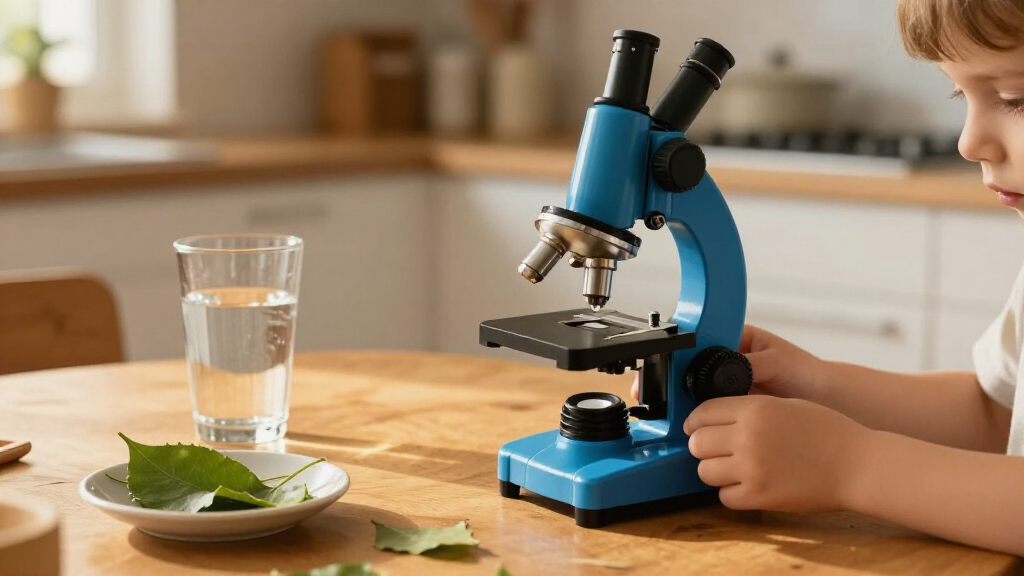
How We Picked
I evaluated each microscope against the criteria that actually shape a child’s experience: image clarity at usable magnifications, ease of focusing for small hands, build quality that survives drops and fidgeting, and how well the included materials sustain interest past the first week. A model that ships with prepared slides, collection tools, and storage earns real credit because the accessory kit often determines whether the microscope gets used twice or two hundred times. For digital models, I weighed screen size and quality, whether photos can be saved to a card, and how reliably the focus wheel behaves at the top of the magnification range.
The ranking logic follows developmental fit and long-term value rather than spec sheets. Optical STEM kits that teach genuine lab technique rank highly for school-age kids because that skill transfers to classroom science. Handheld digitals are ranked by image quality and durability, since that’s where cheap units fail. Preschool-focused models like the GeoSafari line are judged on whether their simplicity is a feature for the age group or a limitation that gets outgrown — and they’re placed accordingly.
Factors to Consider When Choosing Educational Microscopes For Kids
Before picking a specific model, it helps to understand what actually separates a microscope your child will use for years from one that lands in a drawer by February. These are the factors I weighed most heavily, plus the mistakes I see buyers make most often.Match the Type to Your Child’s Age and Temperament
The single biggest decision is optical versus digital, and age should drive it. Kids under six generally lack the fine motor control and patience for slide preparation, which is why oversized, fixed-focus designs like the GeoSafari Jr. line exist — they trade scientific rigor for frustration-free exploration. School-age children (roughly 6–12) get the most from traditional optical kits because the skills involved, mounting a slide, adjusting the stage, and dialing in focus, mirror what they’ll encounter in school labs. Handheld digital scopes suit kids eight and up who want to examine surfaces, textures, and outdoor finds on the spot. A common mistake is buying a technically impressive scope for a child who isn’t ready for it; enthusiasm dies fast when every session requires adult intervention. When in doubt, choose slightly below your child’s ability level rather than above it.
Don’t Chase the Magnification Number
Nearly every kids’ microscope in this price range advertises 1000X, and nearly all of them exaggerate what’s usable. What matters more is optical quality, lighting, and focusing precision — a sharp image at 200X teaches far more than a blurry blob at 1000X. Digital models compound this issue because interpolation and cheap sensors inflate the zoom figure without adding real detail. For optical scopes, look for glass lenses rather than plastic, and a coarse-and-fine focus mechanism rather than a single sticky wheel. If a listing emphasizes magnification above everything else and says little about the optics, treat that as a warning sign. Real classroom work rarely exceeds 400X anyway, so a clean 400X image covers most of what a curious kid will ever want to see.
Weigh Screen Convenience Against Skill Building
A built-in screen is genuinely fun: your child can see results instantly, show siblings, and save photos to a memory card. But screens change what the activity teaches. Digital handhelds turn microscopy into discovery and documentation, while optical kits teach technique and patience — preparing a slide, adjusting light, and hunting for focus. Neither is wrong, but they produce different kinds of learners. Some families solve this by starting with an optical kit and adding a cheap handheld later, which covers both modes for less than one premium scope. Also consider screen time values in your home; if you’re deliberately limiting screens, an optical model avoids turning science into another glowing rectangle. The saving feature on card-equipped digitals is worth having regardless, since preserved photos extend the hobby.
Evaluate the Kit, Not Just the Scope
Accessories determine longevity. A microscope with prepared slides gives immediate wins on day one, while blank slides, droppers, tweezers, and stains enable open-ended experimenting later. Kits that include a carrying case or storage for slides tend to stay organized, and organized kits stay in rotation. I’d treat a 32GB card and case as meaningful value on digital models because they’re cheap for manufacturers to include but genuinely useful. The common mistake is assuming more pieces always means better — a 58-piece kit full of flimsy tools is worse than a 20-piece kit with quality slides. Check whether the scope uses standard slide sizes too, since replacement and refill slides are widely available and cheap for standard formats.
Build Quality and Power Source Realities
Kids drop things, and the difference between a scope that survives and one that shatters usually comes down to body material and stage construction. Metal-bodied optical scopes like the AmScope M30 outlast plastic housing, though they’re heavier for small hands to carry. On digital models, check the power source: built-in rechargeable batteries are convenient but eventually die, while AA-powered units can be refreshed anywhere. LED illumination is standard across this category, but brightness adjustability is not — and dim, fixed lighting makes high magnification nearly useless. Also look at how the focus mechanism feels in descriptions and returns policies; stiff or sloppy focus wheels are the most common failure point on inexpensive handhelds. A generous return window is your safety net when reviews can’t tell you how a focus wheel actually feels.
Frequently Asked Questions
Is a digital microscope or a traditional optical microscope better for a child?
It depends on what you want the activity to teach. Optical scopes like the AmScope M30 and National Geographic kits build lab technique — slide prep, stage adjustment, careful focusing — which transfers directly to school science classes. Handheld digitals like the BEAVERLAB Finder deliver instant, shareable results and are far better for examining surfaces, leaves, fabrics, and coins without preparing anything. Digital models also let kids photograph findings, which turns observation into documentation and storytelling. If your child is patient and school-oriented, go optical; if they’re easily frustrated or drawn to gadgets, go digital. Many families eventually own one of each, since they complement rather than replace each other.
What magnification does a child actually need?
Far less than the packaging suggests. Most educational and hobby microscopy happens between 40X and 400X — that range covers cells, insect parts, fibers, and pond water organisms beautifully. Advertised 1000X figures on kids’ models are often interpolated or achievable only with severe image degradation, especially on handheld digitals with small sensors. Sharpness at 100X–400X matters more than a blurry maximum, and a child who sees crisp detail at low power stays engaged longer than one squinting at smudges at high power. If two models are otherwise equal, pick the one with better optics and lighting at moderate magnification rather than the bigger zoom number.
What age is appropriate for each type of kids’ microscope?
Ages 3–6 are best served by fixed-focus, oversized designs like the GeoSafari Jr. My First Microscope, which eliminates focusing entirely. Ages 5–7 can also enjoy the GeoSafari Talking Microscope, which uses guided audio slides — though many kids outgrow it by 8. Traditional optical kits with real slides suit roughly ages 6–12, with adult help early on for slide preparation. Handheld digital scopes with screens work best for ages 8 and up because stable high-zoom viewing requires a steady hand and some patience with the focus wheel. If you’re buying for a 5-year-old with a 9-year-old sibling, a durable optical kit is the safer middle ground since the older child can use it fully now and the younger one grows into it.
Are the cheap 1000X handheld digital microscopes worth buying?
Some are, if you set expectations correctly. Models like the BMDSAE, Ashfly, and Pozifu offer genuine fun for examining textures and surfaces, and the ones with memory card support let kids build a photo library of discoveries. The tradeoffs are real: focusing at the top of the zoom range gets fussy, image quality falls off sharply above a few hundred times magnification, and build quality varies between units that look identical in listings. The step-up options — the Odatay 4K and BEAVERLAB Finder — cost more but deliver noticeably sharper imaging and more stable focus, which matters if your child is seriously curious rather than casually amused. A cheap handheld makes a fine gift or travel scope; it just shouldn’t be your only microscope if your child shows sustained interest.
Do I need prepared slides, or should we make our own?
Both, in sequence. Prepared slides are the day-one win — your child sees something impressive immediately without any technique, which builds the motivation to keep going. Once that spark exists, blank slides, droppers, and stains become the real educational tools, because preparing a slide teaches sampling, patience, and fine motor control. Pond water, onion skin, cheek cells, and salt crystals are classic homemade subjects that cost nothing. The mistake to avoid is relying only on prepared slides forever; kids who never make their own slides treat the microscope as a toy with fixed content rather than an instrument for investigating the world. Kits that include both types, like the National Geographic and AmScope bundles, handle this transition naturally.
Conclusion
The right pick here depends less on specs and more on who’s receiving the gift. For most families, the National Geographic Junior Microscope Science Kit is my best overall recommendation — it combines real optical performance with a complete accessory set at a mid-range price, and it grows with a school-age child for years. Budget-conscious buyers get the most from the AmScope M30-ABS-KT2-W, which delivers genuine glass-optics lab technique for less than the digital models, with the 58-Piece Kit as a solid alternative if maximizing accessories matters most.
At the premium end, the BEAVERLAB Finder justifies its cost with a large 4-inch screen and the sharpest handheld imaging in the lineup, while the Odatay 4K covers the same territory for slightly less. For the youngest scientists, the GeoSafari Jr. My First Microscope is the clear beginner choice, with the Talking Microscope as a guided-audio alternative for kids who love facts. If your child wants instant, screen-based discovery on the go, the TOMLOV DM301K and BMDSAE handheld offer the best balance of price and performance. Match the scope to the kid, accept each model’s tradeoffs, and the microscope is far more likely to become a habit than a drawer ornament.
Fall Picks
fall essentials
As an affiliate, we earn on qualifying purchases.