If you’re buying a vacuum sealer for bulk food, you’ll find two main types: commercial and residential. Commercial models are perfect for heavy-duty use, offering powerful motors, strong seals, and larger chambers to handle lots of food quickly. Residential models are smaller, easier to operate, and suited for occasional use. Choosing the right one depends on your volume and frequency. Keep exploring to understand the features that fit your needs best.

Prime made for students and young adults
- Fast, free delivery for dorm and study essentials
- Prime Video and Amazon Music included
- Member-only deals
Key Takeaways
- Commercial vacuum sealers are designed for high-volume, heavy-duty food processing, offering durability and faster cycle times.
- Residential models are suitable for small-scale, infrequent sealing tasks with simpler controls and lower capacity.
- Bulk buyers should prioritize commercial sealers for consistent, large-scale food preservation needs.
- Consider volume, frequency, and durability when choosing between commercial and residential vacuum sealers.
- Commercial units provide professional-grade features ideal for processing large quantities efficiently.
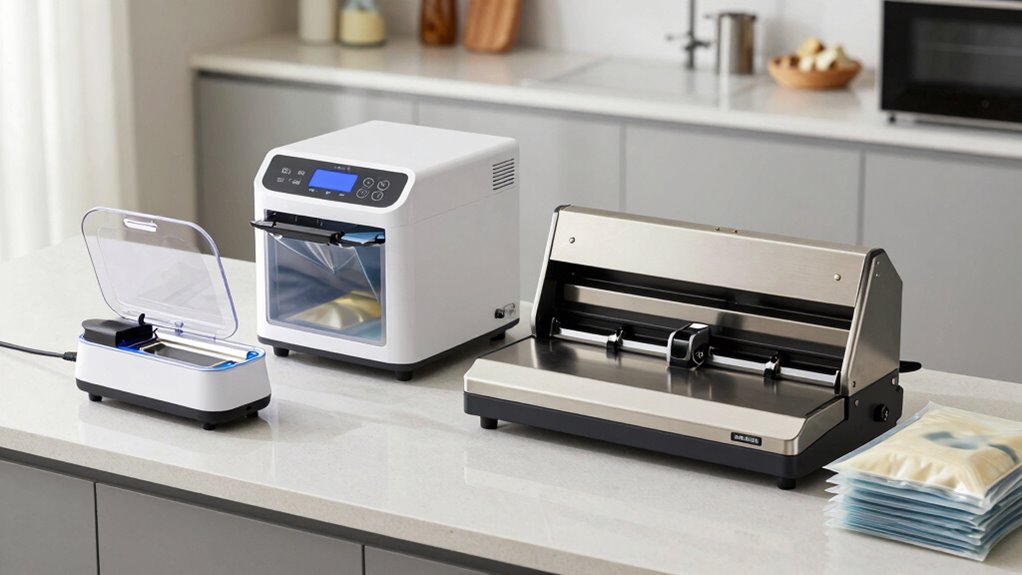
Are you wondering which type of vacuum sealer best fits your needs? When you’re looking at food preservation techniques, understanding the differences between various vacuum sealer types becomes essential—especially if you’re considering bulk buying. Vacuum sealers come in two main categories: commercial and residential models. Knowing their features, strengths, and limitations helps you choose the right one for your needs.
Commercial vacuum sealers are built for heavy-duty use. They’re designed to handle large quantities of food regularly, making them ideal for grocery stores, restaurants, or serious home cooks who process lots of food at once. These models typically have powerful motors, stronger sealing bars, and larger vacuum chambers or bags, which allow you to seal bigger portions efficiently. They often feature continuous operation and faster cycle times, helping you save time during large-scale food preservation. Because of their durability, commercial models tend to be more expensive but offer higher reliability and longer lifespan. If you’re looking for a machine that can manage frequent, high-volume sealing, a commercial vacuum sealer will meet those demands. Additionally, commercial models often incorporate professional-grade technology, which enhances their sealing capabilities and durability. This technology often includes features like adjustable vacuum and sealing settings, making them adaptable for different types of food. Moreover, commercial models typically have specialized features that cater to professional food storage needs, ensuring optimal preservation in demanding environments.
Commercial vacuum sealers are designed for heavy-duty, high-volume food sealing with powerful motors and larger chambers.
For bulk buyers, the ability to maintain consistent sealing quality over many uses is a critical benefit. On the other hand, residential vacuum sealers are designed with home use in mind. They’re usually smaller, more affordable, and easier to operate. For most home cooks or small-scale food preservation, these models provide all the features necessary to extend your food’s shelf life. They often have simple controls, smaller vacuum chambers, and use bag rolls or pre-made bags. While they may not be built for constant, heavy-duty use, modern residential models still deliver excellent performance for everyday needs. They’re also more compact, making them easier to store when not in use. If you’re just starting to explore food preservation techniques or want to vacuum pack in smaller quantities, a residential vacuum sealer offers convenience and efficiency. Additionally, some models incorporate vacuum pump technology, which enhances their sealing capabilities and efficiency in sealing various types of foods. When choosing between the two, consider your volume of food, budget, and how often you’ll use the machine. Commercial models are perfect if you process large quantities regularly, while residential models are suitable for occasional or moderate use. Both types help you extend food freshness and prevent freezer burn, but their capacities and durability differ. Think about your specific needs, and you’ll find that understanding the differences between commercial vs residential models makes selecting the right vacuum sealer easier. This way, you’ll invest in a machine that enhances your food preservation techniques without unnecessary expense or hassle.
commercial vacuum sealer for food
As an affiliate, we earn on qualifying purchases.
As an affiliate, we earn on qualifying purchases.
Frequently Asked Questions
Are Handheld Vacuum Sealers as Effective as Countertop Models?
Handheld vacuum sealers are effective for small tasks thanks to their portable convenience, but they usually lack the power efficiency of countertop models. If you’re sealing larger quantities or thicker bags, a countertop sealer provides better suction and consistency. However, for quick, on-the-go jobs or occasional use, handheld sealers are a handy, space-saving choice that gets the job done efficiently.
Can Vacuum Sealers Be Used for Liquids and Soups?
Yes, vacuum sealers can be used for liquids and soups, but you need to focus on liquid sealing techniques. Use a special moisture setting and freeze soups slightly before sealing to prevent spills. This method helps with soup preservation and keeps liquids airtight without messes. Invest in a vacuum sealer designed for liquids, and you’ll efficiently preserve your soups, sauces, and other liquids without compromising the seal.
How Long Do Vacuum-Sealed Foods Typically Last?
Time flies when your food stays fresh! Vacuum-sealed foods typically last 1-3 years, dramatically extending shelf life compared to traditional storage. For food preservation, vacuum sealing is a game-changer, preventing spoilage and freezer burn. How long depends on the type of food and storage conditions, but in general, you’re giving your food a head start in staying edible and tasty, making your investment worth every penny.
Do All Vacuum Sealers Work With Any Bag Type?
Not all vacuum sealers work with any bag type. Your bag compatibility depends on the sealer’s design and sealing efficiency. Some models only work with specific bags, like proprietary or heat-seal varieties, ensuring a tight, effective seal. Check your vacuum sealer’s specifications to confirm which bags are compatible. Using incompatible bags can lead to poor sealing, compromising food freshness and storage longevity. Always verify compatibility for best performance.
What Maintenance Is Required for Long-Term Use?
Sure, maintenance isn’t your favorite hobby, but for long-term use, stick to regular maintenance schedules—think of it as giving your vacuum sealer a spa day. Clean the sealant area and check the sealant compatibility regularly to prevent embarrassing leaks. Replace worn parts promptly and keep the vacuum’s filters dust-free. This way, your trusty machine stays in top shape, sealing like it’s brand new, year after year.
Conclusion
Now that you’re familiar with the different types of vacuum sealers, you’re better equipped to choose the one that fits your needs. Remember, it’s all about finding the right tool for the job—like a chef with the perfect knife. No matter which you pick, taking the time to understand your options will help you save money and keep your bulk supplies fresh as a daisy. Happy sealing!
Halloween Picks
halloween
As an affiliate, we earn on qualifying purchases.