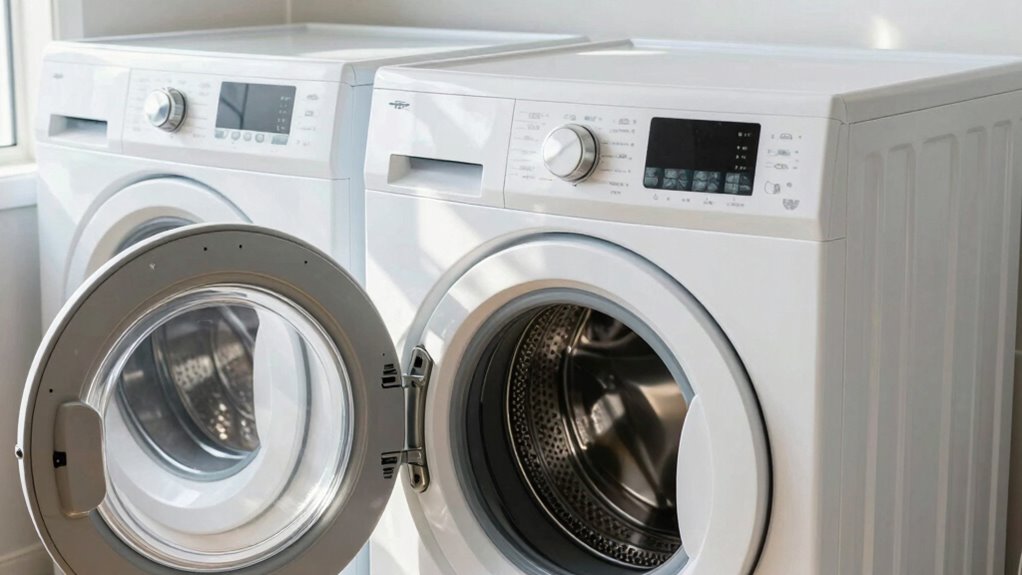

If you prioritize energy efficiency and water savings, a front load washer is easier to live with since it uses less water, dries faster, and handles delicate fabrics gently. On the other hand, top load washers offer straightforward operation and faster cycles, making them convenient if you prefer quick, simple use. Consider your space, maintenance willingness, and laundry routine to determine which suits you best—more details ahead can help you decide confidently.

Prime made for students and young adults
- Fast, free delivery for dorm and study essentials
- Prime Video and Amazon Music included
- Member-only deals
Key Takeaways
- Top load washers are simpler to operate and load, ideal for quick, hassle-free laundry routines.
- Front load washers are gentler on clothes and better for delicate fabrics.
- Top load models generally require less maintenance and are easier to access for loading and unloading.
- Front load washers often have advanced features but may need more upkeep.
- Overall, top load washers offer convenience with faster cycles and straightforward operation.
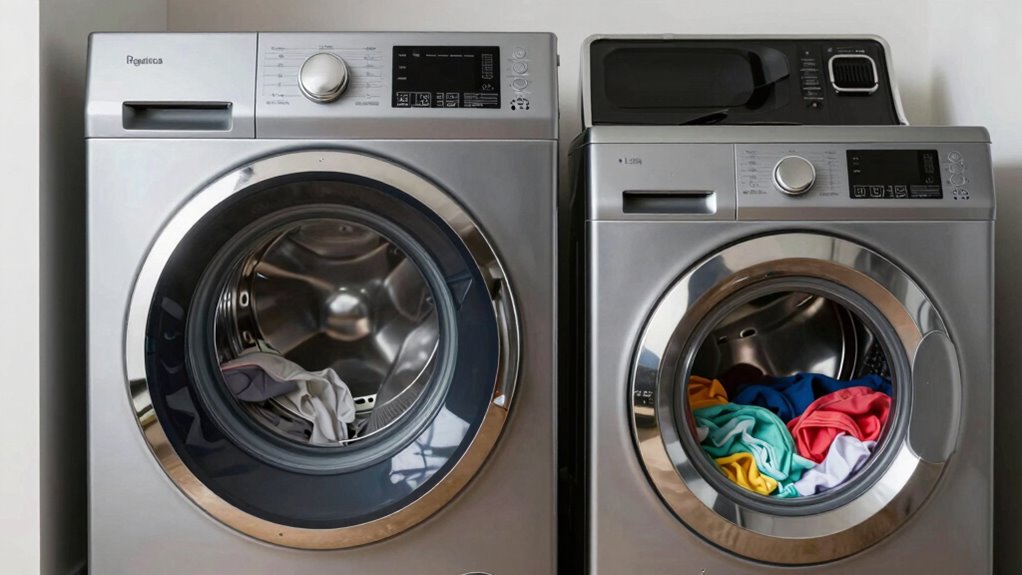
When choosing a new washing machine, understanding the differences between front load and top load models is essential. One of the key factors to weigh is energy efficiency. Front load washers typically use less energy because they spin faster and extract more water from clothes during the cycle. This means your laundry dries faster, saving you both time and electricity. In contrast, top load washers often consume slightly more energy due to their slower spin speeds, which leave clothes wetter and require longer drying times. If reducing your energy bills is a priority, a front load washer might be the better choice.
Front load washers use less energy by spinning faster and extracting more water, reducing drying time and saving electricity.
Water consumption is another critical aspect. Front load washers generally use considerably less water per load compared to top load models. Because they tumble clothes in a horizontal drum, they need less water to fully submerge and wash the laundry effectively. This not only helps lower your water bills but also makes front load washers more environmentally friendly. On the other hand, top load washers fill the entire drum with water for each cycle, which can lead to higher water usage, especially if you tend to wash smaller loads. If conserving water is important to you, front load washers are usually the more sustainable option. Additionally, water-efficient design is a significant feature that can further reduce your environmental impact. Choosing appliances with energy-efficient features can also enhance your overall savings and sustainability efforts.
Beyond efficiency and water use, you’ll also want to think about how each type fits into your daily routine. Front load washers tend to be gentler on clothes because of their tumbling action, making them ideal for delicate fabrics. They also tend to have more advanced features and larger capacities, meaning you can wash bigger loads or bulky items like comforters with ease. However, they often require more maintenance, such as cleaning the door seal to prevent mold buildup, which means you’ll need to stay on top of upkeep. Proper maintenance can help extend the lifespan of your appliance and ensure it continues to operate efficiently. Additionally, energy-efficient appliances are increasingly popular for reducing utility bills and environmental impact.
Top load washers, meanwhile, are known for their straightforward operation and faster cycle times. They’re easier to load and unload because you don’t have to bend down as much, which can be a real plus if you have mobility issues. However, they may not be as energy-efficient or water-conscious as front load models, and their agitator can be rougher on clothes over time. Furthermore, some models are designed with automatic water level features that can help optimize water usage, although they still tend to use more water overall.
As an affiliate, we earn on qualifying purchases.
Frequently Asked Questions
Which Washer Type Uses More Water per Load?
You’ll find that top load washers use more water per load than front load models. This is because top loaders typically have larger water consumption and higher load capacity, which can lead to increased water usage. If you’re concerned about water efficiency, a front load washer might be better, as it uses less water while still handling substantial loads. Your choice depends on your priorities for water conservation and load size.
Are Front Load Washers More Energy-Efficient?
You’ll find front load washers are more energy-efficient, offering impressive energy savings that benefit both your wallet and the environment. Their gentle cycles and optimized water use enhance user convenience, making laundry less of a chore. While they might require a bit more upfront investment, their long-term efficiency and eco-friendliness make them a smart choice for a more sustainable, hassle-free laundry routine that feels good to use every day.
How Long Do Front Load Washers Typically Last?
You can expect a front load washer to last about 10 to 15 years with proper care. To maximize its lifespan, guarantee you use detergent compatible with front loaders and follow installation requirements carefully. Regular maintenance, like cleaning the door seal and checking hoses, helps prevent issues. Proper use and upkeep can keep your washer running smoothly for many years, making it a reliable choice for your laundry needs.
Can Top Load Washers Handle Bulky Items Better?
You’ll find that top load washers handle bulky items more gracefully, thanks to their generous loading convenience. They’re designed to easily accommodate large blankets, comforters, or multiple towels without fuss. Unlike front loaders, which can struggle with bulky items, top loads let you toss in big laundry loads without bending or maneuvering awkwardly. This makes daily chores smoother, especially when dealing with heavy or oversized items.
Which Washer Type Requires Less Maintenance?
You’ll find that top load washers generally require less maintenance than front load models. They have lower maintenance costs because they’re simpler to repair and tend to have a lower repair frequency. With fewer moving parts and less complex seals, top load washers are easier to keep in good shape over time. So, if you want a washer that’s straightforward and cheaper to maintain, a top load might be the better choice.
Conclusion
Choosing between a front load and top load washer is like deciding which path leads to your perfect laundry routine. Both have their merits, but the right choice depends on your needs and preferences. Remember, the best washer isn’t just about features; it’s about fitting seamlessly into your life, like a trusted companion. So, weigh your options carefully—after all, the journey to cleaner clothes is a story you’re writing every day.
Fall Picks
fall essentials
As an affiliate, we earn on qualifying purchases.