
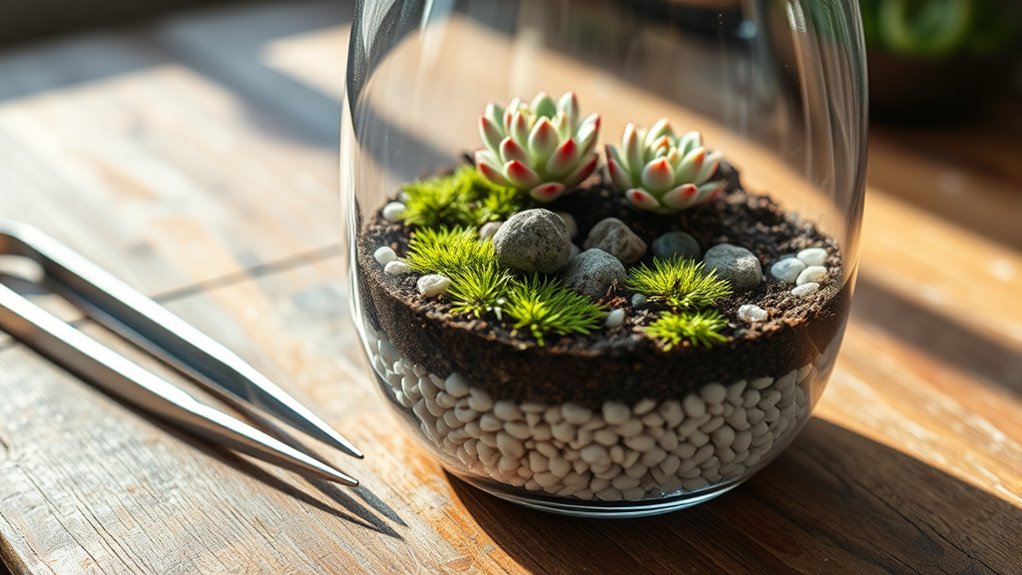
To make a terrarium, start by choosing a suitable container and add a layer of small stones or gravel for drainage. Cover this with activated charcoal to filter air, then fill it with nutrient-rich potting soil appropriate for your plants. Arrange your plants and decorations thoughtfully, placing taller items toward the back and smaller ones at the front. Water sparingly and monitor humidity and plant health to keep it thriving—keep going to discover all the tips for a beautiful mini ecosystem.
Key Takeaways
- Select an appropriate container and add drainage layers like gravel and activated charcoal.
- Fill with nutrient-rich potting soil suitable for your chosen plants.
- Arrange plants and decorations thoughtfully, positioning taller items toward the back or center.
- Water sparingly, using a spray bottle or small watering can to avoid overwatering.
- Monitor plant health regularly, trim dead leaves, and adjust watering or environment as needed.

Creating a terrarium is a fun and rewarding way to bring a bit of nature indoors. Once you’ve chosen your container, the next step is to prepare it properly. Start by adding a layer of small stones or gravel at the bottom for drainage. This prevents excess water from sitting around your plants’ roots, which can lead to rot. On top of the gravel, add a thin layer of activated charcoal to help filter the air and keep your terrarium fresh. Then, cover the charcoal with a layer of potting soil suitable for the plants you’ve selected. Be sure not to overfill; leave enough space for your plants to root comfortably.
Start your terrarium with gravel, activated charcoal, and nutrient-rich soil for a thriving miniature garden.
Now, it’s time for terrarium decorating. Personalize your mini ecosystem with decorative elements like tiny figurines, colorful stones, or moss. These touches make your terrarium uniquely yours and can add an artistic flair that complements your space. When arranging your decorations, keep in mind the scale and visual balance. Place taller plants or objects toward the back or center, and smaller ones at the front, so everything looks harmonious and inviting.
Watering techniques are *essential* to keep your terrarium healthy. Since the environment is enclosed, it retains moisture quite well, so you’ll want to water sparingly. Overwatering is a common mistake that can cause roots to rot, so only water when the soil feels dry to the touch. Use a spray bottle or a small watering can with a narrow spout to deliver a gentle, controlled amount of water. This prevents excess water from disturbing your decorations or washing away soil. If your terrarium is open, watering might be needed more frequently, but for closed setups, a light mist every couple of weeks is usually enough. Always observe your plants and adjust watering based on their specific needs and the environment’s humidity.
To ensure your terrarium remains vibrant, incorporating data-driven strategies such as monitoring humidity levels and adjusting watering schedules accordingly can significantly improve plant health. As you care for your terrarium, remember that maintenance is ongoing. Trim any dead or yellowing leaves, and keep an eye out for mold or pests. Regularly check the soil moisture level to prevent overwatering, and reposition any decorations that might shift over time. With the right watering techniques and thoughtful terrarium decorating, your miniature garden will thrive and become a beautiful, calming feature in your home. Creating and maintaining a terrarium is about patience and observation, but the satisfaction of nurturing your tiny indoor landscape makes every effort worthwhile.

NUOBESTY Glass Terrarium Jar with Cork Lid, 6×6.3 Inch Closed Terrarium for Succulent Moss and Fern, DIY Miniature Desktop Garden for Home & Office Decor (No Plants)
- Creates a self-sustaining environment: Snug-fitting cork lid maintains humidity
- Ideal size for desktops: Measures approximately 6×6.3 inches
- Clear 360-degree view: Thick transparent glass for full visibility
As an affiliate, we earn on qualifying purchases.
As an affiliate, we earn on qualifying purchases.
Frequently Asked Questions
Can I Customize the Terrarium With Different Plants?
Yes, you can definitely personalize your terrarium with different plants. When choosing plants, consider their light and water needs to guarantee they thrive together. Mix various sizes, textures, and colors for a unique look. This allows you to customize your design customization, making your terrarium truly yours. Experiment with succulents, moss, or small ferns to create a diverse, beautiful miniature garden tailored to your style and environment.
How Often Should I Water My Terrarium?
You should water your terrarium roughly once every 2-4 weeks, but it depends on the type of plants and environment. Overwatering can lead to mold and root rot, so observe your plants—if the soil feels dry, it’s time to water. Proper watering frequency is key to terrarium maintenance, keeping your mini ecosystem healthy. Adjust based on your plants’ needs and the humidity levels inside your container.
What Are Common Pests in Terrariums?
You often face terrarium pests like fungus gnats, aphids, and mold if you’re not careful. To prevent these pests, you should maintain proper humidity, avoid overwatering, and use sterile soil. Regularly inspect your terrarium for signs of pests or mold, and remove any infected plants immediately. Pest prevention is key to keeping your terrarium healthy and vibrant, ensuring your plants thrive without unwelcome visitors.
How Do I Prevent Mold Growth?
To prevent mold growth in your terrarium, you should focus on mold prevention by controlling humidity levels. Keep the environment well-ventilated and avoid overwatering your plants, as excess moisture promotes mold. Use a layer of activated charcoal to absorb excess moisture and prevent mold spores from thriving. Regularly check for any signs of mold and remove affected plants or substrate promptly. Maintaining proper humidity control is key to keeping mold at bay.
Can I Reuse the Materials for Future Terrariums?
Yes, you can reuse materials for future terrarium ideas by recycling materials like pebbles, charcoal, and decorative elements. Just clean and disinfect them thoroughly to prevent mold and pests. Reusing supplies not only saves money but also reduces waste, making your projects eco-friendly. Keep in mind that some items might need replacing for health reasons, but with proper cleaning, many materials are reusable for creating beautiful, sustainable terrariums repeatedly.
Conclusion
Now that you’ve learned how to make a terrarium, you’re all set to create your own mini indoor garden. Remember to choose the right plants, layer your materials carefully, and give your new setup the love it needs. Isn’t it satisfying to see your tiny ecosystem come to life? With a little patience and creativity, you’ll enjoy your lush, low-maintenance terrarium for years to come. So, what will you plant in yours first?




![Computational Balloon Twisting: The Theory Of Balloon Polyhedra [Pdf]](https://who-makes.com/wp-content/uploads/2026/07/computational-balloon-twisting-the-theory-of-balloon-polyhedra-pdf-featured-260x140.jpg)