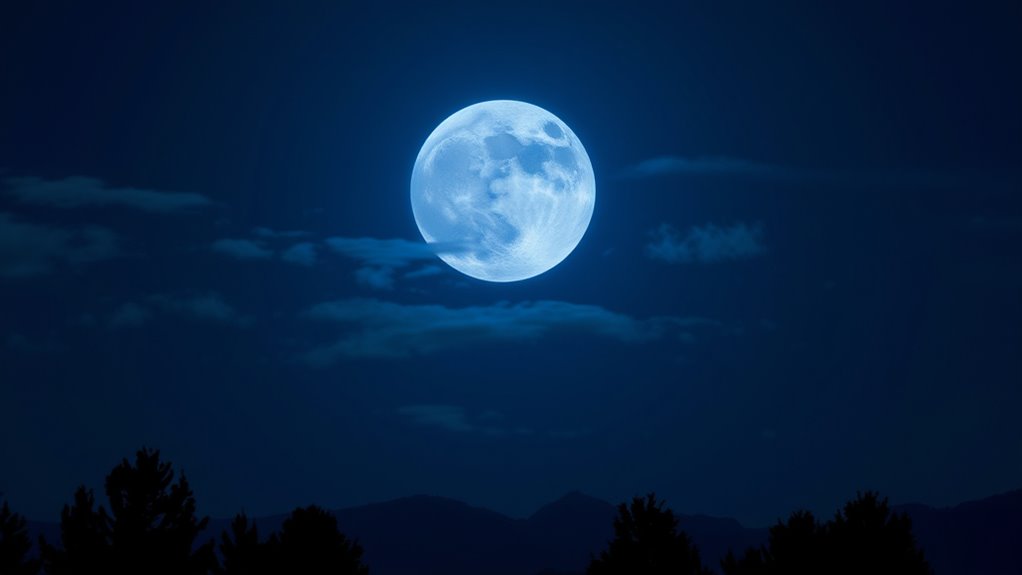

A blue moon happens when a second full moon appears in the same calendar month, which is rare because the lunar cycle lasts about 29.5 days and doesn’t align perfectly with our months. This event isn’t about the moon changing color but about the timing of full moons within the calendar. The mismatch between the lunar rhythm and the Gregorian calendar creates these unusual occurrences. Keep exploring to understand how natural cycles and human schedules influence this fascinating event.

Prime made for students and young adults
- Fast, free delivery for dorm and study essentials
- Prime Video and Amazon Music included
- Member-only deals
Key Takeaways
- A blue moon is the second full moon in a calendar month, not a change in the moon’s color.
- It results from the mismatch between the lunar cycle (~29.5 days) and calendar months.
- Calendar months vary in length, causing sometimes two full moons to occur in one month.
- The term “blue moon” emphasizes rarity and timing, not any physical change in the moon’s appearance.
- The event highlights how natural lunar rhythms interact with human-made calendar systems.
Have you ever wondered what exactly a blue moon is? It’s a term that often sparks curiosity because, despite its name, it doesn’t necessarily mean the moon turns blue. Instead, it refers to a rare event within the lunar cycle that disrupts the usual pattern of full moons. Typically, each month has one full moon, but because the lunar cycle lasts about 29.5 days, occasionally, a second full moon appears within the same calendar month. This anomaly is what we call a blue moon. Understanding this requires a grasp of how the lunar cycle interacts with our calendar, which is based on the Gregorian system, leading to calendar anomalies that aren’t perfectly aligned with the moon’s phases.
The lunar cycle is a natural rhythm that repeats roughly every 29.5 days, from new moon to full moon and back. Because our calendar months vary in length—some are 30 days, others 31, and February even fewer—these lunar phases don’t always fit neatly into our monthly structure. Over time, this mismatch creates irregularities, or calendar anomalies. Occasionally, these anomalies lead to a month hosting two full moons instead of one. When this happens, the second full moon is what we call a blue moon. It’s not about the moon’s color but about the timing within the lunar cycle and the way the calendar captures these phases.
Furthermore, understanding these anomalies involves recognizing how the lunar cycle and our calendar systems interact, which can sometimes result in unexpected occurrences like a blue moon. This concept highlights the fascinating way natural rhythms sometimes collide with human-created schedules.
As an affiliate, we earn on qualifying purchases.
Frequently Asked Questions
How Often Does a Blue Moon Actually Occur?
A blue moon typically occurs once every 2 to 3 years, making it a rare event. It happens because the lunar cycle, which lasts about 29.5 days, doesn’t align perfectly with calendar months. This mismatch means that sometimes, two full moons appear in a single month, creating a blue moon. So, in your calendar, you’ll usually see a blue moon about once every 24 months.
Are Blue Moons Visible From All Parts of the World?
Blue moons are not visible from all parts of the world due to geographical differences in moon visibility. Your ability to see one depends on your location, weather conditions, and the moon’s position in the sky. If you’re in a region with clear skies and an unobstructed view of the night horizon, you’ll have a better chance of observing a blue moon. Remember, timing and local conditions influence moon visibility worldwide.
Does a Blue Moon Affect Horoscopes or Astrology?
A blue moon can influence horoscopes and astrology because it heightens the astrological significance of moon phases. When a blue moon occurs, astrologers believe it amplifies energies, making intentions and manifestations more potent. You might notice increased emotional sensitivity or heightened intuition during this time. Consequently, a blue moon’s rare appearance is often seen as an ideal moment for setting goals or focusing on personal growth in your astrological practices.
What Is the Origin of the Term “Blue Moon”?
The term “blue moon” originates from lunar folklore and astronomical terminology. It first appeared in 19th-century American newspapers, describing a rare second full moon within a single month. This rarity made the term popular, symbolizing something unusual or extraordinary. You might find that the phrase has evolved over time, but its roots lie in folklore and early astronomy, emphasizing the moon’s unique appearance and cultural significance.
Can a Blue Moon Influence Cultural or Mythological Beliefs?
Like a whisper from the night sky, a blue moon often influences your cultural and mythological beliefs through lunar symbolism. It’s seen as a symbol of change, mystery, and rare moments, inspiring stories and rituals. Mythological interpretations turn this celestial event into a sign of transformation or divine intervention. You might feel a heightened sense of connection, as the blue moon’s rarity sparks your imagination and deepens your understanding of life’s mysteries.
Conclusion
So, next time you spot a blue moon, remember it’s like witnessing a rare gem in the night sky—something extraordinary that only appears once in a while. Just as an artist might save their best brushstroke for a special moment, the blue moon reminds us to appreciate life’s fleeting wonders. Keep an eye out for these rare moments; they make the ordinary nights unforgettable, turning the sky into a canvas of magic.
Evergreen bestsellers Picks
bestsellers
As an affiliate, we earn on qualifying purchases.