
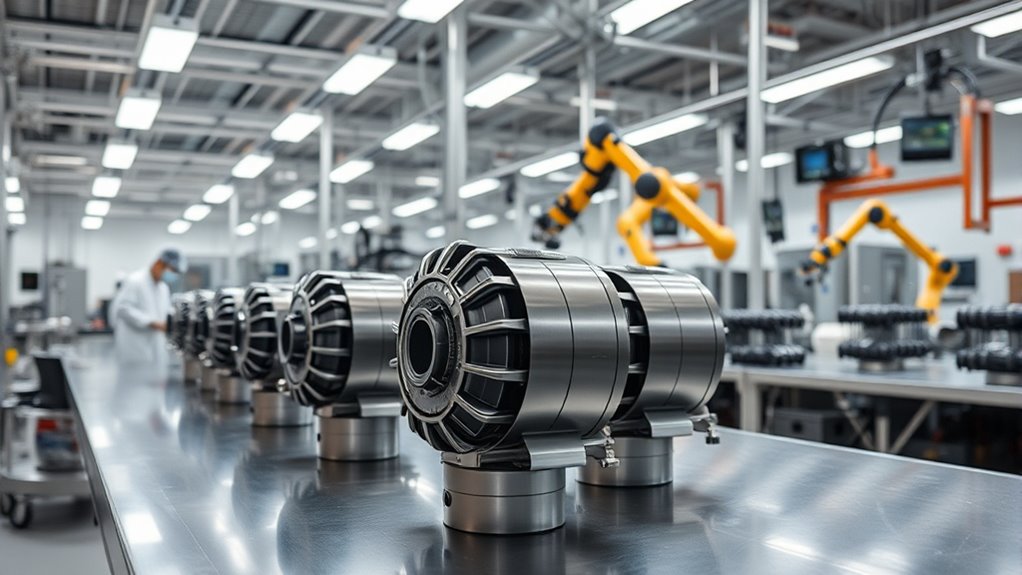

Dyson makes its own vacuum motors, designing and manufacturing high-performance units that focus on quality, durability, and efficiency. They combine innovative engineering with meticulous craftsmanship to guarantee each motor meets strict standards. Dyson also prioritizes noise reduction and lightweight construction for better performance and user experience. If you want to discover more about how Dyson’s motors are built and what sets them apart, there’s plenty more to explore.

Prime made for students and young adults
- Fast, free delivery for dorm and study essentials
- Prime Video and Amazon Music included
- Member-only deals
Key Takeaways
- Dyson designs and manufactures its own high-performance vacuum motors with a focus on quality and precision.
- The company integrates advanced battery technology alongside motor development for enhanced efficiency and portability.
- Noise reduction is a priority in Dyson’s motor design, incorporating sound-dampening materials and optimized structures.
- Dyson employs rigorous quality control and testing throughout the manufacturing process to ensure durability and performance.
- The company invests heavily in ongoing innovation, continuously improving motor technology and integrating new advancements.

If you’re curious about the power behind Dyson vacuum cleaners, understanding their motor manufacturing process is essential. Dyson is renowned for pushing the boundaries of vacuum technology, and a big part of that comes down to the innovative motors they use. These motors are the result of cutting-edge engineering, combining advanced battery innovations with noise reduction techniques to deliver superior performance. Dyson doesn’t just source motors from third parties; instead, they invest heavily in designing and manufacturing their own, ensuring that every component meets their high standards.
Dyson designs and manufactures their own innovative, high-performance vacuum motors with a focus on quality and precision.
The company’s focus on battery innovations plays a crucial role in their motor development. Modern Dyson vacuums are powered by high-capacity, lightweight batteries that provide longer run times without adding bulk. These batteries are integrated with the motor in a way that maximizes efficiency, making the vacuum more powerful and portable. The innovations in battery technology also help Dyson maintain consistent suction, even as the battery drains, so you get reliable cleaning performance every time. They’ve developed proprietary battery management systems that prolong battery life and optimize power delivery, ensuring that the motor operates smoothly and efficiently.
Noise reduction is another vital aspect of Dyson’s motor manufacturing process. Traditional vacuum motors tend to be loud, which can be a nuisance, but Dyson engineers prioritize noise reduction through meticulous design. They incorporate sound-dampening materials and optimize the motor’s internal architecture to minimize vibration and sound emission. This results in a quieter vacuuming experience, making it easier to clean without disturbing others. The combination of noise reduction techniques and high-performance motors demonstrates Dyson’s commitment to user comfort, alongside cleaning efficacy.
Dyson’s motor manufacturing process involves precision engineering and rigorous testing. They design their motors to be lightweight yet durable, capable of sustained high-speed operation. The integration of battery innovations ensures that the motor can operate at peak performance without excessive heat or noise. Furthermore, Dyson continuously refines these motors, incorporating feedback from real-world use to improve noise suppression and energy efficiency. This ongoing development means that each new model benefits from advancements in battery technology and noise reduction.
In essence, Dyson’s approach to motor manufacturing is a blend of innovation and meticulous craftsmanship. They control every stage—from designing the motor to integrating the latest battery innovations and noise reduction techniques—so you can enjoy a powerful, quiet cleaning experience. Their commitment to advanced engineering and high-quality manufacturing processes help explain why Dyson vacuums stand out, offering reliable performance that’s backed by sophisticated motor technology built in-house.
As an affiliate, we earn on qualifying purchases.
Frequently Asked Questions
Are Dyson Vacuum Motors Produced In-House or Outsourced?
You’ll find that Dyson vacuum motors are primarily produced in-house, thanks to their focus on motor manufacturing. This approach gives them better control over quality and innovation. Their supply chain management is tightly integrated to guarantee timely delivery and high standards. By handling motor production internally, Dyson maintains strict quality control and avoids reliance on external suppliers, which helps them deliver reliable, high-performance vacuums to you.
What Are the Primary Materials Used in Dyson Vacuum Motors?
Think of Dyson vacuum motors as tiny, powerful orchestras. You’ll find motor winding, made from copper or aluminum, conducting the electric flow, while magnetic materials like neodymium magnets pull everything into harmony. These materials work together to create the strong suction you rely on. You can trust that Dyson carefully selects high-quality magnetic materials and precise motor winding to guarantee your vacuum performs at its best every time.
How Long Do Dyson Vacuum Motors Typically Last?
Dyson vacuum motors typically last around 5 to 7 years, depending on usage and maintenance. Your vacuum’s motor lifespan is influenced by durability factors like proper cleaning, avoiding obstructions, and regular filter changes. To maximize your Dyson’s lifespan, handle it carefully and follow the manufacturer’s guidelines. With proper care, you can enjoy peak performance and extend the durability of your vacuum motor for years to come.
Can Dyson Vacuum Motors Be Repaired or Replaced Individually?
A stitch in time saves nine, so when your Dyson vacuum motor falters, you’ll wonder if it can be fixed. You can usually get motor repair or explore replacement options, but individual motor repair isn’t always straightforward. Some parts might need professional attention, and replacement can be more practical. Check with Dyson or authorized service centers to see if repair is viable or if a replacement is your best bet.
What Innovations Have Dyson Introduced in Vacuum Motor Technology?
Dyson has introduced innovations like digital motor technology that enhance battery efficiency and reduce noise levels. You’ll notice these improvements in how long your vacuum lasts and how quietly it operates. The advanced motors use fewer parts and optimize airflow, boosting performance while minimizing sound. These innovations make cleaning more efficient and comfortable, giving you a better experience with less noise and longer-lasting power.
Conclusion
So, next time you power up your Dyson vacuum, remember it’s fueled by motors crafted by expert manufacturers behind the scenes. While the sleek design and powerful suction catch your eye, it’s the intricate engineering inside that truly makes the magic happen. Just as a dancer’s graceful movements depend on precise muscles, your cleaning performance depends on these tiny yet crucial motors. It’s a perfect blend of innovation and craftsmanship working silently to keep your home spotless.
Fall Picks
fall essentials
As an affiliate, we earn on qualifying purchases.